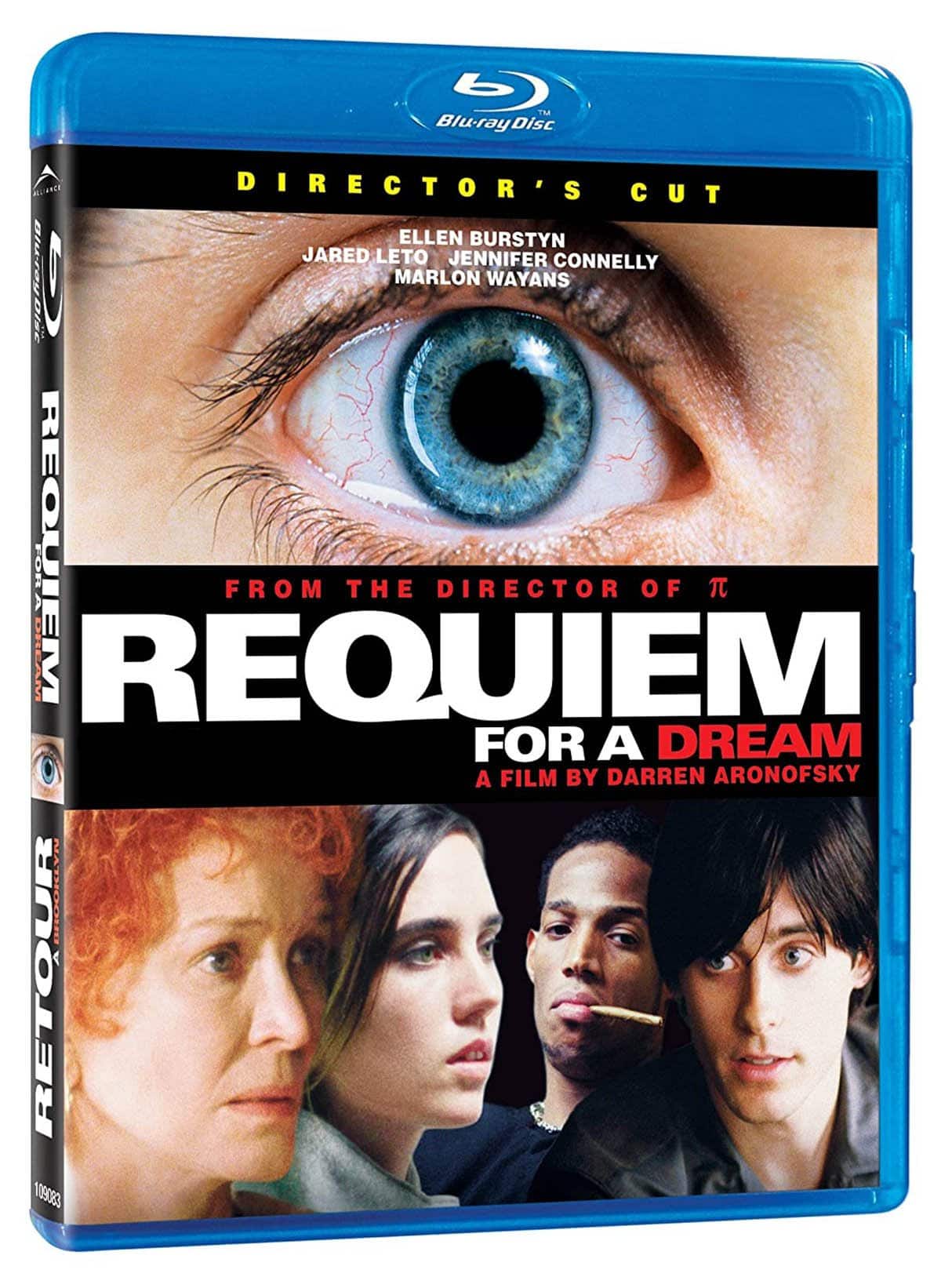
 Most viewers feel that Requiem for a Dream is either a gut-wrenching, formally adventurous masterpiece or an ugly, flashy piece of empty-headed propaganda. Thing is, both camps are sort of right. Darren Aronofsky’s sophomore feature is undeniably accomplished, fully realized in its single-minded, fearless intensity, but it’s also, quite frankly, pretty melodramatic and dumb. Requiem for a Dream is an uncompromised, relentless descent into hell with just one thing on its mind: Drugs are really, really bad for you.
Requiem for a Dream is also the film that firmly established Aronofsky as a primarily visual filmmaker. His 1998 feature-length debut, Pi, was stylish but empty; later, he would elevate The Fountain’s philosophical hooey through sheer operatic force of will and The Wrestler’s solid but rote script through an expressive and soulful appropriation of the Dardenne brothers’ close-up tracking shots. If those later films are more successful than his second feature, it’s because their material could be elevated by style. In Requiem for a Dream, there’s nothing going on but style, and ultimately, that just isn’t enough.
For a while, though, it almost is. Requiem for a Dream’s first 30 minutes are some kind of tour de force, exploding out of the gate as the expression of a unique cinematic voice and introducing the stylistic techniques that structure the entirety of the film. Establishing Requiem for a Dream’s parallel editing schema, Aronofsky and editor Jay Rabinowitz cut between its central characters—Sara Goldfarb (Ellen Burstyn), her junkie son, Harry (Jared Leto), and Harry’s best buddy, Tyrone (Marlon Wayans), and girlfriend, Marion (Jennifer Connelly)—and their respective drugs of choice: heroin and ecstasy for Harry and Tyrone, heroin and cocaine for Marion, and sugar, television, and, eventually, amphetamines for Sara.
Utilizing an entire stable of visual tricks, from split-screens to slow- and fast-motion to rhythmically repeated inserts, these early moments are an exciting and purely cinematic experience. One scene, in which a moment of tenderness between Harry and Marion is presented through split-screened close-ups, may be the finest sequence of Aronofsky’s career, exquisitely expressing the characters’ intimacy as well as their fundamental distance.
Taking place over the course of one year, structured into four chapters tied to the seasons, the film starts bleakly and just gets bleaker, and as it progresses these stylistic decisions start to feel more and more oppressive. This is obviously by design, but there are only so many times you can show the effect of cocaine through fast motion or mental deterioration through fish-eye lenses before the techniques start to feel less expressive than lazy and obvious—crutches for a filmmaker who used up his entire bag of tricks in the first 30 minutes.
Narratively, as Requiem for a Dream spirals toward its nightmarish finale, things start to get so melodramatically awful for the characters that the film starts to seem like a modern-day equivalent to Reefer Madness, never so much as in the ugly way it introduces the character of a black drug dealer, Big Tim (Keith David), solely to exploit audience disgust at seeing a white woman taken advantage of by a black man. And no matter how relentlessly upsetting and effective Requiem for a Dream’s climax is—and it is effective, a self-contained masterpiece of aggressive cross-cutting and sound design—by that point it’s almost impossible to shake the image of Aronofsky as a gym coach hysterically lecturing his class on the dangers of drug use. Sorry, but this reviewer got enough of that in high school.
Image/Sound
The Blu-ray transfer is a faithful presentation of Aronofsky’s visual strategies, preserving the grain and maintaining his images’ steady descent into unpleasant griminess. Still, this has some downsides; image clarity occasionally suffers, and edges are frequently soft in a way that doesn’t always seem intentional. Sound, on the other hand, is consistently strong, providing a showcase for the film’s relentless sound editing and Clint Mansell’s remarkable score.
Extras
No additions have been made to the standard-definition release’s stable of extras, but that was already a pretty strong set. Aronofsky turns in a commentary track, as does director of photography Matthew Libatique; Aronofsky’s is more entertaining and engaging, but Libatique’s is good listening for those interested in technical issues. The making-of documentary is ugly as sin but features a lot of footage focusing on how Aronofsky achieved his showy visual effects. Ellen Burstyn hosts a 20-minute interview with author Hubert Selby Jr., on whose novel the film was based (and who collaborated with Aronofsky on the screenplay), that gets into the man’s somewhat unsettling psyche. Other features include nine deleted scenes of varying quality presented with optional director commentary, as well as trailers and promotional television spots.
Overall
Doesn’t demand an upgrade for those who already own the standard-definition release, but the Blu-ray release is nevertheless an improvement in the presentation of Aronofsky’s horrific vision. Whether that vision adds up to anything will be for the viewer to decide.
Since 2001, we've brought you uncompromising, candid takes on the world of film, music, television, video games, theater, and more. Independently owned and operated publications like Slant have been hit hard in recent years, but we’re committed to keeping our content free and accessible—meaning no paywalls or fees.
If you like what we do, please consider subscribing to our Patreon or making a donation.