
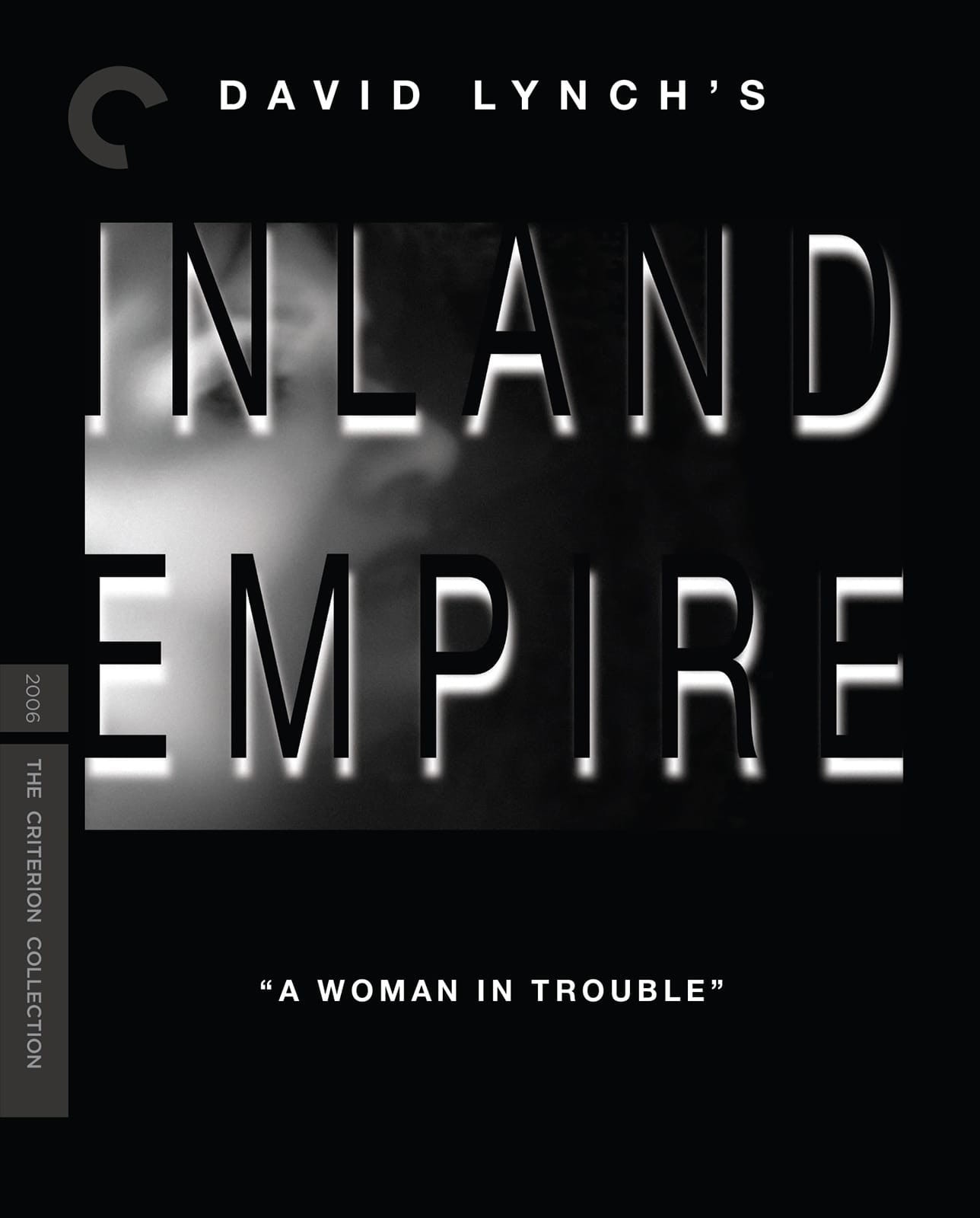
 David Lynch’s Inland Empire is many things, among them a sinister waltz through a SoCal underbelly, a murder mystery, a film-within-a-hallucination-within-a-film-within-so-on, and the story of love affairs that span the boundaries of time, space, and reason. It is happening again, you may think—or dread, as Lynch has his haters: a redux of Mulholland Drive, which in the end is only half true.
Perform a post-mortem on this three-hour beast of a film and you will find only half a heart beating inside its chest, but you will also discover innards that coil in more grandiose directions. Mulholland Drive, possibly the greatest work of American film art since Nashville, is an impossible act for Lynch to have to follow, but the bug-eyed director—pupils dilated and imagination tripping in almost inconceivable directions—has made the Atlas Shrugged of narrative avant-garde films, compulsively watchable and insanely self-devouring.
Seeing Inland Empire early on a Sunday morning for the first time wasn’t unlike slipping into a nightmarish reverie not long after my equally prolonged adventures in REM sleep the night before, which, incidentally, accommodated a screening of a Lynch movie that was not at all similar to this extraordinary freak-out. There’s a very clean divide in Mulholland Drive between a woman’s dreams and waking life, but the walls between the two are completely dissolved in the more fragmentary Inland Empire, Lynch’s most self-reflexive creation to date.
Lynch has vowed never to work on film again, and for this, his first feature shot on digital video, he lobs a cherry bomb at his entire canon, recording the jagged remnants that resonate from the blast as they slide and dissipate into the swirl of his mind’s projector beam. Some may call it a toilet, but I like to think of it as a splendiferous whirlpool of wonders.
Where to begin? At the end, perhaps, with the word “sweet,” Inland Empire’s answer to Mulholland Drive’s “silencio,” though sweetness isn’t something that Inland Empire exactly radiates. Much earlier, a nosy neighbor played, at once hilariously and unsettlingly, by Grace Zabriskie walks into the home of an actress, Nikki (Laura Dern), in order to rant and rave about the younger woman having “it”: the part of Sue in a remake of “a Polish gypsy story” titled 4/7.
That film was never finished because two of its actresses were murdered (the American version goes by the Sirkian title On High in Blue Tomorrows). Zabriskie’s nosy interloper, like Lee Grant’s Louise Bonner from Mulholland Drive, ostensibly sees into the future, offering an implicit warning—to Nikki and, by extension, Lynch’s audience—that time is about to collapse on itself, leaving identities crushed and blurred almost beyond recognition.
Inland Empire weirdly, eerily, insanely picks up reception from metaphysical wavelengths past and present and places here and there, sometimes from Lynch’s own short work. The story’s hilarious depictions of white-trash home life are essentially live-action variations of the director’s Dumbland series, and Rabbits, an anthology of shorts starring Laura Harring, Naomi Watts, and Scott Coffey as sitcom rabbits possibly waiting for Godot, is fascinatingly folded into this film’s metaverse. This time, however, when the rabbits’ phone rings there’s someone on the other end, and when their door opens someone walks through.

From her own den of frustration, a woman—Nikki/Sue’s 4/7 proxy, and ours—watches Rabbits, whose canned laughter undermines her fit of busy tears. These shorts act as one of many exciting portals in the film through which characters cross between worlds, and what is Inland Empire in the end but a hall with walls equipped with barbed rabbit holes, each one daring us to peek through, possibly even to take a plunge into the sea of Lynch’s id?
You may ask what the film’s seemingly endless stream of non sequiturs, anecdotes, clues, doublings, folk tales, and psychotic episodes mean. We could say nothing and declare that Inland Empire doesn’t so much fall into the abyss as it resides in it, telegraphing dizzying sounds and visions from its drowned world toward the outside, which should suffice as an explanation if you’ve learned to respect the fact that Lynch carves his films much closer to where our subconscious impulses resonate from than any other artist has ever dared.
Lynch, more so than Godard, embraces the dark, dingy contours of the DV format, which reflect Nikki’s in-too-deep thesping. She goes after her married co-star, Devon (Justin Theroux), thinking he’s really Billy, the character he plays in On High in Blue Tomorrows, screaming for him not unlike Irene Miracle does when she flashes Brad Davis her breasts in Midnight Express, only to finally confuse her own self. Nikki is Sue and Sue is Nikki and never shall the two part—and realizing how they inhabit and torture each other may just save the world.
Lynch indulges familiar fixations, risking the self-importance of the “Mirror, Father, Mirror” short film that Illeana Douglas’s character screens for her class in Terry Zwigoff’s Ghost World, but he’s serious about burrowing into Sue’s psyche and tapping its resources. And through it all, Dern works fiercely with the director to send us blistering imprints of how Nikki’s consciousness filters itself into her unconsciousness and then back again, and together they weave a meditation on the ecstasy and healing power of watching movies.
Dern’s is the performance of her career, a spectacle of freakish facial expressions, primal screams, and howling monologues. And like Watts in Mulholland Drive, she isn’t afraid to get ugly for her art, which also happens to be what informs Sue’s own artistic daring. She’s a mess of hurt trying to find herself, but what she ultimately stumbles upon, like Watts and Harring do inside the club Silencio, is a form of rapture that permits others to transcend loss.
Image/Sound
It goes without saying that, when it comes to the age-old question of whether or not the will of the artist supersedes historical accuracy, the Criterion Collection is very much on the side of David Lynch. News of Inland Empire’s restoration last year was met with concern by a very small group of people. One Twitter thread, in fact, convinced some that the Absurda DVD edition of the film is the only “authentic” way to experience it on home video.
This release, which includes notes about the restoration in the accompanying booklet, is of the “just the facts ma’am” variety, and you may not realize just how “magical” the work is that was put into the restoration unless you play the Absurda DVD immediately after. Skin tones are healthier and fuller, but the most noticeable and significant improvement is in terms of color balance and saturation, revealing so much more visual information in the images and without compromising Inland Empire’s low-res, subterranean power.
The disc also comes with 5.1 surround DTS-HD Master Audio and uncompressed stereo soundtracks, newly remastered by David Lynch and original rerecording mixers Dean Hurley and Ron Eng. Inland Empire remains a front-heavy experience on the audio front, with little in the way of surround action, but the overall presentation is noticeably more stable, effectively bass-heavy where it counts and very clean during the explosions of music.
Extras
Most of the extras here will be familiar to those who own the Absurda DVD or count themselves as even casual fans of Lynch’s work, including 70-plus minutes of extra scenes (titled “More Things That Happened”) and Lynch’s short film Ballerina. (Sadly missing, though, is the video of Lynch making quinoa.) In addition to the behind-the-scenes reel LYNCH2 by blackANDwhite that was included on the earlier DVD, this disc includes blackANDwhite’s feature-length documentary from 2008 titled LYNCH (one), which was compiled from over two years of footage and, alongside Catching the Big Fish: Meditation, Consciousness, and Creativity, is a pretty comprehensive and enticing window into Lynch’s working methods.
Newly recorded for this release is a 30-minute conversation between Laura Dern and Kyle MacLachlan that’s as warm and inviting as you may expect. Both reminisce about the times they’ve collaborated, together and separately, with Lynch, beginning with Blue Velvet. Dern discusses Inland Empire’s piecemeal shoot and Lynch’s “For Your Consideration” campaign on her behalf and how it went viral, while she and MacLachlan extol Lynch for his ability to consistently offer them “nets” throughout their collaborations.
Elsewhere, Lynch is glimpsed reading excerpts from Room to Dream, his 2018 memoir-slash-biography with critic Kristine McKenna. Rounding out the extras are Inland Empire’s trailer and excerpts from Richard A. Barney’s book David Lynch: Interviews.
Overall
Restored last year under the supervision of David Lynch, Inland Empire retains its low-res, subterranean power on Criterion’s Blu-ray release.
Since 2001, we've brought you uncompromising, candid takes on the world of film, music, television, video games, theater, and more. Independently owned and operated publications like Slant have been hit hard in recent years, but we’re committed to keeping our content free and accessible—meaning no paywalls or fees.
If you like what we do, please consider subscribing to our Patreon or making a donation.



Lynch (One) was released after Catching the Big Fish, no?
Please don’t put charlatan and fraud Ayn Rand anywhere near the majesterial David Lynch
“Nikki/Sue’s 4/7 proxy, and our’s”
ours* (no apostrophe)