
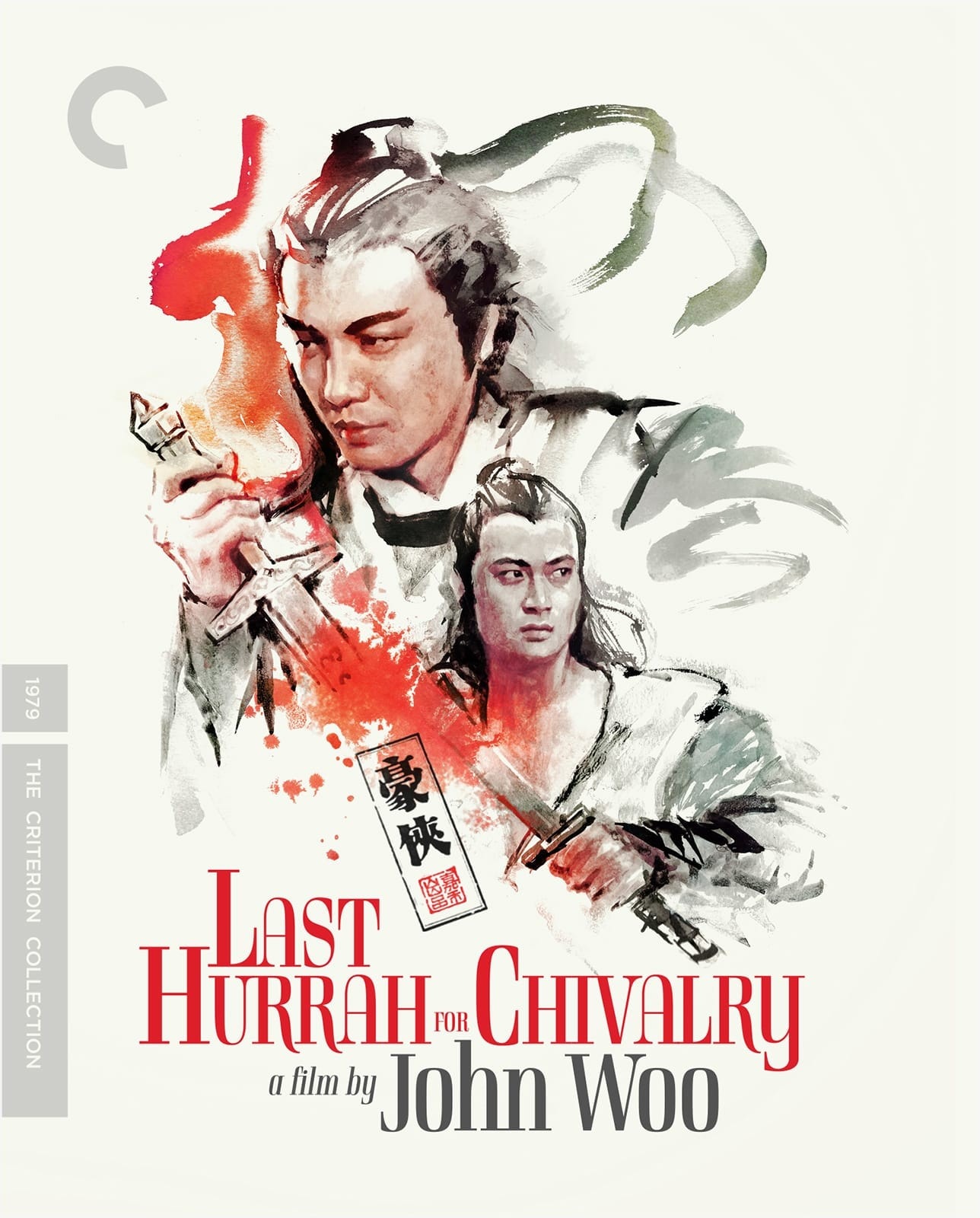
 John Woo’s Last Hurrah for Chivalry opens in customary fashion for a late-’70s wuxia film, in this case with an evil kung-fu master, Pak (Hoi Sang Lee), crashing the wedding of a wealthy scholar, Kao Pang (Lau Kong), slaughtering guests and leaving Kao desperate for revenge. Unable to confront the warrior himself, Kao ultimately hires two mercenaries, Chang San (Wai Pak) and Tsing Yi (Damian Lau), to fight his battle for him. But from this basic setup spirals a tale filled with deceit as Kao soon reveals himself to be a venal, bloodthirsty social climber who will kill anyone to solidify his rise in position, including attempts to sic each of his hired swords on the other.
Stylistically, Last Hurrah for Chivalry bears more similarities to the harder-edged wuxia films of Woo’s mentor, Chang Cheh, than his own later, more distinctive work. While there are plenty of camera movements (all performed on dolly tracks or cranes), non-action shots have the static quality of Hong Kong fare from this period. Woo’s trademark use of slow motion appears only in primitive form, and there’s an occasional stiffness to the manner in which the camera pans and tilts with the swings and stabs of weapons that betrays the director’s greenhorn inexperience.
Still, Woo’s innate command of spectacle is evident in the remarkable variety in the film’s many, many action scenes. There are massive battles with multiple planes of distinct combat captured in wide master shots; comical interludes that make clever use of set layouts and décor to both guide and disrupt the choreography; and intense mano-a-mano duels whose intricate timing Woo films with long takes that anticipate some of his more audacious single-take achievements in later work like Hard-Boiled. Not yet a master, Woo here nonetheless demonstrates far more than mere potential as he starts to lay the foundations for his breakout successes.
Likewise, his approach to Last Hurrah for Chivalry’s story hints at the themes that would set the template for his brand of “heroic bloodshed” films wherein men whose ruthless violence is held in check by a strict sense of personal morality. Chang San and Tsing Yi don’t meet until the film’s second act, but their swift recognition of each other’s fundamental sense of honor bonds them so quickly that when Kao attempts to turn them on each other, each man refuses to harm his new brother. This leads to a climax that features the martyrdom that defines many Woo films, but also an underlying optimism that’s a crucial feature of his blood-soaked melodramas, one that celebrates that a good man would rather die than betray his code.
Image/Sound
Sourced from a 2K restoration, Criterion’s transfer highlights both the pleasures and limits of the soundstage-shot wuxia. Detail is sharp in all instances save those where the camera itself clearly lost focus, and the occasional bursts of color in the form of florid robes and, more commonly, splashes of stage blood pop from the generally neutral tones of painted backgrounds.
The disc comes with two Cantonese tracks (a 5.1 surround DTS-HD Master Audio mix and the original uncompressed monaural mix) and two English-dubbed tracks, which also offer the choice between playing the film’s songs with their original Cantonese lyrics or with their instrumental versions. Each of these tracks sounds clear, though the English dubs have a slightly tinny quality reflective of the lesser care taken in recording those tracks. The 5.1 remix ably distributes sound effects across all channels, though the limits of the original mono can be heard in a handful of moments where one channel suffers a split-second drop-out.
Extras
In a brief 2004 interview, John Woo shares his memories of making the film and his homages to Chang Cheh and Akira Kurosawa. Criterion includes a new interview with author and critic Grady Hendrix, who places the film within the broader context of Woo’s career and discusses the Eastern and Western cinephilic influences that shaped the director. Surprisingly, the most substantial extra here is the booklet essay by film scholar Aaron Han Joon Magnan-Park, who not only goes above and beyond in breaking down the film, but offers an overview of the cinematic and literary traditions of wuxia, Woo’s early career, and the seeds of his later work in the themes and aesthetic methods found in Last Hurrah for Chivalry.
Overall
Criterion’s presentation of John Woo’s promising, sporadically brilliant early feature offers a pristine window on a future master learning his craft.
Since 2001, we've brought you uncompromising, candid takes on the world of film, music, television, video games, theater, and more. Independently owned and operated publications like Slant have been hit hard in recent years, but we’re committed to keeping our content free and accessible—meaning no paywalls or fees.
If you like what we do, please consider subscribing to our Patreon or making a donation.


Interesting, but all I really want is a true 4K Criterion release of Hard Boiled.