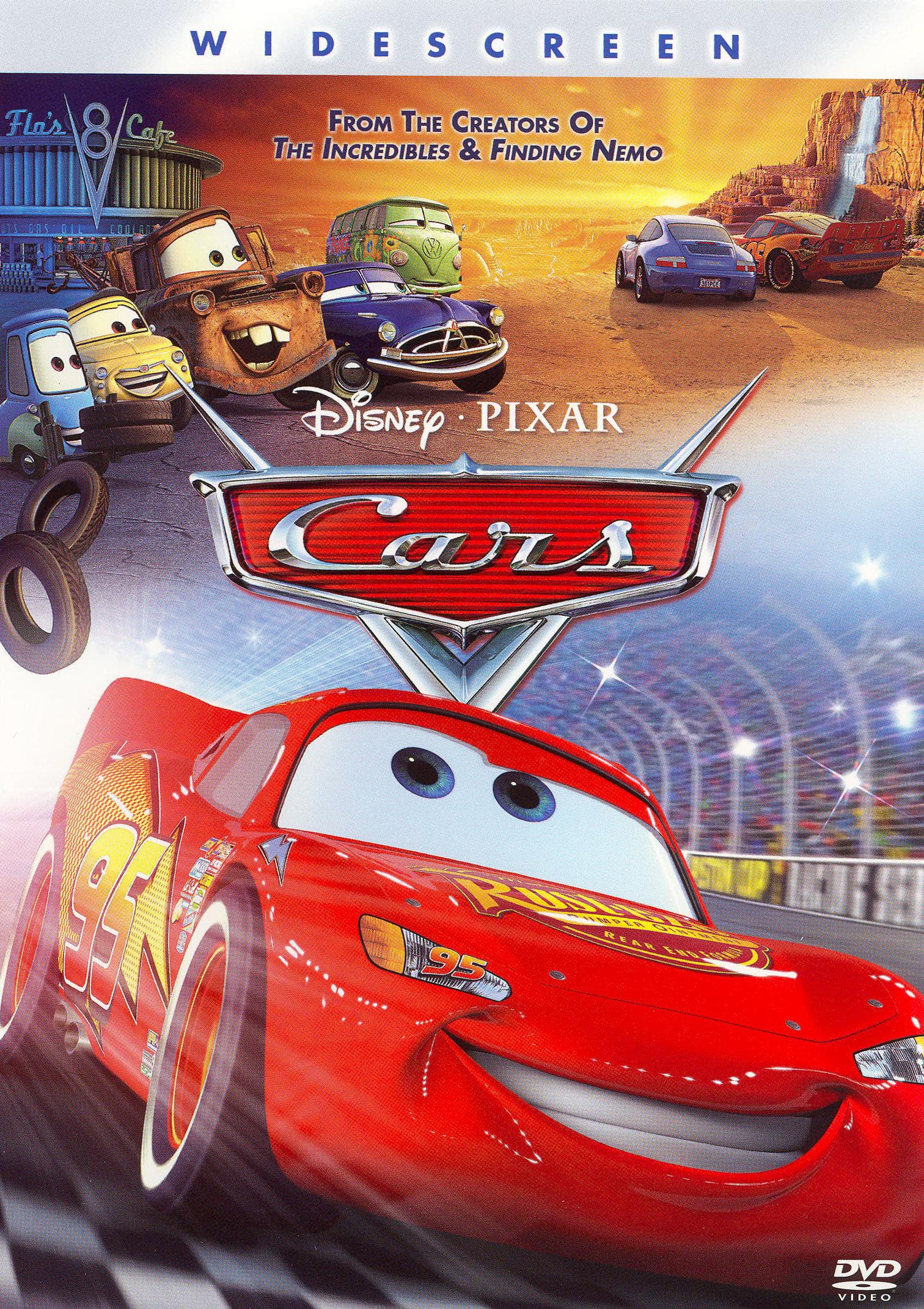
 Though an intrinsic part of NASCAR’s appeal involves witnessing horrific high-speed pile-ups, there’s little enjoyment to be had in watching Pixar—after a decade-long run of producing superlative children’s films—suffer its maiden (albeit minor) wreck with the second-rate Cars. The first feature helmed by Pixar founder John Lasseter since 1999’s classic Toy Story 2, this anthropomorphic automobile adventure turns out to be, strangely enough, a spiritual remake of the Michael J. Fox vehicle Doc Hollywood.
Cars charts the maturation of narcissistic stock car rookie Lightning McQueen (Owen Wilson) after he’s delayed during his trip to a California championship race in the quaint, forgotten Route 66 town of Radiator Springs. It’s there that he meets a hodgepodge of vehicles whose exteriors match their interiors, including a hippie VW van (George Carlin) and a militant army jeep (Paul Dooley), and undergoes an uncomplicated transformation from materialistic, self-involved jerk to noble role model with the help of a crotchety Hudson Hornet (Paul Newman), sexy Porsche (Bonnie Hunt), and hillbilly tow truck (an amusing Larry The Cable Guy).
Despite the fact that their expressiveness is constricted by their physical limitations (i.e., no useful appendages, only one bodily position), the film’s four-wheeled protagonists suggest Matchbox toys sprung to life, their shiny chassis and vigorous velocity helping to partially distract attention away from their insanely creepy tongues (which floppily protrude from their mouths in a manner apt to give small tykes nightmares). But the film’s aesthetic magnificence ultimately comes less from its cute yet unengaging character models than from its panoramic settings and backgrounds, which exhibit a stunning level of near-photorealistic precision.
Related Story
Every Pixar Movie Ranked
In both its breakneck, speedway-set opening sequence and its sweeping shots of rocky desert plains and lush wooded countryside, Cars provides a wealth of crystal-clear textures, brilliantly reflective lighting effects, and naturalistic environmental details (especially with regards to foliage and water) that help to establish a new benchmark for seamlessly synthesizing imagery that’s both authentically lifelike and playfully cartoonish. Nonetheless, whereas the film’s artistry is often awe-inspiring, its dawdling, unfunny 116-minute story stalls at nearly every turn, peddling morals about community, teamwork, and altruism in a ho-hum fashion while also proffering tired, red state-pandering rural-versus-urban hogwash.
From Radiator Springs’s neon-lit architecture to Lightning’s eventual retro detailing, the filmmakers indulge in gooey nostalgia for a mythic Leave It to Beaver version of the ’50s. That is, when life was simple and people were there for one another (no mention of whether black cars were allowed to make pit-stops in this idyll), the predictable flipside to such hooey being a characterization of the modern world as crass, cutthroat, and corrupting.
Cars’ story is a hoary romanticization of all things rustic (and implicit critique of many things contemporary) that, in its schematism, comes off like a thinly veiled Hollywood olive branch extended toward conservative heartland inhabitants. Musty, corny, and largely devoid of any enchanting magic, it’s also the pioneering Pixar’s first effort that, trailblazing technical virtuosity be damned, feels disappointingly regressive.
Image/Sound
There’s lots of color pumped into every frame of this film, especially during those racing scenes where the audience in the crowd appears as a vast tapestry of flashing lights not unlike a Jackson Pollock drip. The disc reproduces those colors impeccably but not without the occasional artifacts (note the greenish dots on Lightning McQueen’s hood) and lines across some surfaces. The audio’s bass levels are stunning and the surround is dynamic without ever sounding bombastic.
Extras
Commercials on television tell us that Walmart is getting exclusive rights to a two-disc edition of the film. That means those without licenses will have to settle for this single-disc edition, which includes two shorts (Master and the Ghostlight and the Oscar-nominated One Man Band), four incomplete deleted scenes, a bunch of previews, and a sweet featurette (“Inspiration for Cars”) that pays reverence to the real Route 66 towns cut off from the world by the expansion of our nation’s super highways. John Lasseter also explains that the film is a merger of his fondness for his mother’s artistic sensibilities and his father’s love of cars.
Overall
A sweet film, but those who don’t shop at Walmart will get the short end of the stick in the features department.
Since 2001, we've brought you uncompromising, candid takes on the world of film, music, television, video games, theater, and more. Independently owned and operated publications like Slant have been hit hard in recent years, but we’re committed to keeping our content free and accessible—meaning no paywalls or fees.
If you like what we do, please consider subscribing to our Patreon or making a donation.