Team Ninja’s Nioh 3 opens with a slightly confusing tutorial that may leave you wondering why you’d want to keep playing. In some ways, the problem is even more exaggerated than it was in Wo Long: Fallen Dynasty. That game’s first boss fight was frustrating, but it was also more climactic than the stubborn roadblock of a duel that awaits you here. But if Nioh 3’s first steps are more awkward than its predecessor’s, then the strange, dense, quasi-open world action RPG it blossoms into is more compelling than that game’s compact, knotty levels.
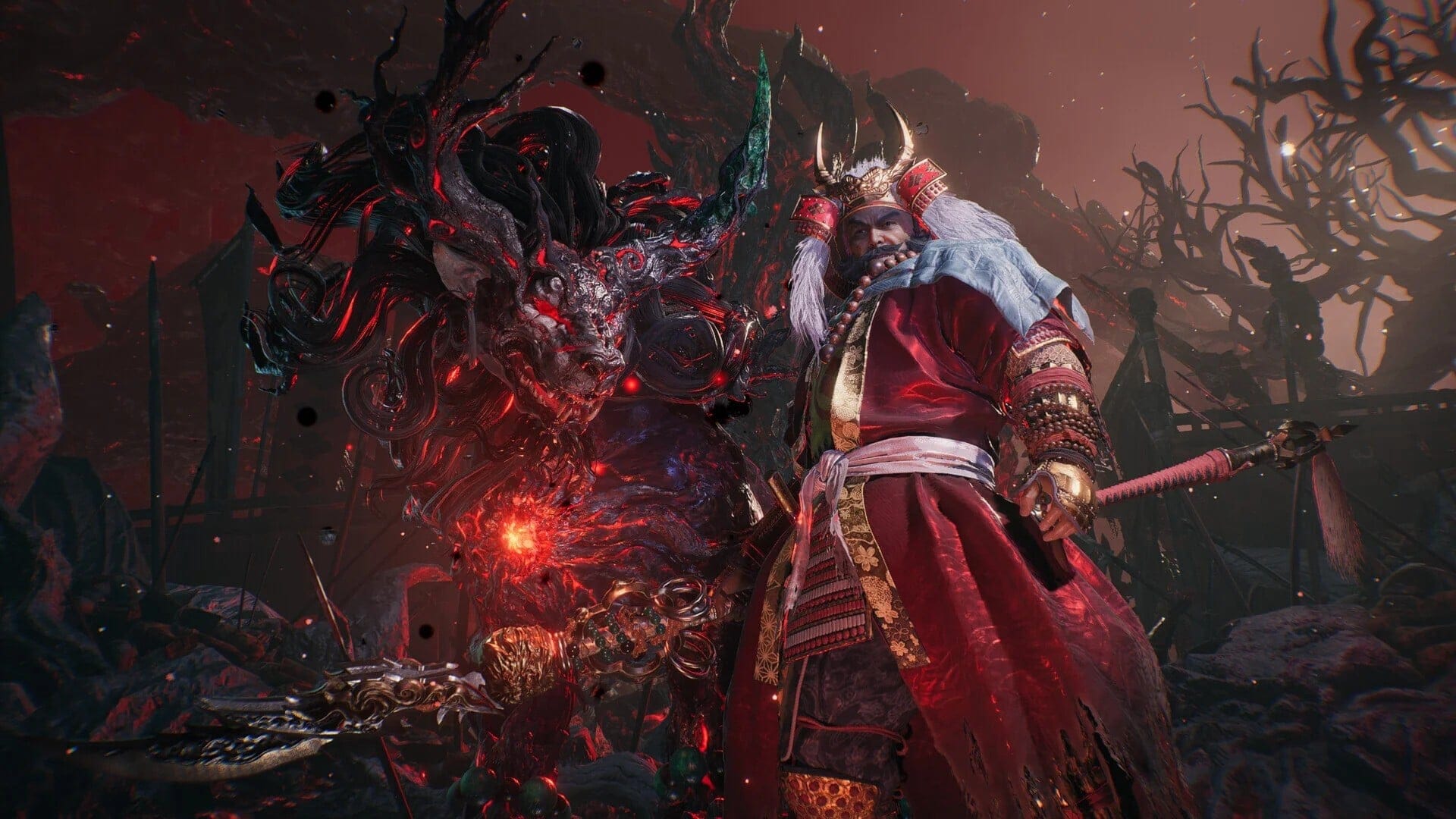
The main thing that sets this game apart from other Nioh titles, Souls-likes, or pretty much any other RPG is its dual class system. Effectively, Nioh 3 has you building two different classes at once, which you can swap between on the fly with the press of a button. Samurai Mode requires judicious management of stamina and the juggling of three separate fighting stances, while having slower attacks and stronger blocks. Ninja Mode is generally faster and more nimble, dealing more damage to enemies’ backs and opening up an array of ranged attack options.
Enemies will also sometimes use special attacks that can be parried with a perfectly timed switch. This stuns enemies while also granting a bit of healing (both of which can prove pivotal in the game’s demanding boss fights). The unavoidability of this mechanic might be divisive, and no doubt it can pose an intimidating challenge, but if you embrace it fully, the resulting combat takes on a fluid and unpredictable shape, the learning of which is immensely rewarding.
And for one more layer of complexity, Nioh 3 lets you sort weapons into a couple dozen different types, from hulking ōdachi to lightning-fast dual claws to throwable dual axes. Each weapon comes with its own moveset that grows and evolves with time, as points can be assigned to weapon class-specific skill trees that unlock a bevy of customizable skills, making each class something that requires more than a little determination to master.
The world here is made up of large, connected open areas, though you will also sometimes be funneled into more linear sections. These areas are dotted with enemies, randomized gear, and incremental upgrades, but their most notable points of interest are enemy encampments. (These come in a variety of shapes and sizes, and they incentivize you to look carefully for advantageous situations to exploit and attack.) This turn toward openness isn’t exactly earthshattering for the Nioh series, and the creativity it encourages may be limited, but it’s a pleasant refresh. And the option to poke around in a few different directions helps to lessen the frustration that can come with repeated defeats at the hands of the game’s many deadly enemies.
These enemies are also a real highlight, both for the way they fight and for the simple fact of their appearance. Like Nioh 3’s environments, these foes (most of which are based on Japanese yokai) are gnarled and grotesque. They often fight in ways that are reflective of their darkly cartoonish appearances. In a delightful twist, plenty of them are also rather silly, like the floating ghosts that fake you out with slow, exaggerated swoops and pirouettes, or the tiny demons with heads that grow so big they topple over when they attack. They can also be surprisingly intelligent, often cannily avoiding attacks and waiting out parries.
With so many Souls-like action RPGs being released at a steady clip, there seems to be an imperative, fair or not, for each one to justify its own existence. It’s not like we’re at a shortage of From Software-produced options as it is, and these remain the standard by which their would-be peers are measured. So with every new release the same question arises: “What makes this one worth my time?” But with its exceptionally detailed craftsmanship and an irresistible conceptual twist, Nioh 3 doesn’t let the question linger for very long.
Since 2001, we've brought you uncompromising, candid takes on the world of film, music, television, video games, theater, and more. Independently owned and operated publications like Slant have been hit hard in recent years, but we’re committed to keeping our content free and accessible—meaning no paywalls or fees.
If you like what we do, please consider subscribing to our Patreon or making a donation.