Alex Honnold, the eerily soft-spoken daredevil at the center of the documentary Free Solo, wrote once about the nature of fear when it comes to doing something as clinically insane as climbing a mountain carrying only chalk tied around his waist: “There is no adrenaline rush. If I get an adrenaline rush, it means that something has gone horribly wrong.”
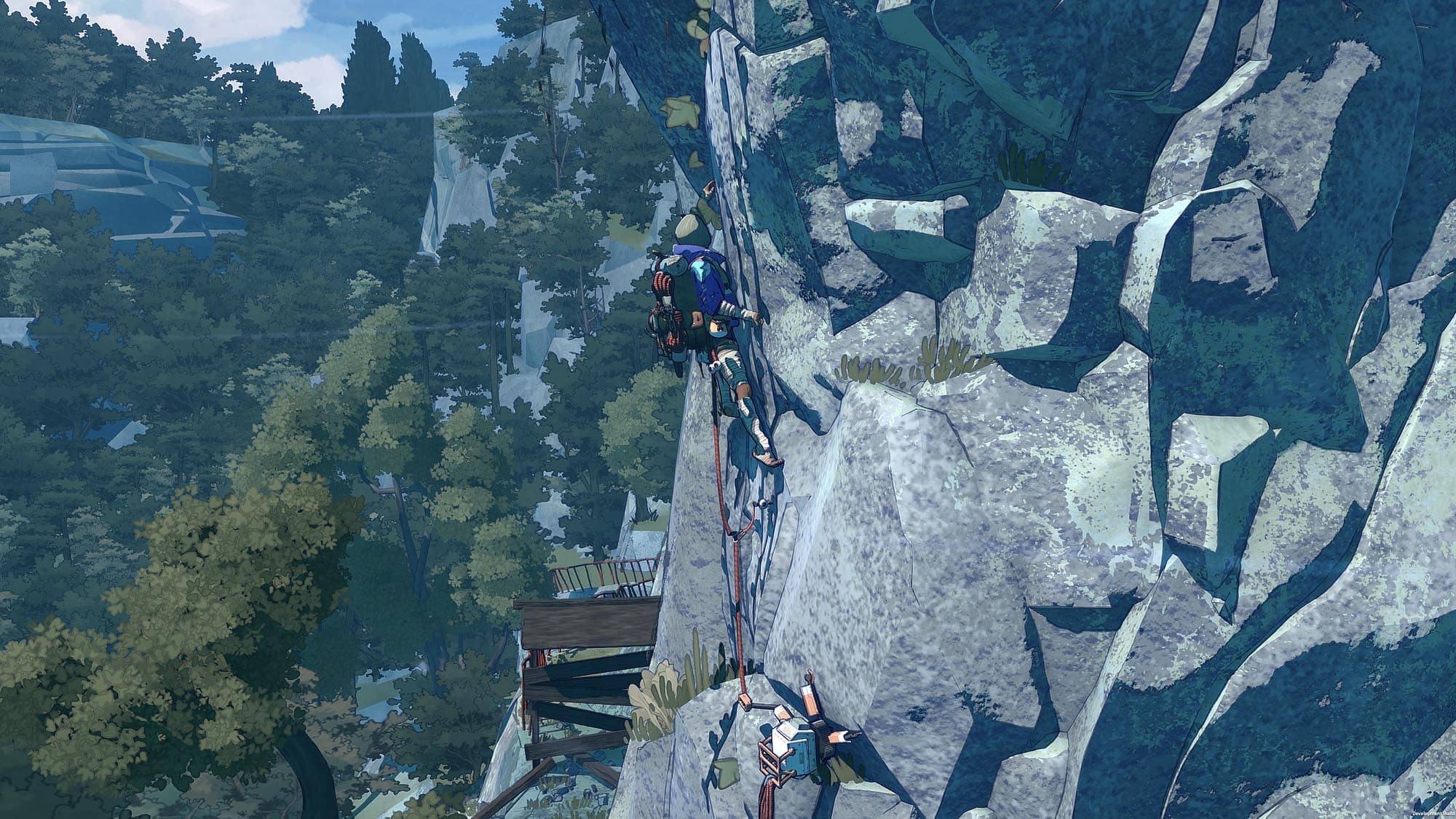
The first time Aava, the supernaturally lithe mountain-climbing protagonist of the Game Bakers’s Cairn, stood too long outstretched in an awkward position, unable to find an inch-wide foothold to keep herself stable, and every nerve in her hands suddenly shook in protest, Honnold suddenly made a hell of a lot of sense to me. If Aava is ever distressed, yelling, shaking, or unsteady in Cairn, something has gone horribly wrong. If you’re at perfect, meditative peace, making every decision in a serene, graceful flow state, you’re doing it right. And make no mistake, for a game about a human being dangling off the side of a widowmaking mountain for over a dozen hours, there’s so much serenity to be had in Cairn.
After a short stint in a training facility at a base camp, Aava steps up to the fictional Mt. Kami to scale it to the top—a feat that, apparently, no other human being has ever done. One button puts Aava in climbing mode when she’s pressed up against stone, at which point the left analog stick controls one limb at a time, and you must choose where to place it while keeping her balanced and supported every step of the climb. Stretch Aava too far and her grip weakens, while a weak foot or handhold will cause Aava to slip. The game forces you to consider Aava’s body in its entirety, and develop an instinct about every step of the journey. Even with the uncanny nature of much of that movement—the strange angles players can contort her into to reach the next foothold—the principle mechanic relies heavily on the deliberate, constant care of Aava’s body.
That happens to include some minor survival game mechanics so players can keep Aava warm, fed, hydrated, and rested along the way. Her ability to perform is hampered should any of those stats falter, but just as in the Game Bakers’s excellent previous title, Haven, there’s no mindless grinding built into that mechanic. It’s all about simple human need, and a massive environment where additional supplies beyond what Aava brings up the mountain may need to be scavenged.
It’s perhaps more accurate to say nothing in Cairn is mindless. Even the process of looking for food and water frequently puts the story of the mountain itself at the forefront. An abandoned tent may have additional food or climbers’ chalk, but also letters to loved ones from previous climbers or handy recipes for nourishing food. An indigenous mountain-dwelling people have recently decided to vacate the mountain, and many of their schools, domiciles, and temples can be reached and explored, and Aava will likely find herself there out of the sheer desperation to find a new source of fresh water. All the while, nearly every resting point gives players the ability to look out onto the horizon, the somewhat simplified cel-shaded art style put to outstanding use, rendering natural phenomena like rainbows over waterfalls and deep orange sunsets beautifully. (The only real bummer is that the game lacks a bespoke Photo Mode.)
If anything in Cairn can be considered truly disruptive to the flow of things, it’s us—or, rather, what the mountain dwellers call “the horizontal world.” Aava’s corporate sponsors constantly send her messages asking for updates, and family members tell her that she’s crazy. Reminiscent of Celeste, Aava’s climb has a deeper, humanist meaning for her, and every interruption of that journey by the world below feels sacreligiously intrusive, and deliberately so in service of the larger, understated plot. But for over a dozen hours, Aava’s task and the player’s pleasure is to let the world below fall away, keep the conversation civil between her and the mountain itself. And whenever there’s an adrenaline rush, you know you’re doing it wrong.
Since 2001, we've brought you uncompromising, candid takes on the world of film, music, television, video games, theater, and more. Independently owned and operated publications like Slant have been hit hard in recent years, but we’re committed to keeping our content free and accessible—meaning no paywalls or fees.
If you like what we do, please consider subscribing to our Patreon or making a donation.