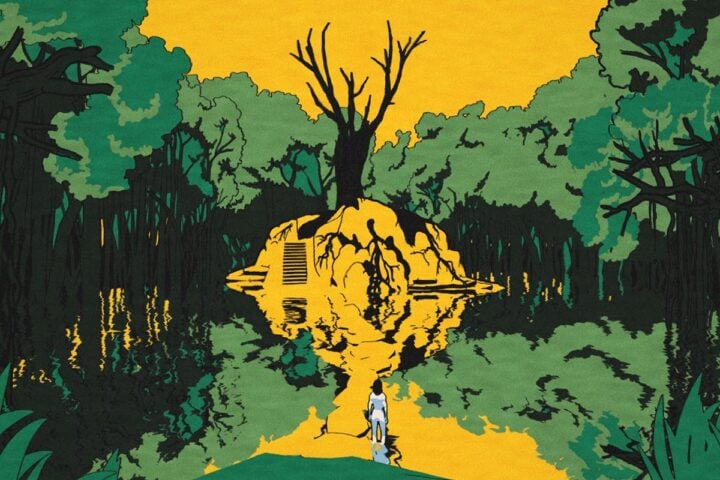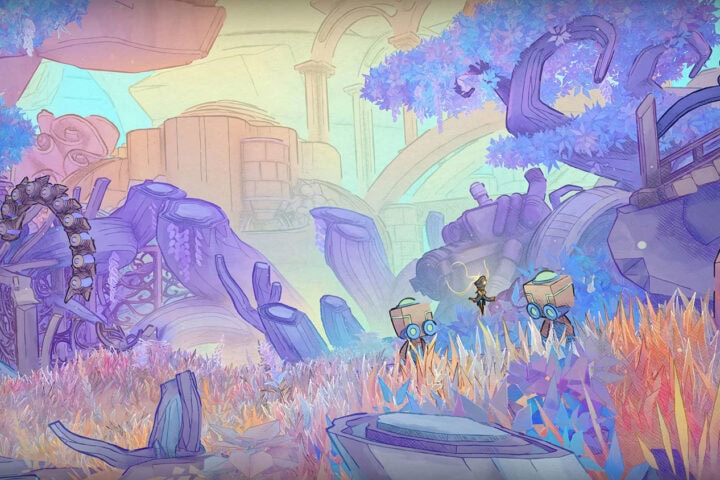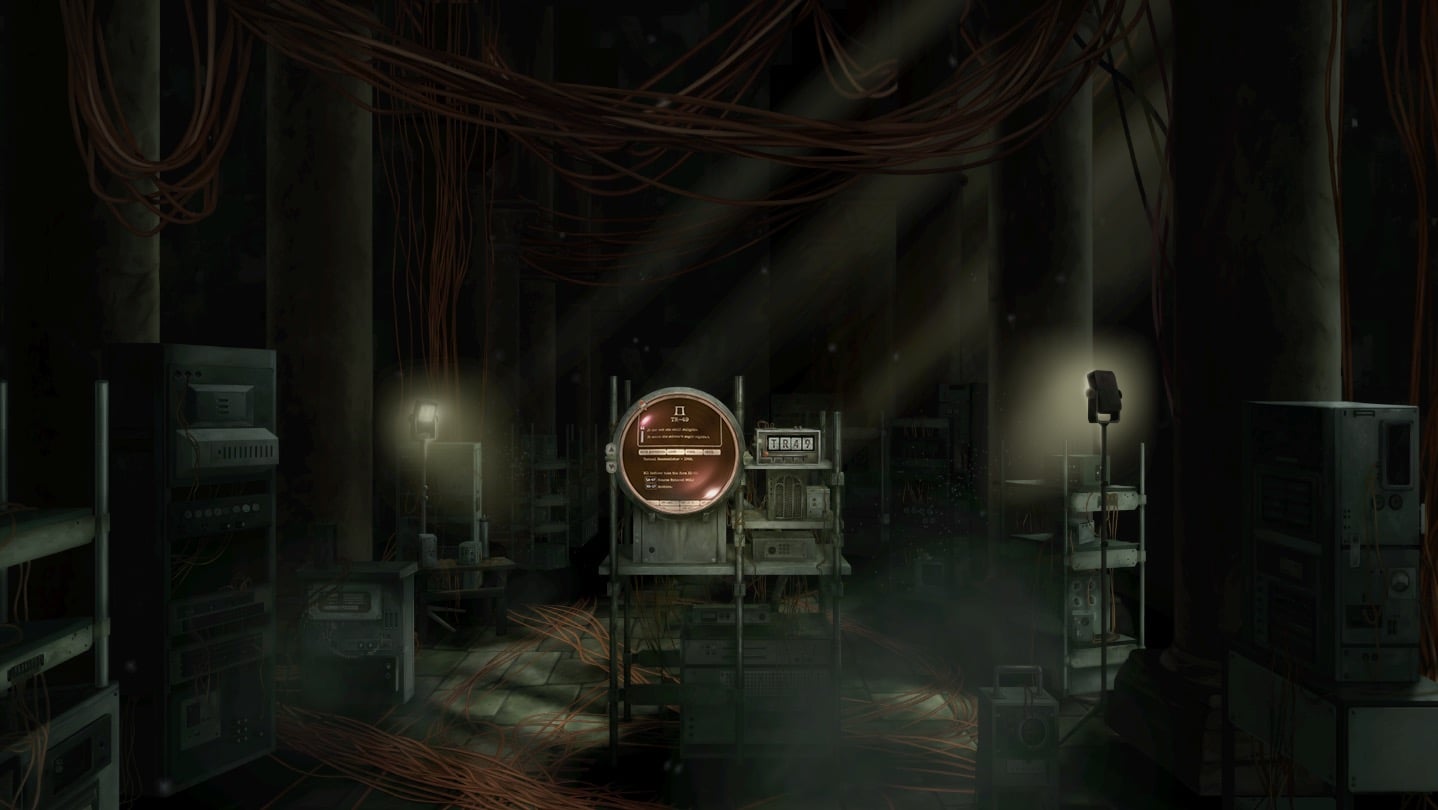
At the outset of TR-49, Abbi awakens in the basement of a Manchester cathedral. Before her is a strange, old-fashioned computer from World War II. Even stranger is the voice coming over an intercom from a man, Liam, telling her that the fate of the world relies upon her ability to somehow operate this device, the TR-49 “textual reassociator.” Your time in the game, the latest from Cambridge-based indie studio inkle, is first spent figuring out how to operate the levers and dials on the device to create alphanumeric codes, like XX-00, that, when correctly combined, lead to catalog cards or execute commands tied to an archive of books.
Other database-driven games, like Her Story and Type Help, tend to offer a bit more direction to the player. TR-49 doesn’t even tell you what you’re looking for at first. This makes for a frustrating first few hours, not only because it’s hard to figure out which authors in the database are important, but because it can be unclear as to whether you’re missing, overlooking, or simply meant to guess at relevant codes. At times, the experience can feel like a catch-22, as the only way to get more information is to discover new cards, but to do so you often need more information. The game’s non-linear structure can also amplify this impression, as you can “spoil” logical setups simply by stumbling upon entries that you hadn’t yet found clues for.
As an example, one of the game’s sources is a multi-volume literary magazine that provides helpful notes on some of the other authors recorded by the TR-49, specifically what they wrote, when it was published, and how it was received. Depending on when you stumble upon the magazine’s two-letter identifier, you may already know how to access the index of all its work. Alternatively, knowing it was published yearly may help you figure out which two-digit identifiers connect to specific issues. But should you overlook any of those pieces, or the note about the magazine not being published during the Great Wars, you might end up ultimately just guessing digits until you find the entry for the issue you’re seeking.
Even at its most random and least urgent, though, there’s always a sense that the game is building to something, and there’s a satisfying payoff as you start to master the computer’s language, using it to unlock additional notes or manipulate the database in intuitive, revealing ways. TR-49 also offers up a rather novel way of keeping you on track. On a second screen, the game records not only the titles and unidentified catalogue cards that you’ll need to match up to complete its core 50-book archive, but also key information about each author that you might have overlooked, as well as slight annotations to point you back toward the sources where that information could be of value in making fresh deductions. In other words, you can try to chart your own path through the database maze or you can use shortcuts to help you navigate.
If you’re in it for puzzles alone, TR-49 will be slightly disappointing. Once you identify an author’s two-letter code, you can, without penalty, brute-force your way through the 100 possible two-digit numbers to pair it with. Furthermore, the “reward” for identifying all 50 texts is essentially a cheat code that explicitly tells you how to reach one of the game’s endings, taking away the satisfaction of piecing together a particular chain of events on your own.
That said, even having certain terms literally spelled out can still spark the joy of discovery as you come to realize the clever ways in which the machine works. More importantly, while TR-49 is billed as the hybrid of a radio drama and narrative deduction, it actually shines most in the ways in which it addresses and celebrates literature itself. Much like Doug Dorst and J.J. Abrams’s S. or Nabokov’s Pale Fire, TR-49 is in dialogue with its own books.
Each card comes not only with a quote from the source, but also a note from the user who fed the source into the machine, and sometimes there are additional margin notes appended beneath those, if you can figure out the code to unlock them. Multiple threads of stories are being revealed simultaneously on every card: a family drama about the TR-49’s creators and their child found in the notes, a wartime drama about the academic writers during the Great Wars, a romantic triangle between three rival scholars, and more. Finding each card is the first step, and reading between their lines to figure out what “DMEs” and “revisions” is another.
The richness of these excerpts make the authors and archivists you learn about feel very real. The choice to mix in real books alongside the ones created for TR-49 also lends an air of credibility to the whole affair. It also serves to make the game’s characters more immediately relatable: from a by-the-books scholar who writes condescendingly about the Bible, to a desperate would-be writer who openly steals from Jane Austen, to an impossible romantic whose favorite novels are Alice in Wonderland and Treasure Island. They don’t just present an overarching series of arguments over the very purpose and place of fiction so much as they embody it. As the game puts it, “The world is the sum of our beliefs,” and in that light, TR-49 becomes a world unto itself, a heartbreakingly beautiful artifact of an alternative history.
This game was reviewed with a code provided by inkle.
Since 2001, we've brought you uncompromising, candid takes on the world of film, music, television, video games, theater, and more. Independently owned and operated publications like Slant have been hit hard in recent years, but we’re committed to keeping our content free and accessible—meaning no paywalls or fees.
If you like what we do, please consider subscribing to our Patreon or making a donation.