There’s an essential Beckettian energy to the Metroidvania MIO: Memories in Orbit. It’s in the way its massive environments work to exhaust Mio, a humanoid robot with golden tendrils for hair, as they search for salvation. Restoring The Vessel, a generational spaceship adrift in space and facing imminent shutdown, may seem initially hopeless, but having lain in ruins for so long, it’s begun to grow new life.
The sentient, stationary, spherical Pearls that maintain The Vessel—named for critical functions like the Eye, the Breath, and the Spine—have run for so much longer than intended that they cannot appreciate these changes. In fact, their mental instabilities have manifested physically across the ship. And yet, they persist. Beckett’s writing in The Unnamable is a fine way to sum up this at once agonizing and amazing adventure: “I can’t go on. I’ll go on.”
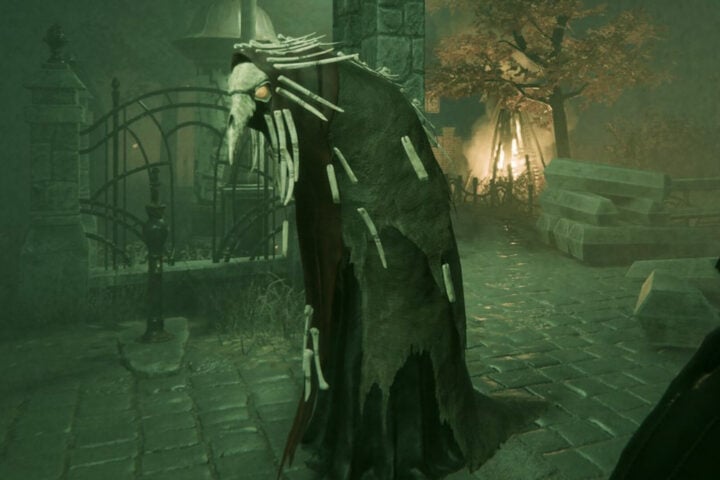
Rich in thrilling platforming elements, MIO is very much in the Hollow Knight mold, requiring you to clamber through the ruins of an ancient civilization with only the vaguest of directions. A map is filled in only when returning to a save point, and bosses brutalize you in unique ways, from an agile, scythe-armed robotic scarecrow to a floating turret that controls the weather.
Your currency, the pearlescent Nacre, is completely drained upon each death. And the hard-earned traversal upgrades to your tendrils—a slingshot-y grappling hook, a surface-scrabbling grip—are useful only in the most perilous of circumstances. So much of the game feels impossibly deadly—corridors of red thorny overgrowths, mazes of explosive mines, gauntlets of angry A.I. guardians—but the rewards for pushing through are so propulsive that it’s hard to truly entertain giving up. Put that into context, then, with the constant question posed by the data logs and robots found throughout MIO: Might it not be worth giving up?

The Vessel’s Heart buckles under the weight of oppressive loneliness, sympathetic tremors echoing throughout the environment. It’s always a deliberate choice to play a game, but MIO really wants you to consider why you’re sticking with it. In fact, it occasionally punishes you for doing so, permanently removing some of Mio’s already limited health bar as time passes.
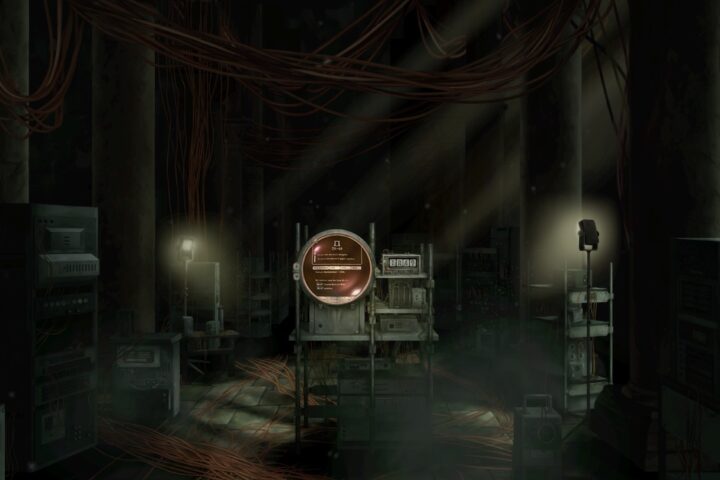
In addition to interrogating the player’s motives, MIO uses its environments to explore each Pearl’s emotional state. The Blood, abandoned so long it forgot what kindness felt like, has shut itself up like Frozen’s Elsa, encasing the once stunning spires of the Metropolis and surrounding living quarters in ice. The Eye, blinded, has turned the Celestial Bay—the former dock and observatory—into an oppressive, gravity-less maze that wends through the never-ending darkness of space. Everything the Hand has discarded over her many fruitless years of tinkering makes its way to the Pit, a colorless maze made out of the broken frames of Mio’s predecessors. No wonder so many of these Pearls welcome the sort of release that you offer.
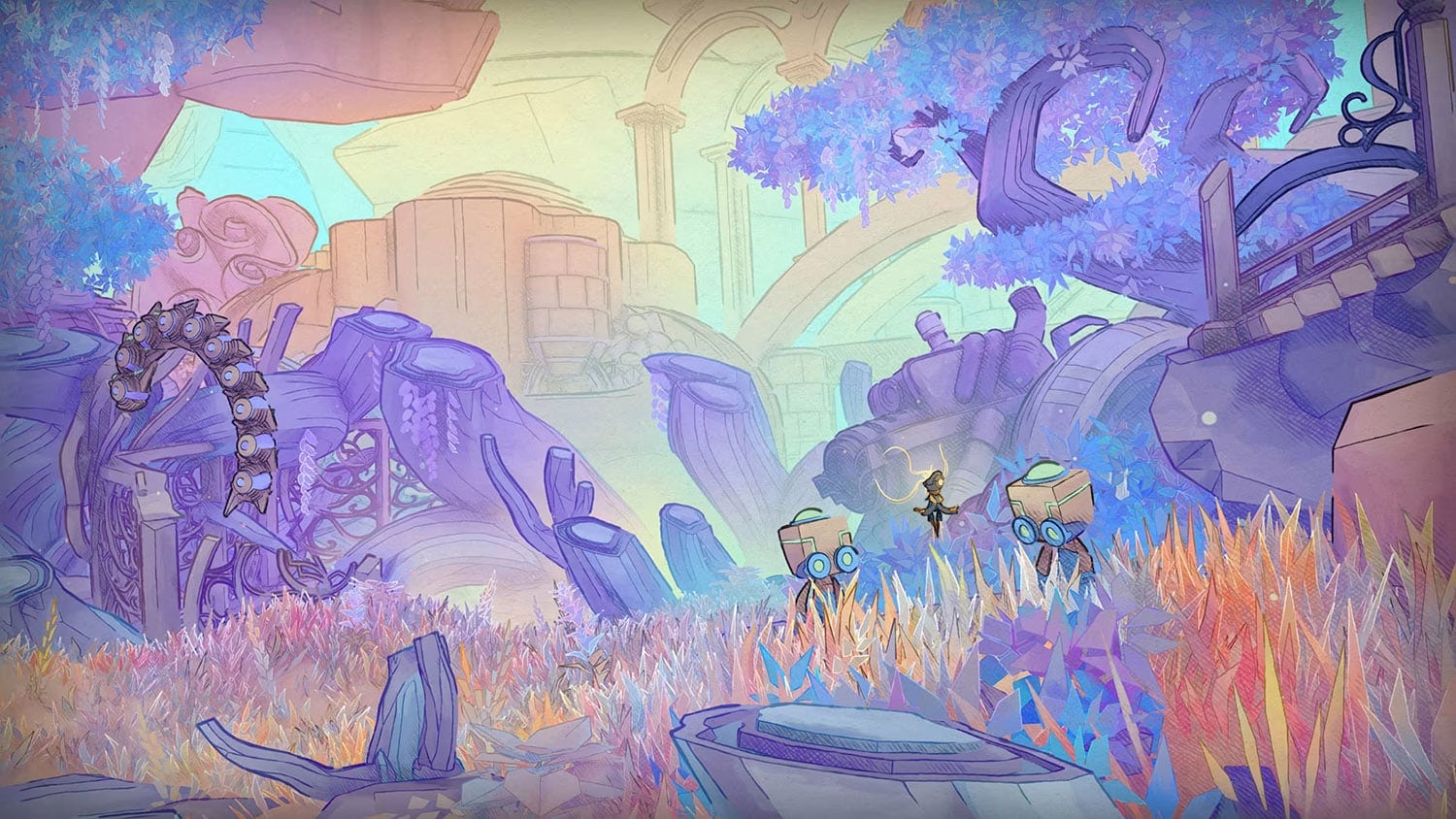
Those feelings are also amplified by the game’s strong art direction and intentionally overwhelming scope. When players first assume control of Mio, they see only a thin stick-figure representation of Mio and the world. As Mio’s awareness grows, an increasing number of details are sketched into the environment; you can see the pencil work, the crosshatching, the sharp contrast between objects in the foreground and their blurrier, less realized backgrounds. When depression flares up, it temporarily overwhelms Mio, draining the color from the world as if going back from a fully inked cartoon to a flat pencil sketch.
There’s a reason Beckett’s estate demands that all productions of his work follow his stage directions to the letter, as they’re as integral to the text as the dialogue. A sense of environmental storytelling similarly drives MIO, justifying the scale of the massive biomes and the sometimes frustrating ways in which you have to backtrack through them. It’s necessary to force players to repeatedly take a minute-long elevator ride into and out of The Vessel’s depths, because it drives home just how big (and how empty) it is. Hopeless as things may seem, even the comparatively small Mio is still capable of carrying a spark of hope.
This game was reviewed with a code provided by Sandbox Strategies.
Since 2001, we've brought you uncompromising, candid takes on the world of film, music, television, video games, theater, and more. Independently owned and operated publications like Slant have been hit hard in recent years, but we’re committed to keeping our content free and accessible—meaning no paywalls or fees.
If you like what we do, please consider subscribing to our Patreon or making a donation.