Each spring, cinephiles turn their attention to Thierry Frémaux, director of the Cannes Film Festival, to learn about where cinema is headed. In 2026, though, the multihyphenate cinematic tastemaker also has something to say about where the art form has been.
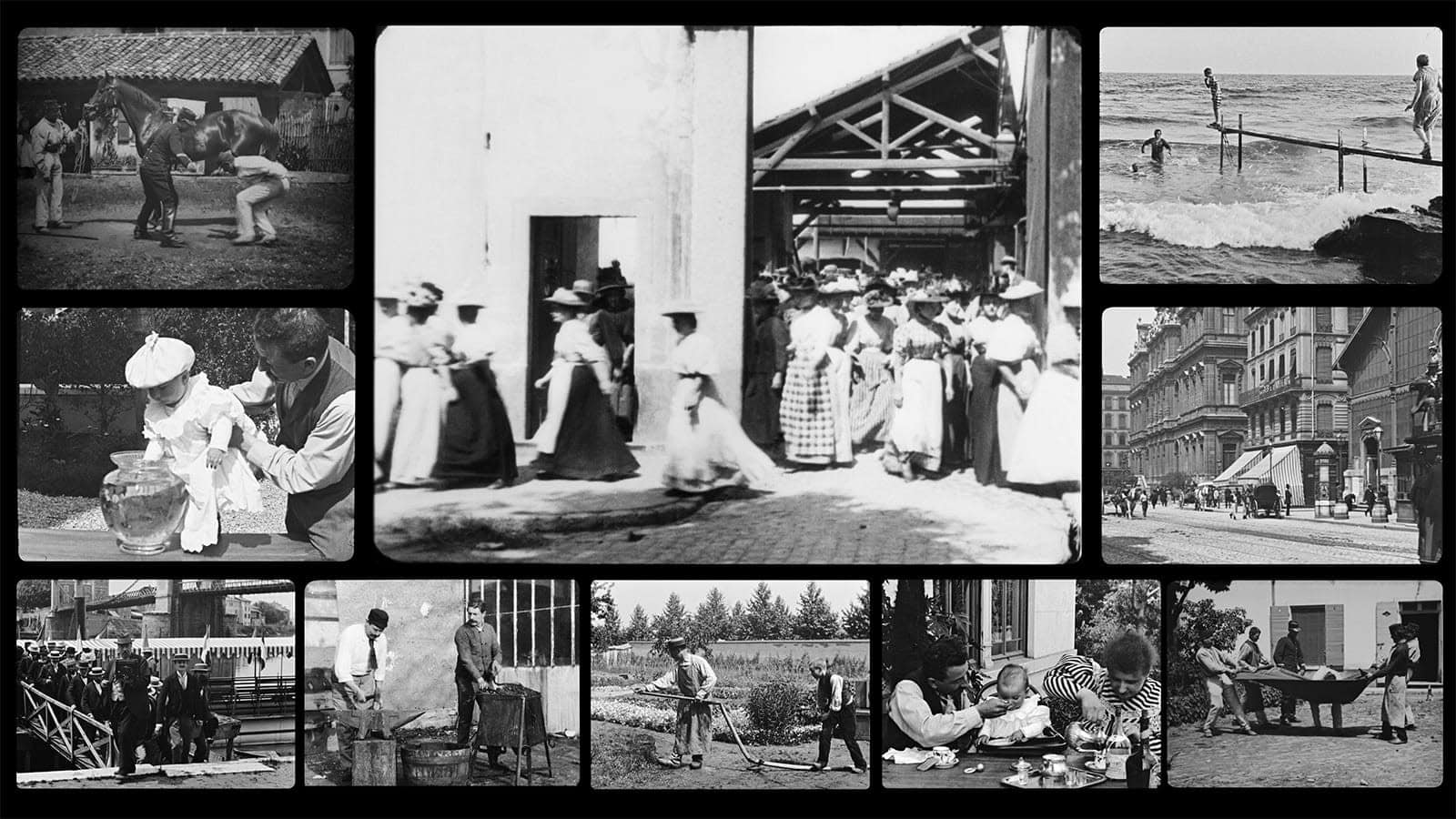
Frémaux has long been an evangelist for the work of early cinematic innovators Auguste and Louis Lumière. He serves as the director of the Institut Lumière in Lyon, where the French filmmaking duo first captured those first indelible moving images of workers leaving a factory, and its associated film festival. Frémaux furthers this mission by creating a film of his own, the documentary Lumière, Le Cinéma!, which he also narrates.
This compendium of over 100 shorts by the Lumière brothers, including many never-before-seen discoveries, plays like an engaging guided tour through the pioneering era of early cinema. Frémaux offers commentary to highlight the historical and aesthetic importance of these thematically organized 50-second works that might not be readily apparent to the naked eye. Yet he also allows the gentle but grand cinematic “gestures,” developed primarily by Louis, to speak for themselves. The documentary gives viewers enough time and space to fully immerse themselves in the richness of these single-shot wonders.
I spoke with Frèmaux earlier this year in New York when he came to present Lumière, Le Cinéma! at the Museum of Modern Art. Our conversation covered how their shots function as the building blocks of the medium, why it’s important to correct the record on the Lumières’ importance to cinematic history, and what filmmakers still connect to in their work today.
You note in the film that the Lumières got the images out of the box. Do you think there’s something about the way that they connected the art form and its exhibition style that made him uniquely qualified to be that figure in history?
I think it’s the main point of [Louis’s] adventure. Why did he get those two good ideas? We really want to say that he did that [art], but he did that because of those before him, especially Thomas Edison. But the other idea is to do the screen room. It’s very bizarre, because since the celebration of the centennial and even 120 years, it was really about cinema. And this year, maybe because the situation of the movie theaters is fragile, we’re more focused on that second dimension of his invention, which was that decision to put the film on the big screen. Which wasn’t the idea of Thomas Edison. More and more, it’s important to preserve that. More and more, it’s important to say that came from those moments, right away. The idea of cinema as a collective, cherished activity shared all together was from him. It’s why, still, cinema is unique. You have to go out and sit with people you don’t know in order share the emotion of the work.
There’s a bit of a truism taught in film history that if you want to understand the difference between French and American cinema, it’s there from the beginning because the Lumières shot everyday working people and Edison shot spectacle. But Louis Lumière also shot performers as well, so was there an intention to expand this idea of what his cinema could contain?
Maybe Lumière shot the workers and some family scenes because it was the easiest thing he could do. But we don’t have any explanation. There’s no archive. We have some technical archives, but no archive about his idea of cinema. It’s like Shakespeare. We know nothing about Shakespeare; we have to make a hypothesis. With the Lumières, we have to make hypotheses to explain what we have in front of us. George Méliès came from illusion, magic, and theater, but Louis Lumière came from something different. What they did with the camera was one of the two strongest ideas of cinema. Maybe, to me, the strongest because it’s more my cup of tea to have Bergman, Murnau, and Bresson. I say that, but then I love Busby Berkeley! I love everything because it’s cinema. Méliès is cinema, and Lumière is cinema.
But what is true is that, as historians, we could check that the history of cinema forgot one of the most important filmmakers, [Louis] Lumière. It’s not true that the cinema started after Lumière; it started with Lumière. As I say in the film, he was the last inventor and the first filmmaker. But we have always a great confusion. He’s not really an inventor because people, they like to say, “No, it’s Edison, Marey, Muybridge, or Émile Reynaud.” Even that guy, Louis le Prince, one of the inventors who was killed in a mysterious situation. People say Lumière had to have killed him; no, it was five years before he was even interested in the thing! So, no. And, there’s also a confusion that everything started with Méliès. No, it started with Lumière!
I grew up at the Lumière Institute as a volunteer watching Lumière films, so I wanted to talk about Lumière as a filmmaker. My point of view wasn’t the point of view of a historian, but a spectator. For example, the first one, there is a film with exactly the same mise-en-scène and same framing as a painting of Cezanne with card players. Did he know the painting of Cezanne? It’s extraordinary! He made a moving story of that scene. If he ignored the existence of the painting, it’s even better. He had the same idea as a great artist like Cezanne. [Lumière’s work] is full of questions, and it’s good to go there.
I often think of a quote from Martin Scorsese when evaluating cinema: “There’s only one place for the camera—the right one.” It struck me watching so many of the Lumière shorts assembled here that it’s been the challenge since the dawn of cinema, and they found so many varying right places for the camera. Is this still the primary challenge of the filmmaker today?
The questions Lumière asked himself are the same questions that the filmmaker today asks himself. And the first one is, “Where do I put the camera? What do I do with my shots?” The history of cinema isn’t about images; it’s about shots. It’s a history of shots. With Lumière, except for the film at the end, it was one shot, so the shot had to mean something. If not, you don’t have any movies. With a bad film today, if the story is interesting, you have something to see. With Lumière, if the shot isn’t interesting, you don’t really have anything to see.

I say this only somewhat jokingly, but I wondered if my big takeaway from the film was this: Are camera movement and editing overrated? Are we undervaluing simplicity and capturing a great shot in cinema today?
It’s very interesting, because when you screen those Lumière films today, filmmakers generally say, “We have to go back to that. We have to get back that simplicity.” Picasso said, “All my life, I have tried to draw like a child.” That’s why I mentioned Godard when he talked about how, if we want to reinvent language, we have to go and see those who don’t know what language is. [Louis] Lumière was the first filmmaker, so he had to invent his own language. What’s quite impressive is that it’s coherent, but always different. In 2,000 movies, not one is similar to the other. But it’s the same idea of cinema, especially that those 50 seconds must mean something.
Louis Lumière’s frames are teeming with life, but it feels like the mass audience has lost the ability or interest to read a film visually. There are so many horror stories of directors getting notes that they need to design their movies with the idea that someone is probably looking at another screen. Do you think more filmmakers need to reclaim the mantle of these grand Lumière gestures?
Especially now with children, their eyes are polluted by the images they see—bad images coming from the internet or even from advertising and television. Imagine that when you wanted to make films, even in the ’50s, the only images you had were images of cinema. Your education of what mise-en-scène is, what a film is, what an image is, and what a shot is came from cinema. It came from Renoir or Ford. Today, no. It’s powerful to know that you still can get lessons from what cinema was and still can be. That’s why it’s always a good thing to go back to those images, like going back to Murnau and Chaplin. But before, it was Lumière, and it was the first time. The idea of the first time is interesting because they didn’t know anything, so it was a kind of audacity to do those images. And another thing is that…are you a critic?
Yes, I am.
The best critic in the world is time. Those films were made 130 years ago and still can be seen today. They’re powerful. They’re strong. You know that—and me, too, in the selection process of Cannes—sometimes you have a film where you’re very impressed, but two days after, you’ve forgotten it. And sometimes with a film, you’re not sure, but one week later, you still have it in mind. Lumière [films], 130 years later, we can see them as pieces of cinema.

My university thesis was on the close-up as cinema’s greatest invention because it was the dramaturgical tool that separated it from the theater. But the artists of the earliest silent film were slow to adopt this shot length. Is that part of the 20% or so of cinema that was left to invent after the Lumières?
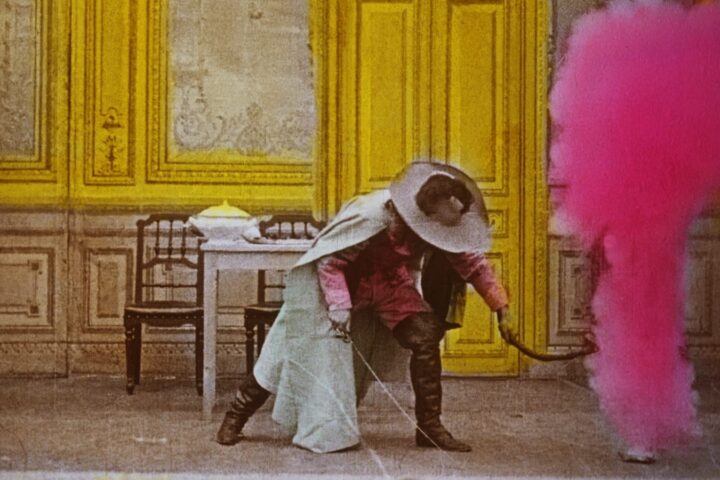
Everyone [thinks] they invented everything. I don’t say that in the movie. But we screened so many things they invented or did that the provision for a lot of the audience is that everything was there. Not everything. For example, there was a [Lumière] film called “The Little Girl and Her Cat,” and it’s a frame like Auguste Renoir, but it’s also almost a close-up of an adult. And when I said that they invented the video of cats, in a way, it’s true. The only interest of that film is showing a cat because it’s quite fascinating, and we still have it on social media. But they didn’t invent the montage; that was Méliès. Inventing the editing process to tell a story came later, even if they did a film like that called “The Car Accident.” It’s an editing process to tell a story, but it’s after Méliès and one of the last Lumière films. We wanted to make a one-hour-and-a-half Lumière film in order for the film to be able to be screened in a movie theater, and for people to see the name of Lumière and go back and pay a ticket to see Lumière films.
If someone wanted to explore other early pioneers of cinema—Alice Guy, Edwin S. Porter, George Méliès—how would you advise them to approach those works?
When I watch a Lumière film, my emotion is the same as watching a film of today. Like Chaplin, like Keaton, like Eisenstein, there’s no difference. You have a lot of films in the history of cinema, and even in primitive cinema, that you watch as something funny or interesting. It’s not cinema. Lumière to me—and, I hope, for you too—it’s cinema. It’s a form. It’s hard to tell the story of a Lumière film. You have to watch it to understand the beauty and to get why the film is important or strong. That film in Lumière’s cinema in Algiers, when the camera is on the tramway going in reverse, is incredible. But that movie can’t be explained. You have to see it.
At your festival in Lyon, honored filmmakers like Francis Ford Coppola and Wim Wenders get to direct their own version of the workers leaving the Lumières’ factory. What is that process like, and what do you find they get out of the project?
Well, first, it’s a game. It’s a little friendly challenge. We’ve had Coppola, Scorsese, Cimino, Almodóvar, and so on. It’s now a collection of remakes. We don’t know where literature, painting, and music have been invented, and it’s impossible to know. Cinema, we know! There’s a place. We started to do it that day, that hour, 19th of March, 1995, exactly 100 years after the first. We did that with Youssef Chahine, Bertrand Tavernier, Jerry Schatzberg, and Carlos Diegues, who were in the exit of the filmmakers from [the factory]. Now, it’s a screening room, and the idea is that from where the first actors and actresses went out, the audience of today goes back to watch films. Francis wanted to do that with his own personal Pathé camera from that time. That’s why the grain of the film is so beautiful. And Bertrand Tavernier died two years after, so it’s the last image of Bertrand. It’s good to see Eleanor [Coppola] in the movie too. She’s in the crowd going out of the Institut Lumière.
Since 2001, we've brought you uncompromising, candid takes on the world of film, music, television, video games, theater, and more. Independently owned and operated publications like Slant have been hit hard in recent years, but we’re committed to keeping our content free and accessible—meaning no paywalls or fees.
If you like what we do, please consider subscribing to our Patreon or making a donation.