Connect with us

Film

Review: The Shooting

The Shooting pays obvious homage to the classic westerns of John Ford and Howard Hawks.

4.0

Published

on

The Shooting

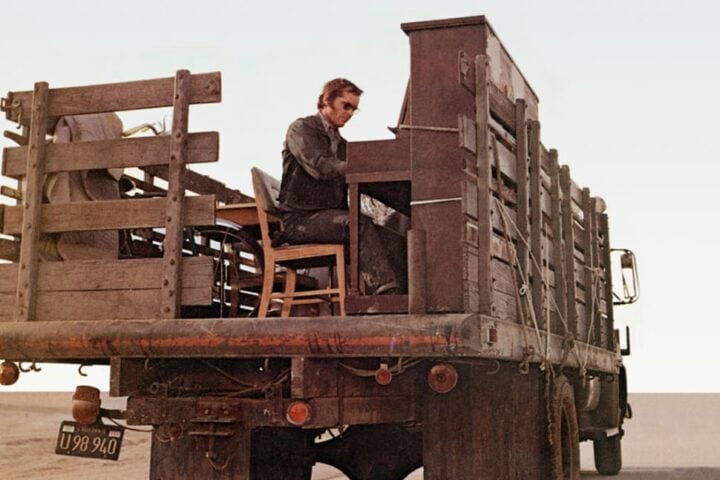
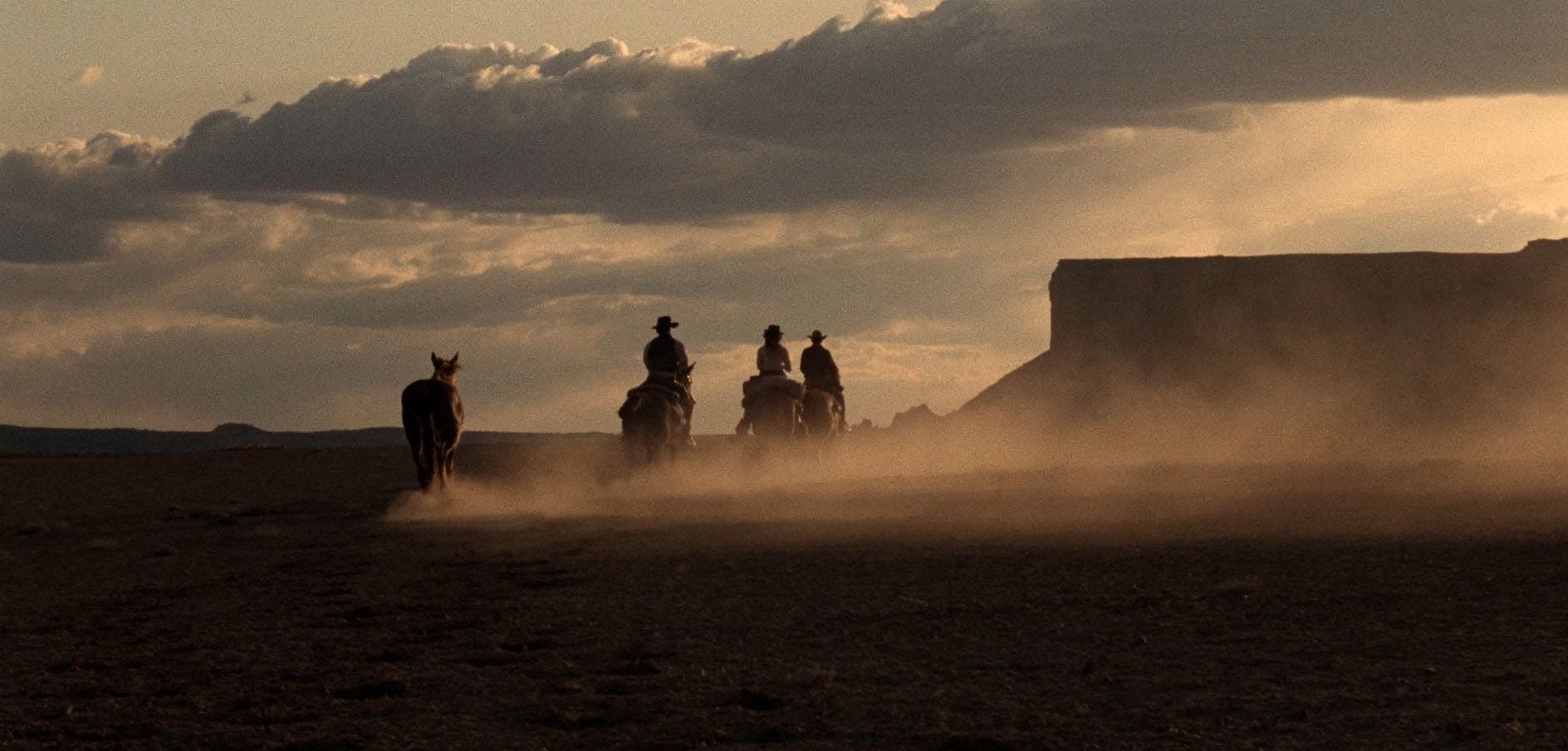
Director Monte Hellman has named Jean-Paul Sartre and Albert Camus as two of his biggest philosophical influences, so it’s no surprise that the characters from his seminal The Shooting follow relentlessly existential paths. The Shooting pays obvious homage to the classic westerns of John Ford and Howard Hawks. Like Robert Altman’s McCabe & Mrs. Miller, the film isn’t so much an anti-western as much as it is an alternate representation of what was already there. Hellman’s masterpiece asserts that individual choice is often subverted by the moral objectivity of others. The film’s ending is a favorite among cinephilles and serves as a paradigm of Camus’s thinking—both stoic and humane, it champions the power of nature over violence. Rather than exaggerate the likeability of his characters, Hellman is more concerned with their very human flaws. We mourn their deaths because of this realism. Hellman fabulously fools around with western archetypes—here we have a faithful sidekick with a penchant for comedy, a scruffy yet likeable hero, an obnoxious yet empowered female, and a mysterious man in black. Hellman’s spatial dynamics are disorienting and his compositions remarkably political. In one shot, Hellman uses a tree trunk to split his frame in two: on one side stands the character played by Perkins, on the other stands Oates and Hutchins. Most startling, though, is Hellman’s refusal to give evil a definitive face. For Hellman, it’s not as easy as distinguishing good from evil by the color of hats. The Shooting, not unlike the film’s equally brilliant companion piece Ride in the Whirlwind, doesn’t ask to be taken as an existentialist mechanism per say, though it certainly functions as one. Hellman has said that The Shooting is about the JFK assassination and that the ending is really about the capture of Lee Harvey Oswald though one would be hard-pressed to figure that out without such an explanation. It does make sense though. The final showdown between the film’s characters might as well have taken place on that infamous grassy knoll in Dallas. If the film’s ending is to be taken as such then Ride in the Whirlwind could very well be about the politics of trust and the public’s fear after the JFK assassination.

Cast: Jack Nicholson, Will Hutchins, Millie Perkins, Warren Oates, Guy El Tsosie, Charles Eastman Director: Monte Hellman Screenwriter: Carole Eastman Distributor: Jack H. Harris Enterprises Inc. Running Time: 82 min Rating: G Year: 1967 Buy: Video

We’re committed to keeping our content free and accessible—meaning no paywalls or subscription fees—so if you like what we do, please consider becoming a SLANT patron:
Advertisement
Comments

Film

Review: Gemini Man Erects a Cardboard World Around Its Special Effects

Whatever new technology facilitated its genesis, the film is just another assembly-line reproduction.

1.5

Published

on

Gemini Man
Photo: Paramount Pictures

In centering its action melodrama around the confrontation between its main character and a duplicated version of himself, Ang Lee’s Gemini Man joins some dubious company: the forgotten Jean-Claude Van Damme vehicle Replicant, the late-pre-governor-era Arnold Schwarzenegger film The Sixth Day, and Richard Lester’s abortive superhero sequel Superman 3. These films relied on split-screen techniques and misleading cuts to split their respective heroes in two—tricks that had, in essence, existed since Georges Méliés. New digital technologies appear to have spurred this old Hollywood hobbyhorse back into action, as Gemini Man’s preternaturally gifted, recently retired secret agent Henry Brogan (Will Smith) confronts not just a clone, but a younger clone, logically dubbed Junior and also played by Smith, de-aged via facial scanning and semi-automated digital animation.

If the special effects industry has devised some new tricks, however, Gemini Man is hardly evidence that Hollywood screenwriters have. Co-written by Billy Ray, Darren Lemke, and David Benioff, the film never successfully redirects our attention from its naked exhibition of advanced CG and toward some sort of meaningful conflict. The broadly sketched attributes that define Brogan are either totally utilitarian (he has a bee allergy, which comes into play in a manner so haphazard that one suspects that the payoff was added at the last minute) or completely unexplored (such as his insomnia). Sometimes, the script’s sense of characterization also betrays its undercooked thinking about its ostensible main subject. To wit, the film dwells both on how Brogan’s traumatic upbringing shaped his psychology and on how different Junior’s youth has been, but then it has Brogan assemble a precise and specific psychological profile of Junior based on his own mind. Nature or nurture? Whichever one, apparently, is convenient to producing a teary-eyed Will Smith in a given scene.

Given Benioff’s writing credit here, it’s also hard not to draw a connection between the phony female badassery of HBO’s Game of Thrones and how Gemini Man treats Danny Zakarweski (Mary Elizabeth Winstead), the agent sent to surveil Brogan in his retirement. When Brogan, attempting to relax and do some boating, outs the attractive young woman working at the dock as an undercover D.I.A. agent (definitely not C.I.A., for whatever reason), he observes, ostensibly impressed, her distinguished record: how she never received a single demerit despite her expansive resume of operations throughout the globe. Brogan then spends the remainder of Gemini Man explaining standard spy procedures to her, like going on the lam, as if she were a rookie. (Lee, Benioff, and company also stage an egregious scene that sees Danielle the seasoned spy strip for an awkward pat-down from Junior.)

Junior has been sent to kill Brogan by Clay Verris (Clive Owen, doing his best to menacingly hit those American diphthongs), Junior’s surrogate father and the head of Gemini, a private military contractor. Brogan, it seems, constitutes a proverbial loose end for both the D.I.A. and Gemini, which cloned him in 1995 and now has his replacement ready to go. The seeming arbitrariness of Verris choosing Junior to assassinate Brogan is hardly accounted for by the film’s explanation, which has something to do with Brogan being Junior’s “darkness” that he must vanquish in order to…become a real man? It’s unclear, particularly as it appears that Verris didn’t want Junior to discover that they were actually the same man.

Perhaps appropriately, Gemini Man suggests a hybrid clone of Bourne, 007, and Terminator flicks. An internecine conflict between shifty agency types divided over what to do about Brogan plays out in dry cellphone exchanges, a pursuit through mostly random places around the globe provides the film with exotic backgrounds for motorcycle chases and extended fisticuffs, and a late-film revelation about Gemini’s ultimate goals raises the specter of a post-human world. Throughout, the action is underwhelming, as Lee uses rapid cuts and tight angles to disguise faulty CG—but to no avail. The problem is less Junior’s digitally altered face—which, while not perfect, can actually emote—and more the rubber bodies that bounce around the frame, rolling out of car accidents and flipping into karate kicks.

Gemini Man is an action movie whose attempt to carry emotional weight is betrayed by the utter weightlessness of both its spectacle and its narrative. There’s a story here about middle age and the loss of youth, the uncanniness of knowing you were once a person you no longer are—the existential discomfort of looking in a mirror and seeing someone else looking back. Occasionally one gets a glimpse of the film Lee thinks he’s making: Brogan avoids mirrors, as he avers on a few occasions, and interestingly, Lee frames close-ups almost frontally, the actors nearly staring into the camera, as in a mirror (or a Yasujirō Ozu film). There’s a self-reflexive element to Gemini Man, concerning the illusory preservation of youth in the cinema and the way Hollywood reflects ideal selves back to us. But Lee can’t do much with this idea, and even a soulful pair of performances from Smith can’t enliven the cardboard world erected around the special effects at the heart of the film. In the end, whatever new technology facilitated its genesis, Gemini Man is just another assembly-line reproduction.

Cast: Will Smith, Clive Owen, Mary Elizabeth Winstead, Benedict Wong, Douglas Hodge, Theodora Miranne, Linda Emond, Ralph Brown Director: Ang Lee Screenwriter: David Benioff, Billy Ray, Darren Lemke Distributor: Paramount Pictures Running Time: 117 min Rating: PG-13 Year: 2019

We’re committed to keeping our content free and accessible—meaning no paywalls or subscription fees—so if you like what we do, please consider becoming a SLANT patron:
Continue Reading

Film

Review: The Dead Center Is an Atmospheric Study of Human Futility

The film is in tune with the need to remain lucid and empathetic while in the maw of human extremity.

3

Published

on

The Dead Center
Photo: Arrow Films

People who work in intense environments, such as police stations, social services offices, and hospitals, are familiar with the strain of needing to remain lucid and empathetic while in the maw of human extremity. Primarily set in a hospital over a few days, writer-director Billy Senese’s The Dead Center, which follows a handful of medical professionals as they grapple with something that symbolizes their fear of succumbing to their patients’ sickness, is profoundly in tune with this sense of strain.

Senese and cinematographer Andy Duensing capture the hard white and sickly yellow light of a hospital in the middle of the night, as well as the eerie alternation of droning white noise and silence that can define such a setting. The filmmakers allow this hospital, especially the psychiatric ward, to creep into our bones. (It certainly helps that the staff here isn’t composed of actors who appear to be out of central casting, as they suggest truly harried and exhausted members of the working class.) Occasionally puncturing this nocturnal twilight are the piercing sounds of patients in crisis, and Senese expertly captures this ebb and flow between the expectation of violence and weathering it. At its best, The Dead Center exudes some of the concentrated lo-fi intensity of Steven Soderbergh’s Unsane.

The Dead Center has a horror-movie hook, which often lingers at the narrative’s margins and screams of Chekhov’s gun. The film opens with an ambulance delivering to the hospital a John Doe (Jeremy Child) who sliced his wrists and chest. Senese films the ambulance’s trip from a god’s-eye view, suggesting a supernatural presence that might not be all that friendly. Later, after John Doe is toe-tagged and bagged, he sits up, and Senese springs an unforgettably creepy sound effect: the crinkling of the body bag, which suggests the crackling of electricity. And this effect is complemented by the poignant sight of the quivering John Doe rising from the bag and wandering the hospital and slipping into an empty bed for warmth. In this moment, Senese grounds resurrection in the textures of a very realistic setting.

John Doe is discovered by the hospital’s staff, and psychiatrist Daniel Forrester (Shane Carruth) is charged with discerning his identity and illness, though Forrester, a renegade with considerable emotional issues himself, doesn’t get far with this endeavor. Carruth invests a familiar type—the hotdog professional with little personal life—with a haunting and unusually opaque vulnerability. He keys us into Forrester’s desperation to hide his own weaknesses from his staff, though his pain is only partially explained. Meanwhile, in a parallel narrative thread, medical investigator Edward Graham (Bill Feehely) investigates John Doe’s origins. This trail leads him to a motel room drenched in blood, and, in another bone-chilling detail, Graham drains a tub of blood to reveal a spiral carved at the bottom. Uncovering John Doe’s identity, Graham discovers a man marked by death, who has become a corporeal Grim Reaper.

The film is ultimately an atmospheric study of human futility. John Doe might be a monster, but he’s also the ultimate incurable victim, who destroys any degree of control that Forrester and Graham fight to assume over their surroundings. Not unlike H.P. Lovecraft, Senese allows his audience to feel as if it’s only seeing but a tip of a malign iceberg, and that ineffable impression of vastness is existentially frightening throughout The Dead Center.

Cast: Shane Carruth, Poorna Jagannathan, Jeremy Childs, Bill Feehely Director: Billy Senese Screenwriter: Billy Senese Distributor: Arrow Films Running Time: 92 min Rating: NR Year: 2018

We’re committed to keeping our content free and accessible—meaning no paywalls or subscription fees—so if you like what we do, please consider becoming a SLANT patron:
Continue Reading

Film

Review: Mary Quickly Squanders Its Promising Horror-Movie Hook

Michael Goi’s film comes to feel as if lacks a through line, collapsing into a series of disconnected horror-movie beats.

1.5

Published

on

Mary
Photo: RLJE Films

With Mary, whose title refers to an ancient ship with a history of drifting off course and losing its crews, director Michael Goi and screenwriter Anthony Jaswinski have settled on a fertile setting for a haunting. This isn’t a grand ship in the vein of either version of Ghost Ship, but a vessel that’s intimate with seemingly little in the way of the sort of nooks and crannies that are integral to games of supernatural hide and seek.

As the latest doomed crew boards the Mary, with the purposes of turning her into a tourist boat along the Florida coast, Goi derives some suspense by implicitly prompting the audience to wonder where the bad stuff can happen, given the constriction of the setting. Intensifying this unease is the film’s one unnerving image: of the boat’s masthead, which is a wooden carving of a beautiful woman with wide, accusatory eyes—presumably Mary, a siren.

At first, it seems as if Mary is going to be a riff on Stephen King’s Christine, in which a young man became romantically obsessed with a vintage vehicle, a 1957 Plymouth Fury. Just as Christine beckoned to its next victim from a junkyard, as a seemingly innocuous antique, the Mary calls to David (Gary Oldman), from a distance as he’s scoping another boat at an auction. Like Christine, the Mary seems impractically beat up, which is a part of the seduction, as they both play into the hero complexes of emasculated men. In David’s case, he’s attempting to break free of a life as a captain for another man’s business, and to help his family rebound from a domestic crisis that isn’t revealed until late in the film. Which is to say that Mary has a promising hook to go with its setting: Initially, it appears that it will tell a story of David’s undoing, of his obsession with a haunted ship that destroys him with promises of redemption.

Astonishingly, Goi and Jaswinski drop that hook immediately. David, who has the most invested in the ghost ship, is shunted off to the film’s sidelines as the Mary works his family over in predictable ways. The man’s wife, Sarah (Emily Mortimer, who’s every bit as game as Oldman), is plagued by nightmares, while their little daughter, another Mary (Chloe Perrin), draws creepy pictures of a mystery woman. Tommy (Owen Teague), the boyfriend of David and Emily’s older daughter, Lindsey (Stefanie Scott), is driven insane almost immediately, while Lindsey is batted around as a victim between various infected parties.

With Goi and Jaswinski unwilling to explore a kinky, psychosexual bond between a man and his demonic lady ghost-boat, Mary comes to feel as if lacks a through line, collapsing into a series of disconnected horror-movie beats. The film’s momentum is further stifled by a framing device—seemingly ported over from a generic cops-and-robbers television show—in which Sarah is interrogated about what happened aboard the Mary. The filmmakers are attempting, via this framing device, to impart a sense of mystery and inevitability upon the narrative, but it serves to make Mary feel as if it’s half over before it even began.

Cast: Gary Oldman, Emily Mortimer, Owen Teague, Stefanie Scott, Chloe Perrin, Michael Landes, Manuel Garcia-Rulfo, Jennifer Esposito Director: Michael Goi Screenwriter: Anthony Jaswinski Distributor: RLJE Films Running Time: 84 min Rating: R Year: 2019

We’re committed to keeping our content free and accessible—meaning no paywalls or subscription fees—so if you like what we do, please consider becoming a SLANT patron:
Continue Reading

Film

Review: First Cow Aims, and Often Strains, to Illuminate the American Experiment

Its themes are propped up by characters who come off as half-formed avatars rather than flesh-and-blood human beings.

2.5

Published

on

First Cow
Photo: A24

The best Kelly Reichardt films strike a sublime balance between character study and socioeconomic critique. First Cow—a mostly 19th-century-set drama co-written by Reichardt and frequent collaborator Jonathan Raymond, and based in part on his 2004 debut novel The Half-Life—is one of the director’s shakier efforts. The film begins with an especially incisive William Blake quote (“The bird a nest, the spider a web, man friendship”), and its themes of systemic exploitation, the enduring vagaries of the free market, and the alternately tender and tempestuous bonds of male camaraderie are propped up by characters who come off as half-formed avatars rather than flesh-and-blood human beings.

That isn’t to say Reichardt, who’s edited all of her films since Old Joy, has lost the ability to create multilayered, gently provocative imagery. First Cow’s opening scene, set in the present day, is particularly beautiful, visually and thematically. A young woman (Alia Shawkat) walking her dog uncovers a pair of skeletons beside an Oregon river. Cinematographer Christopher Blauvelt frames the bones in a steady, un-showy composition (the film is photographed in the boxy 4:3 aspect ratio) so that it takes a few seconds to realize what you’re looking at. The slow-dawning revelation of the moment epitomizes Reichardt’s tendency in First Cow, as well as in many of her other films, to let drama emerge steadily and organically.

How did these bones get here? Reichardt is content to leisurely amble toward the answer to this question, and that approach does intrigue in the early going. In the Pacific Northwest wilderness of the 1820s, a cook named Otis “Cookie” Figowitz (John Magaro) accompanies an aggressive group of trappers as they head toward an Oregon Territory outpost. One night he discovers a Chinese immigrant, King-Lu (Orion Lee), hiding naked in the nearby brush. King-Lu is apparently on the run from some Russian ruffians, so Cookie hides him among the trappers’ belongings. The pair reconnect again at the outpost, where they become drinking buddies and, eventually, partners in fortune-seeking crime.

The outpost’s wealthiest resident, a haughty Englishman referred to only as Chief Factor (Toby Jones), has just brought in the first cow to grace the territory. Figowitz and King-Lu decide to steal the cow’s milk—under cover of night, and as often as needed—which they then use as the key ingredient in artisanal pastries that become a lucrative staple of the outpost’s thoroughfare. Their unwitting benefactor finds out about the treats (though not, at first, about their underhanded procuring methods) and offers them a handsome sum to bake pastries for him personally. And so the cycle of exploitation, righteous and not, continues—until it can’t.

None of that summary quite captures First Cow’s gravelly ambience. The outpost itself is as vividly realized and lived-in a location as the mining town in Robert Altman’s McCabe & Mrs. Miller, a film Reichardt nods to here via both Anthony Gasparro’s mud-strewn production design and the presence of Rene Auberjonois as a scarecrow-thin eccentric with a crow always on his shoulder. The sense of a nascent community rising up out of the primordial muck is palpable, so it’s unfortunate that Figowitz and King-Lu ultimately feel outside it all.

This isn’t the fault of Magaro or Lee. Both performers have a pleasing and often very funny rapport, especially whenever they exchange conspiratorial glances over a shared bottle of whiskey. However, Reichardt sees Figowitz and King-Lu, first and foremost, as the bag of bones they will become (abusers and victims both of capitalist injustice), rather than the men they are in each given moment. Their all-too-apparent endpoint supersedes their tragically flawed existence, which has the adverse effect of diminishing their humanity, reducing them to paper-thin symbols. This wreaks havoc with a finale that grasps for a profound elementalism akin to one of Apichatpong Weerasethakul’s lushly ardent fantasias, but instead comes off with the contrived ambiguity and labored didacticism of lesser John Sayles.

There’s more insight into economic, racial, and social inequities in the offhand, unsubtitled exchange that Reichardt captures between two Native American women (one played by Lily Gladstone, the breakout star of Certain Women) as they converse among themselves in Chief Factor’s home. It’s the supporting cast and the side details that really sing in First Cow, both giving a sense of the alternately hopeful and despairing qualities of the American experiment that Reichardt aims, and too often strains, to illuminate.

Cast: John Magaro, Orion Lee, Toby Jones, Ewen Bremner, Scott Shepherd, Gary Farmer, Lily Gladstone, Alia Shawkat, Rene Auberjonois, Jared Kasowski Director: Kelly Reichardt Screenwriter: Jonathan Raymond, Kelly Reichardt Distributor: A24 Running Time: 121 min Rating: NR Year: 2019

We’re committed to keeping our content free and accessible—meaning no paywalls or subscription fees—so if you like what we do, please consider becoming a SLANT patron:
Continue Reading

Film

Review: In Saturday Fiction, History Itself Is the Realization of Performance

The hegemony of history is rigid, but Lou Ye is still able to disrupt it in the form of its representation.

3.5

Published

on

Saturday Fiction
Photo: United Entertainment Partners

With Saturday Fiction, divisive Chinese director Lou Ye applies a distinctly modern film vernacular to an anachronistic period setting. As in Michael Mann’s Public Enemies, the digital image, disjunctive editing, and a roving handheld camera serve to tether the filmmaking of the present to more remote events of the past, lending immediacy to the action. In Public Enemies, this served to frame what we’re watching as a construct of media—history bleeding into myth and articulated through a modern-day understanding of celebrity. But in this film, the artifice also exists to complement his World War II spy narrative’s preoccupation with different modes of performativity.

Saturday Fiction’s plot is imposing and hard to parse, but after Lou reveals his meta-fiction conceit, the pieces start slowly falling into place: It’s 1941, and famous Chinese actress Jean Yu (Gong Li), after some time spent working in Hong Kong, has just returned to Shanghai, ostensibly to star opposite her former lover, Tan Na (Mark Chao), in a theatrical production, also titled Saturday Fiction, that Tan is directing for the Lyceum Theater. But as is implied by this setting—the “solitary island” period during the establishment of the Shanghai French Concession, six days before Japan’s attack on Pearl Harbor—there are ulterior motives to Yu’s return, and the split nature of her role as actress and spy is reified through Lou’s blurring of the line between his in-film theatrical fiction and the roleplay of espionage.

Lou has tilled this earth before—namely, in 2003’s extraordinary Purple Butterfly, itself a Mannian action opus set just slightly later than the events depicted in Saturday Fiction, during the Japanese occupation of Shanghai. But instead of the steely red and blue color scheme of Purple Butterfly, Lou has opted here for a stark black-and-white palette, a choice that further enriches Saturday Fiction’s provocative mode of aesthetic engagement, as the gritty digital images captured by Lou’s woozy cinematography are put in dialogue with the more stable, classicist compositions typically found in the cinema of the period in which this film is set. This all serves as a way of amplifying the apparent identity crisis of Saturday Fiction’s central character, a woman negotiating between a range of different allegiances: to her foster father, Frederic (Pascal Greggory), an agent of the French intelligence; to an ex-husband (Zhang Songwen) who’s being detained by Japanese authorities; and to Tan, who’s entirely unaware of Yu’s life as a spy, even though, ironically, he’s cast her in his play in the role of a spy.

If some of this sounds convoluted, that’s partly by design: As with Lou’s other film from this year, The Shadow Play, the focus isn’t on crafting a tidy, easily comprehensible narrative, but rather reveling in the chaos of a historical moment in China that saw many different cultural and political influences converge to set the stage for dramatic changes in the country. In The Shadow Play, the chosen moment was the turn of this millennium, when the corruption of Chinese private and government enterprise alike set in motion a chain of lurid events that well represented the dissolution of faith in China’s postsocialist economic prosperity. With Saturday Fiction, Lou and his regular collaborator Ma Yingli, whose screenplay was adapted from Chinese author Hong Ying’s novel Death in Shanghai, locate a manifestation of the intersectional political ambitions and mounting conflicts of a world on the brink of war.

The theatrical framing of Saturday Fiction serves to further the impression of history itself as the realization of a performance, as the various maneuverings of the narrative proper are lent no formal distinction from scenes of Yu and Tan’s rehearsal, and, in fact, many are choreographed and shot with a stage-appropriate approach to blocking. The hegemony of history is rigid, the narrative specifics unchanging, but Lou is still able to disrupt it in the form of its representation. The last third of Saturday Fiction sees the dense plot of the film falling away in favor of a succession of intense shootouts, sequences that find the instability of Lou’s formal and narrative fictions finally combusting into an inevitable expression of violence. And at the center of all this is screen legend Gong Li, who, in her first film role in three years, gradually undergoes a transformation from passive observer into gun-wielding firebrand, resulting in the most truly iconic performance that the actress has delivered in decades.

The final moments of Saturday Fiction frame Yu’s actions as representative of the greater ideal at the center of Lou’s filmography—a body of work that’s always commented on the present moment, even when it’s explicitly about the past. Just as The Shadow Play’s depiction of workers on strike during China’s urbanization period and Summer Palace’s portrayal of student protestors revolting in Tiananmen Square captured resistance at critical moments in the nation’s history, the explosion of unrest at the end of Saturday Fiction comes as a response to prescribed Chinese identity, a conundrum that plagues the republic even today.

Cast: Gong Li, Mark Chao, Pascal Greggory, Huang Xiangli, Ayumu Nakajima, Joe Odagiri Director: Lou Ye Screenwriter: Ma Yingli Running Time: 126 min Rating: NR Year: 2019

We’re committed to keeping our content free and accessible—meaning no paywalls or subscription fees—so if you like what we do, please consider becoming a SLANT patron:
Continue Reading

Film

Review: Low Tide’s Sense of Place Transcends Nostalgia for Bygone Era

Kevin McMullin displays a piercing awareness of the tensions that drive the dynamics of adolescent outsiders.

3

Published

on

Low Tide
Photo: A24

As American pop culture’s obsession with 1980s artifacts continues unabated, along comes Kevin McMullin’s Low Tide, which paints the Jersey Shore of yesteryear as a haunted dreamland—a place that brings to mind The Goonies and Bruce Springsteen’s catalog in equal measure. Thankfully, Low Tide is more intimately acquainted with the Boss’s dashed hopes than with the shrill stereotypes that Richard Donner’s film peddled, as McMullin displays a piercing awareness of the tensions that drive the dynamics of adolescent outsiders.

In The Goonies, and later progeny like Stranger Things, characters embrace whatever reduced “type” they are, which is how these productions flatter our sentimentalized versions of our childhoods. In Low Tide, however, the characters feel embittered and trapped by roles that are determined for them subliminally by their physical prowess and the economic status of their families. This social context allows the film to transcend its nostalgic roots and feel dangerous, reminiscent of Tim Hunter’s River’s Edge or the best parts of Rob Reiner’s Stand by Me.

Low Tide concerns a group of young townies who rob the affluent homes of seasonal residents, whose mobility and freedom they resent. This resentment is allowed to float in the air, essentially unmentioned, as McMullin’s poetic script has an uncanny grasp of the unspoken. The leader of the group is Red (Alex Neustaedter), who commands the loyalty of his cohorts through fear rather than kinship. Red has that preternatural sense of “adultness” that’s evident in teenagers who’re already capable of hard crimes, and Neustaedter doesn’t overplay Red’s volatility. In a performance reminiscent of the work of Peter Greene, Neustaedter allows Red to be scariest when it’s most evident that the character is fighting to keep himself from boiling over. Yet the actor doesn’t make Red a monster either, as he understands Red’s rage to be the ultimate manifestation of the rootlessness and entrapment that hound the others.

Red’s polar opposite is Smitty (Daniel Zolghadri), the nerdy oddball who never has anything witty to say to the girls on the boardwalk and who’s perpetually hustling as a defense against his scrawniness. Zolghadri brings to visceral life the watchfulness of a calculator—a natural born stool pigeon. Smitty and Red, who seem to hold each other hostage in accordance with their respective advantages, are an unusually thorny and resonant example of the bully-wimp partnership that American cinema so often plays for laughs.

Red and Smitty are Low Tide’s villains. They signify all the perils that two brothers, Alan (Keean Johnson) and Peter (Jaeden Martell), must navigate after finding a sack of golden coins that they bury and hide from their friends. Alan and Peter suggest a healthier, bizarro version of Red and Smitty, as Alan is a brawny yet empathetic man of action while Peter is a thinker who tries to keep Alan from exposing their crime with his carelessness. As vividly alive and multifaceted as this cast uniformly is, Martell walks away with Low Tide, dramatizing an internal war to be sensitive and optimistic, and to escape his impoverishment the right way, rather than succumb to the hopelessness that’s turned Red into a psychopath.

McMullins has a flair for both sentimentalizing and de-sentimentalizing a setting, illustrating the comfort his characters take in the boardwalk and the nearby fishing piers as well as the torment of tourist sports cars that suggest unattainable status. McMullins’s Jersey Shore is a place of danger as well as of the faux heaven of carnival lights glowing in the sky. Certain slow-motion passages—of the lighting of a cigarette, of the approaching of a beautiful girl—suggest the blossoming of the nostalgia that will seep into these adolescents in adulthood. Yet McMullins doesn’t forget the uncertainty and self-loathing of young life, which, in this case, bubbles into a climax of primordial bloodshed that suggests a rematch between Cain and Abel.

Cast: Jaeden Martell, Keean Johnson, Shea Whigham, Alex Neustaedter, Daniel Zolghadri, Kristine Froseth, Mike Hodge Director: Kevin McMullin Screenwriter: Kevin McMullin Distributor: A24 Running Time: 84 min Rating: R Year: 2019

We’re committed to keeping our content free and accessible—meaning no paywalls or subscription fees—so if you like what we do, please consider becoming a SLANT patron:
Continue Reading

Film

Review: Wrinkles the Clown Is a Meta Commentary on Trolling in the Digital Age

The film’s mid-act about-face lends a refreshing sense of complexity to an otherwise superficial depiction of Wrinkles.

2.5

Published

on

Wrinkles the Clown
Photo: Magnet Releasing

Wrinkles the Clown, the alias of a Southwest Florida man whose identity remains unknown to this day, started out offering his services—mainly consisting of scaring children in order to dissuade them from doing something “naughty”—by plastering stickers on lampposts with his photo and phone number on them. A parent may threaten to call Wrinkles if their child does something they’re not supposed to, or even hire him to make a surprise appearance under the child’s bed. A short-lived frenzy around Wrinkles was triggered by his mysterious sightings, akin to Bigfoot’s or the Loch Ness monster’s, which may or may not turn out to have been a meticulously planned marketing stunt.

A documentary like Michael Beach Nichols’s Wrinkles the Clown, about a scary clown whose call to fame rests solely on his having gone viral, might seem as gimmicky as its main subject’s notoriety—yet another film trying to tap into the popular vacuity of internet life, forcing the logic of the meme into a cinematic structure to no avail. In some ways, Nichols’s portrait of the man behind the coulrophobia stunt is indeed an unsustainable exercise in repackaging the fragmented and fickle nature of social media spectacle into long form. That’s until halfway into Wrinkles the Clown, when we realize that the director, too, has been pulling a prank on his own audience. When the gimmick within the gimmick comes to life, the gimmick becomes, rather, a meta commentary on the documentary’s subject matter: the infantile pleasures of clowning and trolling that proliferate online but certainly precede digitality.

It’s difficult to be more specific about the mid-act about-face of Wrinkles the Clown without spoiling its most redeeming quality. Let’s just say that when that shift occurs, Wrinkles, whose face we haven’t yet seen except in extreme close-ups, turns out to have been a red herring. Nichols’s tactic lends a refreshing sense of complexity to an otherwise superficial depiction of Wrinkles, finally enabling us to reflect on issues such as sadistic enjoyment, the end of authenticity, the inherently fictitious nature of even the most pseudo-realistic representation, and, most ominously, how medieval our methods for “educating” children still are.

Wrinkles the Clown ultimately becomes a commentary on the ways in which fad-obsessed digital culture reduces spontaneity, authenticity, and chance into a set of aesthetic, and synthetic, conventions. Drama is no longer a question of emotion, but of standardized mise-en-scène, like clown makeup. The world that makes Wrinkles a star is the same one that allows for the Kardashians to claim that their TV series is “real and unscripted” with a straight face. It’s a world desensitized to falsehood, where all is controlled and choreographed, especially feelings like fear, and that defense mechanism borne out of it: violence.

Interviews with parents who hired Wrinkles as a way of sugarcoating child abuse with a whimsical sheen, a sort of replacement for spanking, can be disturbing but not surprising. More fascinating are the children who adulate Wrinkles as a way of performing their own cruelty. One boy is obsessed with wearing Wrinkles’s wig, candidly fantasizing about using the clown’s image to attack other kids. “Hello, Wrinkles, I need you to come to my house and kidnap a little girl,” says another child on a voicemail to the clown. Other children keep calling Wrinkles’s number only to hang up as soon as he answers, overwhelmed by the adrenaline of getting caught and punished. Yet other little kids leave Wrinkles voicemail messages professing their love for him, or telling him that he’s their role model.

Courting punishment, of the other or the self, are hardly extraordinary fantasies for children to have, as they form the very core of one of Freud’s most iconic essays, “A Child Is Being Beaten.” But in Wrinkles the Clown, cruelty as the go-to currency between adults and children feels reciprocal, as if it was cruelty itself that linked them as members of the same race.

Director: Michael Beach Nichols Screenwriter: Michael Beach Nichols, Christopher K. Walker Distributor: Magnet Releasing Running Time: 75 min Rating: NR Year: 2019

We’re committed to keeping our content free and accessible—meaning no paywalls or subscription fees—so if you like what we do, please consider becoming a SLANT patron:
Continue Reading

Film

Review: Lucy in the Sky Is Faux High Art Made from Lewdly Low-Hanging Fruit

Noah Hawley treats his protagonist’s story as a somber tragedy that at times stoops to trashiness.

1

Published

on

Lucy in the Sky
Photo: Fox Searchlight Pictures

Noah Hawley’s absurdly sullen feature debut, Lucy in the Sky, doesn’t open “in the sky” but above it, with astronaut Lucy Cola (Natalie Portman) completing an awe-inducing spacewalk that’s a prelude to her emotional and psychological downfall. Once you’ve glimpsed the infinite expanse of the universe, how can anything earthbound compare? This is especially true for Lucy, a character based on real-life astronaut Lisa Nowak, who went off the deep end after she had a tumultuous affair with fellow space traveler William Oefelein.

The details of the actual case are soap-opera lurid: divorce, secret erotic rendezvous, attempted kidnapping, even the suggestion that, on a feverish road trip to find Oefelein, Nowak wore adult diapers so she wouldn’t have to stop her car. Hawley—the mastermind, such as it is, behind the occasionally compelling TV adaptation of Fargo, as well as the stylistically self-satisfied and thematically dubious Legion—treats Lucy’s story as a somber tragedy that at times stoops to trashiness. The film is faux high art made from lewdly low-hanging fruit.

Oefelein avatar Mark Goodwin (Jon Hamm) is certainly ripe for picking. From the second they lock eyes, it’s obvious what Lucy sees in him: an old-school virile allure that her husband, Drew (Dan Stevens), decidedly lacks. Mustachioed, soft-spoken Drew is so obliviously milquetoast he might as well be wearing a “Cuck Me!” sign on his back.

Lucy and Mark have both been to what Star Trek’s Khan Noonien Singh would call “spaaaaaaaaaaaaccccce!,” so they share a uniquely special connection. They’ve touched the stars, and now they can touch each other. Though there’s plenty of phallic rocket imagery—as well as Lucy’s caustic mother, Nana (Ellen Burstyn), noting that “all that astronaut dick has made you soft”—in case the pair’s explosively orgasmic relationship doesn’t register. A moment in which Mark reclines shirtless on the couch, sipping whiskey and replaying footage of the Challenger disaster, suggests he’s equally adept at transgressive self-pleasure.

Hawley goes hog-wild with cinematographer Polly Morgan, not only indulging in swooning camera tilts, but incessant shifts in aspect ratio that are meant to mirror Lucy’s slow mental breakdown as Mark’s interest in her wanes. (A cover version of the Beatles’s “Lucy in the Sky with Diamonds” even accompanies a showy people-mover shot.) Rather than reveal character, however, this overwrought style illuminates the resounding lack of substance in Elliott DiGuiseppi and Brian C. Brown’s misogyny-tinged screenplay, which Hawley revised.

Lucy herself is a gynophobic projection of female hysteria—an Ingmar Bergman heroine by way of Zalman King. She casts scowling, jealous looks at fellow astronaut Erin Eccles (Zazie Beetz, as wasted here as she is in Joker), who proves to be both her professional and romantic competitor. In one scene, Lucy self-centeredly puts herself in danger while doing some underwater training for a second spacewalk; in another, she stalks through Mark’s backyard barbecue with a deranged entitlement that Portman tries desperately to make plausible. (At least her Southern accent is more convincing than her Northeastern one in Jackie.)

The character’s only truly interesting outburst comes after a rain-soaked, slow-mo climax in which a bewigged, trench-coat-sporting Lucy confronts Erin and Mark. It plays like an outtake from Brian De Palma’s Raising Cain and the sudden shift to all-out pulp after the preceding two hours of aesthetically oppressive humorlessness is, if only for a moment, liberating.

Cast: Natalie Portman, Jon Hamm, Zazie Beetz, Dan Stevens, Colman Domingo, Ellen Burstyn, Nick Offerman, Tig Notaro, Pearl Amanda Dickson, Jeffrey Donovan Director: Noah Hawley Screenwriter: Brian C. Brown, Elliott DiGuiseppi, Noah Hawley Distributor: Fox Searchlight Pictures Running Time: 126 min Rating: R Year: 2019

We’re committed to keeping our content free and accessible—meaning no paywalls or subscription fees—so if you like what we do, please consider becoming a SLANT patron:
Continue Reading

Film

Review: In the Tall Grass Suggests an Interminable and Pointless Game of Tag

Vincenzo Natali’s film divests itself of stakes in the name of total meaninglessness.

1.5

Published

on

In the Tall Grass
Photo: Netflix

The title of writer-director Vincenzo Natali’s In the Tall Grass is fatally accurate, as much of the film’s running time consists of people wandering an expansive field of bright green grass, walking in circles. Characters keep entering the field to look for others, who are in turn looking for the people who’re looking for them. This increasingly nonsensical wandering is supposed to be existentially, supernaturally frightening, but Natali exhibits little of the formal ingenuity that he displayed in his 1997 breakout film, Cube.

Based on a novella by Stephen King and Joe Hill, Natali’s screenplay features a mixtape of King tropes. The eerie field in the American West, next to an abandoned church that will of course play into the proceedings, suggests the setting of Children of the Corn—an association that becomes explicit as the field is revealed to be controlled by a religious cult. Later in the film, a fortysomething father, Ross (Patrick Wilson), becomes possessed and tries to kill his son, Tobin (Will Bule Jr.), and wife, Natalie (Rachel Wilson), in the tradition of too many mad King patriarchs to count. Tobin soon learns the rules of the demonic game and advises others in the tradition of numerously precious King children. At the center of this collection of stereotypes are a sibling Jack-and-Jill team, Becky (Laysla De Oliveira) and Cal (Avery Whitted). Becky’s one trait is that she’s pregnant, rendering her susceptible to learning a life lesson, while Cal is defined—with perverse yet unfulfilled promise—by his attraction to Becky.

For the film’s first 20 minutes, Natali terrifyingly implies that he’s going to subject his audience to nothing but endless variations of Becky and Cal calling one another’s names, in a kind of “who’s on first” routine set in Beckett’s idea of hell. As other characters pour into the film, more backstory is added, though only for the sake of essentially having more people call one another’s names. Such a dull idea might have benefit from a sense of humor or an ability to render the titular grass visually uncanny, neither of which Natali displays.

There are fine shots of the grass blowing in the wind, reminiscent of underwater seaweed, but Natali offers no variations on this motif, and his blunt staging never allows the evil of the field to be insidious, particularly when a sacred rock, which resembles an egg carved out of hardened feces, is revealed to be at the center of the ghostly shenanigans. (The nighttime sequences are also drab and texture-less, rendered in the impersonally glossy cinematography that’s been the bane of several Netflix films.) A high concept gradually renders this game of tag even more interminable than before. The evil magic field appears to be on a dimensional axis in which multiple timelines simultaneously exist. If someone dies, then, they might come back soon to lure other characters into this grassy web. With no one able to die, in accordance with rules that aren’t given to the audience, the film divests itself of stakes in the name of total meaninglessness. Natali gets lost himself in a thicket of gimmicks.

Cast: Laysla De Oliveira, Avery Whitted, Patrick Wilson, Will Buie Jr., Harrison Gilbertson, Rachel Wilson Director: Vincenzo Natali Screenwriter: Vincenzo Natali Distributor: Netflix Running Time: 101 min Rating: TV-MA Year: 2019

We’re committed to keeping our content free and accessible—meaning no paywalls or subscription fees—so if you like what we do, please consider becoming a SLANT patron:
Continue Reading

Film

Review: Celebration Finds Fashion Legend Yves Saint Laurent at His Most Elusive

Olivier Meyrou’s ironically titled documentary weaves a tightly constructed story about success, power, and mortality.

3

Published

on

Photo: KimStim

Olivier Meyrou’s documentary Celebration opens with a black-and-white close-up of Yves Saint Laurent’s hand hesitating over a sketch. Then, the fashion designer is called away before he can add anything to the ensemble he’s designing. This lengthy opening shot emblematizes the portrait of Saint Laurent drawn by Celebration: Even though it follows the designer’s eponymous haute couture firm over the course of a productive period in the late 1990s, the film finds its namesake hesitant and reclusive.

Originally commissioned by Saint Laurent’s business partner and onetime companion, Pierre Bergé, Celebration had been suppressed for over a decade after Bergé, who died in 2017, reportedly didn’t care for its depiction of his and Saint Laurent’s company. (Saint Laurent died in 2008, the year after the documentary’s initial premiere at the Berlin Film Festival.) Although the film is no journalistic exposé, it implies through carefully selected imagery and a subtle narrative structure that, as Saint Laurent retreated into his shell, Bergé became a domineering presence in their company, lording over his former lover and collaborator.

But Celebration could be read as implying that it was the other way around: that, perhaps, it was Bergé’s ambition and overriding presence that turned Laurent inward. A particularly resonant shot in the film racks focus from a distracted Saint Laurent in the foreground to an ominously shadowed Bergé observing him unnoticed from around a corner in the background. Bergé makes no bones about keeping Saint Laurent in the background while he manages their company. Speaking with a journalist later, Bergé cites a quip from author Marguerite Duras about the sleepy-eyed Saint Laurent, adding to it his own conclusion that “Yves should be left asleep.” That’s best for the company and the quality of its collection, Bergé means to point out, but he adds, rather shockingly: “It’s true that he is not happy.”

The film’s camera often catches the elusive Saint Laurent indirectly in a mirror, or shoots him from a distance, in black and white. When we do get a full-color close-up of him, it’s often from behind or in profile, taken by a handheld camera following him backstage at a fashion award show. Celebration compiles an image of the man and his company that’s intriguingly alienating. Every once in a while, the sparse score by François-Eudes Chanfrault, consisting of either dry percussion or pulsing electronic tones, slides in under the images, giving the YSL company’s colorful dresses and exacting fitting procedures an unexpectedly dour tone. A patriotically themed collection made for a grandiose display at the 1998 World Cup is displayed without fanfare, and at a cold distance, relayed partially through a muted television.

Saint Laurent’s impenetrability and Bergé’s glad-handing personality contrast with the current and former seamstresses who appear in the documentary, all of whom laugh, complain, chatter, critique their work, and in general behave like human beings. Pointedly, Meyrou shows us much more of them constructing and adjusting the fashion house’s designs than of Saint Laurent himself at work. Both he and Bergé are shown to be separated from the labor of fashion: At one point, Meyrou includes an awkward encounter between Bergé and a representative from a seamstress’s union, in which the fashion mogul patronizingly explains which unions he prefers and why young seamstresses are untrustworthy.

All of this, of course, might have more intrinsic interest if one is already familiar with some of the background of YSL. Despite some discussion of the firm’s origin in the early ‘60s, the film provides little context for its importance in the industry, or the personal backstories that inform the mostly unspoken dynamic between former lovers Saint Laurent and Bergé. It’s also surely relevant, though unacknowledged in the film, that Gucci bought the YSL brand in 1999, the year after a bulk of Meyrou’s footage was captured, and that Saint Laurent ended the haute couture line in 2002. The ironically titled Celebration weaves a tightly constructed story about success, power, and mortality that, to an extent, is universal but could have fashioned a more revealing—and grounded—documentary out of the same material.

Director: Olivier Meyrou Distributor: KimStim Running Time: 73 min Rating: NR Year: 2007

We’re committed to keeping our content free and accessible—meaning no paywalls or subscription fees—so if you like what we do, please consider becoming a SLANT patron:
Continue Reading
Advertisement

Giveaways

Advertisement

Newsletter

Advertisement

Preview

Trending