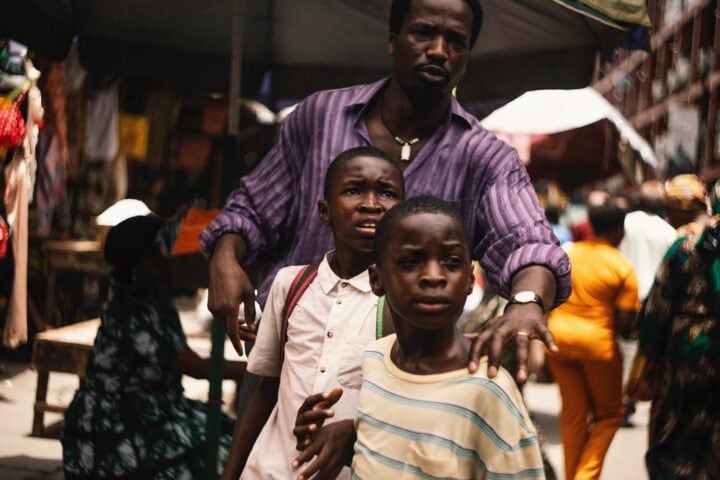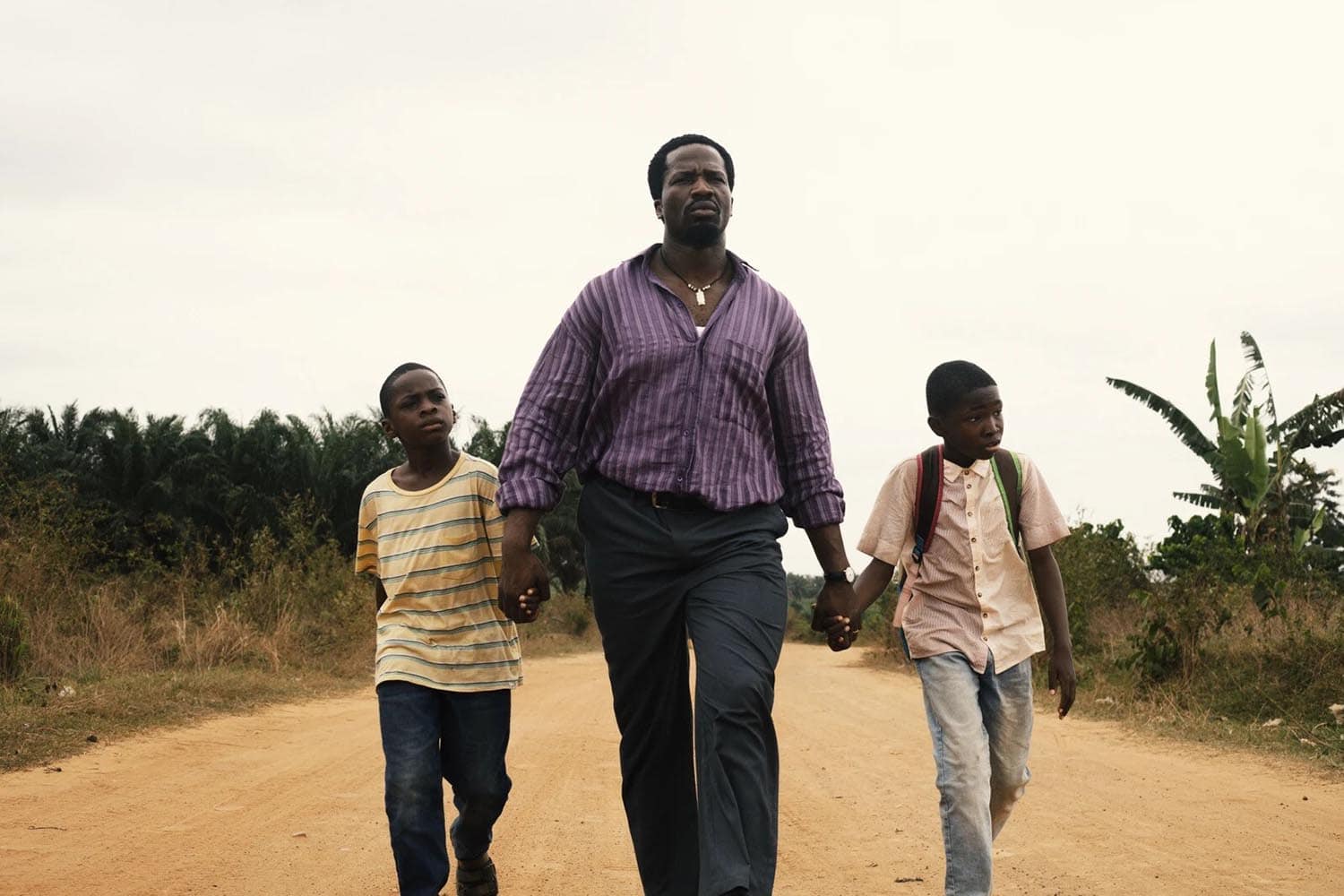
Filtering the personal and the political through the perspectives of eight-year-old Akin and 11-year-old Remi (played by real-life brothers Godwin and Chibuike Marvelous Egbo, respectively), Akinola Davies Jr.’s semi-autobiographical My Father’s Shadow opens with the return of the boys’ father, Folarin (Sope Dirisu), to their remote Nigerian village. Folarin soon whisks Remi and Akin away to Lagos, where he must track down his boss to collect six months of back pay. He hopes to reconnect with the sons he rarely has the chance to see, while at the same time eagerly anticipating the pending election results, which portend the end of Ibrahim Babangida’s military dictatorship and legitimate arrival of democracy in Nigeria.
Hope springs eternal for both the brothers and the Nigerian public, who sense a long-awaited turning of the political tide. Yet, on June 24, 1993—the day on which most of My Father’s Shadow is set—the dream for many Nigerians died as Babangida would eventually annul the results of the election that was to have stripped him of power. Despite Remi and Akin being thrilled at spending the day with their father, symbolic harbingers of this impending doom hang in the air. Shots of strangers’ newspapers that the boys glimpse bear headlines about a recent military massacre, while close-ups of rotting fruit on the ground and birds ominously circling in the sky suggest a potential future that neither Folarin nor his children see coming.
Indeed, hope and fear are inextricably bound throughout Davies Jr.’s feature debut. The brothers, for one, are happy to be with their father, yet they realize how fleeting their time with him is likely to be. Davies and cinematographer Jermaine Edwards allow the camera to linger on close-ups of many of the strange new faces Remi and Akin take in, as well as of the oft-overlooked minutiae the boys observe around them. Meanwhile, the meticulous sound design heightens the cacophonous din of the city, so as to get at the sense of disorientation and overstimulation the brothers experience in this at once unfamiliar and enticing place.
As the day goes on, we bear witness to Akin and Remi’s shifting perceptions, of both their father and the political realities that will shape their future. Where Folarin enters the film as an almost mythical figure, he accrues layers of complexity across the family’s tense time in Lagos. Folarin has a tendency to be strict, and at times even domineering, with his sons, but the depth of his love for them is revealed as he treks around Lagos with them, introducing them to his favorite restaurant, stopping by the beach to give Akin a swim lesson, and even taking advantage of his connection with a security guard to let the boys play in an abandoned amusement park.
It’s clear that Folarin isn’t the perfect father or husband, as he’s not great at keeping touch with his children and his suspicious behavior around a waitress suggests that he’s cheating on his wife, but you don’t doubt his steadfast need to give them all a better life. At one point, Folarin tells the boys, “Everything is sacrifice. You just have to pray you don’t sacrifice the wrong thing.” He’s obviously speaking about the job that keeps him away from them for long stretches of time. And as the political chaos begins unfolding around them, one might wonder if Folarin’s efforts were somewhat in vain if not for all the wisdom he imparts to his young sons.
Since 2001, we've brought you uncompromising, candid takes on the world of film, music, television, video games, theater, and more. Independently owned and operated publications like Slant have been hit hard in recent years, but we’re committed to keeping our content free and accessible—meaning no paywalls or fees.
If you like what we do, please consider subscribing to our Patreon or making a donation.