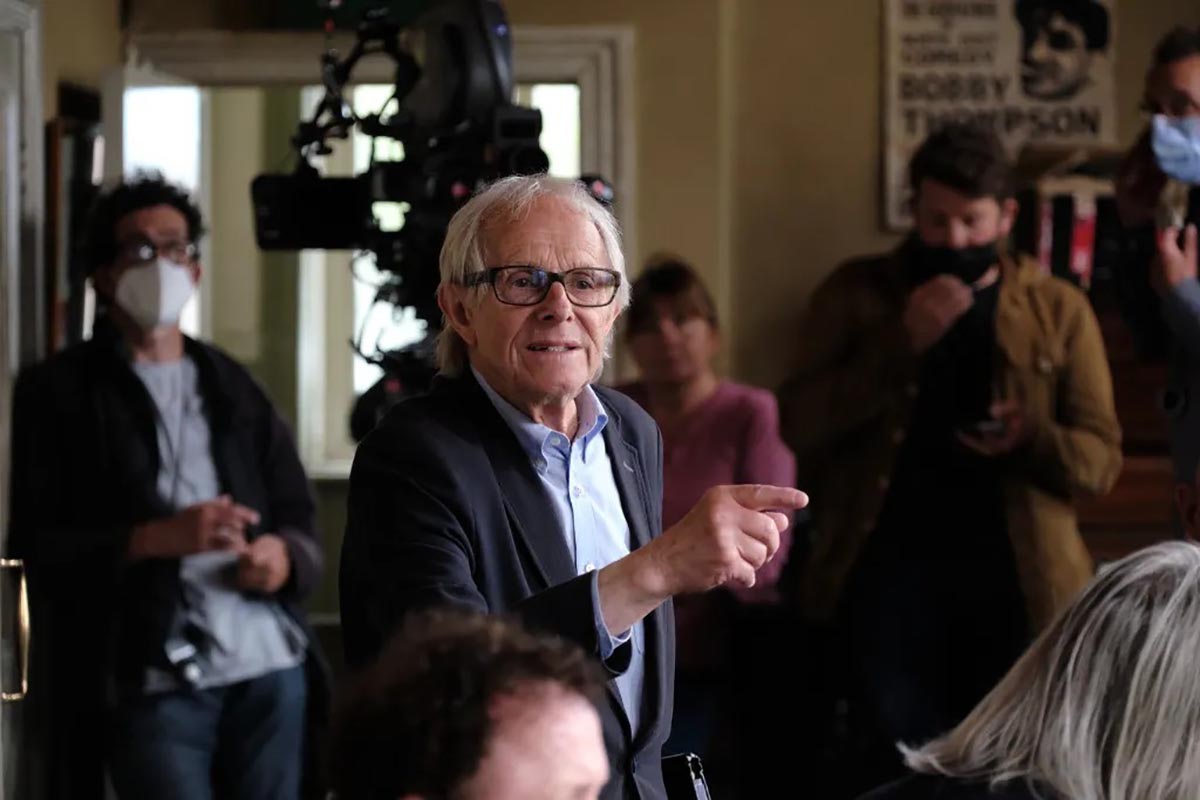
In a career that spans over half a century, the indefatigable Ken Loach has cemented his reputation as the foremost filmmaker of the British working class. At 87, he’s out of neither steam nor ideas even as he signals that his latest, The Old Oak, might be his final film. (Loach said something similar a decade ago when premiering Jimmy’s Hall, and he indicated to me that he’s got an idea to redo the ending of a recent documentary, so never say never.)
The Old Oak makes for quite the cherry on top of a splendid body of work, most of which will be featured in a career-spanning retrospective in spring 2024 at New York City’s Film Forum. This sympathetic and socially attuned portrayal of the proletariat set in a dying village in northeast England is part three in an informal trilogy with 2016’s I, Daniel Blake and 2020’s Sorry We Missed You. While those films focused on post-austerity holes in the social safety net and the precariousness of the gig economy, respectively, the contemporary issue under Loach’s microscope in The Old Oak is the country’s absorption of migrants.
The arrival of Yara (Ebla Mari) and other refugees from war-torn Syria in 2015 sets off a culture clash in Durham, where citizens of a former mining town are still reeling from decades of their own government’s abandonment. But Yara finds a local ally in TJ (Dave Turner), who also endeavors to push through frustration and fear to find commonality and cordiality. Their spiritual kinship finds an architectural analog in the film’s titular bar, a ramshackle space that nonetheless holds steady as a point of communal gathering—and an organizing point for solidarity between residents old and new. Loach’s The Old Oak functions much like the establishment that TJ owns: a defiantly optimistic space designed to fortify the connections between all those who share in the struggle against oppression.
I spoke with Loach prior to the stateside release of The Old Oak. Our conversation covered the film’s balance of timeliness and timelessness, the connection between form and content in his work, and which of his prior efforts he’s most eager for audiences to catch at his retrospective.
How do you think about the issues that you’ve covered in your recent set of films set in North East England, like the gig economy and the Syrian refugee crisis? Are they just extensions of age-old forces, or are they also something new?
They turned into a picture of a society which is harvesting the consequences of the Reaganomics and the Thatcher counterrevolution of the 1980s where the economic system’s strategy was to remove all restrictions on employers and corporations making as much profit as they could because that’s what they thought a progressive society should be. Then, of course, when there’s a need and no profit, the need goes unanswered. And so the market economy, which is worshipped here, doesn’t build houses for people who can’t afford them, so we have a huge problem of homelessness. The market economy doesn’t provide income for those too vulnerable or unable to work, or on very low wages, so you get you get people in dire poverty with no food. There are now half a million children who don’t eat unless people put an extra can in at the supermarket. Hunger and food insecurity are real issues for us now. And the level of job insecurity is massive because the unions were made weaker.
The gig economy means you don’t get workers’ rights. Many workers don’t have holiday pay or sick pay, so if you stop work, you don’t get money. The old industries weren’t replaced when they faded the mines, the steel industry, the shipbuilding, which were the core industries in the northeast. They disappeared. And so the northeast is a shining example of the misery that neoliberalism has brought. That’s the unifying theme: a society in which people are now carrying the scars of the neoliberal experiment.
How do things like social media, which TJ checks to see a torrent of hatred, or the omnipresence of video footage, which Bashir watches alone, affect the way people process the events around them? Has that changed the nature of the problems?
Well, it’s the way society has developed, hasn’t it? That anonymous venom—people attacking people they want to take down with internet trolling—is pretty disgusting, cowardly, horrible. It gives that hatred weight when you’re on the receiving end of this. But people think, “Oh, we can do it, no consequences.” The fact that kids take pleasure in the bullying they’re doing is just a reflection in how people are dehumanized. I think someone can be dehumanized by putting them on video. They cease to be people—they’ve become objects. It’s not the easiest to empathize with people in that situation. But it’s the way the world has gone.
Both within your films and out in the world at large, it often proves challenging for people to extend the empathy they feel when confronted with the pain and suffering of people around them to those they do not see or know. What do you make of that gap we must close?
The politicians endorse it, that’s the problem. The treatment of immigrants is a case in point. They promote the idea that we have to keep them out at all costs. This is a big distraction in our politics now. Of course, Trump is building his politics on this: “You’ve got problems. These people are coming to take your job. You can’t see your doctor because there’s somebody who doesn’t speak the language in the queue in front of you, and it will take twice as long. You go home, and you’ve got a bunch of foreigners with kids occupying a home you could have,” and so on and so on. No reflection on the failure of the economy to provide decent services or homes and the rest. It’s building an offering of people who are worse off than you are yourself—to be blamed for the failures of an economic system that isn’t interested in providing those things. We had a massive homeless problem before refugees arrived in small boats.
I’ve heard some of what you describe as a “race-class narrative,” where racial animosity is being leveraged to drive a class wedge and make people align against things that are in their economic interest. What’s the balance of depicting those larger social conditions that are fomenting that kind of animosity without excusing the way that individuals are expressing it?
That’s what we tried to show in The Old Oak. It begins with a genuine concern and anger because these mining communities were intentionally destroyed. Thatcher’s attack on the miners, it wasn’t an early ecological decision to close the mines. They were the most powerful union, the most politicized union, the communities were built around the mine, and they were the most political, internationalist, principled communities you will ever find. The level of political discussion in a mining village was higher than the university I went to, that’s for sure, because they’re founded on real experience. In her attack on unions, she left the miners for last, plotted their downfall, and relied on the collusion of other trade union leaders—not the members—who already had solid jobs and the Labour Party leaders, right-wing labor leaders, who walked away from the strike, never visited a picket line, and opposed the miners’ leaders. They amassed support from rank and filers, with no support from the official labor movement.
Thatcher mobilized the power of the state to defeat them. The communities were abandoned. Shops are closed; the infrastructure’s gone; schools and churches have closed, even. I mean, it’s wrecked and abandoned. People are angry, alienated, and disillusioned. There’s a bit of a bitterness there, and so they’re vulnerable to the far right. We’ve had far-right speakers down, and they get a lot of support because it’s an easy answer: blame immigrants. It’s a breeding ground for fascism. I mean, this is where the Nazis came from. The collapse of the German economy, that’s where they came from. The struggle is always to say, “Don’t be misled. It’s not about people are making you worse off. It’s the system itself causing the problem.”
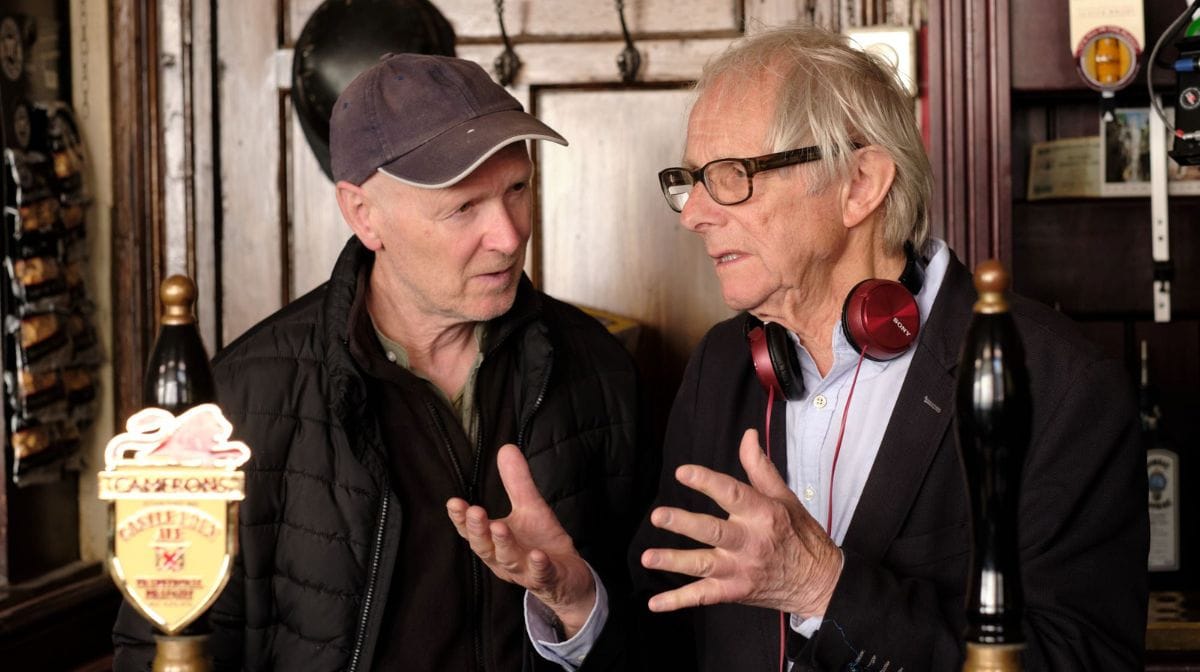
Your early teleplays were broadcast right after the news, and your goal was to have viewers exercise the same judgment they were using while watching journalistic reporting. Is that mindset something you’ve carried through to today when the kinds of images and news they’re consuming could be the very thing you’re pushing against?
Yeah, the news was at 9:00, and at 9:15 we had our studio dramas. Of course, we were saying things in a roundabout way that directly opposed what the news was saying or [had] a different point of view. The cinema works differently because you’re swimming in an ocean as one small minnows among sharks. I think, as time has moved on, [I’m] dealing with bigger ideas than just today’s headlines. We learned the basic ideas of class struggle in the ’60s, societies riven by struggle between two opposing classes with interests that would never be reconciled. And then the reality of that was played out in the ’80s with Reaganomics, Thatcher, and the neoliberal victories. Now, we’ve got the harvest.
I recently caught up with The Spirit of ‘45. How much of that film is a skeleton key to your whole body of work? Especially with the woman at the end who says the generation that lived through 1945 has a duty to join the fight and inspire people with the original vision, that sounds a lot like what you’re still doing.
It’s one of the pivotal moments because the people fought the war had to experience 1930s. It was only six years earlier, and that had been a decade of mass unemployment and poverty. And then the unemployment was only solved by people going to war. When they came back, they said, “We’re not going back to the ’30s.” There was the sense that a united country was fighting fascism, and then Churchill was swept away because they remembered him as a class warrior. His biggest enemy was the working class of his own country. He’s now been revealed as this terrible racist and other appalling things by the books that have been written. He was swept away, and a welfare state was created. There were no food banks; everybody had a home; we had a health service that really belonged to the people. Housing was built by local councils with direct labor, not private builders. It was a people’s country, in many respects, not in all. That was Thatcher’s determination to destroy that, and she did. She led the way, and Labour followed. Now, we have two neoliberal parties.
But that film peters out because there wasn’t a good end at the time. I’ve often thought about redoing the last 20 minutes, maybe, which is something I might still do. If I can get rid of a health issue I’ve got and scrub the energy, I’d love to re-cut the last 20 minutes. We had a Labour leader of the left [Jeremy Corbyn] briefly. He set out a very modest program to begin to re-establish a welfare state, and he was destroyed by the right wing. That raises a lot of interesting questions. I’m glad you saw it. I quite like that film.
You’ve directed ads, most recently the “For the Many” campaign you directed for Jeremy Corbyn. How do you conceive of the connection between those and your feature filmmaking?
I was in a bad place in the ’80s. I’d done several documentaries, and most of them had been banned. I was in a position where, as they say, I couldn’t direct traffic. The designer I was working with was a very close friend, and he said, “Don’t leave, come and do a couple of commercials with me.” So I did, and the people who did them were just normal professionals. But I hated it, and fortunately, I was very bad at it because I questioned the research. That’s one thing you can’t do when you’re making commercials. I got out of it as soon as I could. But nevertheless, it was a very bad time. I did them and wish I hadn’t. But I had bills to pay, and that was the only answer I saw short of getting a teaching job or something. And I didn’t want to do that, so I took the easy option. But anyway, you have to own up.
How do you conceive of the connection between form and content in your films? You’ve expressed frustration that critics in particular focus on the brushstrokes of your work but don’t stand back and look at the content of the painting at large.
Yes, and the reverse is also true now. They think, “Ah, it’s just about politics, and we won’t look at the filmmaking.” It’s really important to say that the [film’s] writer, Paul Laverty, confronts a blank sheet of paper, and it’s his film as much as mine…if not more so. And Rebecca O’Brien, the producer who’s creative as well as arranging the finance. We’re a trio, and it’s not me personally.
We try to tell stories that are truthful. The deal with your audience is we will tell you the truth as far as we can, and we invite you to believe in the people we’re presenting, that they are who they say they are. To get those sorts of performances and tell the story in the way we wanted, we present the people in a way that’s empathetic and where you will be engaged with them rather than see them as objects. That leads to certain kinds of lighting. It leads to the camera being at eye-level so you’re like an observer. It leads to the lenses you use so they correspond to the human eye. It leads to the editing so that you cut when your eye would move, and the film doesn’t know in advance who’s going to speak next. There may be a challenging look, and then [they’ll] look. Or somebody might interrupt, so you hear a word or two, and then you cut.
There’s a sense of the audience being in the corner of the room just absorbed, and the train of thought of the audience is what we try and reflect in the way the film is made. But, for me, it should have a pleasing quality. The frame should be pleasing. The colors should seem absolutely true, as though you just walked in off the road to someone’s house…but nevertheless arranged very discreetly so that the point of interest is what we want it to be, which is probably the face of the person doing what they’re doing or thinking. The lines of the frame draw you to that. We spend ages—not ages, but comparatively [long]—just thinking, “Where do I place the camera?”

The first question is the light, always the light. It’s often said that filmmaking is physically about light hitting celluloid, but it’s also about enlightening and clarifying. There’s this metaphorical connection to light as well as the physical connection to the mechanism of creating an image. So there’s all those considerations. If you use music, and we use it sparingly, it has to earn its place. Because there’s nothing that can destroy a realistic scene [like], “Hey, here’s the orchestra! Where are they sitting?” You’ve got to be absolutely disciplined, and George Fenton is a wonderful composer [who] understands that discretion and nuance. You might have been following two or three characters and their interconnection, but the music can expand and turn something very human and precise in between a small group into something more of a general application.
So there’s all those things that you’re juggling all the time, as well as—and this is the other key point—creating a situation in which the reality of the experience of the people in front of the camera is as true, authentic, and surprising as it can be so that it doesn’t seem premeditated. It’s not somebody with lines in their head they’re repeating. There’s no wisecracks unless it’s genuine from the person. You don’t see the script in their heads, and creating that with people who often haven’t been in front of a camera before needs a certain ambience. It needs an ease, a friendship, a warmth, and a sense of enjoyment so that they can be vulnerable and confident.
On the note of the camera, I loved the way that for Yara, the camera represents the past as a gift from her father, the present moments it captures, and the future of hope and strength she chooses to see. Are we to understand that as similar to your own relationship with the camera?
In some respects, yes. That was a line of Paul’s, and it’s a lovely thought. How you can gain strength from that, seeing the good and the positive from something much more intangible. Just the nuances of how people are with each other, the joy people have in each other. We shot as a documentary the little scenes when they’re eating together, but with the same kind of lenses and eyelines. The people there have met just two or three times before. They’re really engaged in conversation. You can’t hear what they’re saying, but they’re absolutely desperate to listen to what each other is saying and enjoying speaking to each other. That’s the pure gold you look for. It’s not put-on because it’s the first time they’ve ever said it. If it happens, great.
You’ll soon be the subject of a retrospective at New York’s Film Forum. Is there any title you’d be keen for people to catch up with, either because it’s thematically relevant to this film or because it hasn’t been as widely seen as you’d like?
There’s one little film that we did called The Gamekeeper, which was written by Barry Hines, who wrote Kes, which over the years became quite popular. If people see that, that’s a great pleasure. The Gamekeeper has got very much the same quality, and it was barely seen. It’s about a year in the life of a gamekeeper, but the gamekeeper was a steel worker whose work shut. He was a worker who stood alongside other workers in solidarity, whatever the dispute. Now, his job is to keep those same people off private land, and there’s an inherent contradiction there. That’s what attracted Barry Hines to the story. It’s [based on] a lovely book, and it was the same cameraman that shot Kes. So that’s one. [Editor’s Note: The Gamekeeper will unfortunately not be showing as part of Film Forum’s Ken Loach retrospective.]
We did a little comedy called Riff-Raff about building workers on the building sites written by a building worker with a great eye and ear for comedy. He died shortly afterwards, Bill Jesse. That was good fun that, again, people didn’t see much. But I’ll be glad if anybody goes at all, really!
Since 2001, we've brought you uncompromising, candid takes on the world of film, music, television, video games, theater, and more. Independently owned and operated publications like Slant have been hit hard in recent years, but we’re committed to keeping our content free and accessible—meaning no paywalls or fees.
If you like what we do, please consider subscribing to our Patreon or making a donation.