
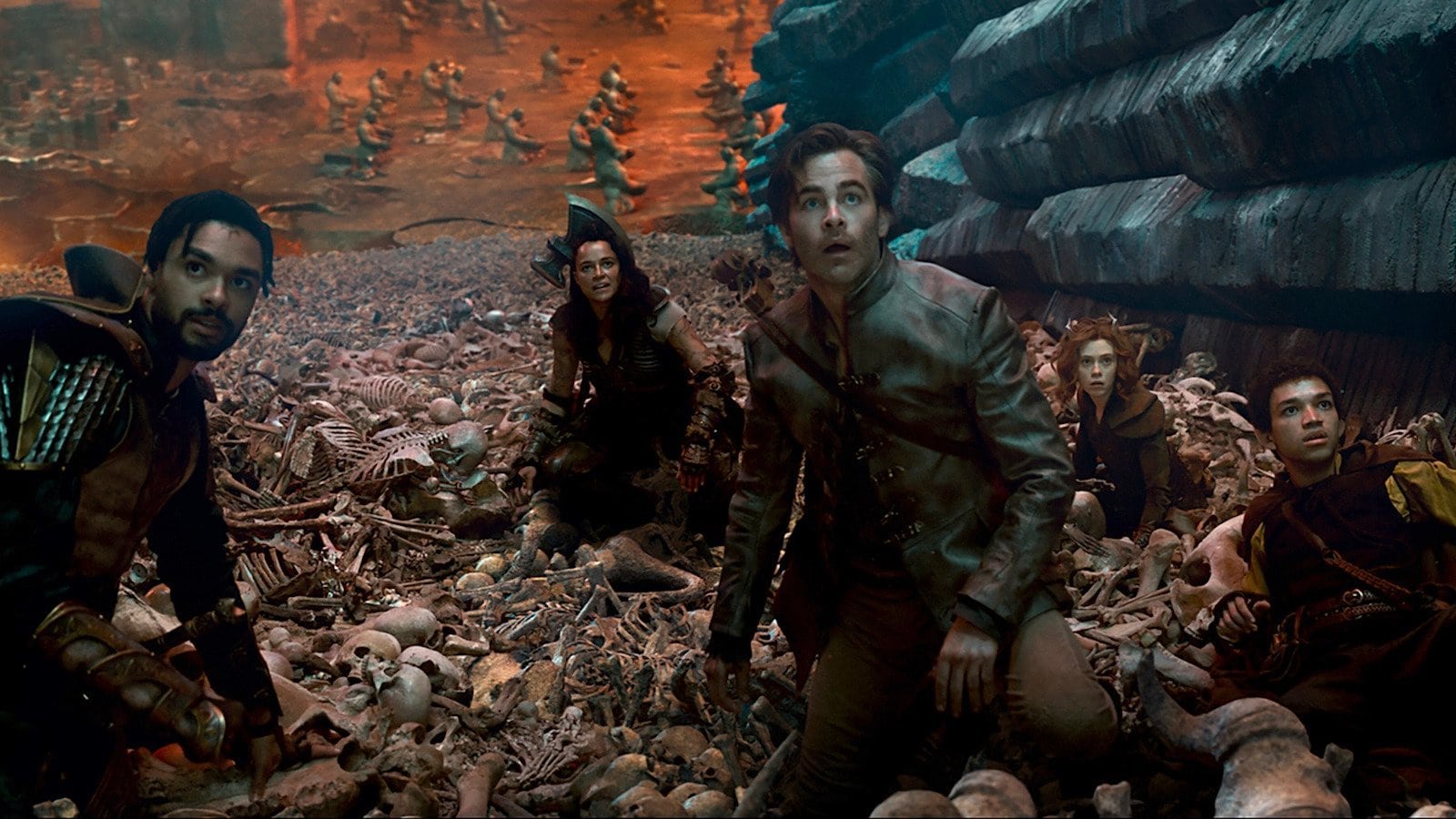
How does one turn a methodically complex RPG like Dungeons & Dragons into a streamlined action-adventure blockbuster aimed at teenagers? Evidently, by sanding down everything that made said franchise a massive success in the first place.
While Dungeons & Dragons: Honor Among Thieves bears the namesake of Gary Gygax and Dave Arneson’s fantasy tabletop epic, the film feels more akin to the limp styling of the modern-day Marvel machine than it does a longstanding property known for its dynamic decision-making elements. The film hardly even delivers on the promise of its plural-filled title, as there’s exactly one dungeon that’s excavated and only one dragon that’s satisfyingly dealt with.
In an effort to try and fast-track its barebones setup, Honor Among Thieves begins in media res, as bard turned thief Edgin Darvis (Chris Pine) summarizes, to an uncaring parole board, the circumstances that have led this once respected Harper to a life of petty larceny. Since his fellow Harpers operate as the biggest nonprofit spy network across the land, this selfless snoop is eventually tempted to seek out monetary compensation by any other means necessary, which includes stealing the powerful Red Wizard’s marked gold.
This rash action indirectly led to the death of Darvis’s wife, along with his daughter Kira’s (Chloe Coleman) capture at the hands of former ally Forge Fitzwilliam (a delightfully dickish Hugh Grant). Now, Darvis, along with his fellow imprisoned barbarian sidekick Holga Kilgore (Michelle Rodriguez), seeks retribution against Fitzwilliam, and the duo escape from their hiemal prison shortly afterward and set off to accomplish just that.
It’s from this point that the film firmly situates itself as an aspirant Avengers in everything but the fantasy setting. Our two heroes slowly, but ever so surely, assemble a motley crew of agreeable-enough personalities, get into a few cheeky brawls that carry no sense of weight or consequence, bicker with one another until an eventual make-up session comes their way, and defeat some anonymous world-threatening baddie before the eventual post-credits sequence.
Outside of its well-worn structure, Honor Among Thieves’s flat dialogue is also increasingly indicative of its formulaic contemporary-blockbuster nature, which is evenly split between nonstop exposition and banter-filled quips. Characters will openly mock others’ honor-bound motivations and appearances in order to score some cheap laughs at their expense, and these are the film’s go-to punchlines. While having a sense of humor about itself is preferable to some po-faced Skyrim-esque excursion, there surely could have been a better middle ground than the generally self-mocking tone that Honor Among Thieves wholeheartedly embraces.
The overreliance on wisecracks and employing, and then mocking, clichés make it seem as if Honor Among Thieves is outright embarrassed by its source material and wants you to know it. The film tries to appease viewers who couldn’t care less about Dungeons & Dragons’s methodically conceived world and feels as if the best way at gaining these newcomers’ sympathy is to reinforce their pre-existing notions about the seemingly geek-favored franchise as something to belittle. Choices such as these may prove beneficial in attracting a wider audience at the moment, but in the process, they also turn one of the most instantly recognizable role-playing titles into anonymous, big-budget fodder intended for mass consumption.
Since 2001, we've brought you uncompromising, candid takes on the world of film, music, television, video games, theater, and more. Independently owned and operated publications like Slant have been hit hard in recent years, but we’re committed to keeping our content free and accessible—meaning no paywalls or fees.
If you like what we do, please consider subscribing to our Patreon or making a donation.



Very tedious to see yet another movie adaptation that hates the thing it is adapting.
It doesn’t, simply put. This is better as an example of a Critic failing to understand the tone of the source material as well as the self-perception of its fanbase.
We ourselves love making fun of ourselves. Using and abusing tropes and self-referential in jokes is a time-honored part of the pastime.
Paul’s criticism make sense in a vacuum, but they really just don’t apply here.
And if there is one word that someone could not validly apply to this movie, it’s Tedious.
I think it’s worth noting that you’re almost alone in seeing the movie as mocking its source material. Most of the reviews have explicitly mentioned how well the movie captures the tone of the game as it’s actually played, and based on my viewing last week, I have to agree with them. You’re seeing condescension here where, I’m pretty confident, none is intended.
I mean, D&D is the anonymous big-budget fodder intended for mass consumption of the roleplaying world so I’m not sure what the author was looking for. Also, D&D is not particularly complex or full of “decisions”. The basic setting of The Forgotten Realms is just about the most generic, reductive and derivative fantasy setting possible. I have not seen the film yet, but from what I have heard it actually comes off as respectful of the source material while also being playful and cheeky about that source material’s inherent silliness. As usual, Slant reviewers just do not seem to know how to have fun.
I’ve seen it, and I’m also a longtime D&D player and have consumed a great deal of media set in and about the Forgotten Realms.
While I think calling Forgotten Realms “Reductive” is itself a reductive point of view. It’s a massive amalgam of the independent creative works – Many of them very good – Of dozens or hundreds of authors and creators, all injecting their own influences and ideas into it. With an amalgam of this size inspired by all of the things that inspired all of the hands that built it, you’re undoubtedly going to get a broad sense of homogeneity at a surface level, but as I said above – That would be a reductive view.
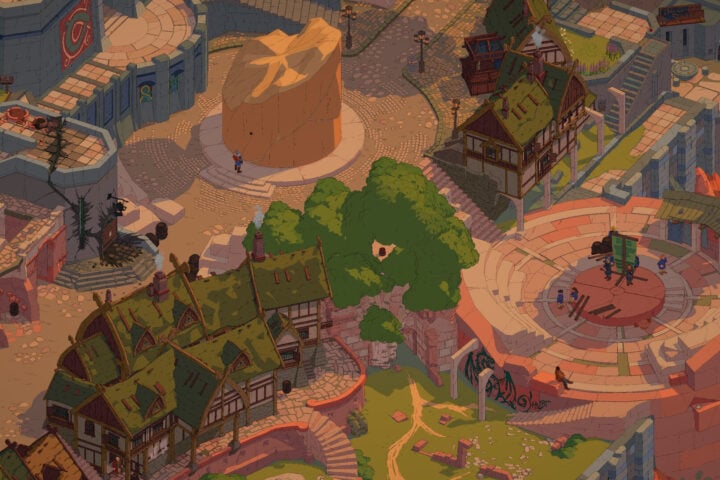
And yes, the film is 100% a good-hearted love letter to Faerun. Whoever developed the story got everything right in terms of lore. Every person and place seen or mentioned pays apt detail to the world without shoving the fact it’s doing it in your face. Neverwinter didn’t have to actually look like Neverwinter, but it does, and some of the features in the establishing shots of that city are never called out in the film, but they are still there.
That’s something that happens when the people making the film care.
Spoiler in the sixth sentence… well done.