There’s a deceptively narrow margin of error for a coming-of-age period piece like Kelly O’Sullivan and Alex Thompson’s Mouse. Inaccurate recreation of a particular setting or a slight tonal misstep can make for a film whose youthful nostalgia feels cynical, or just tired and formulaic. The film dodges these pitfalls impressively, delivering the genre’s familiar tropes with sincerity and a vividly realized sense of place and time, as well as touching on an experience surprisingly under-examined in depictions of adolescence’s end: grief.
Taking place in the early 2000s, O’Sullivan and Thompson’s second co-directed feature revolves around Minnie (Katherine Mallen Kupferer), a shy theater kid heading into her senior year of high school in Little Rock, Arkansas, in the shadow of her more popular, outgoing best friend, Callie (Chloe Coleman). The latter hosts fun sleepovers and plays the grand piano at a huge house owned by her worldly British mother, Helen (Sophie Okonedo), and charismatic ex-military father, Mark (Christopher R. Ellis), while Minnie shares her scrappier working-class home with an adopted baby brother and the occasional animal that her single mother, Barbara (Tara Mallen, Kupferer’s real-life mother), rescues from the veterinary clinic where she works.
Though the strokes used to fill out Minnie and Callie’s family backgrounds can be broad, with the contrast between Helen’s multi-course meals and Barbara’s reheated TV dinners being particularly on the nose, Mouse mostly deploys lived-in details to great effect. Contemporary needle drops, alongside one character’s insistence that he’s foregoing college to join the army and hunt down “Osama,” ground the story in its era without lapsing too far into geriatric millennial cosplay. The girls also have an endearing obsession with Good Will Hunting, which becomes more affecting after a devastating accident permanently impacts their relationship.
Another effect of this life-altering tragedy is that Minnie is brought closer to Helen, and it’s the dynamic between these two characters that becomes crucial to the film’s ambivalent study of maturity and self-actualization. Despite the unbridgeable gaps in age, experience, and culture that remain between the pair, they share an outsider status and a melancholy compounded by the presence of Callie in their lives. In contrast with the romantic future in theater that she’s planned out for herself post-graduation, Minnie can imagine little to look forward to, while the once-celebrated concert pianist Helen’s prospects appear to be diminishing, with her marriage breaking down as she moves further into middle age.
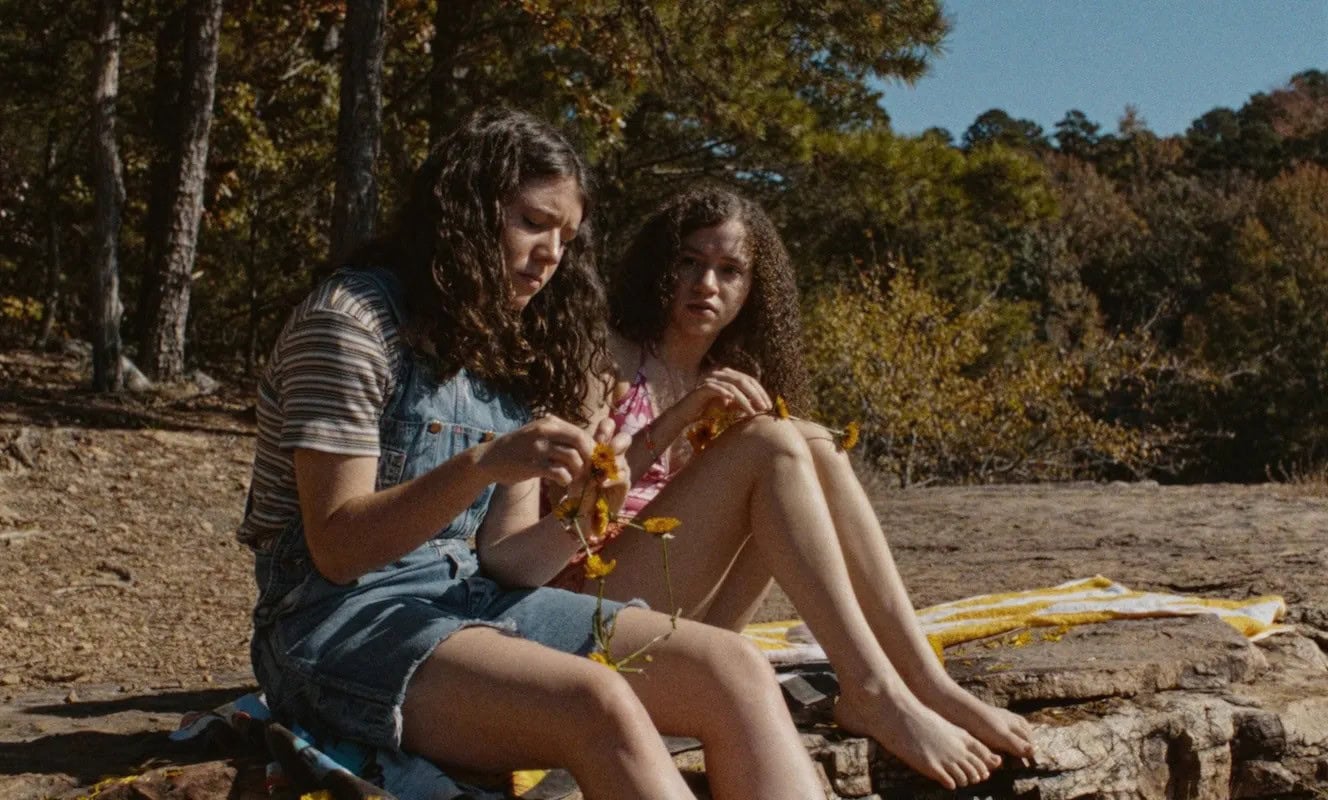
This is subject matter that might sound heavy, but the difficult feelings dredged up never overwhelm the film’s gentle, character-driven approach. Mouse’s emotional heft can creep up on the viewer unannounced: The late reappearance of a plucked flower, briefly focused upon after a tender moment between Lillie and Callie near the start of the film, is an effective symbol for healing, and a scene in which Minnie helps her mom to euthanize an elderly dog resonates as a climactic reckoning with a loss too painful to process directly.
Unfortunately, the film itself loses its way over the final half hour or so, as it locks in more firmly to a conventional structure, with a few rushed final conflicts introduced unconvincingly. More egregiously, O’Sullivan’s script yields to some of the temptations so deftly avoided up to that point, both showing a little too much pity for Minnie’s upbringing and attempting a more thorough unpicking of her and Helen’s thorny tangle of emotions.
Mouse’s efforts to resolve its story in a hopeful way undermine its refreshingly honest thesis statement—that growing up brings departures and disappointment, just as much as it offers adventure and opportunity. Spelling things out in explicit therapy-speak, the film begins to disavow the fundamental messiness that its pivotal trauma left in its wake, as well as partly exposing the rails that the characters have been on for a majority of the runtime. It’s a shame to see O’Sullivan and Thompson struggle ultimately to overcome the inherent limitations of the genre, but by that point they’ve earned enough goodwill to ride out this bumpy landing.
Since 2001, we've brought you uncompromising, candid takes on the world of film, music, television, video games, theater, and more. Independently owned and operated publications like Slant have been hit hard in recent years, but we’re committed to keeping our content free and accessible—meaning no paywalls or fees.
If you like what we do, please consider subscribing to our Patreon or making a donation.