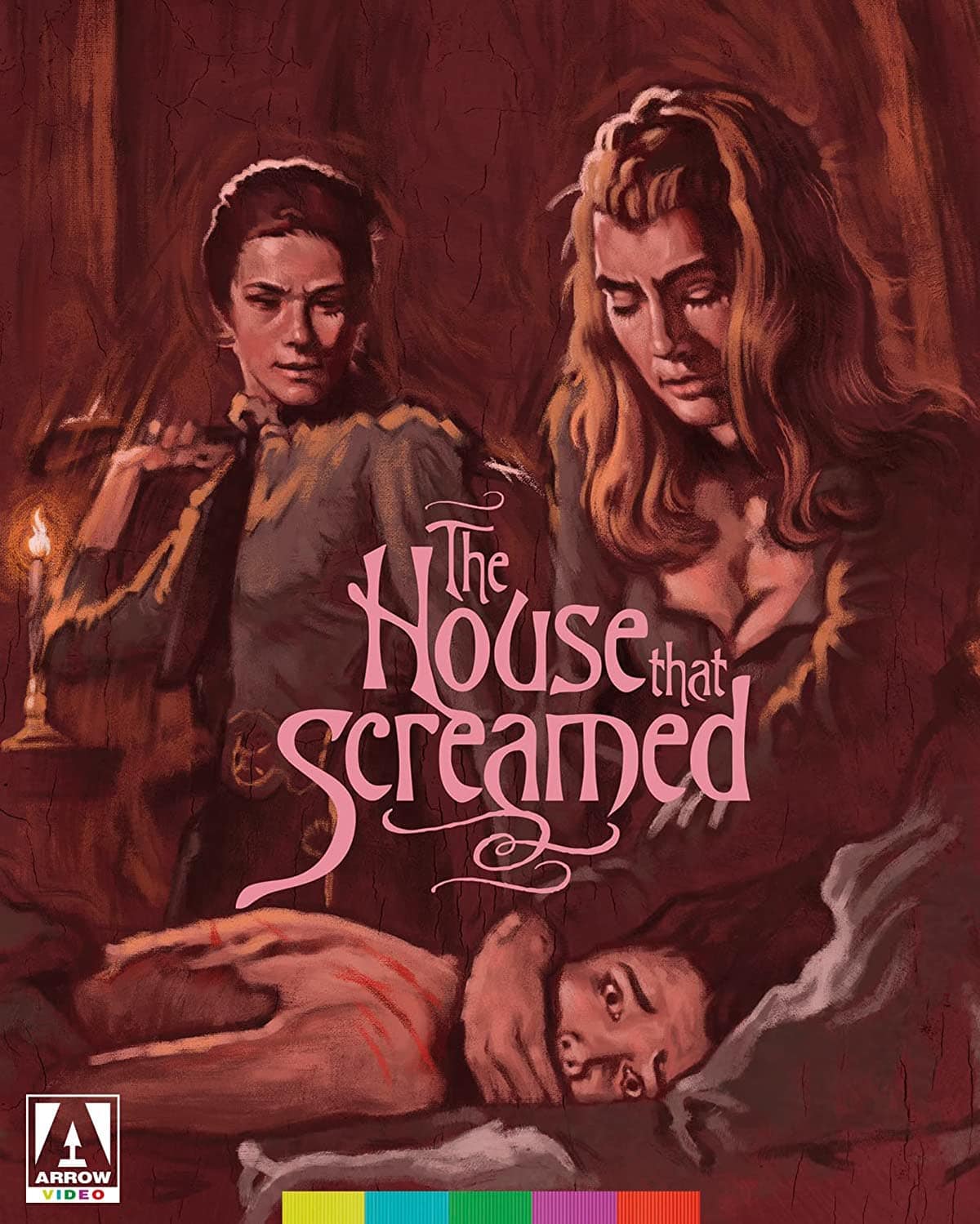
 Intended by its producers to put Spain squarely on the map of commercial horror cinema, The House That Screamed is a seminal slice of Spanish gothic. Writer-director Narciso Ibáñez Serrador made his bones on television, where he became a nationwide sensation by creating and hosting Tales to Keep You Awake, a terrific series (akin to Rod Serling’s Night Gallery in its mix of fantasy and horror) that Severin Films released on Blu-ray last year. The House That Screamed was initially intended to be an episode of that show until it was decided that the material was strong enough to stand on its own as a feature film.
A canny amalgam of Hammer Films’s gloomy interiors and the bloody antics of an early giallo like Mario Bava’s Blood and Black Lace, The House That Screamed takes an admirable slow-burn approach to delivering its shocks. Where contemporary horror filmmakers would feel the need for an initial jolt of terror within the first few minutes, Ibáñez Serrador takes his time adumbrating the film’s cloistered milieu, as well as its diverse dramatis personae, all while subtly telegraphing some of his abiding themes and visual conceits. With its methodical build-up to a shocking murder, the film brings to mind Hitchcock’s Psycho.
We enter the seemingly idyllic grounds of an ornate 19th-century French boarding school along with a coach bearing young Teresa (Cristina Galbó), after passing through gates that are conspicuously kept heavily padlocked—whether to keep the riff raff out, or the residents safely ensconced within, remains to be seen. At any rate, the general impression of institutional confinement is only deepened when Teresa’s guardian commends her to the care of Madame Fourneau (Lilli Palmer), the establishment’s stern headmistress, in an exchange that seems more like the transfer of an inmate from one facility to another.
Madame Fourneau’s regime is exemplified by strict discipline, learning by rote, and severe punishment for any perceived infraction. In the sly Trojan horse manner often employed by genre cinema to disguise social criticism, this boarding school serves as a metaphor for life in contemporary Spain under the dictatorial control of Generalissimo Francisco Franco, who ruled with an iron hand until his passing in 1975. Like the members of a fascist youth group, the girls march around in single file, perform acts of almost ritualistic cleanliness (such as keeping their nightgowns on while showering), and find themselves regaled at meal times by supposedly edifying readings that discourage interaction among them.
Ibáñez Serrador exhibits an astute grasp of group psychology when it’s revealed that Irene (Mary Maude), Madame Fourneau’s all-too-apt acolyte, has created her own secret society within the larger student body, which she presides over as the meanest of mean girls. Although it’s clearly grounded in her own perverse proclivities, Irene’s sadism also serves an institutional function as an instrument of discipline and punishment. Nor is Irene the only one at the school who merges libidinal and social economies. While Irene mercilessly flogs a recalcitrant young resident, Madame Fourneau looks on, her habitually severe lips parted in apparent excitation. After the others file out of the room, Madame Fourneau leans down to kiss the girl’s bloody welts, and it’s the only time we ever glimpse a real crack in her armature.

The House That Screamed’s eroticism is relatively subdued in its graphic explicitness, which is unsurprising given the censorship situation in Spain at the time. But the filmmakers find some fascinating ways to hint at the barely submerged sexuality of these young ladies. In the most hilariously unhinged scene in the film, the girls in sewing class “work through” their knowledge that one of their number is being serviced by a working-class stud in the stables. The shot selection and rhythm of the editing build to a veritable frenzy, even while overtly nothing is going on but the stitching. The sequence ends with a priceless punch line when one girl suddenly pricks her finger, drawing a spot of blood. Pricks often leave a mark.
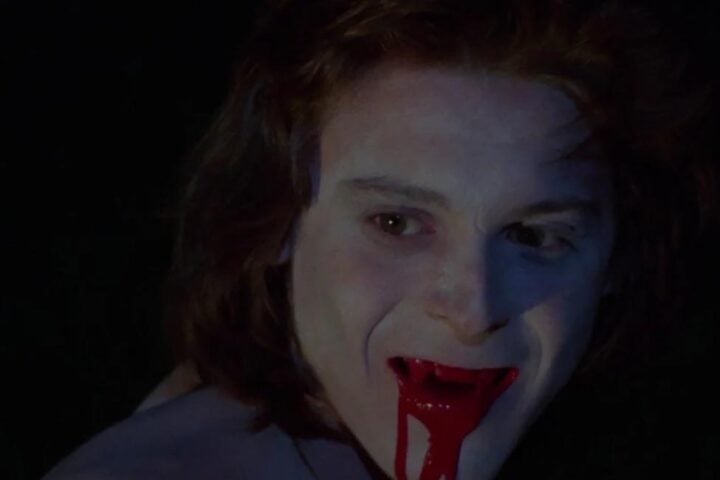
Ibáñez Serrador’s script doubles down on his preoccupation with abnormal psychology when it comes to the relationship between Madame Fourneau and her son, Louis (John Moulder-Brown), a baby-faced lad of 15 who also lives on the premises. Her absolute dictatorship extends to her control over Louis, whom she forbids from interacting with any of the young women, since none of them are any good, let alone good enough for him. She makes it painfully clear that only a younger version of herself would suffice as an ideal companion.
As it turns out, Madame Fourneau’s designs on Louis aren’t entirely motherly, as evidenced by the protracted kiss that they share after one of her disapproving dressing-downs. Ibáñez Serrador films them in extreme close-up, until a surreal dissolve reveals the brightly hued panes of a stained-glass window, serving as a cheeky juxtaposition of the sacred and the profane. Despite his air of pampered innocence, Louis proves to be a sneaky little voyeur, spying on the girls while they shower, in another clear nod to Hitchcock’s Psycho.
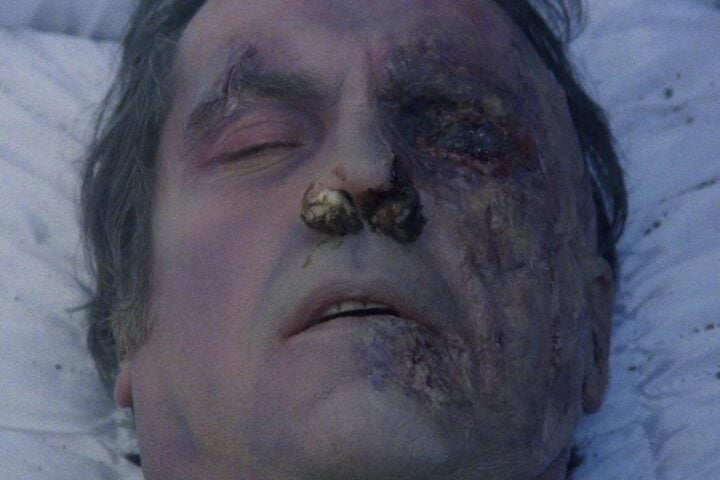
In its denouement, the film goes full-on Grand Guignol. Despite serving as the ideal red herring with his mother-fixated bruised masculinity, Louis turns out to be the culprit, and his motivation is nuts. He’s doing a Frankenstein number with the ideal bits he’s taken from his victims, in an effort to construct the perfect woman, “just like the girl that married dear old dad.” Delving into the blackest of black humor, the finale unfolds like one sick joke, except we’re never quite sure whether Louis is entirely in on it or not. Is he being ironic in his exhortations to his mother to get to know his creation—or is he perfectly earnest? The matter remains entirely open. Like Polanski in Repulsion, Ibáñez Serrador ends his film with an extreme close-up on a frozen frame that signals the ineluctable merger of childhood innocence and utter madness.
Image/Sound
Arrow offers new 2K restorations for two cuts of The House That Screamed: the 105-minute extended version (titled The Finishing School) and the American International theatrical cut that runs about 10 minutes shorter. Both transfers are sourced from the original camera negatives, and they render full justice to Manuel Berenguer’s densely colored and deeply tenebrous cinematography. Gone is the patchwork quality that plagued Scream Factory’s 2016 Blu-ray due to some dupey-looking SD inserts, particularly conspicuous during key murder sequences. With this restoration, the fine details of period costume and décor really stand out. Grain is well maintained, never growing too unwieldy. On the audio front, the extended cut has both English and Spanish LPCM mono mixes (the AIP cut is English-only). Since the film was shot in English, that’s probably the way to go. Either way, these tracks cleanly and clearly deliver dialogue, and really put across Waldo de los Ríos’s eerie score.
Extras
The commentary track from programmer, podcaster, and critic Anna Bogutskaya is conversational and thoroughly informative. She begins by going over Narciso Ibáñez Serrador’s early life and career in television. Bogutskaya then provides an in-depth history and analysis of The House That Screamed, touching on matters like how the film’s tenebrous ambience contrasts with the daylight horrors of Who Can Kill a Child? (Ibáñez Serrador’s only other feature film), and how The House That Screamed belongs in the company of other horror titles that center on groups of young women like Black Christmas and The House on Sorority Row.
Interviewed in 2017, actor John Moulder-Brown talks about testing for his role alongside Lilli Palmer, developing a crush on Cristina Galbó, and conveying the madness behind his character’s innocent mien. Taped at the 2012 Fantastic Fest in Manchester, actress Mary Maude discusses getting her start on the British TV show The Freewheelers, working with Ibáñez Serrador, and learning Spanish on the set. And story writer Juan Tébar goes into his time in film school, his love of Dickens and Hitchcock, meeting Narciso Ibáñez Serrador while working in TV, his original short story, and electing to stay off set during production.
Elsewhere, Alejandro Ibáñez, Narciso Ibáñez Serrador’s son, discusses his family’s long history in theater and television, his relationship with his father, how Tales to Keep You Awake presages Black Mirror, and how his father paved the way for next-generation Spanish genre filmmakers like Paco Plaza, Jaume Balagueró, and Álex de la Iglesia. Finally, Spanish film historian Dr. Antonio Lazar-Reboll puts The House That Screamed in the context of earlier genre cinema of Jess Franco and Paul Naschy, adumbrates Spanish culture under “late Francoism,” and elucidates the sociopolitical commentary embedded in the film.
Overall
Narciso Ibáñez Serrador’s chilling, atmospheric, and pioneering slice of Spanish gothic gets a superb new 2K restoration as well as a full house of fine bonus materials.
Since 2001, we've brought you uncompromising, candid takes on the world of film, music, television, video games, theater, and more. Independently owned and operated publications like Slant have been hit hard in recent years, but we’re committed to keeping our content free and accessible—meaning no paywalls or fees.
If you like what we do, please consider subscribing to our Patreon or making a donation.