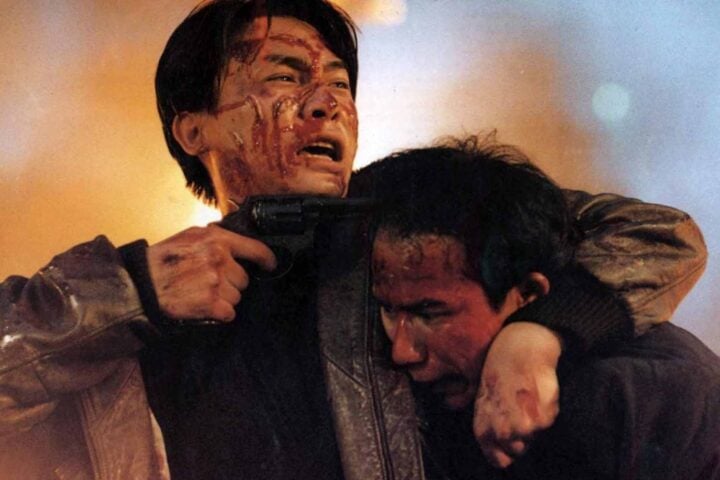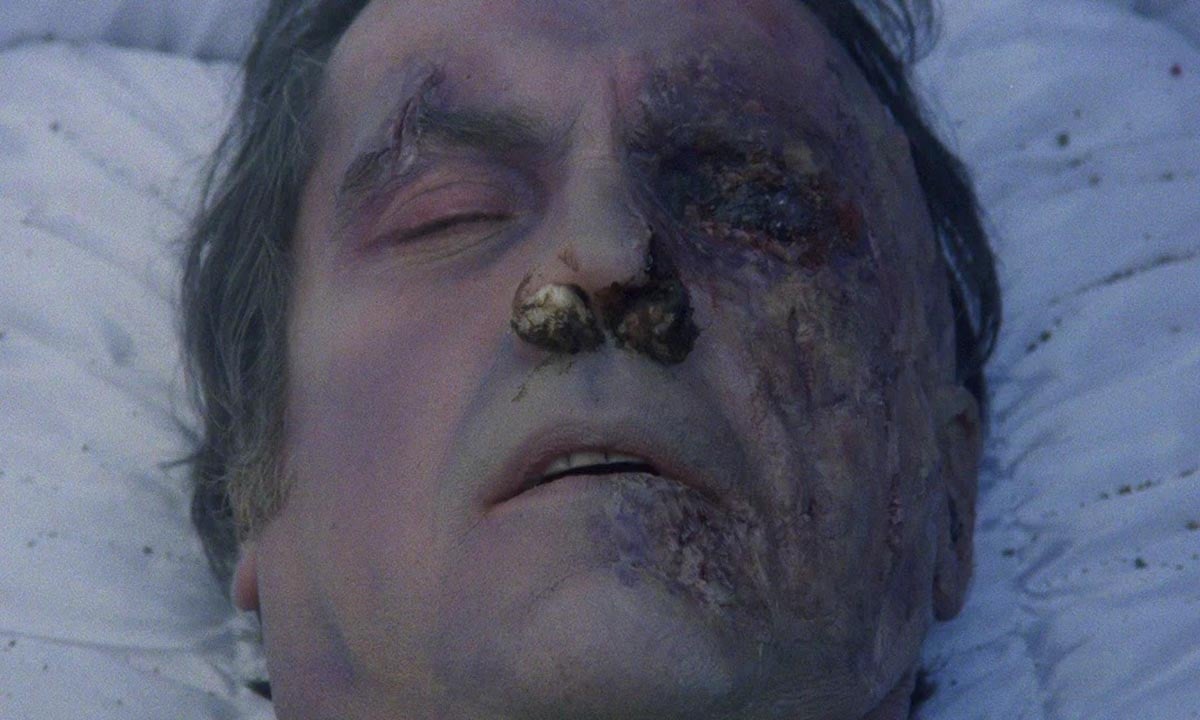
When Francisco Franco—the fascist leader who had ruled over Spain since the end of the Civil War in 1939—died in 1975, his passing led to a sea change in Spanish cinema. This was even more the case with the inauguration of the S rating in 1977, which lasted until 1983. The equivalent of the MPAA’s R rating, it opened the floodgates for more graphic depictions of sex and violence. It also allowed filmmakers more latitude when addressing previously taboo topics, which earlier films had to tackle at a more metaphorical level. In Exorcismo: Defying a Dictator & Raising Hell in Post-Franco Spain, Severin Films brings together 18 films that chronologically straddle the creation of the S rating, alongside a terrific new documentary that provides tons of information on the films and their times.
Broadly speaking, the films gathered here address three primary topics from an amazingly diverse number of angles: family, religion, and politics. The cross-pollination of these themes both within and across films leads to a particularly fertile and fascinating body of work. For the historically minded, this set includes the two-part 1983 documentary After… directed by Cecilia Bartolomé and José Juan Bartolomé, which provides gripping on-the-ground footage of the political situation during Spain’s so-called “transition” to democracy.
Francoist Spain, allied with the Catholic Church, preached the inviolate sanctity of the patriarchally oriented family. Two of the films in this set adopt the science-fictional scenario of the post-apocalyptic society (or post-nuclear family) to examine the underlying stressors in this arrangement. José Ulloa’s Creation of the Damned, from 1974, places two couples (and one beefy post-adolescent stepson) in an underground shelter and watches as their petty jealousies, microaggressions, and selfishness blossom into betrayal and murder.
In Leon Klimovsky’s The People Who Own the Dark, from 1975 and starring horror icon Paul Naschy, a gathering of sadistically inclined bigwigs faces a Night of the Living Dead-inflected siege from the hoi polloi who have been blinded by an atomic blast. Klimovsky’s film also shares Night of the Living Dead’s penchant for a bummer of an ending, this one scored to a highly ironic version of the last movement of Beethoven’s Ninth Symphony.
Claudio Guerín’s Bell from Hell, from 1973, features the gothic staples of gaslighting and scheming for an inheritance as a way to underline the ruthlessness and greed of a matriarchal clan led by Viveca Lindfors’s Marta. The hero (Renaud Varley) emerges at the start from a psychiatric clinic where his aunt has paid to keep him a prisoner. Antisocial pranks and intimations of incest escalate to a downbeat finale that borrows from Edgar Allan Poe.
In Jorge Darnell’s The Devil’s Exorcist, from 1975, the parents (Luis Prendes and María del Puy) of its troubled heroine are more concerned with business affairs (and just plain affairs) than with the welfare of their daughter (Inma de Santis). The young woman is prey to increasingly surreal visions that owe a debt to the hallway full of grasping hands from Roman Polanski’s Repulsion. There isn’t actually an exorcist on hand here, and madness proves contagious in an ending that somewhat recalls the third segment of Dan Curtis’s Trilogy of Terror.
Writer-director Rodjara also plays the lead in 1980’s Dimorfo, a historically minded riff on Pier Paolo Pasolini’s Teorema. Sometime near the end of WWII, fugitive Jew Salomón finds refuge with one of cinema’s most bizarre families, setting off a series of erotically charged encounters with the bisexual son (Alex Fontsa), lustful daughter-in-law (Akira Valer), and elderly matriarch (J. Caracuel) who proves to be a troubled patriarch struggling to take his dead wife’s place.
Two films from Eugenio Martín explore different aspects of the family structure. In the disturbing That House in the Outskirts, from 1980, a woman (Silvia Aguilar) unknowingly moves into a remote house, once used as a clandestine clinic, where she received an illegal abortion five years earlier. What’s more, the clinic’s unhinged nurse (Alida Valli) now lives upstairs, and her plans for the young woman include one truly nasty scare. The nurse’s bizarro motivations are a funhouse mirror distortion of Francoist beliefs: Any woman who would get an abortion has a place in hell ready for her.
In Supernatural, from a year later, an abusive husband’s undying hatred reaches out from beyond the grave to terrorize his widow (Cristina Galbó). The effects here are Starcrash-level ropey, but the film’s excursion into parapsychology, in particular the use of Kirlian photography to capture evidence of a person’s aura, is truly fascinating.
The one title that explicitly deals with religion is Eloy de la Iglesia’s The Priest, from 1978, in which a priest (Simón Andreu) does valiant yet futile battle with temptation. “The flesh is strong, the spirit weak,” he says in an inversion of the typical maxim. The solution to his fleshly torments, involving the misuse of some garden shears, proves shockingly radical. The priest is equally a failure when called to defend the tenets of National Catholicism, the Francoist alliance between church and state. In the context of the film, which is set against the backdrop of a 1966 referendum that imposed slight restraints on Franco’s sweeping powers, the titular priest is seen as just one failure among many; by the end, all but one of the parish priests have left the order.
Politics are front and center in Javier Aguirre’s Battered Flesh, from 1978. Based on a true story, it’s a gritty “women in prison” film where the inmates cynically, but not incorrectly, avow that they’re punished inordinately for their little crimes, while the big criminals—industrialists, politicos, and other big shots—act with impunity. Another wrinkle is introduced when a group of political prisoners is introduced into gen pop. Berta (Esperanza Roy), our heroine, tries to establish some much-needed solidarity between the two groups, which, when the chips are really down, falls apart entirely. The film ends despairingly, repeatedly showing Berta’s suicide by train in slow-motion, just to rub our noses in the atrocity of it all.
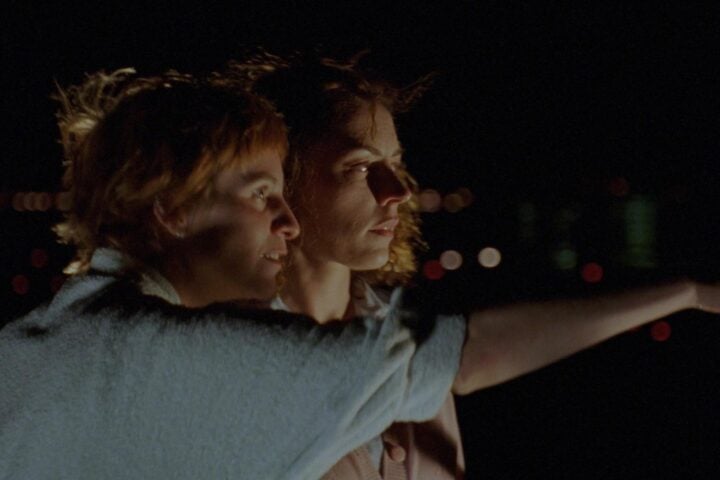
A slasher with a sense of political history, Manuel Esteba’s Bloody Sex, from 1981, takes place in 1975, and opens with a radio broadcasting the announcement of Franco’s death. As though in a direct rebuke to the regime’s repressive laws against homosexuality, the film’s leads are a lesbian couple (Diana Conca and Viky Palma) who, along with their parapsychologist friend (Rosa Romero), wind up spending more time than they bargained for in a spooky old gothic mansion. The motivation for the killing spree that takes up the film’s final stretch (which boasts a surprise decapitation and a disquietingly bloody knife to the vagina) traces back to a politically motivated gang rape that occurred on the premises back in 1942.
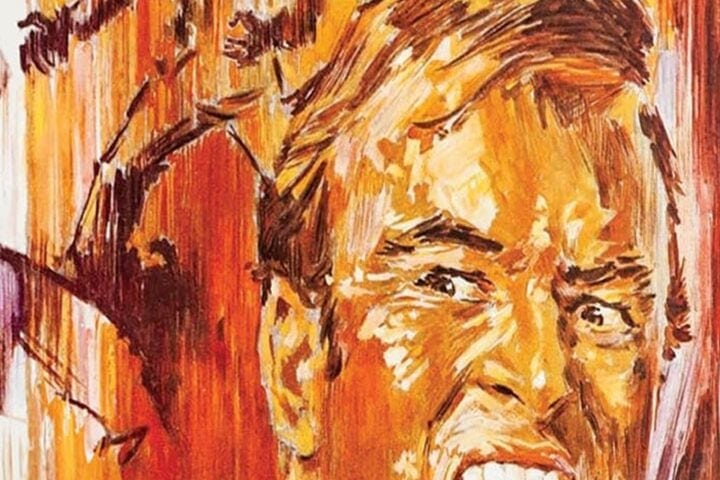
Though its poster makes it look like a Spanish version of Cruising, José María Castellví’s Poppers is actually a stylish and surreal riff on The Most Dangerous Game that also provides intriguing glimpses into the new wave, punk, and gay subcultures of the time. This heady brew made up the countercultural scene that came to be known as La Movida Madrileña, among whose guiding lights was filmmaker Pedro Almodóvar. Poppers includes some jaw-dropping set designs, especially for the domiciles of its quintet of powerbrokers, who include a businessman (Alfredo Mayo) who enjoys watching horses give birth in the middle of his vast living room.
Severin’s Exorcismo box set also includes a couple of films that are outliers; neither set out to say anything remotely profound about society or religion, yet they remain distinctive and enjoyable viewing for other reasons. Morbus (Or Bon Appetite), from 1983, directed by Ignasi P. Ferré and written by Isabel Coixet, is an unabashed parody of both the softcore and horror genres. Along the way, you get shambling zombies, satanic cultists on bicycles, one ritualistic orgy (with votary candles), a reanimating fluid that isn’t neon green, and a trio of well-read sex workers with literary aspirations. What’s more, genre stalwart Victor Israel (and some terrible prosthetic teeth) shows up as the horror novelist’s Afghan sidekick Shiu Shi to provide some much-needed sadistic torture via various implements.
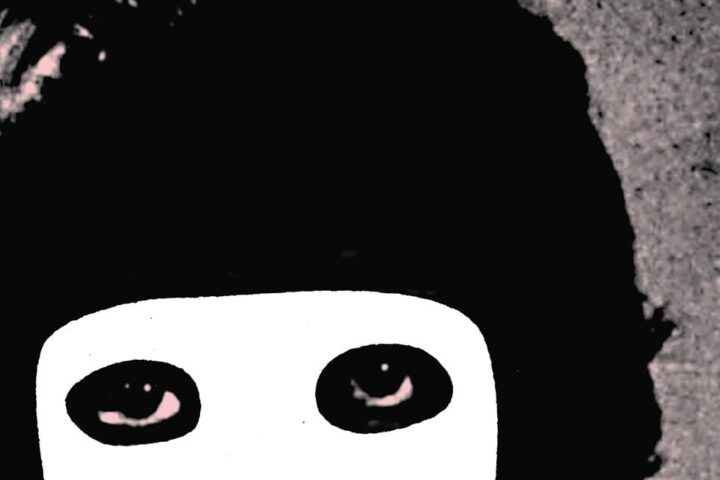
Atmospheric and oneiric, Juan Ignacio Galván’s Faces, from 1978, features a sculptor (Juan Pardo) who can no longer see faces until he meets a mysterious woman (Carmen Saville) aboard a jetliner on the way to his seaside home on Lanzarote. They’re both pestered by a diabolical man in white (Julián Ugarte), who keeps prodding the woman to complete her enigmatic mission, which doesn’t end well for the sculptor. Adding to the overall aura of the uncanny, there’s Bárbara Rey performing a bloody voodoo dance that wouldn’t be out of place in one of Jess Franco’s films. The druggy aftereffects of the film are akin to that of the vividly hued and quite hallucinogenic plant that turns up near the end.
Exorcismo: Defying a Dictator & Raising Hell in Post-Franco Spain is available on February 3 from Severin Films.
Since 2001, we've brought you uncompromising, candid takes on the world of film, music, television, video games, theater, and more. Independently owned and operated publications like Slant have been hit hard in recent years, but we’re committed to keeping our content free and accessible—meaning no paywalls or fees.
If you like what we do, please consider subscribing to our Patreon or making a donation.