With the third installment of their Danza Macabra series, the fine, twisted folks at Severin Films shift focus from the boot of Italy to the Iberian peninsula. This collection spotlights four fascinating Spanish examples of the sort of moody gothic filmmaking that Italian directors like Mario Bava and Antonio Margheriti, not to mention Hammer Films in Britain, helped to popularize for international markets.
Rife with reptilian monsters, vampires, zombified Knights Templar, and even a cameo from Frankenstein and his misbegotten creation, these films vary considerably in tone and approach, ranging from rambling shaggy-dog tales to almost esoteric fables. They also differ in how far they’re willing to go with their respective lashings of sex and violence, growing bolder as the restrictions of the Franco regime lifted after the dictator’s passing in 1975.
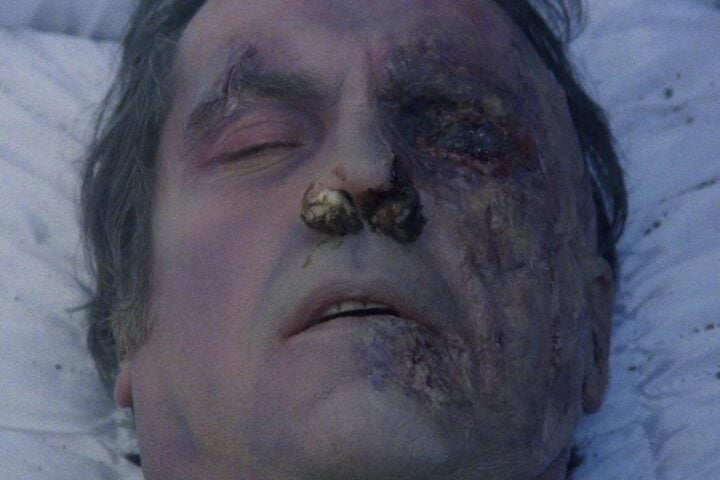
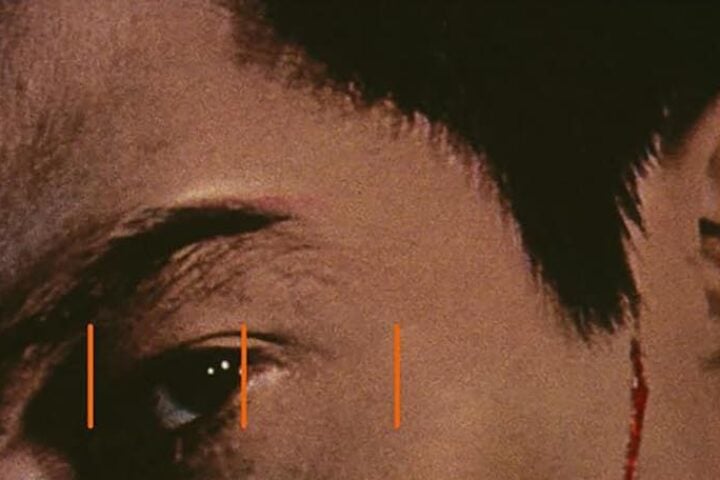
Writer-director Miguel Madrid’s schizoid Necrophagous, from 1971, divides its time between two principal storylines that barely cohere in the end. In the first, businessman Michael Sherrington (Bill Curran) returns to his ancestral manse to find out what really happened to his wife, who allegedly died in childbirth. The secondary plot concerns the disappearance of his brother, Sir Robert (John Clark), which is somehow related to a spate of body-snatchings from the local graveyard overseen by the nefarious-looking Mr. Fowles (Victor Israel).
Despite its deliciously gothic atmospherics, Necrophagous provokes more questions than it can ever hope to answer. We never do find out exactly what happened to Michael’s wife. What’s more, our ostensible hero drops out of the film for long stretches at a time (at one point, he’s even taken for dead). And Necrophagous leaves the details of Sir Robert’s unholy medical experiments to a massive exposition dump that only occurs after all the scaly monster action is already over with. Characters remain ciphers, their motivations entirely opaque. Jealousies, plots, and counterplots are continually hinted at but rarely pay out in any significant fashion.
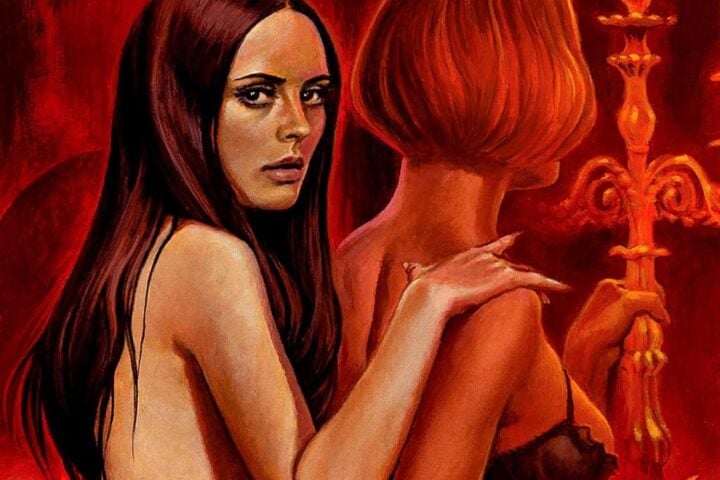
The intriguingly, if inexplicably, titled Cake of Blood, also from 1971, is a four-part omnibus that plays like a distinctly arthouse spin on Amicus anthology films of the ’60s. The segments, each taking place in a different historical timeframe, tend to treat their on-screen horrors more as loose metaphors than actual flesh-and-blood creatures. But that’s not to say that they lack sumptuous visuals, moody cinematography, and even some moderate bloodletting.
José María Vallés’s “Tarot” stars Julián Ugarte as an errant knight who wanders a blasted landscape dominated by religious fanatics before encountering a dead woman who may or may not be a demon. Initially recalling Ingmar Bergman’s The Seventh Seal, the segment morphs into something very different and weirder, before reaching an ending that’s open-ended to the point of impenetrability. Less inscrutable is Emilio Martínez Lázaro’s “Victor Frankenstein,” a strangely pastoral version of the Frankenstein story that sees Victor (Ángel Carmona Ristol) deliberately setting the risibly foppish yet successfully homicidal creature (Eusebio Poncela) against his own family, ending in mutually assured destruction for all.
Far cheekier is Ángel Carmona Ristol’s “Terror Among the Christians,” which compares the persecution of Christians under Nero to the depredations of a group of vampires led by a striking succubus (Marta May). In the final and arguably finest of the segments, “The Dance, Or Emotional Survivals,” writer-director Jaime Chávarri conjures up a modern-day ghost story that explores the entanglements of love, lust, and betrayal, yet ends in a peculiarly lyrical mode.
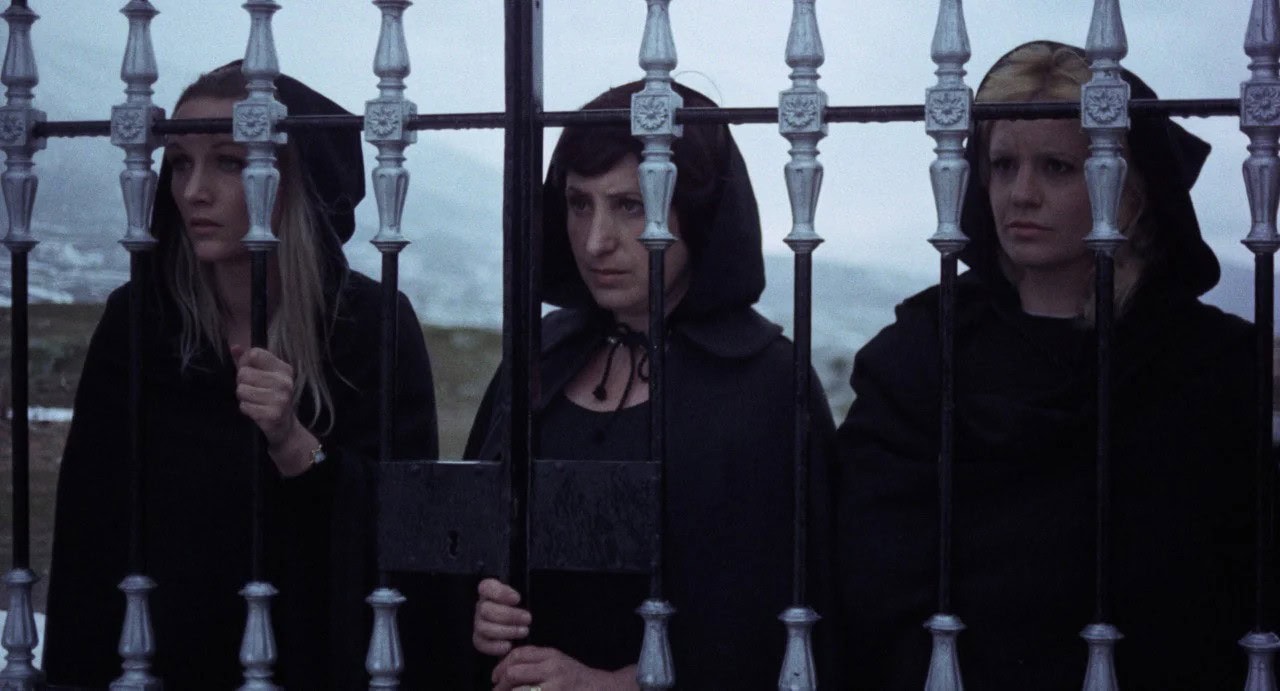
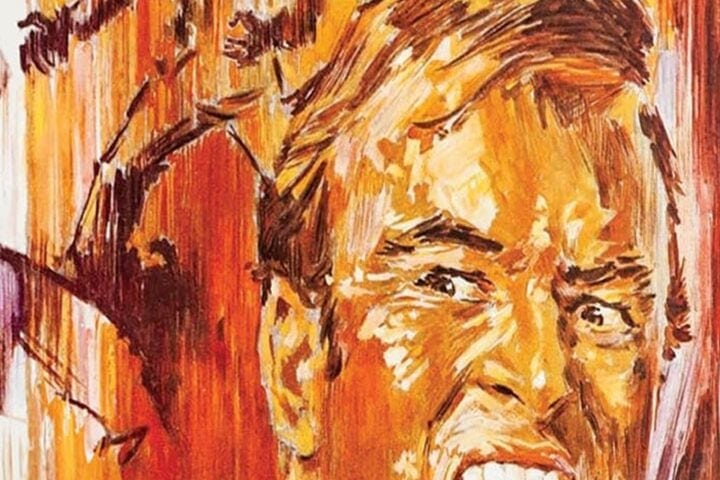
When it comes to Cross of the Devil, from 1974, the story behind the film is almost as interesting for horror buffs as the film itself. The script originated with Spanish horror icon Paul Naschy (writing under his real name, Jacinto Molina), based on a trio of spectral stories from 19th-century writer Gustavo Adolfo Bécquer, whose surreal “The Kiss” was the basis for the first segment of Luis Buñuel’s deliriously fragmented The Phantom of Liberty.
The project was taken away from Naschy by an unscrupulous producer and handed over to expat British director John Gilling, who had helmed two excellent Hammer horror films from 1966, The Plague of the Zombies and The Reptile. Since Cross of the Devil makes legions of skeletal Knights Templar its ultimate villains, it can’t help but play out like a more literary version of Amando De Ossorio’s pulpier Tombs of the Blind Dead from 1972.
Hashish-addicted writer Alfred Dawson (Ramiro Oliveros) and his fiancée, Maria (Carmen Sevilla), travel to Spain in order to investigate the suspicious death of his sister at the foot of the titular diabolical landmark. In the course of his investigations, Alfred hears snippets of the three Becquer stories, only one of which actually plays out in flashback. The hazy ambience of hash smoke that hangs over Alfred, and some 11th-hour tinkering with the line between dream and reality, gives Cross of the Devil an added and very welcome jolt of the surreal.
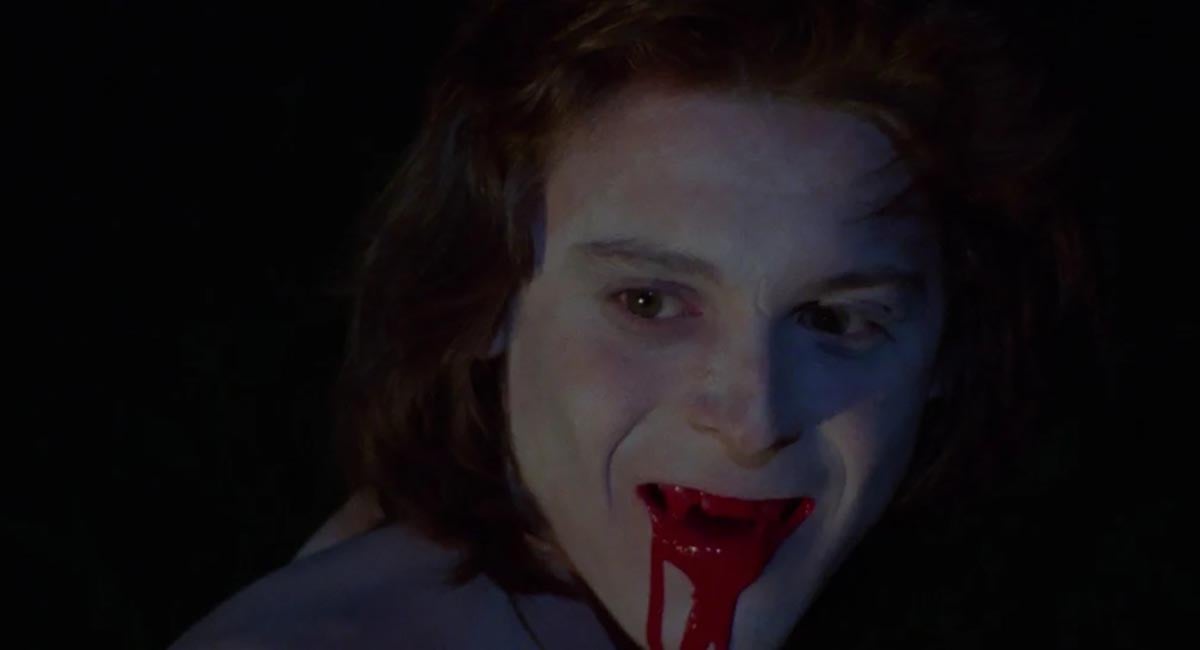
Directed by regular Naschy collaborator León Klimovsky, 1975’s The Night of the Walking Dead takes a fairly distinctive approach to the vampire myth. Its depiction of the undead Baron Rudolph de Winberg (Carlos Ballesteros) as a Byronic and ultimately tragic figure aligns it with Dan Curtis’s 1974 TV adaptation of Dracula and, much later, Francis Ford Coppola’s Bram Stoker’s Dracula. Then again, the climactic vampire ball definitely brings to mind Roman Polanski’s Dance of the Vampires, a.k.a. The Fearless Vampire Killers, from 1967.
The baron’s would-be immortal beloved, Catherine (Emma Cohen), is kept in a sickly state as much by the highhanded edicts of her tyrannical father (Manuel Pereiro) as by the unspecified heart ailment she apparently suffers from. So it’s poetic justice when, late in the film, Catherine’s sister, Mariam (Amparo Climent), vampirizes her own father, a symbolic act of rebellion against the oppressive patriarchy. The generation gap definitely separates the villagers and the vampires. A sort of mod vampirism marks The Night of the Walking Dead from its opening credits, with their fuzzed-out guitars and vibrant solarized images of fanged cavorters.
But it isn’t all flower power versus garlic powder. At one point, Mariam turns her undead attentions on Catherine, tapping at her bedroom window in a shot that eerily anticipates one of the terrifying highpoints of Tobe Hooper’s Salem’s Lot miniseries. Nor does the story end happily. A cruel twist of fate leaves the baron bereft and awaiting a long-overdue reunion with the daylight. Klimovsky’s film is by turns trippy, ghoulish, garish, and sad, effectively closing out another excellent assortment of cinematic Euro gothicism from Severin Films.
Danza Macabra Vol. Three: The Spanish Gothic Collection is now available.
Since 2001, we've brought you uncompromising, candid takes on the world of film, music, television, video games, theater, and more. Independently owned and operated publications like Slant have been hit hard in recent years, but we’re committed to keeping our content free and accessible—meaning no paywalls or fees.
If you like what we do, please consider subscribing to our Patreon or making a donation.