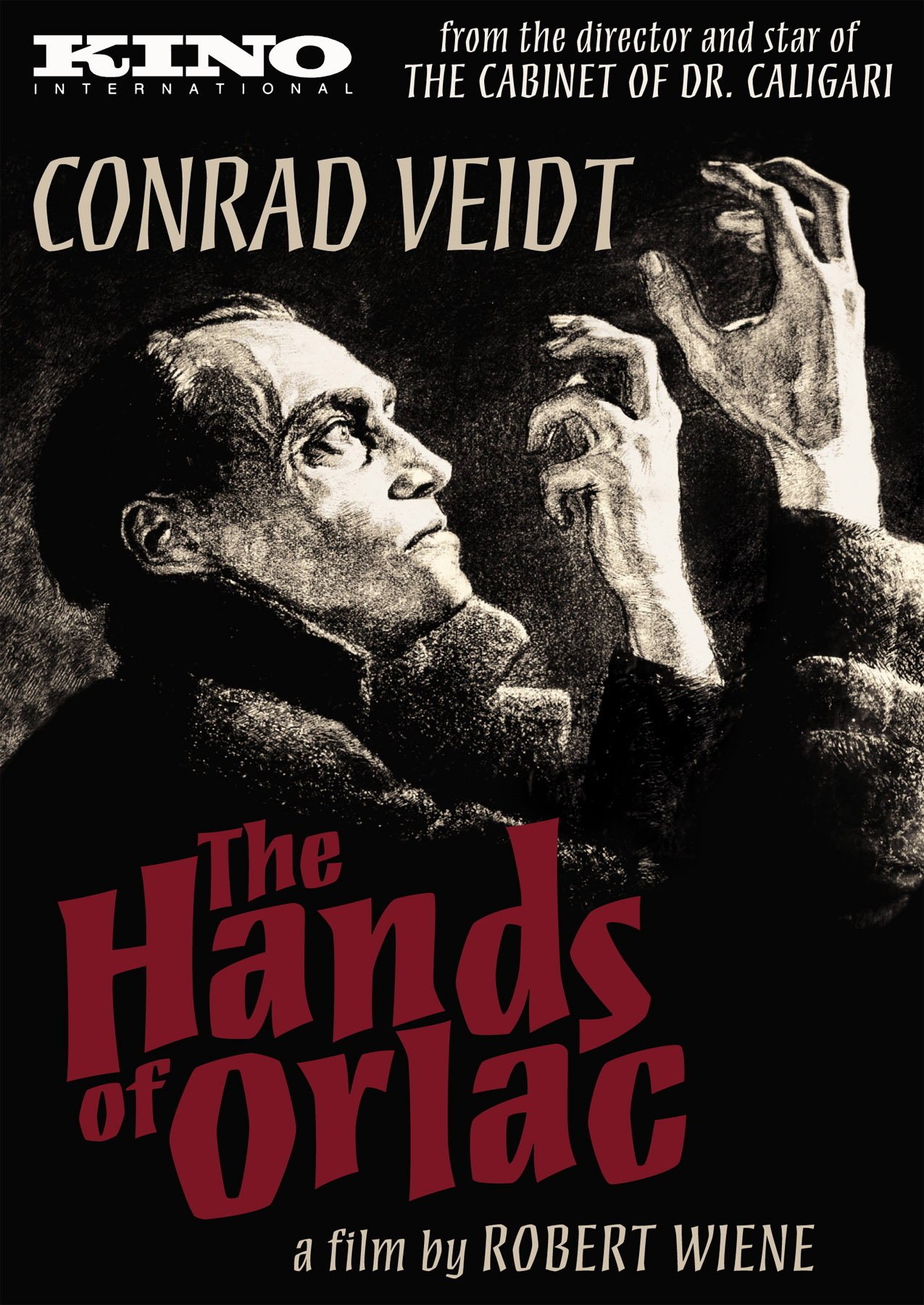
 Like his more famous The Cabinet of Dr. Caligari, Robert Wiene’s The Hands of Orlac is ponderous but indelible. Orlac (Conrad Veidt) is a concert pianist whose hands—his wife Ivana’s (Alexandra Sorina) favorite part of his body—are mangled in a train wreck. The macabre twist is that the new limbs sewn to Orlac’s stumps previously belonged to a murderer, a revelation that, along with the appearance of a mysterious blackmailer (Fritz Kortner), proceeds to demolish Orlac’s sanity. “The spirit rules the hand,” his doctor (Hans Homma) attempts to convince him, but no less than Veidt’s Cesare from The Cabinet of Dr. Caligari, Orlac suggests a prisoner in a trance-like march, and it’s only a matter of time before his hands are drawn to their old owner’s dagger.
The film is full of castration imagery, Freudian intimations (including a patriarchal ogre in a twisted castle), and assorted perversities (like Ivana’s erotic yearning to be touched), yet next to the relentlessly distorted subjectivity of The Cabinet of Dr. Caligari, Wiene’s handling here seems almost minimalist, keeping the camera angles mostly balanced as the horrors materialize through stark atmosphere and Veidt’s extraordinary physical expressiveness.
Paced like a funeral and saddled with one of the least satisfying endings in the pantheon of German Expressionism, The Hands of Orlac scarcely reaches the baroque complexities of The Man Who Laughs, where it was Veidt’s grin, rather than his mitts, that tortured his character. Still, it lingers as a unique waking nightmare both in the viewer’s mind and in film history: He may have inspired a long line of unruly-appendage shocks, from Karl Freund’s 1935 remake Mad Love to Sam Raimi’s Evil Dead 2, but Wiene’s greatest contribution was imagining, decades before David Cronenberg, the ultimate horror of the body turning against itself.
Image/Sound
Other than a couple of cracked patches and lines that betray the degraded quality of the original print, Kino’s transfer is quite amazing in its sharpness. Paul Mercer’s score is serviceable, if unmemorable.
Extras
Most interesting among the sparse extras is a brief but detailed featurette essaying the differences between Orlac’s domestic and international cuts, with a single change in angle at times altering the entire feel of a shot. Also included is the original trailer for Mad Love with a cackling Peter Lorre, an image gallery, excerpts of the Maurice Renard novel which served as the film’s basis, and an informative essay by Veidt biographer John Soister.
Overall
Conrad Veidt is the original innocent with dirty hands in this memorable bit of Germanic arcana.
Since 2001, we've brought you uncompromising, candid takes on the world of film, music, television, video games, theater, and more. Independently owned and operated publications like Slant have been hit hard in recent years, but we’re committed to keeping our content free and accessible—meaning no paywalls or fees.
If you like what we do, please consider subscribing to our Patreon or making a donation.