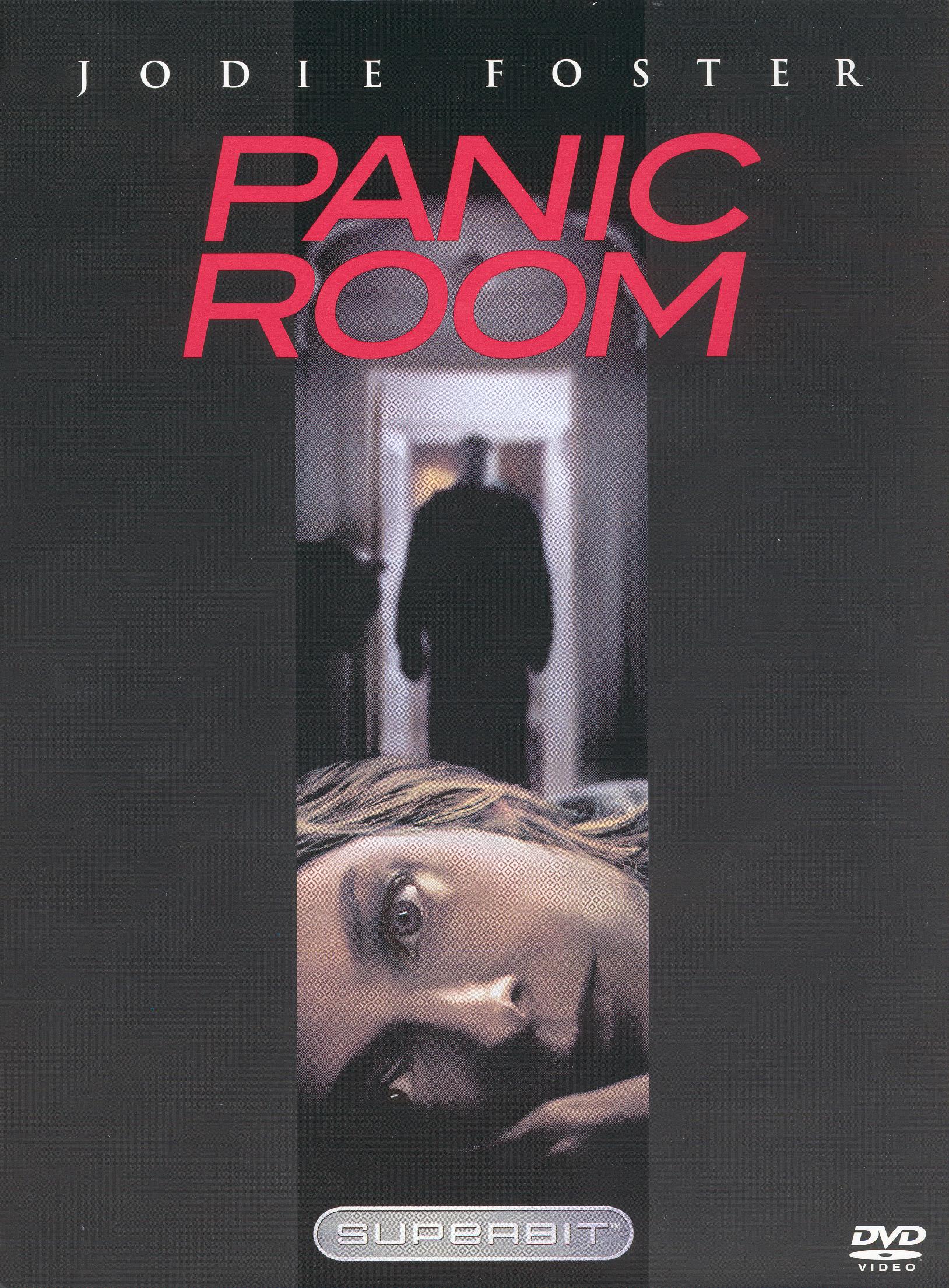
 In essence David Fincher’s version of Hitchcock’s Rope, Panic Room is a study of the house as labyrinth, its center a closet space built in fear, tucked away in a corner and hidden behind a mirror. This film of many traps is, on one level, a well versed thriller better made than most, having far more in common with the director’s The Game than Se7en or Fight Club, which contain his more overt stylistic and satirical flourishes. The setup is simple: A mother (Jodie Foster) and daughter (Kristen Stewart) whose home is invaded by thieves are forced to lock themselves in a room designed as both watchtower and safe, a rectangular box built of concrete and steel which boasts a wall of monitors connected to cameras throughout the house.
While being a thriller, Panic Room is also something more. The film could almost be thought of as a haunted house tale with living ghosts. Meg and her daughter are both the walking wounded, recovering from the damage of a recent divorce, and while the thieves are a motley lot who spend more time arguing among themselves then anything else, one in particular, Burnham (Forest Whitaker), is driven by a more personal urgency, and the film uses Whitaker’s mournful presence to great effect. On a formal level, the motion control camera effects, creating a free roaming image which performs impossible feats of acrobatics by invading impossible spaces, feels less gimmicky here than they did in Fight Club.
Fincher uses the trick to discompose and complicate the perception of the interior of the house, twisting and bending to indicate a certain spatial uncertainty. Mirroring the characters internal instabilities, this invaded space is threatening because it seems vast and haunted, yet easily penetrated. Fincher takes his camera through walls and floors and glides through rooms with a menacing ease. It is at once an almost cheeky demonstration of omnipotence/authorial control, and an important symbolic gesture in transforming this New York Brownstone into a seemingly inescapable maze which forces those who journey into it further and further inward. Space is a wounded thing in Panic Room, and Fincher’s expressionism is allowed full reign.
Image/Sound
Image and sound are first rate, even on the extras material, which befits the elaborately packaged product.
Extras
Panic Room’s Special Edition DVD is a celebration of formal experimentation and self-conscious narrative thrills, and as befits Fincher’s reputation for concentration on details and an almost obsessive mechanical preoccupation, it’s jam-packed with technical tidbits. The set, which splits discs two and three into pre-production, production and post-production, is replete with featurette after featurette from in-depth ruminations on the necessity of color timing to the apparent glories of pre-visualization strategies. Of particular interest are the extensive discussions of the film’s use of hyper-fluid and free roaming camera motion and the uses of CGI in “liberating” the camera, and the soft spoken intensity of visual effects supervisor and Thor look-a-like Kevin Tod Haug, who is charmingly direct and yet clearly passionate in his dissection of the difficulties inherent in so elaborate a production.
The amazing thing is that rather than coming across as either throwaway space filler or a lot of self-absorbed navel gazing, these extras are compellingly instructive. The set even takes the time to feature an essay on Fincher’s use of Super 35mm film and the benefits and pitfalls in the various kinds of film formats and image framing over the years, even sidestepping into a gentle attack on viewers who prefer full-screen pan and scan to letterboxed formats for television exhibition. There is something pleasingly intense and yet quietly detached, never cloying or overly precious, about the set, something that is only appropriate given Fincher’s work and its own passionate want to examine the smallest movements in the grandest of ways.
This special edition is jam-packed with juicy little bits and pieces as well as thoughtful commentary tracks, particularly from director Fincher, who comes across as less the tech-geek than the dedicated filmmaker. On a side note, it must be mentioned that the set has perhaps some of the most elegant menus ever put on a DVD, featuring a clever use of a blueprint conceit and the same kind of smooth glide through space that punctuates the film.
Overall
The DVD provides enough substantive insight into the contemporary Hollywood filmmaking process that what often feels like the shallow, masturbatory quality to so many DVD special editions is pleasantly mitigated.
Since 2001, we've brought you uncompromising, candid takes on the world of film, music, television, video games, theater, and more. Independently owned and operated publications like Slant have been hit hard in recent years, but we’re committed to keeping our content free and accessible—meaning no paywalls or fees.
If you like what we do, please consider subscribing to our Patreon or making a donation.