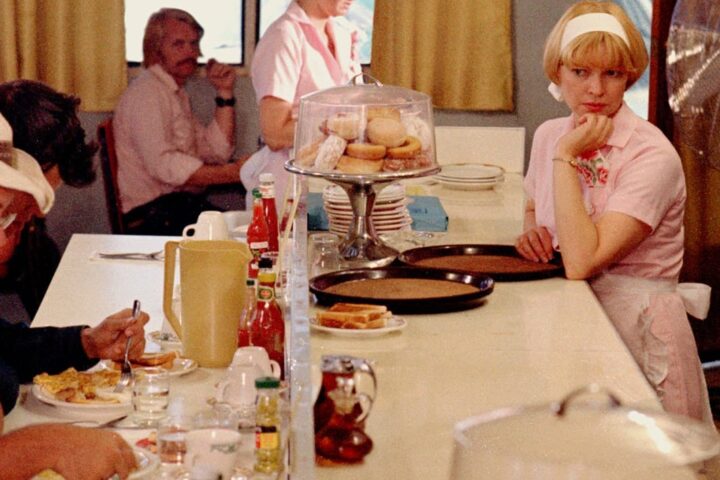
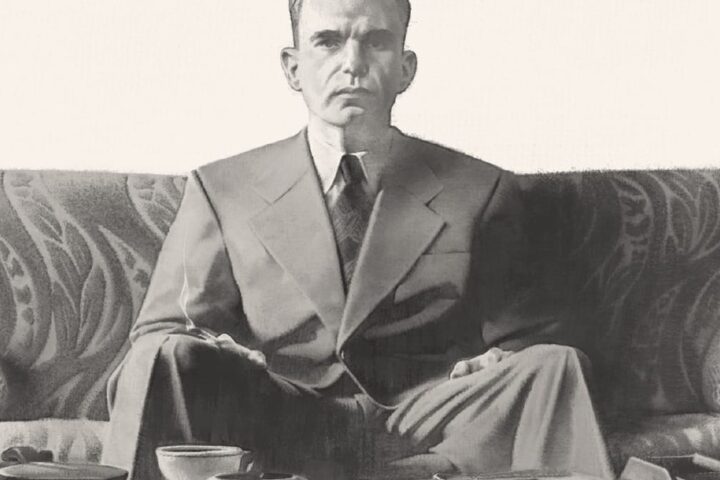
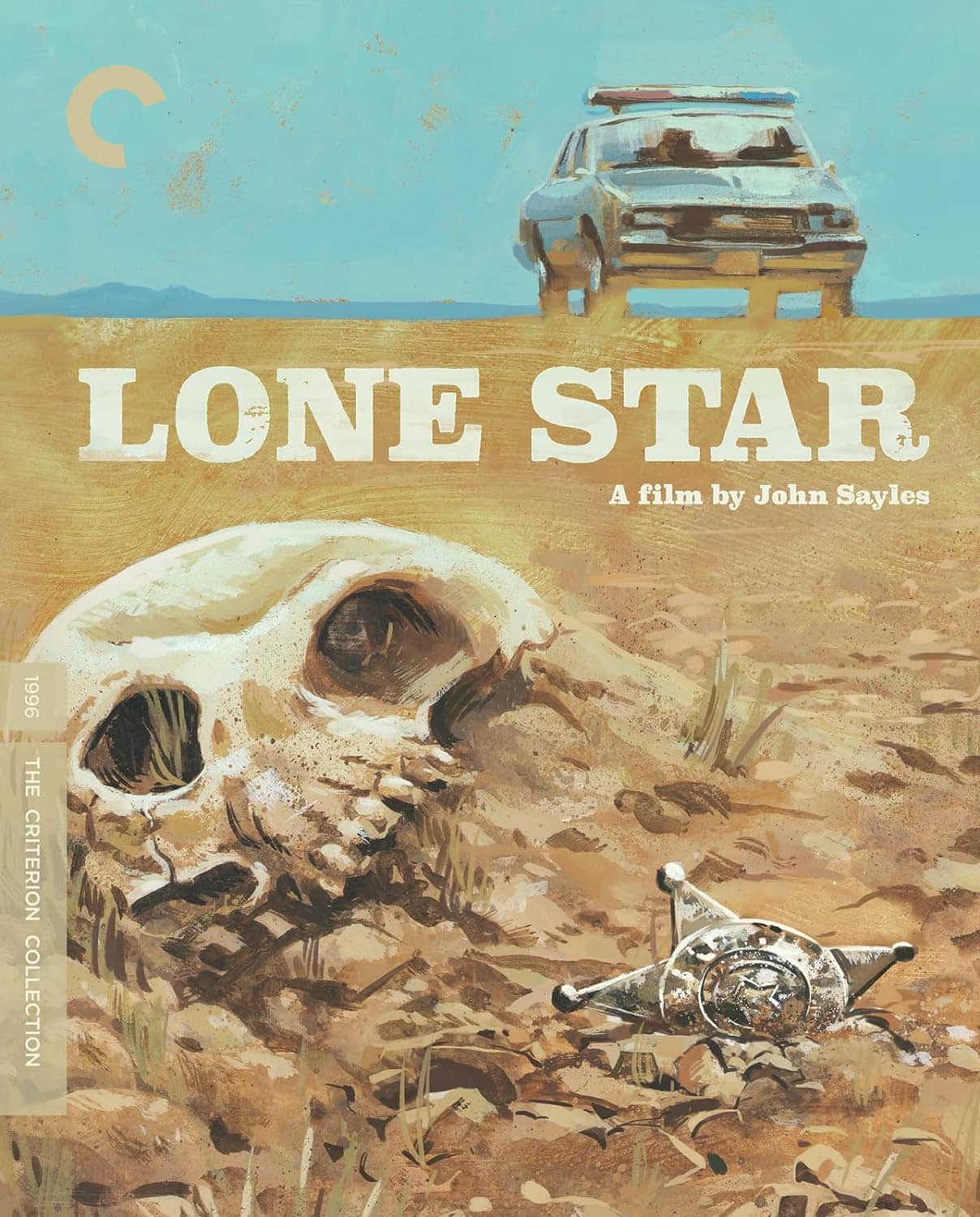
 The term “literary” tends to be invoked to describe films with a grand narrative sweep, featuring a sizable cast and beholden to a dialogue-heavy script. A more holistic definition, though, might be one that highlights how the elements that make up a movie operate in such perfect harmony that they seem to flow from the same pen. On those terms, John Sayles’s Lone Star is among the most literary films ever made. Ostensibly a murder mystery set in a Texas border town, the 1996 neo-western blossoms into something far more complex: a reckoning with personal and historical skeletons that, true to the setting, are left exposed under harsh sunlight even as people struggle to hide them in the faintest sliver of shade.
The story sets into motion with the discovery of a skeleton belonging to Charlie Wade (Kris Kristofferson), Frontera’s racist, corrupt sheriff during the 1960s, who ruled the border town with an iron fist. Just about everyone, especially Frontera’s present-day sheriff, Sam Deeds (Chris Cooper), believes Wade’s killer is Sam’s deceased father, Buddy (Matthew McConaughey), who became sheriff after Wade’s disappearance. Unlike Sam, though, no one else in Frontera has any interest in proving the matter, instead preferring to maintain their almost beatific view of Buddy as the man who replaced tyranny with decency.
It’s no wonder that many wish to keep to their narrative. Flashbacks belonging to a variety of characters tease out Frontera’s sordid past, and Sayles and cinematographer Stuart Dryburgh adopt different stylistic traits to convey characters’ perceptions of both Wade and Buddy. When the Black and Tejano town elders recount run-ins with Wade and his extortionist, pistol-branding behavior, their memories are captured using nifty and extreme methods, such as canted angles, that heighten the sheriff’s sense of absolute power over them.
When Buddy appears in these recollections, however, he enters the frame like a Fordian hero, the image brightening as he objects to his boss’s immoral actions. These elders speak of Buddy with a fondness that doesn’t fade even when they casually mention the man’s own exploitation of minority communities, tacitly trading a gentler hand for votes.
Throughout Sam’s own recollections of his father, Buddy tends to be closer to the camera, and McConaughey’s body language is more aggressive as the man asserts authority over his son. We see also how Buddy’s disgust at Wade’s violent racism doesn’t absolve his own, subtler distaste for matters like interracial relationships, which McConaughey talks about with a terse coldness wholly opposite to the crusading tone he uses against Wade.

Gradually, the memories uncovered and examined of Wade and Buddy expand outward into a larger study of individual stories and shared history, from the romantic past of Sam and local teacher Pilar (Elizabeth Peña) to other generational clashes between children and their parents to broader conflicts over whose history gets to be told. The latter can be seen in an enduringly relevant scene where Pilar must defend her history lessons about the harsh colonization of Texas against local school board matrons complaining of their children having to hear about white atrocities and demanding curriculum approval despite representing a fractional minority.
On personal and political grounds, Lone Star suggests that the only way anyone can have a particularly fond view of the past is through willful denial. With that in mind, Sam’s refusal to accept the tidy narrative of things marks him less as a morally upstanding figure than a tragic one doomed to feel alienated from his immediate surroundings.
Perhaps the most remarkable aspect of Lone Star is how its characters can speak plainly about their anxieties and hang-ups while still leaving so much unsaid. Cooper and Peña especially excel at this in scenes where Sam and Pilar circle around the remains of their long-ago romance. Sam and Pilar openly air their regrets, the emotional tolls of their subsequent marriages, and their desire to rekindle a flame, but both approach each other like cautious animals smelling for trouble. The same taciturn sadness that Cooper brings to Sam’s investigation of his father carries over to the sheriff’s romantic entreaties, giving the film’s brightest glimmer of hope for a better future a tarnished reminder of the past that future must overcome.
Image/Sound
The bright desert exteriors of Lone Star positively glow on Criterion’s 4K disc, while the dark, dusty interiors have a clarity that was wholly lacking on Warner’s 2005 DVD. The more stylized, expressionistic colors that creep into flashbacks pop with added intensity, and the image consistently boasts stable contrast and depth. A lossless 2.0 audio track emphasizes the natural sounds and many moments of silence that hang between dialogue exchanges, which are rooted in the center channels and always sound crisp. The earlier DVD occasionally buried quieter moments in murky channel bleed, but no such issues plague this soundtrack.
Extras
Given the thematic and technical richness of the film, it’s surprising, and more than a little frustrating, that this disc comes with so few extras. A new interview with John Sayles covers his career in broad strokes and offers its greatest insights into his methods and interests when connecting his career as a novelist to his work as a filmmaker. A separate interview with cinematographer Stuart Dryburgh covers his work on the film and how he and Sayles crafted its stylistically complex but unshowy look. A booklet essay by film professor Domino Renee Perez unpacks Lone Star’s dense, interwoven lines of buried histories and political themes.
Overall
John Sayles’s complex, unorthodox neo-western noir from 1996 arrives on a glittering Criterion 4K that primes the film for a long-overdue rediscovery.
Since 2001, we've brought you uncompromising, candid takes on the world of film, music, television, video games, theater, and more. Independently owned and operated publications like Slant have been hit hard in recent years, but we’re committed to keeping our content free and accessible—meaning no paywalls or fees.
If you like what we do, please consider subscribing to our Patreon or making a donation.