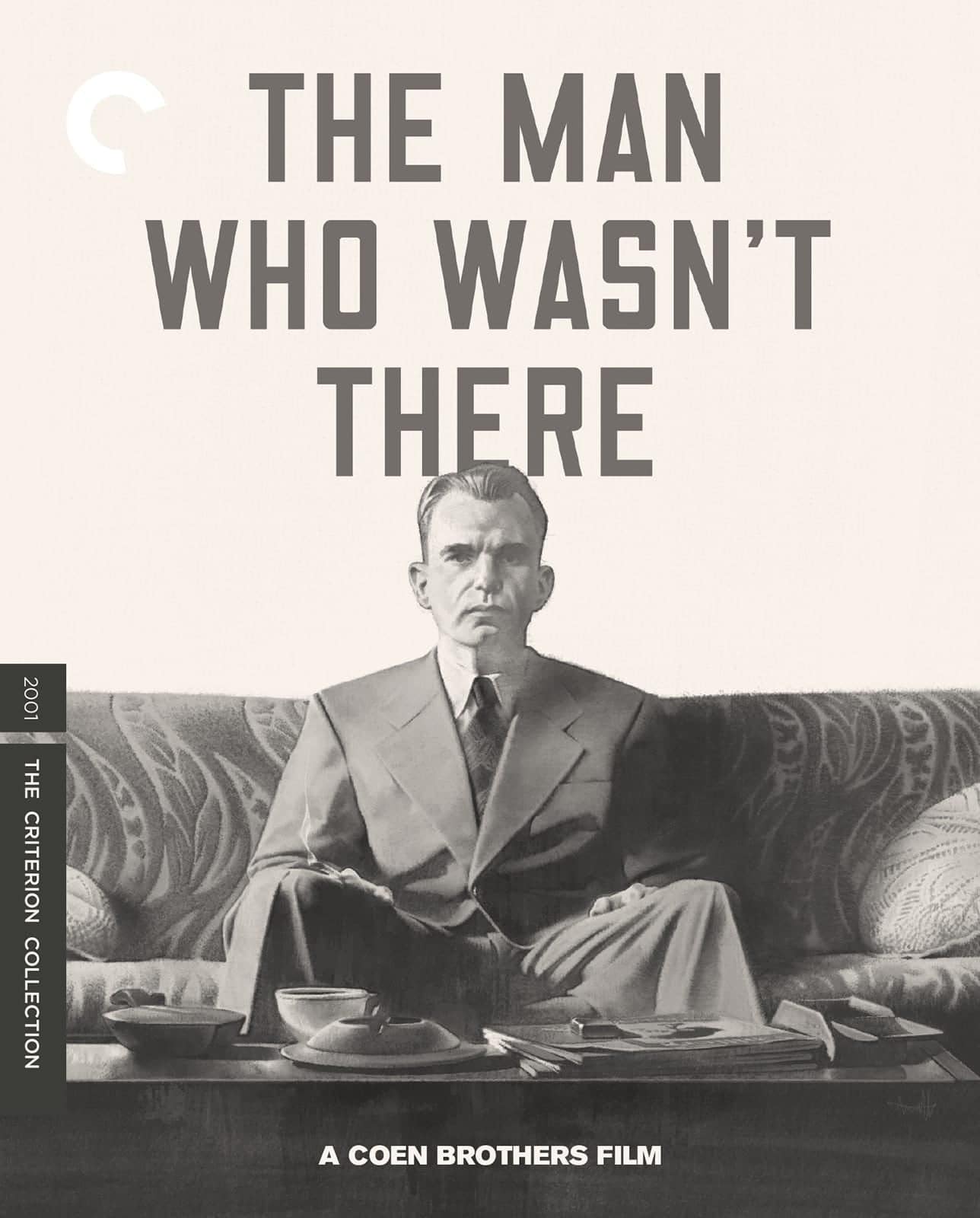
 Of all the Coen brothers’ riffs on film noir, The Man Who Wasn’t There is perhaps the purest tribute to the genre’s classic era. Set in the aftermath of World War II, the film draws heavily from the works of James M. Cain, especially Double Indemnity, following barber Ed Crane (Billy Bob Thornton) as his initially mundane efforts to rise above his humble station spiral into blackmail and murder.
Like many Coen films, The Man Who Wasn’t There juxtaposes a taciturn individual against characters who seemingly never shut up. Ed rarely says more than a sentence at a time to the motormouthed people in his life, and his voiceover narration is only marginally less terse as he lays out his mindset and motivations in matter-of-fact curtness. Not that he can get a word in edgewise around his loud, possibly adulterous wife, Doris (Frances McDormand), who gleefully emasculates him in social settings. When a customer pitches him the chance to invest in the then-new industry of dry cleaning, even his greedy efforts to extort money from his wife’s boss and possible lover (James Gandolfini) have a bloodless detachment to them.
Throughout, the Coens’ love of noir is on full display. Few films since Out of the Past have wrung as much erotic frisson out of cigarette smoke than this one. As ever, the brothers’ dialogue pulls from the finest hardboiled prose, pitched on a knife-edge between gallows humor and existential horror. Still, the filmmakers’ idiosyncrasy shines through at the margins.
Not hampered by the censorious Hays Code restrictions foisted on their forebears, the brothers more explicitly touch upon subjects like closeted sexuality, and the growing male angst at seeing the elevated role of women in the professional sphere thanks to their filling empty roles on the homefront during the war. On the rare occasions that Ed approaches loquaciousness, he does so in absentminded reveries that reveal a deeply buried macabre streak that borders on the Lynchian. Crucially, The Man Who Wasn’t There sidesteps femme fatale tropes, even illustrating how misogyny makes women the ideal patsies for the actions of men.
Perhaps the film’s biggest departure from genre convention, though, is Roger Deakins’s cinematography, which mostly eschews expressionistic, high-contrast play of light and deep shadows in favor of medium-contrast grayscale shot in deep focus. This inverts the classic visual subtext of noir as revealing the seedy underbelly beneath the postwar American prosperity to suggest that our dark side was fully visible the whole time and pointedly ignored. In some ways this is more disturbing than the genre’s original insinuations, suggesting a failure to address the seismic existential questions broached by the first half of the 20th century that can seed monstrosity in even an unremarkable schlub like Ed.
Image/Sound
Sourced from a restoration approved by Roger Deakins, Criterion’s 4K transfer offers a definitive presentation of the film’s velvety black-and-white cinematography. Subtle gradations of gray are plainly visible, and black levels are robust and free of crushing artifacts. Small details like the play of light through the mesh of a woman’s fascinator or the contrasting patterns of dress shirts and jackets pop in a way they never did on earlier video releases. The 5.0 audio track subtly threads unnerving ambient sounds like howling wind or the faint echo of footfalls in large rooms around the centered dialogue, enhancing the film’s existential horror.
Extras
Criterion ports over most of the extras from Universal’s 2001 DVD, most notably the commentary track featuring the Coen brothers and Billy Bob Thornton. The trio make engaging speakers, largely homing in on the small touches like Thornton’s subtle shifts in body language and the simple camera framings that profoundly speak to the main character’s misery and sense of stasis. The Coens rarely record commentaries, but their accessible, unpretentious discussion of their aesthetic choices makes one wish they did so more often. There are also a few brief deleted scenes and a 16-minute making-of documentary that mostly focuses on the actors’ experiences on set rather than the technical details of the filmmaking.
A discussion on that subject can be found in a much longer interview with Deakins, who details the process of shooting the film on 35mm color stock and processing it in monochrome during post-production. He also offers insights into how the film’s use of eye-level, centered compositions communicate Ed’s alienation from the world around him. Rounding out the disc extras is a newly recorded conversation between the Coens and author Megan Abbott, and the accompanying booklet contains an essay by author Laura Lippman in which she explores how the Coens boil down the noir genre to its most spiritually hollow essence.
Overall
The Coen brothers’ under-heralded noir tribute receives a sparkling transfer from Criterion.
Since 2001, we've brought you uncompromising, candid takes on the world of film, music, television, video games, theater, and more. Independently owned and operated publications like Slant have been hit hard in recent years, but we’re committed to keeping our content free and accessible—meaning no paywalls or fees.
If you like what we do, please consider subscribing to our Patreon or making a donation.