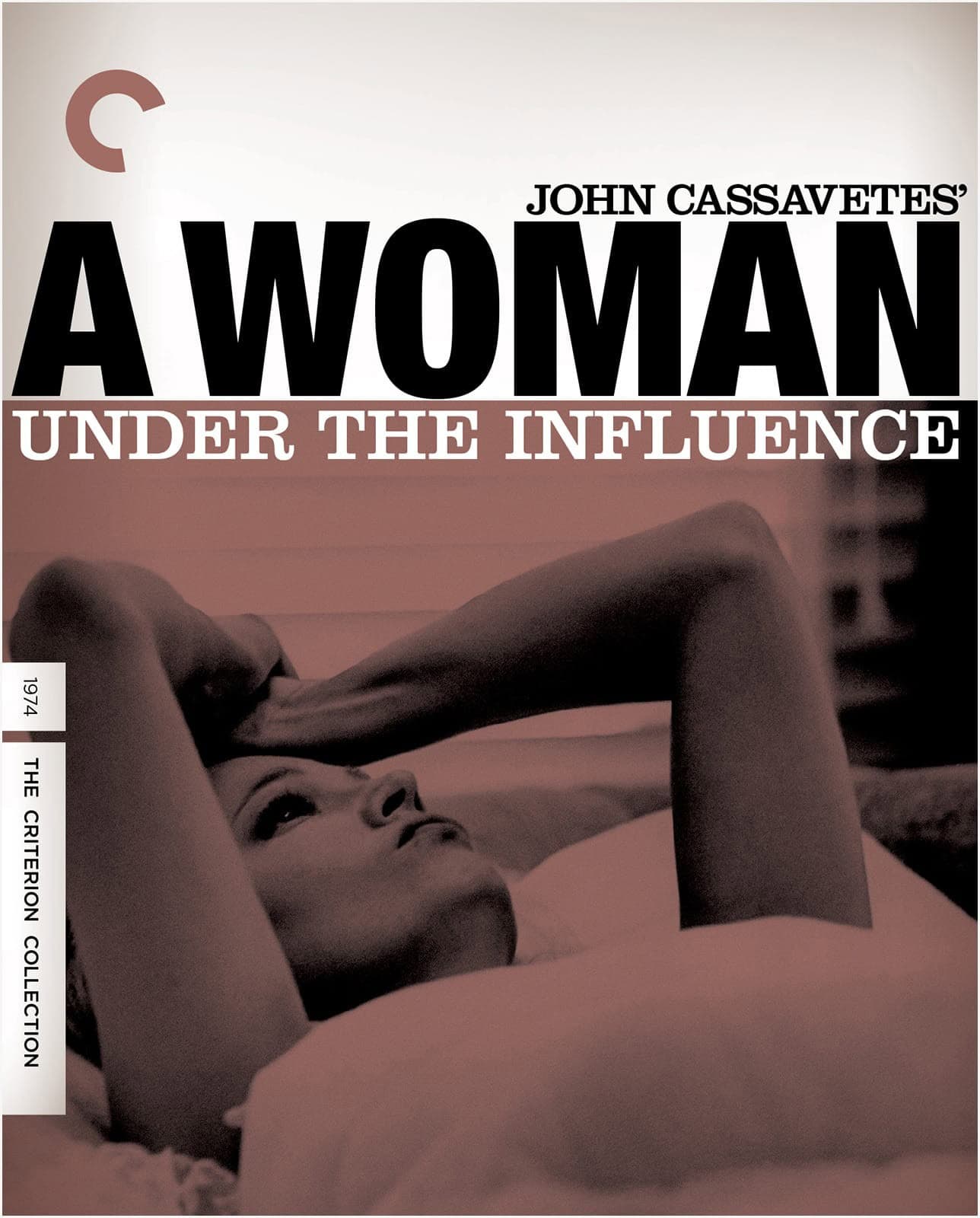
 John Cassavetes’s films were born out of emotional truth. With Mabel (Gena Rowlands) and Nick (Peter Falk), the mismatched married couple at the center of A Woman Under the Influence, the unbridgeable gulf that divides them is one created and sustained by social norms and behavioral expectations. And Cassavetes’s film meticulously interrogates the high tensions and feverish emotions that arise from these constricting and somewhat amorphous set of rules being forcibly thrust on Mabel, who’s innately unequipped to conform to them.
While Mabel’s attempts to engage with those around her are often intrusive and bewildering, they’re her singular ways of expressing her individuality. It’s Nick’s inability to consistently accept her as she is that primarily disrupts their marriage. His heightened sensitivity to his blue-collar co-workers suspecting that she’s crazy causes him to become enraged and overly defensive (“She’s not crazy, so don’t say she’s crazy!”). And yet, when she gets a bit too familiar with one of Nick’s co-workers at the dinner they host at their home, he angrily calls her a “whacko.”
Mabel and Nick are like two magnets moving toward one another and repelling each other as soon as some semblance of contentment is within reach. Nick inevitably feels shame and embarrassment at her unconventional behavior when he should be embracing her uniqueness. But to Cassavetes, Nick is no villain, just as Mabel is no saint, depicting them as two wounded souls grasping for one another in the darkness of their troubled marriage.
Nick is certainly abusive at times, but it’s also clear that he adores Mabel. He’s simply unable to fully comprehend or even embrace her idiosyncrasies, especially when other people are around them. Even when Mabel returns home after six months in a mental institution, Nick wavers between his professed desire for her to be herself and his unshakeable need for her to suppress her instincts and have “normal” conversations about the weather.
During the family’s dinner at the end—a funereal affair that beautifully serves as a contrast to the lively spontaneity of the spaghetti dinner early in the film—Nick gets tangled in his own circular logic, both frightened of Mabel’s detached, subdued behavior and aggravated whenever she snaps out of it. Whether Mabel’s struggle mirrors Cassavetes’s own in his marriage and career, as Cassavetes scholar Ray Carney suggests, or that of many women’s domestic conflicts on the cusp of second-wave feminism, A Woman Under the Influence remains a profound, and profoundly moving, exploration of the emotional demands that surreptitious social forces inflict on those who can’t conform to the so-called acceptable way of being in the world.
Image/Sound
That Criterion didn’t hold off for a new restoration to justify a 4K upgrade is a baffling decision, but considering this transfer is over 12 years old, it still looks surprisingly good. Black levels are particularly strong in the nighttime exterior scenes, while the colors and details in the costume and production design are impressive throughout. The image is a tad soft, especially deeper in the frames of wide shots, and while there’s certainly room for improvement, it’s more than a serviceable transfer. The uncompressed mono track is superbly balanced, retaining the cacophony of overlapping voices while ensuring the important dialogue is forward in the mix.
Extras
For this release, Criterion has ported over all of the extras from the A Woman Under the Influence Blu-ray included in the 2013 box set John Cassavetes: Five Films. On their commentary track, sound recordist and composer Bo Harwood and camera operator Michael Ferris cover the film’s production process in great detail, including the strategies of shooting and sound recording. In a 2004 conversation, actors Peter Falk and Gena Rowlands fondly recall working with one another and Cassavetes, while an audio-only with the filmmaker finds him delving into his scriptwriting process and the role of improvisation in his work. Rounding out the package are some production stills and a booklet with a 1975 interview with Cassavetes and an essay by Kent Jones that’s focused on the density of detail in the film’s storytelling.
Overall
While the lack of a 4K upgrade is disappointing, this release is a budget-friendly entry point to the work of an independent maverick.
Since 2001, we've brought you uncompromising, candid takes on the world of film, music, television, video games, theater, and more. Independently owned and operated publications like Slant have been hit hard in recent years, but we’re committed to keeping our content free and accessible—meaning no paywalls or fees.
If you like what we do, please consider subscribing to our Patreon or making a donation.