Dating apps, like the fictional one that HBO’s DTF St. Louis is named after, have been blamed for creating an impatient and incurious social culture, encouraging users to dismiss strangers with a swipe of a finger. The first episode of DTF St. Louis may likewise leave a lot of viewers wondering what else is out there. Those who stick around, though, will discover a series with a unique personality and a charm that sneaks up on you.
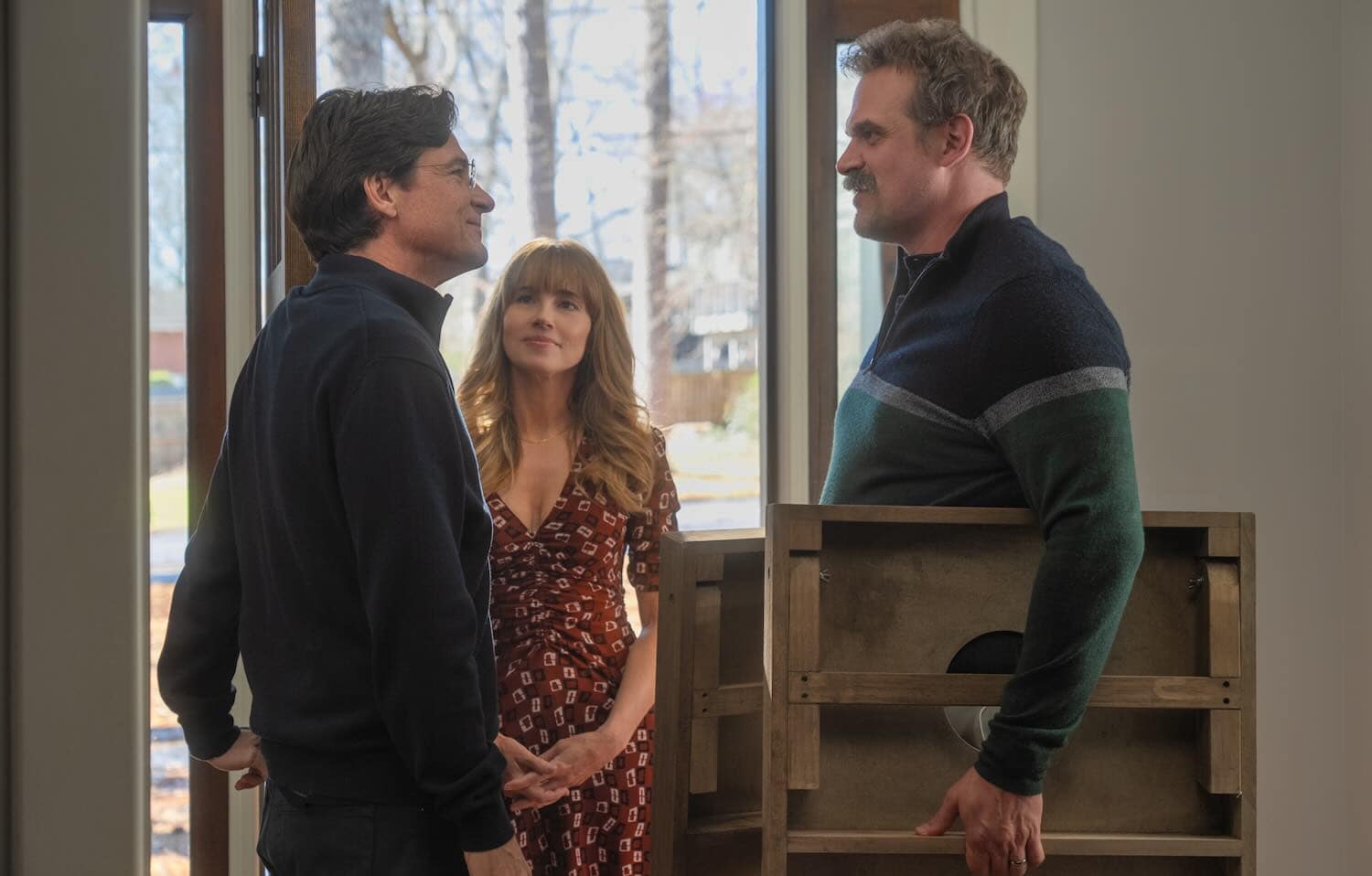
Created by Steven Conrad, DTF St. Louis revolves around a couple of married men, TV weatherman Clark (Jason Bateman) and sign language interpreter Floyd (David Harbour), who works alongside him. They start meeting up outside of work and realize that they have a lot in common, including the fact that they’re both deeply unsatisfied with the state of their sex lives. So Clark suggests that they give the titular app a try.
The first half of the first episode, “Cornhole,” suggests an anti-comedy about male friendship and middle-aged malaise in the mold of Andrew DeYoung’s Friendship. Characters speak in a flat, repetitive dialogue and hold lengthy, circular conversations about mundane things. The series seems to be aiming for a “so unfunny it’s funny” quality, and Bateman and Harbour’s full-bodied commitment to looking like absolute dorks does provide some laughs.
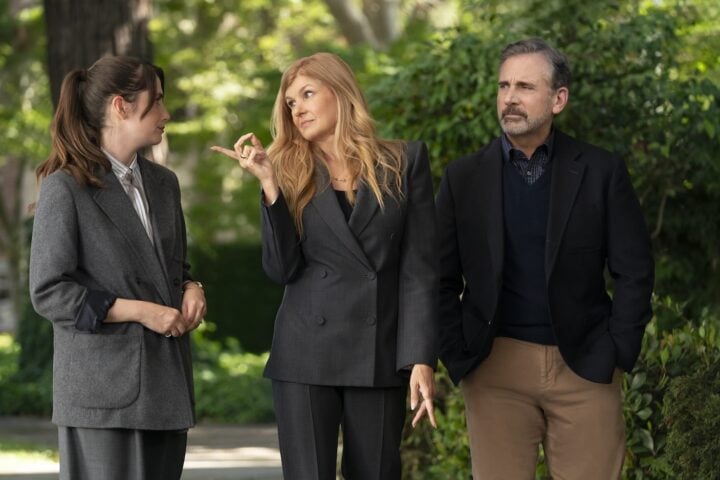
Then, Floyd is found dead under suspicious circumstances, and DTF St. Louis reveals itself to be something else entirely. From this point on, the series hops between different perspectives and points in time, following both the investigation into Floyd’s death and, crucially, the days leading up to it. We learn, for one, that while Floyd had arranged at least one meet-up through the DTF app, and Clark had taken a more analogue approach to adultery and simply started sleeping with Floyd’s wife, Carol (Linda Cardellini).
The whole situation sets us up for a good old-fashioned murder mystery where every character has a plausible motive and each new episode points the finger of blame in a different direction. The clever thing about this precisely constructed plot is that each new step in the investigation reveals not only a new aspect of the case, but a new layer of pathetic-ness in the show’s lead characters. All three are struggling financially, romantically, or personally.

DTF St. Louis wastes no time establishing Clark and Floyd as more or less unfuckable: The former likes to ride around in a recumbent bicycle while the latter enthusiastically attends an R&B dance class designed for children. Meanwhile, Carol is the type of person who demands to speak to the manager, only for the manager to tell them to fuck off.
It’s that ineffectiveness that initially makes the trio, if not exactly empathetic, at least a bit pitiable. From their rizz-less flirting to their clumsy seductions, corny sex games, and woefully obvious attempts to manipulate each other, it’s all tragically unhip. There’s a hypnotic power to watching what amounts to an erotic thriller play out in such gawky fashion. The sincerity of the characters’ desires is moving, even if the way they’re expressing them is relentlessly uncool.
“This world can be very cold,” Floyd says, while explaining the concept of hostile architecture to his troubled stepson, Richard (Arlan Ruf), in the show’s third episode, “The Go Getter.” He’s talking about a park bench, built with a bar in the middle so unhoused people can’t sleep on it, but he may as well be describing the world of DTF St. Louis, whose color palette is muted and dominated by blues and grays that emphasize its coldness.
The Brutalist-style police building where the murder investigation and much of the later episodes take place feels borrowed from a dystopian novel and underlines this sense of hostility. Yet this harshness is juxtaposed by the gentleness of how DTF St. Louis treats its characters and how they treat each other.
Whether its during police interviews or motel tristes, the show’s characters are forever exposing embarrassing parts of themselves in absurd circumstances, but these revelations are never met with cruelty. The scenes between Floyd and Richard in particular have a beautiful tenderness to them, as a former weird kid passes down wisdom to a current one.
Somewhere along the way, the show’s cringe comedy gives way to sincerity and our pity evolves into genuine empathy. And the longer we spend with this group of goofy, hopeless characters, the more grateful we are that we didn’t give in to that initial impulse to swipe left.
Since 2001, we've brought you uncompromising, candid takes on the world of film, music, television, video games, theater, and more. Independently owned and operated publications like Slant have been hit hard in recent years, but we’re committed to keeping our content free and accessible—meaning no paywalls or fees.
If you like what we do, please consider subscribing to our Patreon or making a donation.