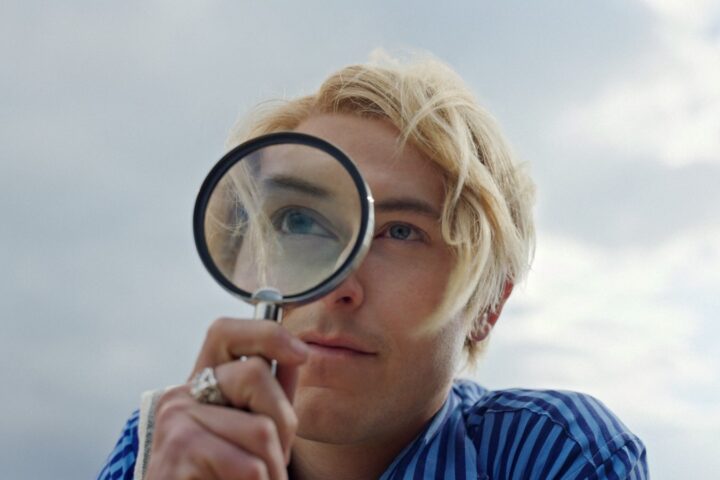
According to a stoned undergrad (Maximo Salas) in HBO’s Rooster, college is a time for reinvention—even if, he implies, you’re a middle-aged professor. It’s a winsome, if glib, sentiment that comes to embody a comedy that proves to be wholeheartedly competent but about as consequential as a class taken pass/fail.
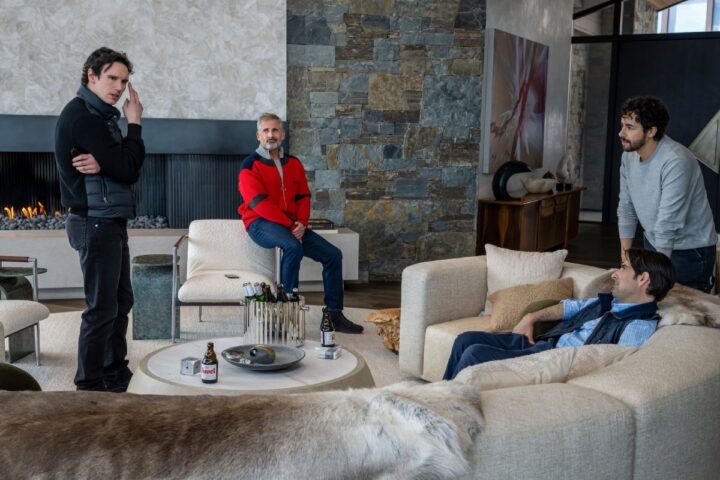
Greg Russo (Steve Carell) is a bumbling, eternally affable writer behind the bestselling Rooster books, a schlocky Fletch-esque series whose covers display a suave detective with a strikingly Carell-looking face that doesn’t quite match the man’s Photoshopped six-pack. Greg’s alter ego is a roguish man who always bags the girl and shoots to kill, whereas Greg himself is a sweater-clad divorcee whose idea of a cuss is “shoot.”
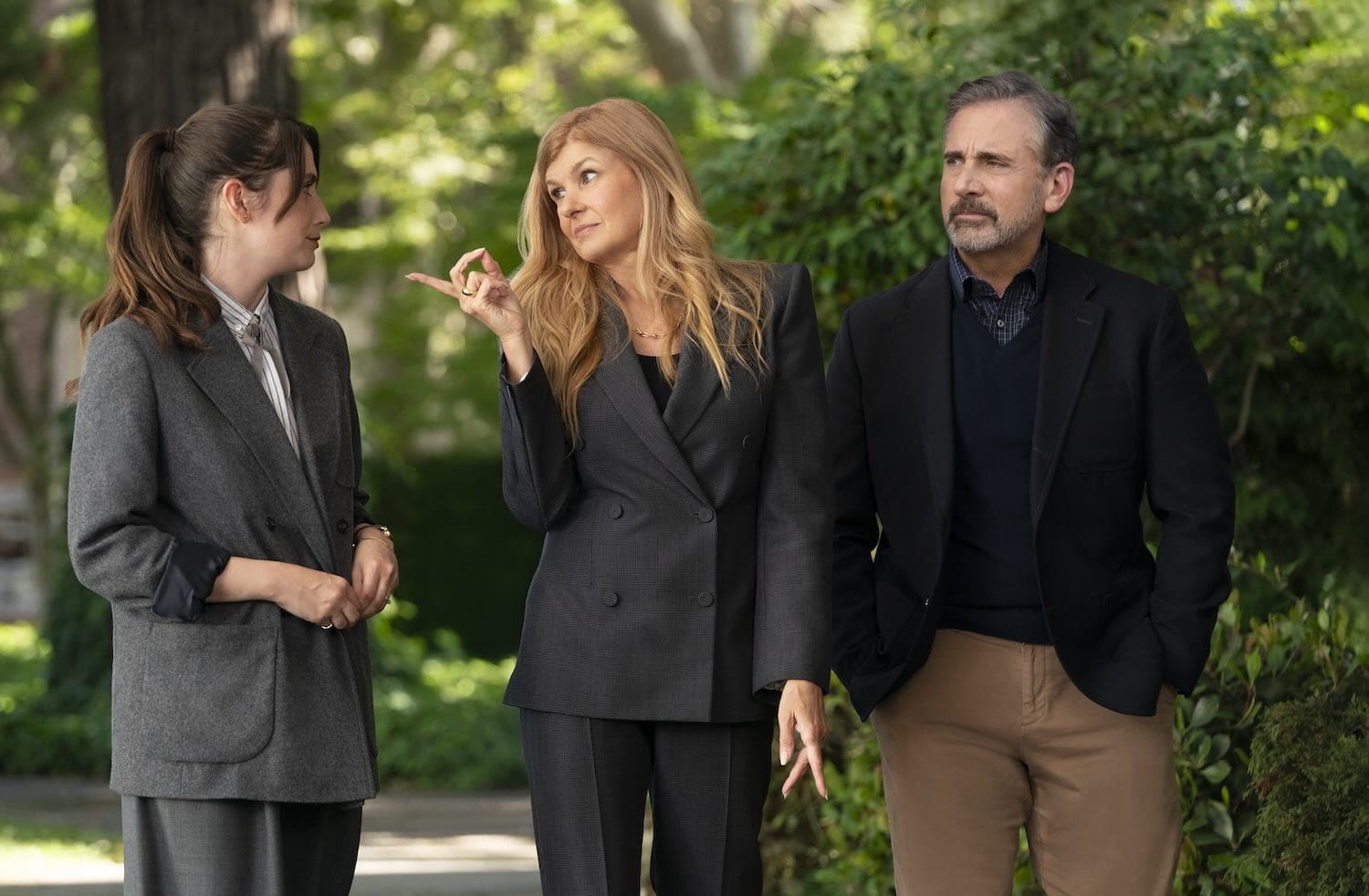
Greg accepts an opportunity to give a reading at the fictional Ludlow College, mainly to check in on his daughter, Katie (Charly Clive), a teacher whose marriage to hot-shot Russian studies professor Archie (Phil Dunster) just collapsed after he left her for a grad student (Lauren Tsai). Greg’s well-meaning meddling in Katie’s life drives her crazy as often as it grounds her. And much of the show’s warmly funny moments revolve around Katie’s directness and sarcasm bouncing off Dad’s awkward attempts to take up as little space in the world as possible.
Greg is offered a teaching residency by Ludlow’s president (John C. McGinley), who confides, “Liberal arts colleges used to be safe havens for free thought, Greg. When did you and I become the bad guys?” But Greg might not be exactly the man he’s looking for. Agreeable to a fault, Greg responds, “Amen,” only to then ask, after actually absorbing what was said, “What?”
In these early scenes, Rooster has the makings of a satire of the American college campus that exists in the public imagination—the perennial lightning rod for our never-ending culture wars. But even as the series checks off its requisite jokes about the tightrope walk that is adhering to political correctness, the ways A.I. has infiltrated the classroom, and the faultiness of sustainability initiatives, the barbs are mostly light fare. The show’s principal interests are pretty thematically old-fashioned: rebuilding self-esteem, the tension between desire and professional responsibility, and the value of family are all right at the top of the syllabus.
As Rooster was co-created by Bill Lawrence (Shrinking and Ted Lasso), its inward focus on its characters’ bourgeois relations with one another isn’t altogether surprising. The series doesn’t possess the absurdist wit of Community, the raunch and excess of Blue Mountain State, or the caustic politics of The Chair. Instead, the college campus is merely a backdrop for a breezy show about good people striving to do good by others and themselves, making the humor as cozy and agreeable as an autumn stroll across the quad.
By eliding any substantial evocations of the very real, worrisome trends in contemporary collegiate life, the show’s scope becomes narrow. Apart from some indistinct secondary characters, the cast is largely game, but the banter-heavy dialogue can grow stale, especially when the jokes have a habit of undercutting any emotional heft. And visually, Rooster falls prey to the shallow depth of field that’s got Hollywood in a chokehold, blurring Ludlow College’s exteriors to the point where we’re never able to feel like the institution has a living, breathing spirit of its own. As Greg, self-conscious about his own aptitude for teaching, says early on, “At a stuffy college like this, these kids aren’t looking for fun, they’re looking for depth.”
Since 2001, we've brought you uncompromising, candid takes on the world of film, music, television, video games, theater, and more. Independently owned and operated publications like Slant have been hit hard in recent years, but we’re committed to keeping our content free and accessible—meaning no paywalls or fees.
If you like what we do, please consider subscribing to our Patreon or making a donation.