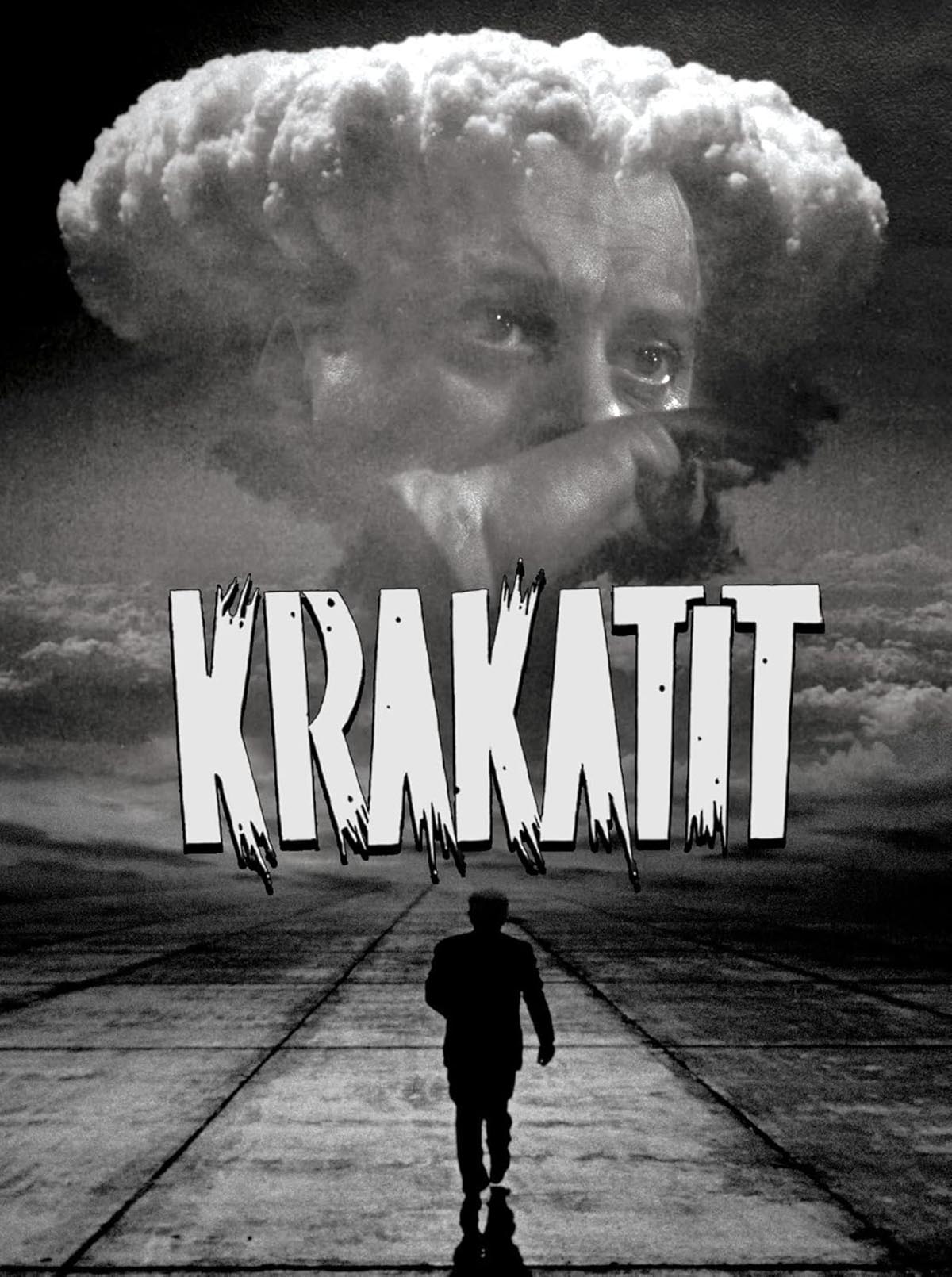
 “This film takes place in the midst of a feverish dream,” heralds Krakatit’s opening title card. It’s both a promise and a warning, as the frequently ruptured narrative flow of Otakar Vávra’s 1948 film and its barrage of bold, stylistic flourishes ensure that the viewer will remain disoriented and agitated throughout. The film’s protagonist, Prokop (Karel Höger), is, like Billy Pilgrim from Kurt Vonnegut’s Slaughterhouse-Five, unstuck in time. Locked in a state of acute amnesia and ever-rising paranoia, Prokop is propelled into different periods of time during his years of researching and creating the titular substance—an insanely explosive powder with the power to destroy the world many times over.
Blending elements from various genres, the film, written by Czech writer Karel Čapek (whose play R.U.R. famously coined the word “robot”), is as destabilized as its protagonist and the world he inhabits. From scene to scene, and sometimes even shot to shot, Krakatit shifts its visual style with hairpin precision and embraces a sense of temporal dislocation that beautifully expresses the fears, anxieties, and regrets of a man seemingly unable to accept his culpability in the creation of a substance so powerful and horrifying that its existence is inconceivable.
Krakatit builds tension and envelops its audience in an enigmatic shroud of mystery through the wonderfully bizarre and clever ways it perpetually disrupts the reality within the film. At one point, while Prokop speaks to one of his lovers, Anna (Nataša Tanská), the drops falling from a spigot of water stop in mid-air, and in another scene, he sees a moving image of himself in another location altogether while looking out of a bedroom window. It’s as if the film language itself embodies Prokop’s own state of utter confusion and helplessness, and moments such as these signify both jarring transitions in time and the frenzy and absurdity of a world gone mad.
Made just as Czechoslovakia was transitioning from a liberal democracy to a communist dictatorship, Krakatit brims with the panic and unease of a place clawing back from the brink of annihilation. It was one of the first European films to confront matters of atomic destruction. And its hallucinatory visual style blends fantasy and reality as memories collide with nightmares to evoke both the seductive allure of power and the personal and national trauma of people living through Nazi occupation only to find themselves living under another form of authoritarian rule. Few films have more potently captured the distress of living in a time where mankind’s impulse for self-destruction was seemingly at its peak.
Image/Sound
For this release, Deaf Crocodile has transferred a 4K restoration from the 35mm nitrate original camera negative. Aside from some minor signs of scratching, the image is immaculate, with inky blacks and an impressive range of greys that highlight Václav Hanuš’s stunning, moody cinematography. There’s no sign of any de-graining and the image clarity and detail is very strong. On the audio front, the lossless mono track nicely handles Jiří Srnka’s unsettling score and all of the strange sci-fi audio effects, while also presenting crisp, clean dialogue.
Extras
In a brand new commentary, film historian Peter Hames and Czech film expert Irena Kovarova discuss director Otakar Vávra’s importance in mid-century Czechoslovakia, delving into his career and placing his work in the historical context from the years just before World War II to the years following it, deepening our understanding and appreciation of the film. There’s also a lengthy interview with archivist Tereza Frodlová of the National Film Archive in Prague, who details the restoration process for Krakatit, how she got into the field, and the general state of classical film restoration in Czechoslovakia. Lastly, film scholar Clayton Dillard’s excellent new visual essay, “Moral Vertigo in the Nuclear Age,” touches on the ways Vávra’s deftly braids form and content to uniquely express the anxieties of the post-war world, particularly in the wake of the dropping of the atomic bomb on Hiroshima and Nagashima.
Overall
Otakar Vávra’s deeply strange and unsettling sci-fi mystery about a world hellbent on self-destruction rings as true today as it surely did in the wake of World War II.
Since 2001, we've brought you uncompromising, candid takes on the world of film, music, television, video games, theater, and more. Independently owned and operated publications like Slant have been hit hard in recent years, but we’re committed to keeping our content free and accessible—meaning no paywalls or fees.
If you like what we do, please consider subscribing to our Patreon or making a donation.