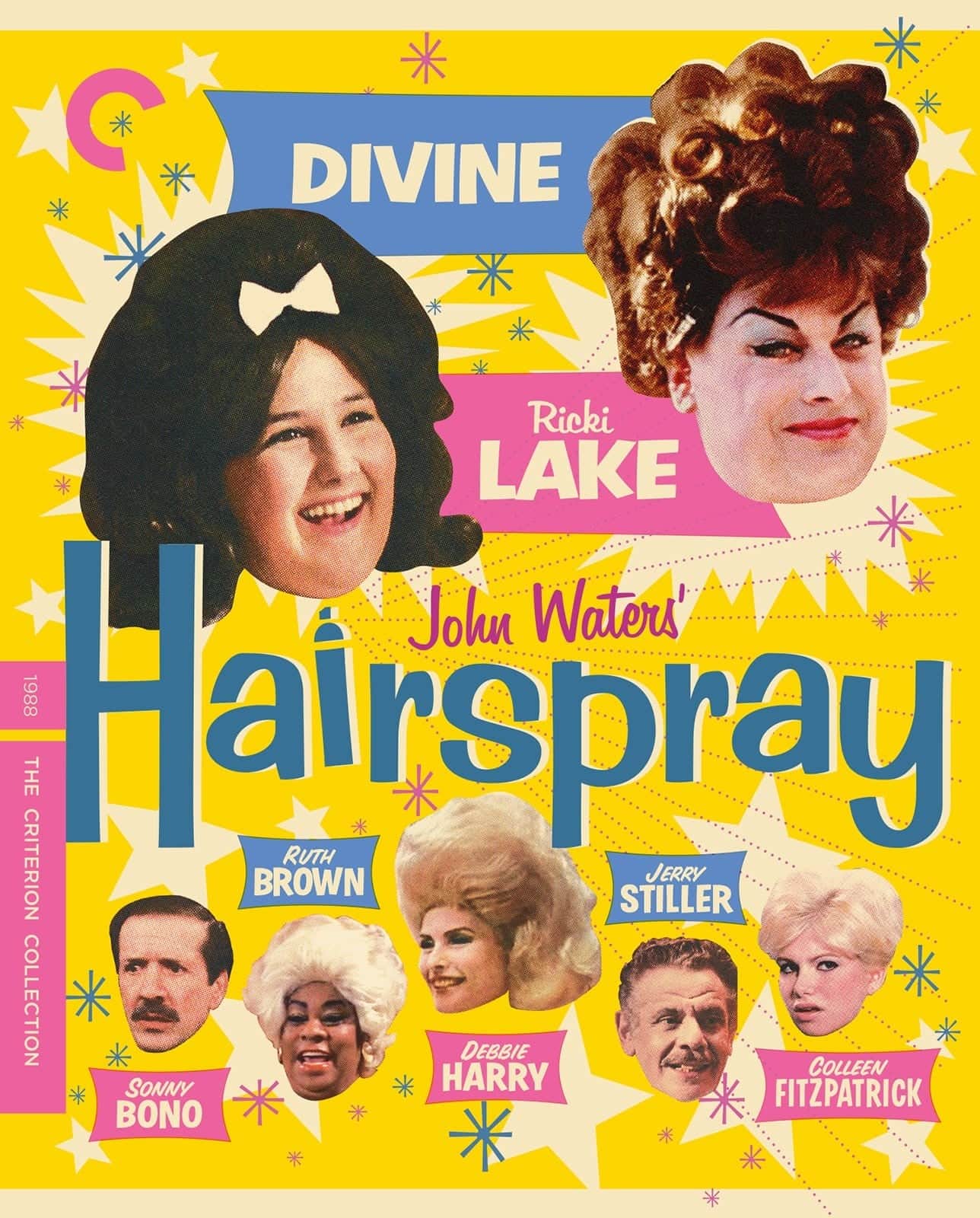
 John Waters had been sending up the hysteric social issue dramas of the 1950s and ’60s for over 20 years when he finally turned his attention to rock ‘n’ roll, one of the chief targets of the genre, with 1988’s Hairspray. The film revolves around The Corny Collins Show, an early-’60s racially integrated teen dance television show modeled after the real-life The Buddy Deane Show. Waters foregrounds the social tensions that arise from this racial utopianism, illuminating just how much of the initial panic toward rock was less about the music itself than how it furthered the acceptance of desegregation.
Even the parents of The Corny Collins Show’s spotlight-hogging prima donna, Amber (Coleen Fitzpatrick), criticize their daughter for dancing to Black music while otherwise doing all they can to keep promoting her. Meanwhile, one of the show’s most devoted fans, Tracy Turnblad (Ricki Lake), loves the program as much for its harmonious possibilities as its energetic music selections.
Describing herself as “pleasantly plump,” Tracy in her own way is as defiantly self-confident as the characters Divine played for Waters, though she also radiates an ebullient, kill-them-with-kindness charm. She auditions for her favorite show and so delights the judges that not even Amber’s sniping can tank her. Soon, Tracy becomes the show’s breakout star and a lightning rod for her open promotion of fully integrating both the cast and larger Baltimore society.
Tracy is as much an outsider as Waters’s usual protagonists, but she elects to resist the system with friendliness and an unguarded enthusiasm for community-building rather than punkish nihilism. This lighter touch informs the performance of Waters’s most important collaborator, Divine. The icon brings her trademark cattiness to the role of Tracy’s frumpy housewife mother, Edna, deploying it against the reactionary parents who slam her daughter. But she also exudes a matronly warmth where even her zingers are flecked with real affection.
Steeped in the Atomic Age nostalgia that the B-52s brought to new wave, Hairspray can be seen as a foil to The Girl Can’t Help It. Where Frank Tashlin’s film blatantly wore its skepticism toward rock on its sleeve, Hairspray is both a loving tribute to the initial rock craze and its underlying social potency. It’s by some measure Waters’s most open-hearted work, the only time his satire has been tempered by sentimentality.
Image/Sound
Criterion’s 4K transfer maximizes the radiant pastel tones of the film’s cinematography. Pinks, yellows, and baby blues all pop, but even the more muted tones (like the comically drab gray of Tracy’s apartment complex exterior) are vivid and eye-catching. Minute details of aggressively coiffed hairstyles and the shimmer of white lipstick under studio lights are readily visible.
The disc comes with the original stereo soundtrack and a 5.1 surround mix. The dialogue is clear and firmly centered on both tracks, and the needle drops fill the entirety of the sound field nicely, but the surround mix does a better job of revealing the subtler details of the sound design. This is most apparent in scenes that cut between the scenes set at The Corny Collins Show, where the music roars out of speakers and the bass practically forces you to dance, and scenes in which the show is broadcasting out of tinny mono systems on early TV sets, where the sound is muffled and thin (but still drives watching teens crazy).
Extras
Criterion includes a 2004 commentary track featuring John Waters and Ricki Lake, who were recorded separately. Lake speaks fondly about her first movie and how much she loved working with Waters and Divine, while Waters is at his usual acerbic best recalling some of the challenges of making Hairspray. Nonetheless, he speaks generously about his actors and crew.
The disc also comes with a new conversation between Waters and WFMU DJs Dave “the Spazz” Abramson and Gaylord Fields and reflections from actors Debbie Harry, Jo Ann Havrilla, Leslie Ann Powers, Clayton Prince, Shawn Thompson, and Pia Zadora, while Lake and Colleen Fitzpatrick appear together in a new interview. Mostly the comments are warm and reflective, but occasionally you’re reminded that this was a Waters film when, say, Shawn Thompson (who played Corny Collins) offhandedly mentions doing crack with Jerry Stiller.
Some deleted scenes and production footage are also included, as is a 1987 featurette focused on Waters as he prepared to move into the mainstream. A booklet essay by critic Jessica Kiang charts the filmmaker’s growing clout throughout the ’80s and how Hairspray was the culmination of his unlikely journey to becoming a minor household name.
Overall
Criterion further bolsters its lineup of John Waters titles with a gorgeous transfer of his sly but generous teen movie send-up from 1988.
Since 2001, we've brought you uncompromising, candid takes on the world of film, music, television, video games, theater, and more. Independently owned and operated publications like Slant have been hit hard in recent years, but we’re committed to keeping our content free and accessible—meaning no paywalls or fees.
If you like what we do, please consider subscribing to our Patreon or making a donation.