
 It seems like distant memory, a relic of a bygone era, but “punk cred” was once currency in certain corners of rock culture. To be perceived as inauthentic, cynical, or ambitious meant losing stock with a sizable chunk of the music press as well as your peers, and few bands felt the brunt of that as much as the Smashing Pumpkins. Indie icons from Stephen Malkmus to fellow Chicagoan Steve Albini criticized the band in songs and interviews, and even as recently as 2015, Kim Gordon called the group “in no way punk rock” in her memoir Girl in a Band.
Led by the mercurial Billy Corgan—or William Patrick Corgan, as he’s preferred in recent years—the Pumpkins started as a mopey goth band but gradually addended their love of the Cure and New Order with Black Sabbath-inspired riffs and psychedelic guitar. Their debut, 1991’s Gish, boasted bombastic production courtesy of Butch Vig—indicative of their lack of regard for the indie playbook—and was, for a time, the best-selling independent album in history.
The Pumpkins signed with Virgin Records for their sophomore effort, 1993’s Siamese Dream, determined to create something even bigger, louder, and more ambitious. The album’s lead single, “Cherub Rock,” kicked the era off with opulent fury, building from a swift drum-roll-to-kick-drum intro to mountains of fuzz guitars.
Aware of his outsider status even within a scene filled with ostensible outsiders, Corgan takes aim on “Cherub Rock” at both the mainstream music industry, keen on commodifying alternative culture (“Stay cool/And be somebody’s fool this year/‘Cause they know/Who is righteous, what is bold/So I’m told”), and those sitting at the cool kids’ table (“‘Cause deep down/They are frightened and they’re scared/If you don’t stare”).
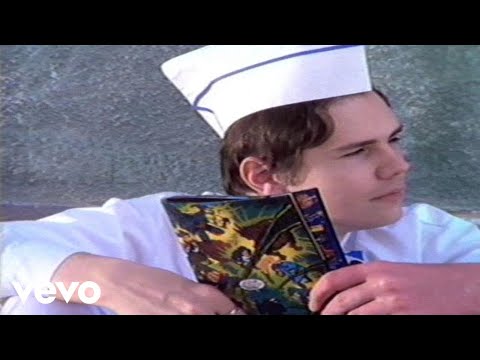
Corgan had recently discovered the Electro-Harmonix Big Muff and the pedal’s gnarly tone propels “Cherub Rock” and the hard-rocking “Quiet.” Reflecting on his relationship with his parents on the latter, the singer hones his lyrical juvenilia into a diaristic confession of childhood trauma. “For years/I’ve been sleeping/Helpless/Couldn’t tell a soul,” he sings with a self-conscious remove as the music rages behind him.
It’s a theme Corgan returns to on the hit single “Disarm,” which, with its prominent acoustic guitar and soaring strings, was a dark, dramatic turn for the Pumpkins. Corgan’s signature nasal whine comes out in full force as he delivers what are among his most iconic lines to date: “I used to be a little boy/So old in my shoes…The killer in me is the killer in you.”
Nirvana’s Nevermind turned alternative rock from a subcultural phenomenon into a marketing category, and it was this new cultural climate, one that didn’t appreciate authenticity as much as fetishize a narrow definition thereof, that the Pumpkins, and Corgan in particular, were reacting to. While Nirvana regained some underground cred with In Utero, Siamese Dream saw the Pumpkins lean further into the luxurious production style that marked Gish.
RELATED STORY
The 50 Best Rock Albums of the 1990s
The album has little in common with Pavement’s smart-ass slacker rock or the solipsistic lo-fi of early Sebadoh. The Pumpkins’s sound is all ’70s grandeur and obsessive textural alchemy a la My Bloody Valentine. “Rocket” and “Mayonaise” explode with blaring guitars and nostalgic melancholy—“Mother, weep the years I’m missing/All our time can’t be given back”—but it’s the band’s mastery of stylistic whiplash that has earned Siamese Dream its spot in the rock canon.
The Pumpkins pull off the prog-grunge fireworks of “Geek U.S.A.” just as easily as they take shoegaze to anthemic heights with “Hummer.” And even when their pedals get a much-needed rest, the tunes lose none of their sonic richness. “Spaceboy,” an aching tribute to Corgan’s brother, swells with a lush orchestral arrangement, while a garbled audio sample of a woman opening up about her husband’s sexual habits serves as a segue into the nearly nine-minute “Silverfuck.” The latter track interpolates dreamy neo-psychedelia in its heavy metal destruction, employing the loud-quiet-loud dynamic pioneered by acts like Dinosaur Jr. and the Pixies.
Considering the Pumpkins’s image in some circles as self-serious careerists, it remains refreshing to hear the walls of guitar feedback that close out “Silverfuck” be followed by Corgan flippantly saying, “Alright, this take, don’t give a fuck.” Similarly humorous but hardly ever commented on is the choice to follow that track with the 90-second “Sweet Sweet,” which chugs along delicately until “Luna”—a bittersweet love song that, rumor has it, was written about Courtney Love—brings the hour-long album to a close.
Although 1995’s Mellon Collie and the Infinite Sadness would go on to outsell the multiplatinum Siamese Dream, the Pumpkins fizzled out by the end of the millennium, breaking up in 2000 before regrouping in 2007. But while most of their contemporaries have either imploded or resigned themselves to sporadic, highly lucrative greatest hits tours, Corgan and company have stubbornly continued to evolve their sound—much to their critical and commercial detriment. Still, if the compendium of nu-gaze bands currently aping Siamese Dream’s heavenly guitar fireworks is any indication, the album has lost none of its power.
Since 2001, we've brought you uncompromising, candid takes on the world of film, music, television, video games, theater, and more. Independently owned and operated publications like Slant have been hit hard in recent years, but we’re committed to keeping our content free and accessible—meaning no paywalls or fees.
If you like what we do, please consider subscribing to our Patreon or making a donation.




Excellent article I love this album, tape on replay in my metal cases “slim” Walkman in ’94. Closest sound to SP currently around may be the up and coming Tiger Cub.
Thank you very much! Funny you should mention Tigercub, I actually put on a show with them and Dilly Dally in 2016 I think. Very fun, very wild night and both bands were great! Thank you for reading