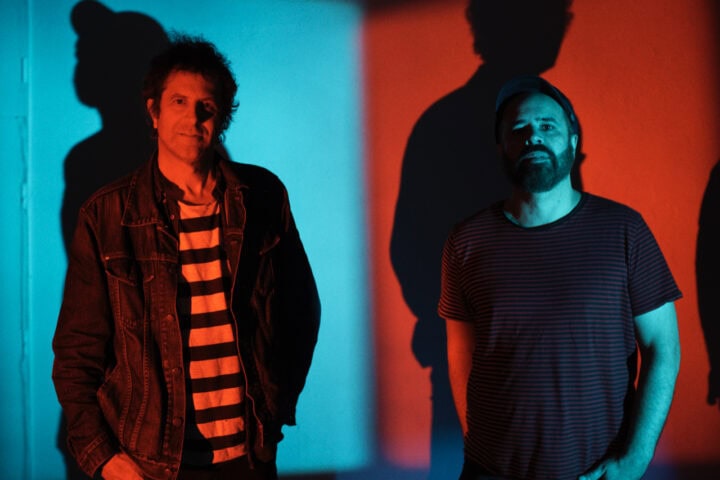
Both Phoebe Bridgers and Conor Oberst specialize in drawing listeners into their anguished, introspective states of mind. So while a collaboration between the two singer-songwriters might seem like a formula for melancholia, their surprise joint release, Better Oblivion Community Center, proves that both musicians are capable of capitalizing on their best tendencies while largely avoiding their worst.
The first verse of the album’s opening track, “Didn’t Know What I Was in For,” is quintessential Bridgers, her wistful voice laid over spare acoustic guitar. Oberst’s appearance in the chorus reveals a startling chemistry between his quivering baritone and Bridgers’s somber falsetto. Over swelling bass and E-Bow guitar, the song morphs into a mesmerizing exploration of the impotency of activism in a hyper-connected world.
“Sleepwalkin’” betrays an acumen for upbeat folk-pop that’s been rare in both Oberst and Bridgers’s solo work, while the infectious “Dylan Thomas” features unexpectedly rapid-fire witticisms and a driving guitar break. Nothing else on Better Oblivion Community Center quite matches the fervor of those opening tracks, but the album is studded with gems of a different sort, including the breezy “My City,” the synth-driven “Exception to the Rule,” and “Chesapeake,” a hauntingly beautiful meditation on alienation.
Oberst and Bridgers have built their careers on songs full of unfeigned personal torment, and themes of loss, loneliness, and addiction permeate this album. Yet, collaboration seems to have tempered their gloom. The songs on Better Oblivion Community Center are contemplative rather than declarative, granting the artists a chance to approach sorrow in a cheekier manner and find reserves of hope amid the wreckage.
The album vacillates between self-affirmation and self-abnegation, community and solitude, sometimes mocking our urge for self-care, sometimes finding redemption in it. This is a collaboration in the truest sense, often embodying the ambivalences of a conversation: “Can you hear it now?” the duo asks in the final seconds of “Chesapeake,” which ends on an unresolved high note that seems to capture the project’s ethos.
Since 2001, we've brought you uncompromising, candid takes on the world of film, music, television, video games, theater, and more. Independently owned and operated publications like Slant have been hit hard in recent years, but we’re committed to keeping our content free and accessible—meaning no paywalls or fees.
If you like what we do, please consider subscribing to our Patreon or making a donation.