Compared to its predecessors, the most noticeable change that Wolfenstein: Youngblood makes to the series’s proven formula isn’t the touted presence of a partner character, who’s controlled either by the AI or a second player. Rather, it’s the little popup numbers that tell you how many experience points a Nazi death is worth or how many silver coins you’ve collected. Those numbers signify the new direction that Wolfenstein is taking under the watch of MachineGames. Indeed, the story-driven series has been reconfigured into a bite-sized, co-op-enabled amalgamation of the so-called “forever game,” a ceaseless quest to get your numbers to go up, up, up—because that’s the way to acquire more stuff. Amass enough coins and you can buy a new shotgun attachment. And don’t forget to check the list in the hub area for daily and weekly challenges to complete for bonus rewards.
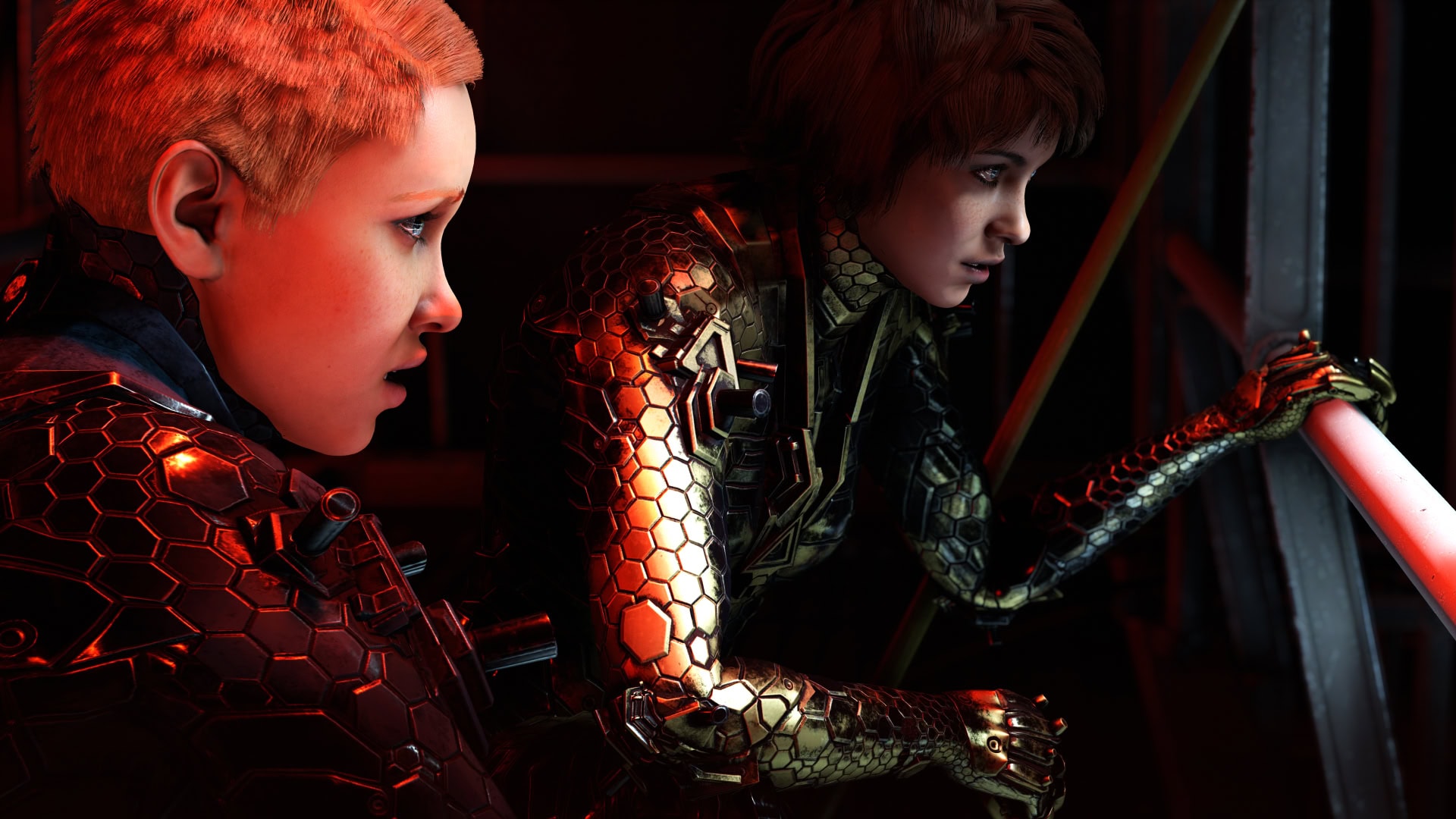
It’s 1980 in an alternate history where the Third Reich won World War II, decades after the events of Wolfenstein II: The New Colossus, and series protagonist B.J. Blaskowicz has gone missing. Jess and Soph, his teenage daughters, track him to Nazi-occupied Paris and get caught up in the French resistance’s struggle to liberate the city, though there’s precious little time to get to know the sisters. From snippets of dialogue and a handful of cutscenes, they suggest complete doofuses in a way that’s endearing, evincing none of the cool-guy posturing of most video game heroes; instead, they tell juvenile little jokes, reminisce about home, and obsess over some ludicrous-sounding series of British spy novels. But most of your time is devoted to roaming the open-world districts of Paris, where the real story seems only to be that there are Nazis to shoot in between you and the next objective marker. Plenty of people stand around the hub area, a resistance outpost in the Paris catacombs, but they’re little more than quest-givers, glorified signposts to more experience and more coins.
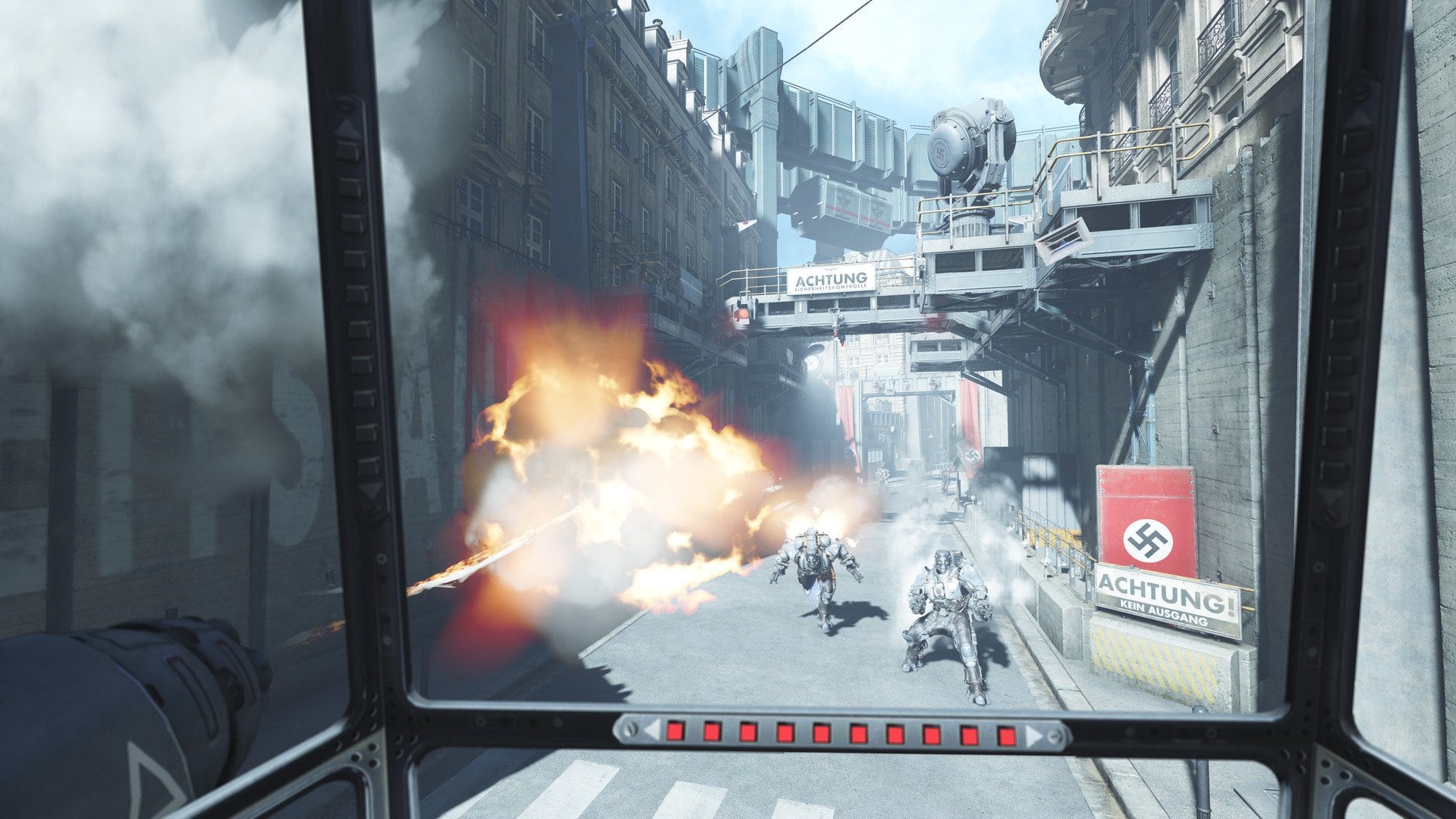
Expectations should, on some level, be tempered for Youngblood, which is clearly a smaller, more experimental spin-off at half the price of its predecessor. But it experiments with all the weakest parts of the series and ties them together with a new, tedious, and all-consuming progression system. The Wolfenstein series’s gunplay, an awkward middle ground between run-and-gunning and taking potshots from behind cover, has changed very little here; some enemies still soak up a truly absurd number of bullets to little apparent reaction, and stealth remains an undercooked afterthought. In some places, however, bandages have been applied to the prior game’s unclear action and navigation mechanics; indicators that you’re being shot are now impossible to miss, while the inclusion of a minimap and giant enemy health bars somewhat mitigate the problem of gray enemies blending into similarly gray backgrounds.
But for what flaws have been ironed out from The New Colossus, this game’s additional systems have only created new ones. Frequent popups state the exact number of available upgrades, yet time and time again you must scroll through every single option because the menu never highlights the upgrades you can actually afford, most of which modify arcane gun statistics to little appreciable difference. Missions tend to task you with running back and forth between multiple districts, killing enemies who respawn the moment you leave, and there’s no convenient way to make the most of each excursion since missions aren’t grouped according to location. It’s not even easy to choose the type of ammo most effective against an enemy because both ammo icons are just two different kinds of white rectangles.
Most of these problems are quality-of-life quibbles, but they snowball into something monumentally irritating, which only highlights how ill-equipped this series is to focus near-exclusively on shooting rather than storytelling. Prior games in the series carved out a surprising amount of space for the characters while somehow weaving outlandish plot twists (preserved heads, moon bases) into coherent themes. But asYoungblood wears on and the numbers that let you buy better things continue to climb, the game only raises the question of whether divorcing the context from the plot tying it together is even a particularly good idea.
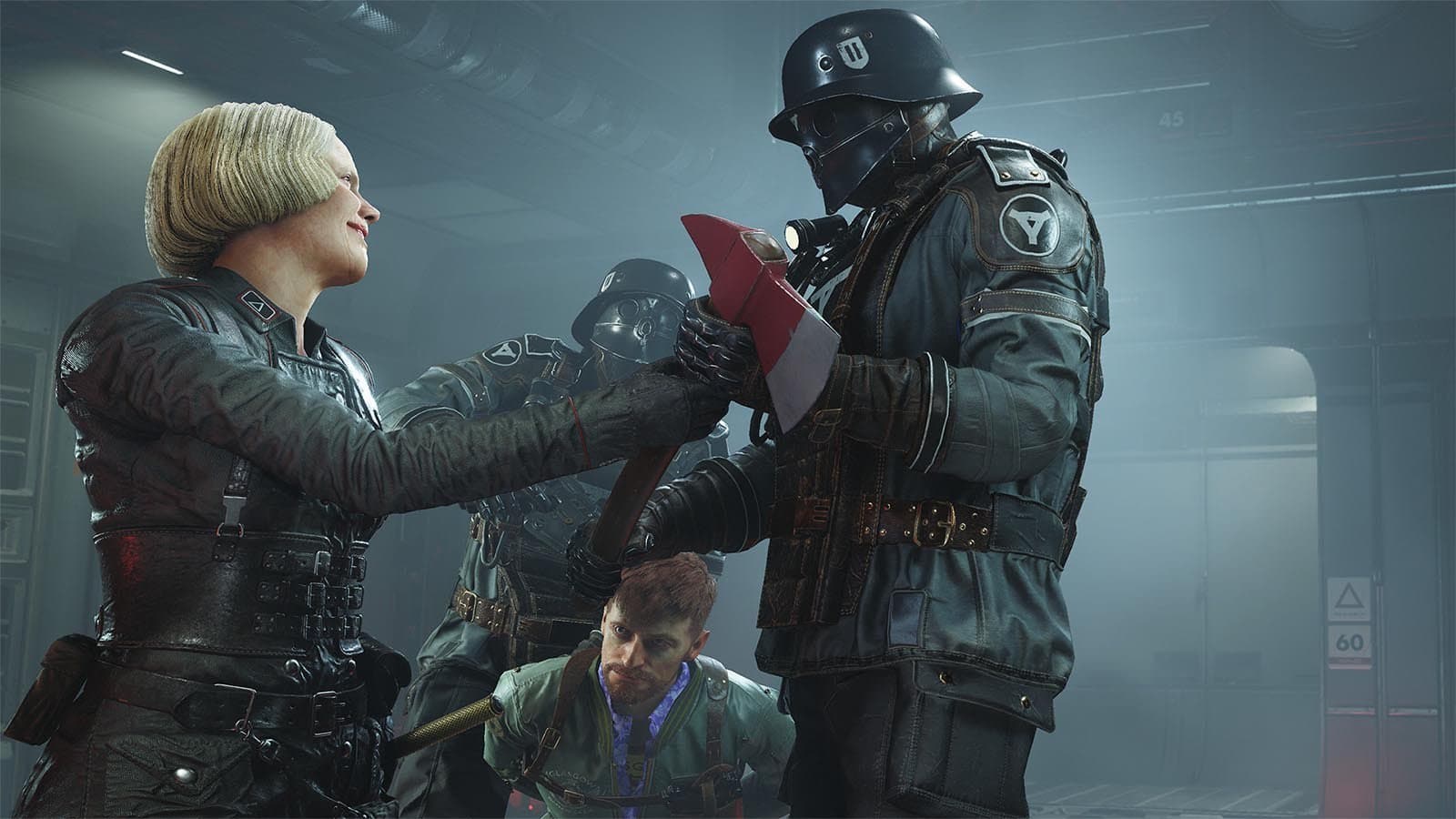
The Wolfenstein games have sometimes struggled with their loaded subject matter, like the unexamined jingoism of the United States that’s paraded about in The New Colossus. But for the most part, these games treat their thin historical basis with a bizarrely appropriate mixture of respect and disrespect, never diminishing the threat of their Nazis antagonists yet equally intent on demythologizing them. By incorporating absurd sci-fi technology, this series heightens its narrative to near-cartoonish levels of remove while nevertheless regarding it with a straight face, foregrounding its Nazis’ noxious ideologies as well as the suffering that emerges in a world governed by them. But by minimizing Wolfenstein’s focus on story, Youngblood thus removes much of this context, transforming the series’s reckoning with Nazism from a semi-coherent thesis into merely so much wallpaper over nondescript video game bad guys. In addition to being generally misjudged and cumbersome, this latest Wolfenstein title feels more than a little crass as its antagonists devolve into the thing they pointedly weren’t in prior games: a simple backdrop while you run the numbers treadmill.
The game was reviewed using a download code provided by fortyseven communications.
Since 2001, we've brought you uncompromising, candid takes on the world of film, music, television, video games, theater, and more. Independently owned and operated publications like Slant have been hit hard in recent years, but we’re committed to keeping our content free and accessible—meaning no paywalls or fees.
If you like what we do, please consider subscribing to our Patreon or making a donation.