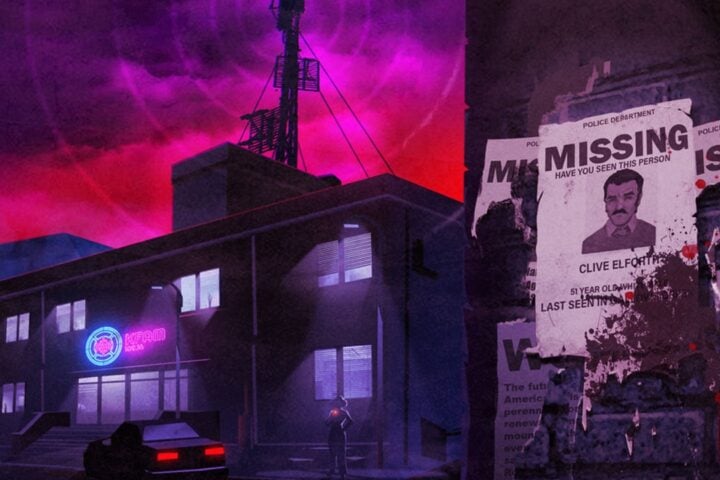
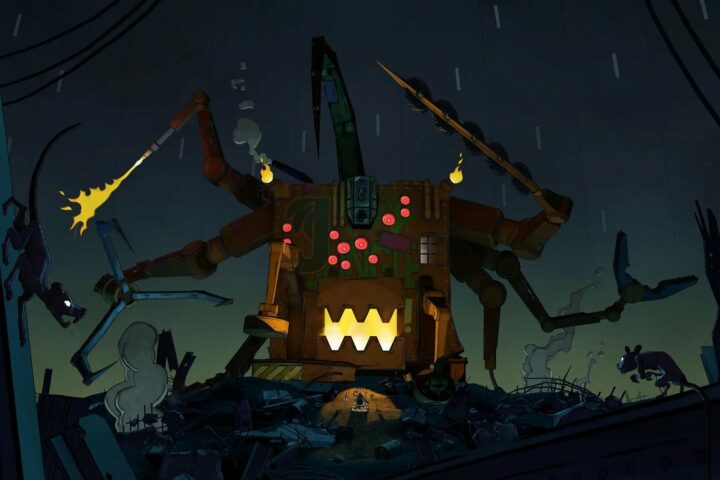
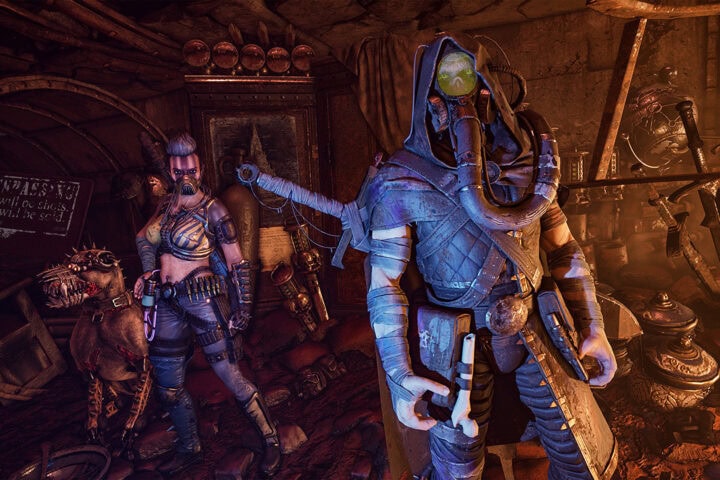
As you complete her mind scan, Senka Babić looks up at you with a twinkle in her eye, flush with the memories she’s just shared. Sure, her love of her grandchild is likely sincere, but the never-wrong diagnostic tool assigned to you by the authoritarian government, The Structure, at the center of Copenhagen-based developer The Outer Zone’s Mind Scanners tells you that she may be a deceptiac—that is, mentally prone to deceit—so you might as well wipe her memories for the greater good. “For normality and the mind!”
This is just one of over 30 cases you’ll be tasked with resolving in this psychiatry simulator. Players act from a position of power within The Structure and are tested to see how selfishly far they’ll go—in this case, to make their protagonist a Level 3 Mind Scanner and reunite him with his daughter, who carries a “highly contagious mental illness.” Fail to cure enough people of what your Book of Lunacy condemns and you won’t be able to afford The Structure’s daily maintenance fee, and you’ll be exiled to the Outer Wastes—a nice way of saying Game Over. Misdiagnose or recklessly stress patients and you may incur additional penalties, or wipe too many personalities in the process—accidentally or on purpose—and Moonrise, a rebel faction that opposes the rule of The Constructor, may take issue with your methods.
The Outer Zone’s developers are careful to use their retro-futuristic science-fiction setting to dissociate Mind Scanners from real-world diagnoses of actual conditions and any associated stigmas regarding their treatments. The game isn’t interested in debating the efficacy of current pharmacology or medical devices, and further abstracts things by turning the tools at your disposal into wacky minigames, such as the way you must carefully tune the Throatarizer’s dial or compare the vibrations of three excitable nodules on the Lunasucker.
All of this frees the game to focus on the morality of diagnosis, and how this power can be abused either by feckless individuals or controlling governments. One patient, a professor who descends into a self-induced madness so as to better understand the affliction, perfectly describes the game’s central thesis: “The question is not whether someone is insane, but how dangerous they are.” Someone like Casey Lothuin is a danger to himself; if he spends all his money on collectibles, he’ll wind up losing it all when he’s exiled. By contrast, Bert Herbert’s affliction is revitalizing, as his imaginary friend allows him to cope with the tedium of work.
These character studies are creative and well-written, and they come vividly to life via the mind scans you perform before declaring a patient sane or insane. (They’re also occasionally quite funny, though never at the expense of the patients.) On its surface, the mind scan is little more than a series of multiple-choice questions in which players must properly interpret the unseen-to-you Rorschach-like test that the patients are taking. Your subjects relate what they’re seeing to you in static paragraphs of text, but their descriptions are flooded with so much personality that you can largely determine what they’re suffering from, even if the names of their ailments are fictional. This is particularly useful should you choose to rebel against The Structure’s bleakly prescriptive form of oppression—things like revoltosis, aquaholism, and poesis—as it’s ultimately up to you and you alone to render judgment.
Where Mind Scanners is less compelling is in the way you treat patients, though that’s perhaps a feature rather than a bug, as the limited tools at your disposal have been designed by The Structure almost as a reminder that the erasure of personality is a routine occurrence. But that supposed intentionality doesn’t make it any less frustrating to endure some rather redundant gameplay. Though the characters change, the treatments do not, as you’ll just keep using the same eight main devices to quickly remove symptoms by completing the minigames associated with each tool. And this gameplay loop actually grows more tedious halfway through the game, as patients start exhibiting mental instabilities that prevent or penalize you for treating specific symptoms out of sequence. Mind Scanners begs players to replay it—you can’t meet every randomly assigned patient in a single campaign, nor can you side with both The Constructor and Moonrise—only to make it a chore to do so.
That, though, is the point of Mind Scanners. Treating patients like people and preserving even those personalities that are inconvenient to the government takes work, but it’s work worth doing. This may only be a game, but it actively demonstrates that a dystopia like The Structure can only arise and maintain itself when the people become inured to its injustices. Along those lines, it doesn’t feel authoritarian at all to diagnose this game as insane in all the right ways, an engrossing cyberpunk therapy adventure whose moral choices might keep you up at night.
The game was reviewed using a code provided by Brave at Night.
Since 2001, we've brought you uncompromising, candid takes on the world of film, music, television, video games, theater, and more. Independently owned and operated publications like Slant have been hit hard in recent years, but we’re committed to keeping our content free and accessible—meaning no paywalls or fees.
If you like what we do, please consider subscribing to our Patreon or making a donation.