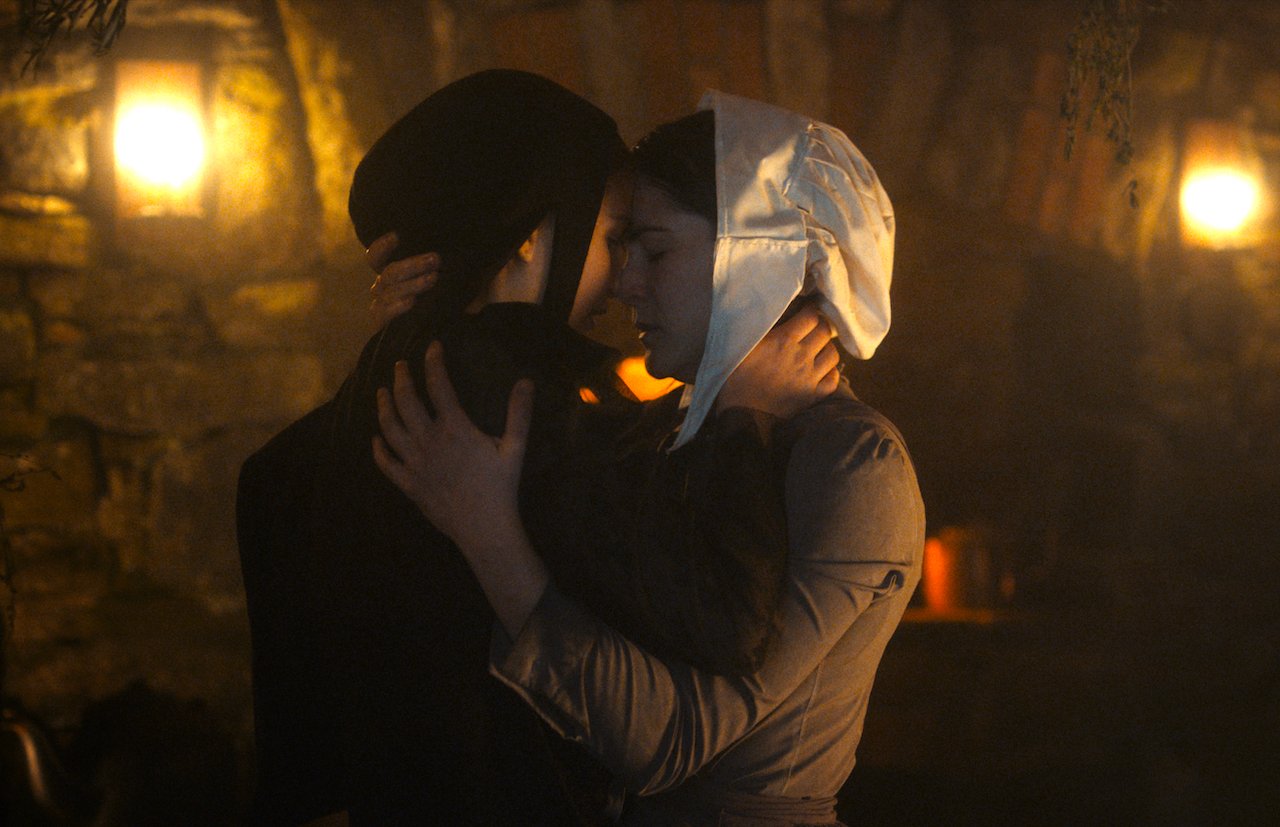
Edoardo Vitaletti’s The Last Thing Mary Saw is a pale shadow compared to Benedetta, Paul Verhoeven’s wildly unfashionable, crackerjack farce about potentially possessed lesbian nuns. The film contains so much risible dialogue that it comes to feel like a parody of a possession flick rather than a straightforward replication of the genre’s tropes. Scene after scene adheres to the same sullen mood, replete with characters glaring at or creepily whispering to one another, and are marked by lighting dimmer than just about any shot from Stanley Kubrick’s Barry Lyndon. Vitaletti may have a sure hand, but the film’s monotony is such that it comes to suggest a match that frustratingly never ignites.
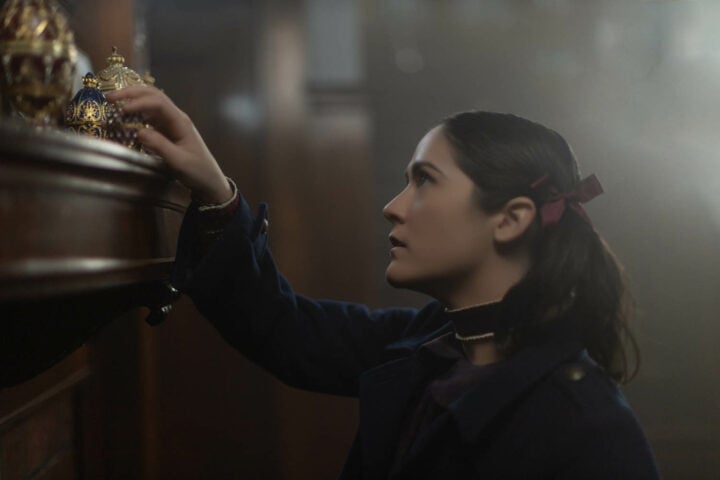
The Last Thing Mary Saw is set in 1843 and revolves around Mary (Stefanie Scott), a farm girl living in rural New York who, given her love affair with the family maid, Eleanor (Isabelle Fuhrman), isn’t very popular with the town’s devoutly religious elders. The film opens with Mary on trial—not for her sexual preferences, but because the town’s all-male court has pegged her as responsible for her mother’s (Judith Roberts) mysterious death.
The events of The Last Thing Mary Saw unfold in subsequent flashbacks to before Mary’s prosecution, and among them are scenes involving the Intruder (Rory Culkin), a phallically charged embodiment of male evil. The Intruder captures the essence of the film’s themes: Men represent sexual repression, violence, and religious oppression, while women, shackled by a system that both physically and mentally imprisons them, fight in futility to loose themselves from these constraints. But Vitaletti doesn’t so much probe those ideas as allow them to become boilerplate for uninteresting period details and an attempt at “elevated horror” that, ironically, quickly deflates for its unimaginative reliance on zeitgeist-baiting subject matter.
Vitaletti’s writing and direction, too, display little knack for anything other than broadly mimicking recent, witch-hunting period pieces like Robert Eggers’s The Witch, especially when it comes to capturing a distant century’s manner of speech through overwritten, faux-literary dialogue. “Our daughter’s ears are deaf to the Lord’s preaching,” Mary’s father (Michael Laurence) gloomily states early on. Similar unintentionally hilarious highlights crop up throughout as a result of the script’s bludgeoning solemnity. That The Last Thing Mary Saw unfolds in chapters that are given titles such as “The Temple of Earthly Desires” and “A Monstrous Birth” only magnifies how hobbled would-be serious material becomes when its maker approaches such subjects without a glint of self-awareness or a sense of humor.
Since 2001, we've brought you uncompromising, candid takes on the world of film, music, television, video games, theater, and more. Independently owned and operated publications like Slant have been hit hard in recent years, but we’re committed to keeping our content free and accessible—meaning no paywalls or fees.
If you like what we do, please consider subscribing to our Patreon or making a donation.