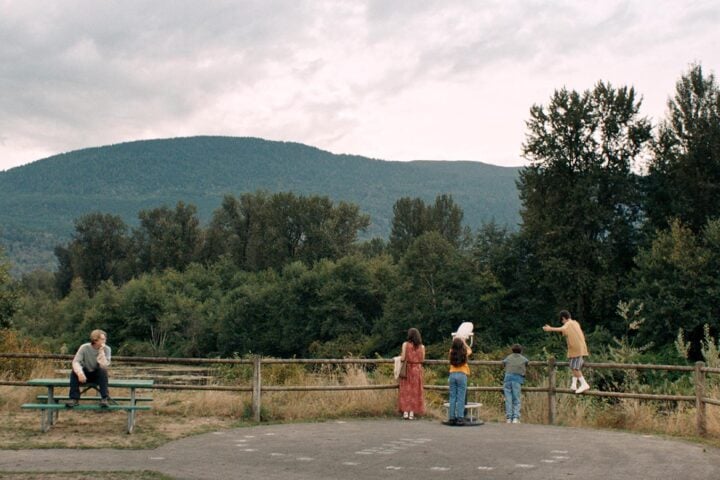
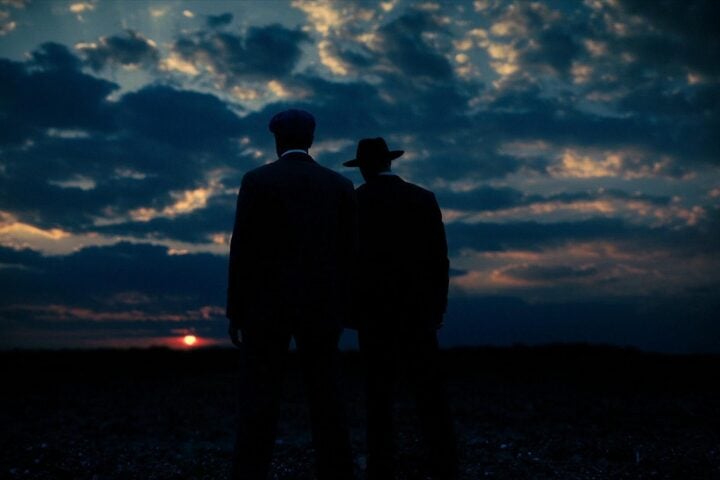
Nostalgia has always been a powerful force in cinema. Films are fragments of images and sounds, born from personal obsession and business apparatus alike, that unavoidably reflect the past. An aspiring blockbuster reaches audiences years after its conception, and a barebones indie, usually crowded out of the theaters or even streaming services by tent poles, can take years to land a release or corral the populace’s attention—if it manages to at all. Which is why it’s always weird when disparate films, produced over differing spans of time with vastly contrasting means, seem to anticipate a cultural mood. And modern culture is currently obsessed with, yes, nostalgia, the very lifeblood of cinema.
With too many crises to list here currently affecting our sense of global order, it’s tempting to flock to movies that depend on a misremembrance of the past. This tendency, along with Marvel fatigue, incredible action sequences, and hype that’s atomic even by studio standards, account for the unexpected success of Joseph Kosinski’s Top Gun: Maverick. Nostalgia also drives many of the films on this list, from Michael Bay’s Ambulance, which weds ’90s-era kinetics with a surprisingly contemporary sense of economic unease, to Jeff Tremaine’s Jackass Forever, which pivots on the inherently poignant sight of a group of aging men attempting to defy the passing of time with their characteristically ludicrous stunts.
Nostalgia isn’t solely the currency of pop movies. Phil Tippett’s Mad God proffers it from two different angles: the pop-art detritus seen in its post-apocalyptic setting reflects a bygone world in a literal sense, while the realization of said setting involves the use of tactile special effects that have been largely discarded now for less personal, less convincing CGI. Kentucker Audley and Albert Birney’s Strawberry Mansion is a Proustian slipstream that abounds, a la Mad God, in unforgettable analogue effects. On the even more absurdist side of things, there are the multiple potential worlds conjured by Daniel Kwan and Daniel Scheinert’s unexpected smash Everything Everywhere All at Once, a film that directly taps into the very suspicion that fuels nostalgia to begin with: a collective sense that we squandered our past. Chuck Bowen

Ambulance (Michael Bay)
“We don’t stop!” screams career criminal Danny Sharp (Jake Gyllenhaal) to the LAPD officer, Captain Monroe (Garret Dillahunt), who’s been pursuing him since a bank robbery went all sorts of wrong earlier that afternoon. While Danny is talking about the titular vehicle that he and his adopted brother, Will (Yahya Abdul-Mateen II), hijacked in order to use as a makeshift getaway, his declaration could just as easily double as Ambulance’s mission statement from director Michael Bay. The film builds tension and pathos not only through its central, seemingly endless, car chase, but through the ever-shifting dynamic that develops between Danny, Will, and Cam (Eiza González), the paramedic who they’ve taken hostage. The disorienting speed with which one bad decision can snowball out of control becomes the film’s ultimate raison d’etre. Answering Danny’s question about why he left home to join the Army, Will tells him, “It gave me purpose.” The same could be said of Bay and Chris Fedak’s screenplay for Ambulance, as the former’s frenzied stylistic tics have rarely been so well-suited and effectively intertwined with the substance of one of his films. Derek Smith

Apollo 10½: A Space Age Childhood (Richard Linklater)
With Apollo 10½: A Space Age Childhood, Richard Linklater points his auto-anthropological eye toward the social environment of his own upbringing: the ever-sprawling suburbs of late-’60s Houston, where Spam is for dinner, touch-tone phones are an exciting novelty, and seemingly everyone’s dad works for NASA. Though it reflects the forward-thinking optimism of the space age, when domed stadiums and astroturf seemed to prefigure an imminent techno-utopia, the film provides constant reminders that the late ’60s weren’t such a rosy time for everyone. Eschewing the hypnotic rotoscoped fluidity of his prior animated work, Linklater opts here for a gorgeous picture-postcard hyperrealism. Based on hours of home movies sourced from Houston locals, the film’s style is at once a loving reconstruction of the past as well as a layered attempt to distance the audience from the idea that any of this, even the most mundane details, happened exactly as they’re depicted. Keith Watson

Benediction (Terence Davies)
In Benediction, British cinema’s laureate of self-loathing sets his sights on Siegfried Sassoon, the English poet and writer whose antiwar verses brought him great acclaim in the aftermath of WWII. It’s a film that’s both elliptical and caustic, a rhapsodic portrayal of an upper-crust milieu in which words are wielded like weapons by people who might otherwise be pariahs. Evocative temporal transitions are a hallmark of Terence Davies’s work, though Benediction’s high-def look takes getting used to. Cinematographer Nicola Daley often goes for a harsh flatness that initially seems at odds with what one expects in a Davies film. There’s purpose in this approach, though, as Sassoon—who’s played in youth by Jack Lowden and as an older man by Peter Capaldi—and his gay coterie are mostly moving in shadows internally. The world outside is, by contrast, brightly, glaringly lit, its every feature apparent, whether beautiful or ugly, exalted or debased. There’s nowhere to hide. The only option is to deflect. Keith Uhlich

Everything Everywhere All at Once (Daniels)
Throughout Everything Everywhere All at Once’s nearly two-and-a-half-hour running time, Daniels put Evelyn Wang (Michelle Yeoh) through an existential ringer that’s every bit as exhausting as it is thrillingly alive with possibility. Across a series of connecting universes, Evelyn will not only peer into the lives of the Evelyns that could have been, but also absorb their powers to save reality itself. And as she learns how to access the skills and talents of her other selves from throughout the multiverse, Daniels’s feverish mélange of ideas, genres, tones, and emotions pushes the boundaries of mainstream filmmaking. For all its chaotic collages of images and ideas, though, Everything Everywhere All at Once is, at its core, a coherent depiction of a family learning to stay whole in an overstimulated, hyperactive world that trafficks in distractions far more effectively than it invites love and understanding. The film works magic by embracing that excess, finding a kind of harmony and possibility within it, and reminding us of the beauty and lunacy of the human experience along the way. Smith
Fabian: Going to the Dogs (Dominik Graf)
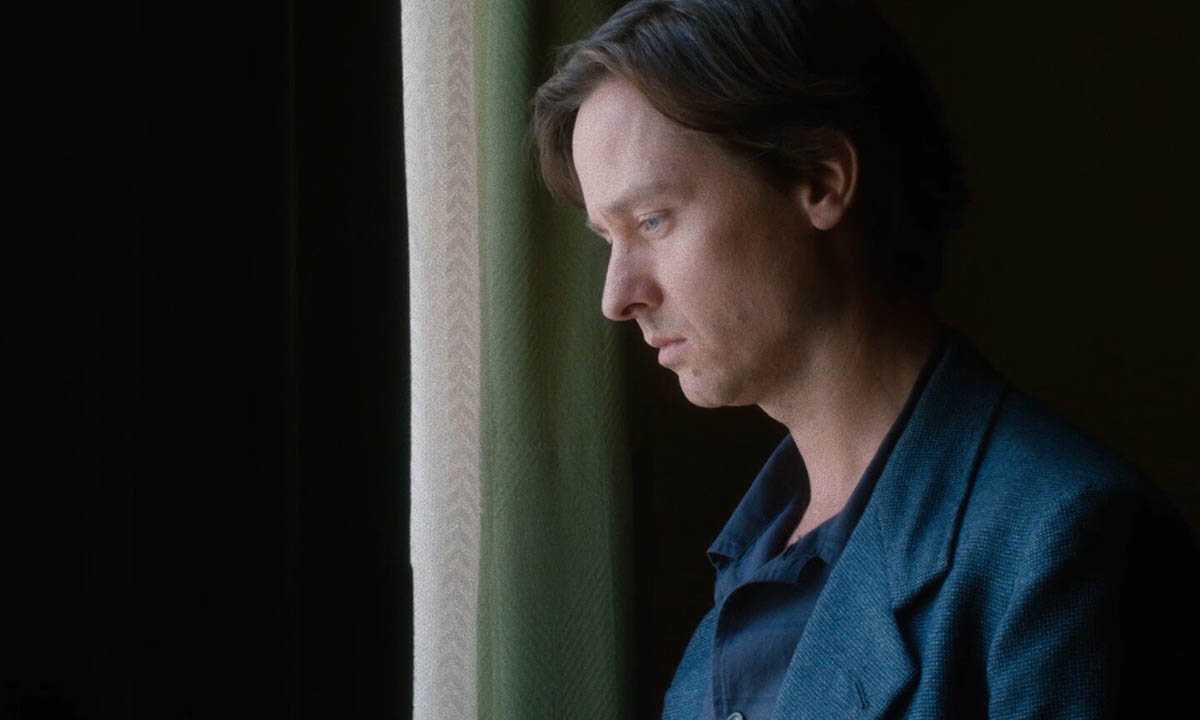
Based on Erich Kästner’s 1931 novel Fabian: The Story of a Moralist, Fabian: Going to the Dogs follows a shell-shocked war veteran, Jakob Fabian (Tom Schilling), whose unable to cope with the ethos of the times, the desperation-fueled abandonment of human relations that determines the life path of nearly everybody he comes across. While the book, published less than two years before the Nazis took power, conveys the foreboding sense that the Weimar Republic was at its end without possessing the knowledge of what precisely was to come, we and the film have inherited those dreadful details as part of world history. Kästner’s darkly satirical book turns a rather sober glance toward a society in which its author was embedded, while the film, with its bricolage of images and the dream logic of its temporally dislocated places and grotesque caricatures, conjures a shared nightmare of the past. Its characters are suffused with a paradoxical kind of fear that can only happen in a dream—the dread before an immense catastrophe that’s unavoidable because it’s already happened. Pat Brown

Friends and Strangers (James Vaughan)
James Vaughan’s Friends and Strangers begins in romcom territory by way of mumblecore as it traces a hesitant encounter between Alice (Emma Diaz) and Ray (Fergus Wilson) in Brisbane, though after their camping trip gone awry, the film pivots away from this romantic thread, then continues reorienting itself every few scenes, ultimately weaving a patchy quilt of quotidian happenstance, with the recurring thread being that nothing goes as planned for anyone. A funky comedy of manners emerges, but the breaking of decorum here does a bit more than just ruffle feathers, because gradually it appears to crack the face of reality itself. The film’s tonal and situational shapeshifting doesn’t go to the surrealist lengths of, say, The Discreet Charm of the Bourgeoisie, but Vaughan similarly indulges in burlesquing upper-middle-class complacency. The film offers up a portrait of well-heeled white Australians who have inherited the fruits of a nation’s colonialist fortune but who nonchalantly dismiss, if not outright repress, the thought of where that fortune might have originated from. Carson Lund

Futura (Pietro Marcello, Francesco Munzi, and Alice Rohrwacher)
Pietro Marcello, Francesco Munzi, and Alice Rohrwacher’s Futura is attuned to the dreams and anxieties of people on the brink of adulthood. Journeying across Italy, the filmmakers interview farmers, students, actors, boxers, among others. And given the uniformity of the disillusionment that they capture, it’s almost as if they’re driving in circles. While the interviews cover a wide range of contexts, almost everyone has similar complaints. From Milan to Palermo, they speak of how there aren’t any jobs for them, that Italy is “asleep,” that it doesn’t care about its young people, and that the government is only interested in pensions and immigration issues. They also seem to agree that Italian schools are excellent. And it shows, as their eloquence and wit are disarming, and just as consistent as their hopelessness, which makes the whole scenario all the more heart-wrenching. Diego Semerene
Great Freedom (Sebastian Meise)
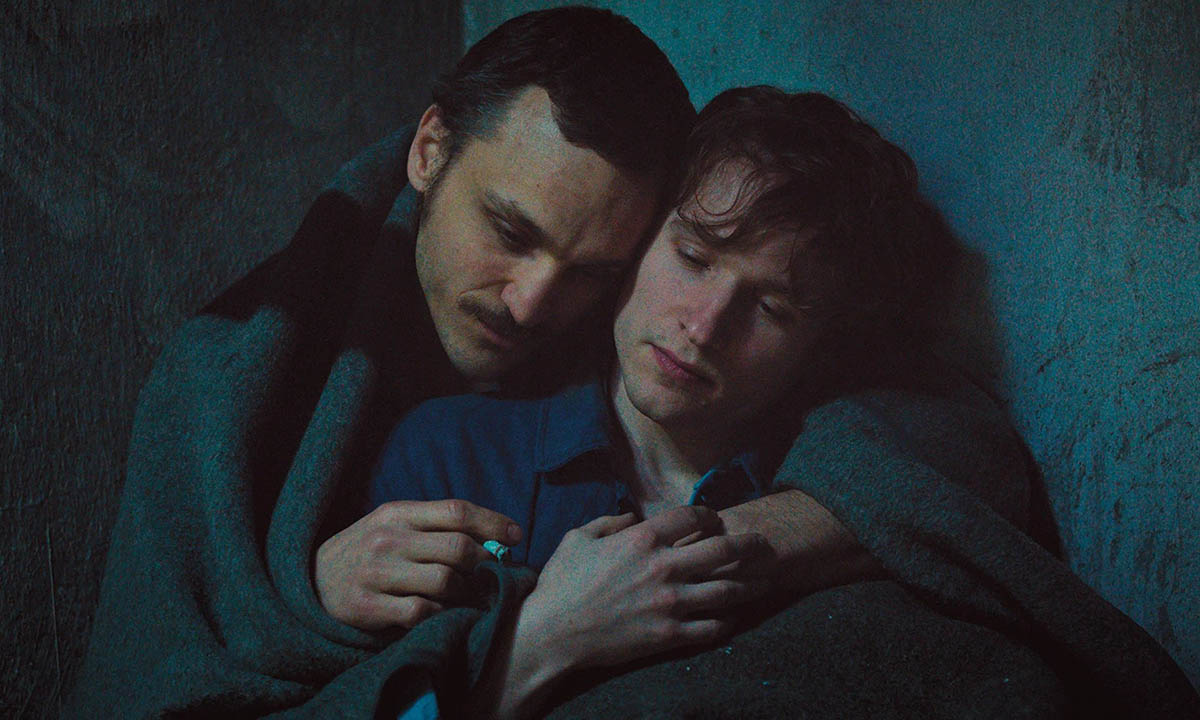
Sebastian Meise’s Great Freedom centers on Hans (Franz Rogowski), a Jewish man living in post-war Germany who goes from a concentration camp straight to prison for engaging in homosexual acts in a public bathroom. Throughout, we follow his many stints in that prison, and the film sees his recidivism as an addiction-like symptom of his desires. Great Freedom implies as much by it pairing Hans with a junkie cellmate, Viktor (Georg Friedrich), who develops a visceral relationship with Hans over the course of decades after being initial repulsed by his sexuality. The film, fortunately, never insists on an equivalence between drug dependence and gay sex. It simply evokes a common link between Hans and Viktor around the question of unescapable patterns. Love, like gay sex, finds a crack to slip through and manifest itself. Great Freedom sees gay sex and love, too, as weapons for emotional and institutional survival, enacting themselves through a kiss, a public embrace to soothe a weeping other, and the tattoo that covers up the evidence of genocide. Semerene

Happening (Audrey Diwan)
In Audrey Diwan’s Happening, Anne (Anamaria Vartolomei) discovers that she’s pregnant following a summer fling. Forced to navigate the arduous process of getting an abortion in 1963, when even assisting someone to find an abortionist could lead to jail time, she sees her chance at the future she wants for herself slip away. Set at a conservative university in the southwest of France, where the prospect of going to school as a single mother is unthinkable, Happening exhibits a profound understanding of the moral and emotional mechanics that are, often surreptitiously, at work in this environment. The psychological turmoil and agonizing isolation that all of this puts Anne through lends Diwan’s film a gripping immediacy that’s further reinforced by its general avoidance of period details in its costumes and settings. As such, it manages the difficult task of speaking to our current moment, where women are increasingly facing hurdles to abortion access, without being didactic or preachy. Smith

In Front of Your Face (Hong Sang-soo)
Hong Sang-soo’s In Front of Your Face is an obsessive rumination on the little squabbles and inconveniences and pleasures that add up to the bulk of our lives. Throughout this spritely and elegiac production, Hong lingers on details that most filmmakers would either take for granted and entirely disregard. Characters talk about whether to get coffee, a small stain on a dress becomes an existentialist symbol of control, and, of course, there’s a prolonged soju-drinking session with a blinkered male artist in which a few emotional cards are finally laid on the table. Hong’s gift resides in part in his ability to inform potentially tedious tangents with a rapturous and seemingly effortlessly achieved intensity. He returns to the same ground throughout his films and justifies the repetition, which becomes resonant in its own right. Like Rainer Werner Fassbinder claimed to be doing, Hong is building a house—an interconnected series of films about the collision between day-to-day nonsense and private artistic realms. Bowen
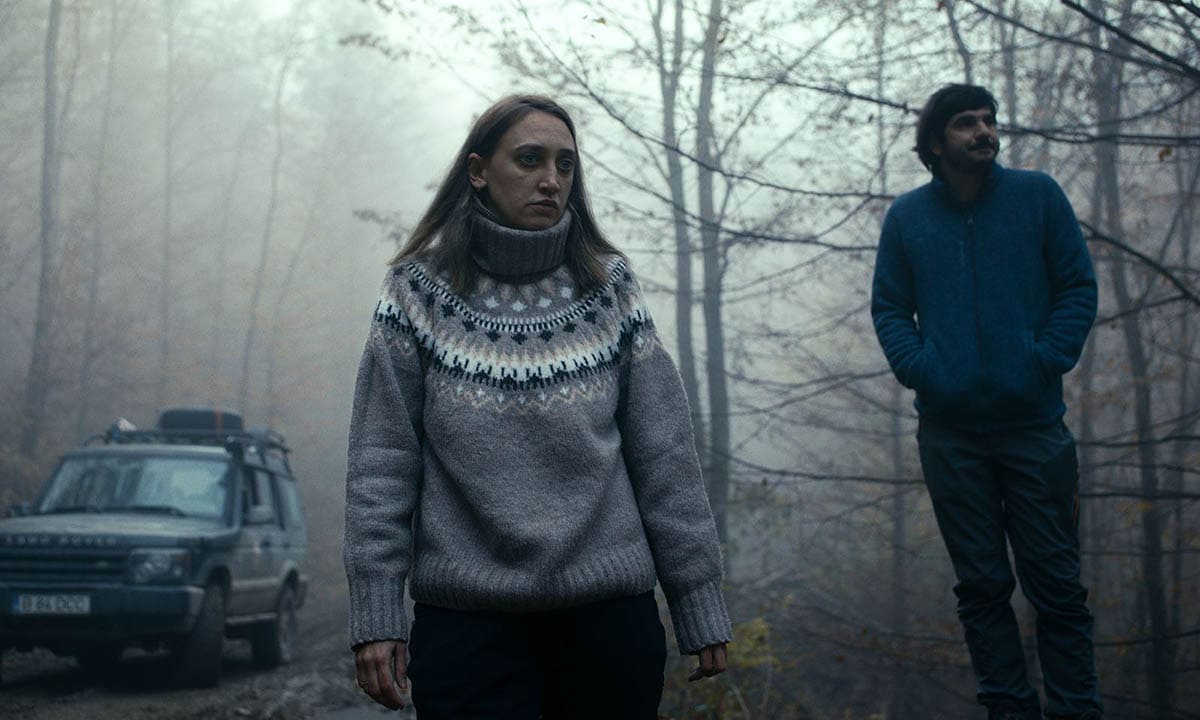
Întregalde (Radu Muntean)
Radu Muntean’s Întregalde is a sharply drawn and subtle fable about the meaning of charity and the limits of altruism, and it finds the Romanian director far from the cosmopolitan, post-Ceaucescu Bucharest of his breakthrough drama, Tuesday, After Christmas. Like many of the canonical works of the Romanian New Wave, Muntean’s 2010 film wrung considerable tension from quotidian but irreconcilable domestic dramas. Though Întregalde quickly, and unexpectedly, evolves into something close to a genre exercise, it’s similarly dogged in its quest to illustrate the gaps between human values and human nature. With a neutral tone that isn’t judgmental but is nonetheless hyper-inquisitive and devastatingly witty, the film exposes the differences between doing good to feel good about yourself and doing good because simply because there’s no one else there to help. Christopher Gray

Introduction (Hong Sang-soo)
It would be easy but shortsighted to dismiss Introduction as another collection of sketches by the prolific Hong Sang-soo. Every one of his films uncovers new emotional contours as Hong continues to mercilessly hone his aesthetic, and this one is no exception. Introduction was shot by Hong in the same kind of ghostly black-and-white as many of his other recent productions, and it finds him continuing to refine a sense of negative space that communicates gracefulness and inner turmoil. When characters stand or walk alone here, looking into a pocket of bright white sunshine or stepping into a reflective rain puddle, they momentarily slip into their own skin after intricate, implicitly combative verbal jousting with family and friends. Here, Hong continues to compress the distance between himself and his actors, capturing moments of unforgettable behavioral acuity, which he fuses with his stark, expressionistic, nearly Bergman-esque compositions. The result is a modern melodrama of grit, beauty, jagged edges and resonant dead ends and false starts. Bowen

Jackass Forever (Jeff Tremaine)
The most immediately arresting sight in this fourth installment in the Jackass film series is how the actors have aged since Jackass 3D. The Jackass crew speaks honestly about the toll that this franchise has taken on them, and Jackass Forever has the feeling of a farewell in its unabashed nostalgia, with the performers updating a number of gags from the TV show and prior films. Jackass has always existed in a larger tapestry of entertainment history that links high- and low-culture touchstones as disparate as silent film comedy, performance art, and backyard wrestling, and there’s even a gag here that’s right out of Looney Tunes. To see the old-timers pass the torch to their acolytes cements the improbable importance of Jackass in American pop culture, twisting a property that was once considered proof of a nation’s budding nihilism into maybe the strangest-ever celebration of human ingenuity and the lengths that we go to in order to amuse ourselves and others. Jake Cole

Kimi (Steven Soderbergh)
Steven Soderbergh’s Kimi is in line with the filmmaker’s other paranoid thrillers of the past decade, Side Effects and Unsane, which both cast a skeptical gaze at the mental health industry. Here, though, Big Tech rather than Big Pharma plays the baddie in a plot centered around an imperiled young woman. But the fiercely and unapologetically intense Kimi also reflects another long-running Soderbergh interest, as it articulates the socio-political problems of omnipresent surveillance and alienated labor in the form of a taut, exciting chase through the already-dystopic spaces of our hypermediated society. If Soderbergh ever follows through on his repeated threats to retire, we might look back on him as one of our foremost pop chroniclers of the contemporary world. In Kimi, he and screenwriter David Koepp extend into impactful hyperbole the tensions inherent in the situation of being subjects of and subjects to incessant surveillance. Effective as a nail-biting thriller, the film ultimately lands with a jolt because it takes place in a world that we recognize at once as an unbearable cyberpunk dystopia and as, undeniably, the one we already live in. Brown

Mad God (Phil Tippett)
A humanoid referred to in the credits as the Last Man (Alex Cox), costumed in a kind of warrior outfit that resembles a fusion of deep-sea diving gear and WWII-era military regalia, descends into a strange world on a corroded diving bell. Upon landing somewhere in the recesses of a valley, after passing by relics and dolls and bric-a-brac that suggest life as lived in a giant attic from hell, the Last Man consults a map. He intends to do…something. That’s the entire plot of Mad God, as Phil Tippett cannily turns our familiarity with post-apocalyptic lone-hero clichés against us. As the Last Man traverses this world, he becomes acquainted with overlapping food chains defined by subjugation and slaughter. There’s no beauty here, and not even any speech, and so the straw people, the only creatures designed with a sense of sympathy, zone out in front of TV sets. Like these people, our eyes are tickled by the sensory stimulation that Tippett offers, while our souls are sickened by the carnage and unrelenting hopelessness. Which is to say that Mad God is a compact, despairing, wildly inventive song of mourning. Bowen

Mr. Bachmann and His Class (Maria Speth)
Maria Speth’s Mr. Bachmann and His Class taps into the space where knowledge is collaboratively constructed, not transferred, and stays there, basking in its magic from start to finish. Speth contemplatively trains her camera on an elementary school class, composed of child immigrants, in the provincial German town of Stadtallendorf. Dieter Bachmann is their maestro, not master, conducting the quiet spectacle of progressive pedagogy with the most tender of grips. Throughout the film, the students’ grades are discussed, one by one, among the entire class. The process makes it clear that students aren’t defined by the provisional result of their efforts. Clashes are resolved through listening. The rigidity of math is punctuated by music, cooking, and drawing once the teacher senses that boredom and crankiness have surfaced. The documentary exists within the very restricted pantheon of films that successfully reap the cinematic potential of pedagogy. The obvious comparison is to Peter Lataster and Petra Lataster-Czisch’s Miss Kiet’s Children, but Mr. Bachmann and His Class isn’t so much a portrait of a class, but a masterclass in portraiture. Semerene
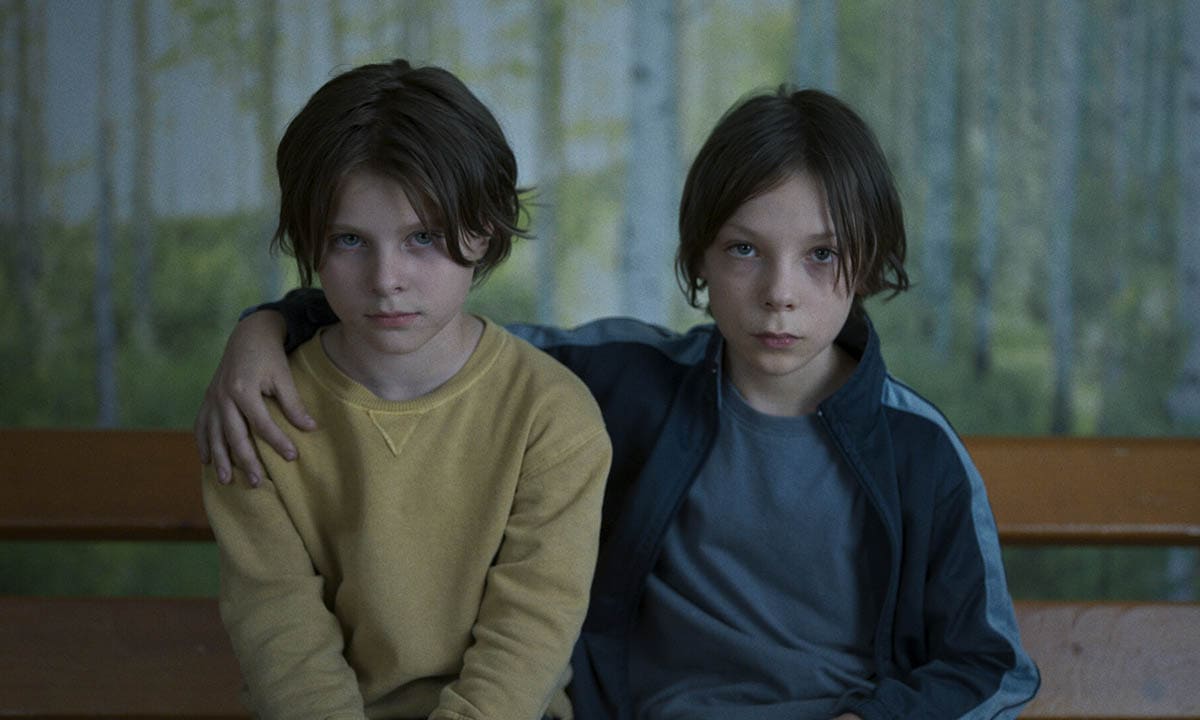
Playground (Laura Wandel)
Laura Wandel’s Playground is an unmooring account of bullying in an elementary school that’s witnessed by the young Nora (Maya Vanderbeque), who shares in, and intensifies, our sense of impotence. Above all, Playground is an unwavering expression of point of view: We never leave the school setting, and the faces of adults are often obscured, as they hover out of the frame, out of the empathetic periphery of the children at the center of the narrative. As the violence escalates, Wandel renders it more subliminal, relegating violations to terrifying blurs on the peripheries of compositions. When we feel as if we can’t take it anymore, when we need to see the violence to hopefully confirm it to be less awful than we’ve imagined, Wandel springs a climactic shard of incident that reveals school to be an all-too-common hornet’s nest. It’s the kind of place we might remember ourselves, a wellspring of institutional psychosis that inspires us to flock to more soothing movies, so as to avoid a reckoning with the brutality, and emotional brokenness, that exists off to our sides, under our feet. Bowen

RRR (S.S. Rajamouli)
A watershed for Indian cinema, director S.S. Rajamouli’s RRR is a feverish blend of historical epic, mythological allegory, and superhero blockbuster. A blisteringly anti-British, pan-Indian action extravaganza whose politics have been both attacked and defended from accusations of nationalism, RRR is at heart a buddy movie. Two men on ostensibly opposite sides of the Raj, a Gond tribe warrior named Bheem (Jr NTR) and a police officer named Ram (Ram Charan), become friends first through deception and thrilling derring-do, then a common cause. Throughout, the delirium of Rajamouli’s aesthetics is felt in everything from the extravagant dance numbers—which includes a suspenders bit that’s already being justly celebrated as one of the greatest cinematic dance sequences of all time—to the florid colors, swooning camera movements, and slow motion that elevate the brutal fighting scenes to the level of melodrama. It’s been a surprisingly decent year for American tent poles, but none hold a candle to this Telugu-language epic’s myth-making machinery. Cole

Strawberry Mansion (Kentucker Audley and Albert Birney)
James Preble (Audley) is a “dream tax” auditor in a near-future in which citizens’ dreams have been monetized. Is there a hot air balloon in your dreams? Well, the value of that image is somehow $5,000, so you owe a couple bucks to the tax man. Dreaming of a spider infestation? Conveniently, the anonymous party dude in the Hawaiian shirt who keeps popping up in your dreams has a spider spray to recommend to you. Strawberry Mansion, with its shadowy corporations, VHS tapes, demons, and impossible recursive connections between present and past, weirdly covers ground similar to that of the recent Netflix horror series Archive 81. The two share a fantasy of being able to enliven archaic media formats—the wish that the discarded tapes that lie forgotten in dank basements might offer real interchange with the histories, fantasies, and people they archive. Except that Strawberry Mansion doesn’t view the repressed material of the mind (or of the video tape) with trepidation, but rather with a sense of open, playful delight. Here, even the demon who’s kidnapped the object of your VHS-mediated affection will at least offer to make you breakfast. Brown

Vortex (Gaspar Noé)
Resignation to fate is the dominant affect of Gaspar Noé’s Vortex. Other films about the onset and advancement of dementia have rarely been as steadfastly bleak or as full of futile despair as this tale of an elderly couple whose bond is dissolved by the disease. Noé uses split screen to represent the divide between the characters, and in the opening minutes of Vortex, the filmmaker shows us the moment that the disease comes between them by having the black bar that will separate the screen for the rest of the film slowly inch down the middle of the frame as the couple lies in bed. The film takes place in a universe indifferent and unresponsive to its characters’ hopes—in which, at one point, plans are literally flushed down the toilet. In other words, it’s set in a world emptied of the usual sentimental pieties about aging and death. As the possibility not only of a happy ending, but of any real resolution, of any reconciliation with the fact of death that we might hope the characters will make, becomes remote, the film evokes that familiar but unshakeable cliché that everybody dies alone. Brown
Since 2001, we've brought you uncompromising, candid takes on the world of film, music, television, video games, theater, and more. Independently owned and operated publications like Slant have been hit hard in recent years, but we’re committed to keeping our content free and accessible—meaning no paywalls or fees.
If you like what we do, please consider subscribing to our Patreon or making a donation.