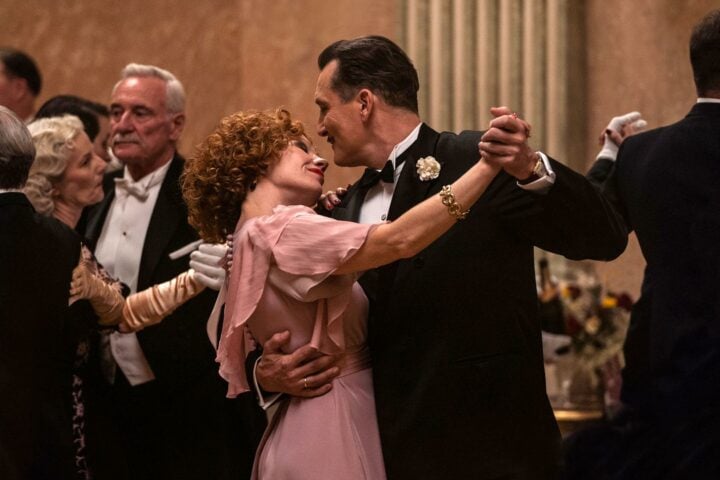
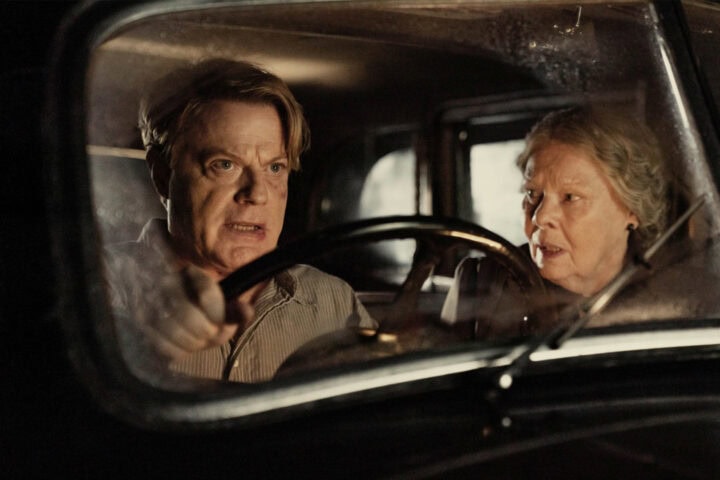
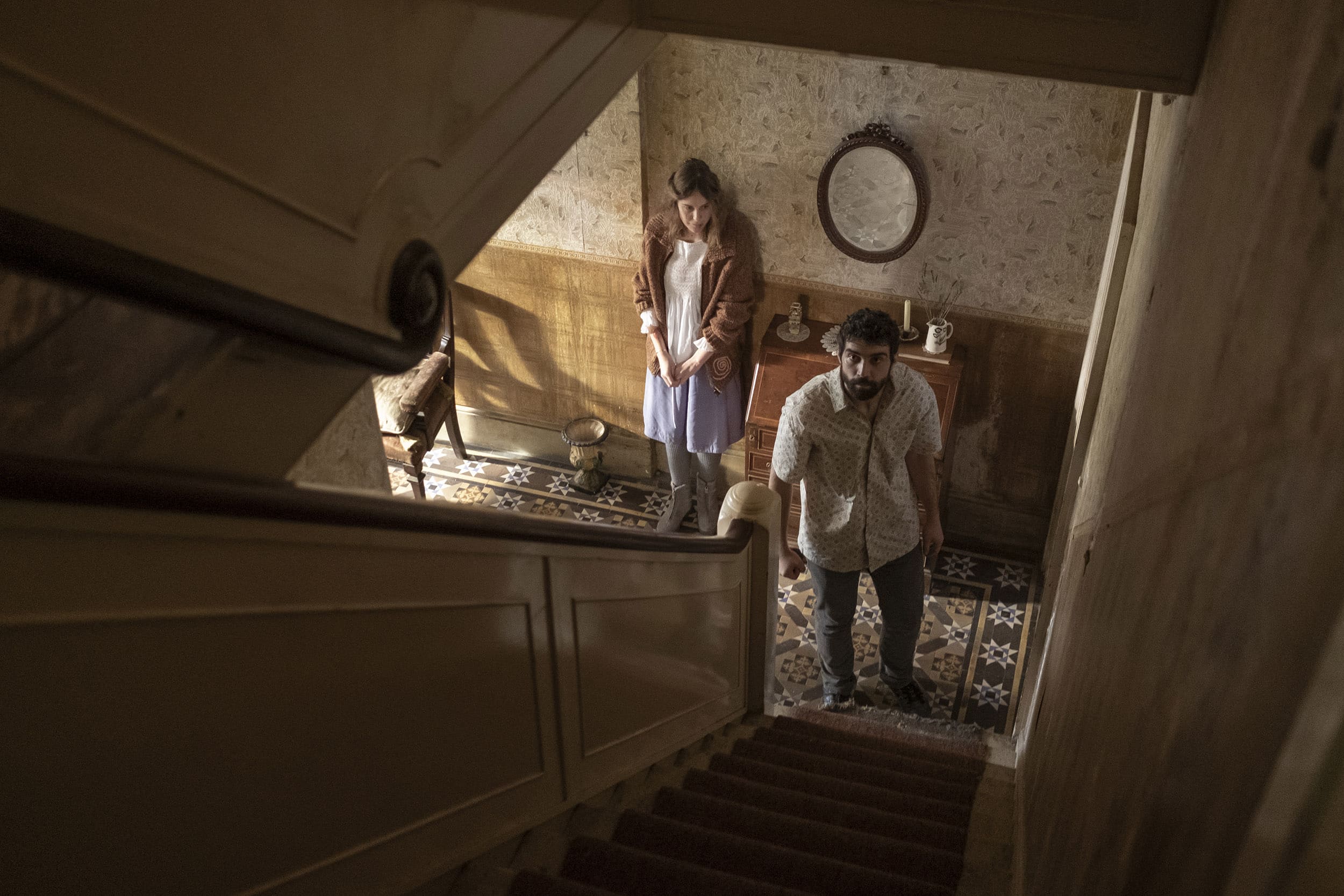
Even before her family fled Germany in the days leading to Adolf Hitler being appointed chancellor of Germany in 1933, nine-year-old Anna Kemper (Riva Krymalowski) drew pictures of disasters. But after emigrating to Zurich and then to Paris, the girl creates an elaborate flipbook of drawings of her family at the Eiffel Tower, telling her father, Arthur (Oliver Masucci), “I don’t want to give you any more disasters.” It’s an admission on her part of having come to terms with the fact that Arthur, a prominent theater critic who continues to openly condemn Hitler, lives in fear, and thus doesn’t need any additional negative energy directed his way. But it could also serve as a statement of intent from writer-director Caroline Link, whose When Hitler Stole Pink Rabbit presents a sanitized vision of Jewish refugee life that’s curiously light on danger, turmoil, and, really, any drama in general.
To a significant extent, this family-friendly approach stems from the film’s source material: the beloved children’s novel of the same name by Judith Kerr. But where the events of the 1971 book are largely filtered through Anna’s naïve perspective, the film takes a broader view of the adversity faced by the Kemper family, making its unwillingness to confront the gravity of the political climate of the era all the more frustrating. Where Kerr’s book sees a troubled world through the eyes of a child, Link’s film simply adopts a childish view of the world.
The gloss of When Hitler Stole Pink Rabbit’s visuals and the precious, lilting quality of its piano and strings-dominated score are representative of the film’s middlebrow sensibility. Its gentle sentimentality initially appears intended to soften the blow of a would-be harrowing journey, but as Anna and her brother, Max (Marinus Hohman), move around Europe, the film’s bland, paint-by-numbers aesthetic only mirrors the surprisingly innocuous situations they find themselves in. Indeed, the siblings’ struggles ultimately amount to little more than those typical of any child adapting to life in a new country: language barriers, new customs and cultural mores, and snotty schoolmates looking to pick on anyone who’s different.
These issues aren’t unworthy of dramatization, but they feel spectacularly inconsequential given the film’s historical context. Anna makes close friends, goes on a nice boat ride for her 10th birthday, and later visits the Eiffel Tower. Max’s biggest dilemma, on the other hand, is that his parents don’t have enough money for him to go to the movies. But this shortage of money never appears to adversely affect the family’s life all that much, aside from them having to avoid their landlady whenever they’re late on their rent. Considering that Dorothea’s (Carla Juri) biggest qualm is now having to send Anna and Max to supposedly crummy public schools rather than to the sort of private institution that they’re used to, the privilege inherent in such a predicament becomes too strongly pronounced for their struggles to stir our sympathies, especially if you consider the fates of millions of other Jews across Europe.
When Hitler Stole Pink Rabbit is clearly trying to tell a small and personal story, rather than one that gets caught up in the larger sweep of Hitler’s reign. But even within this purposely limited scope, the stakes remain consistently low. Only a few times is anti-Semitism depicted in the film, and the reality of Nazi Germany and its looming atrocities feels as if it exists only beyond the edges of the frame. Even when we learn that Hitler put out a small bounty on Arthur’s life, the film never generates a sense of urgency. And in keeping nearly everything unseemly, offensive, and threatening at arm’s length, When Hitler Stole Pink Rabbit downplays both the dangers of fascism and the harsh realities of life as a refugee.
Since 2001, we've brought you uncompromising, candid takes on the world of film, music, television, video games, theater, and more. Independently owned and operated publications like Slant have been hit hard in recent years, but we’re committed to keeping our content free and accessible—meaning no paywalls or fees.
If you like what we do, please consider subscribing to our Patreon or making a donation.