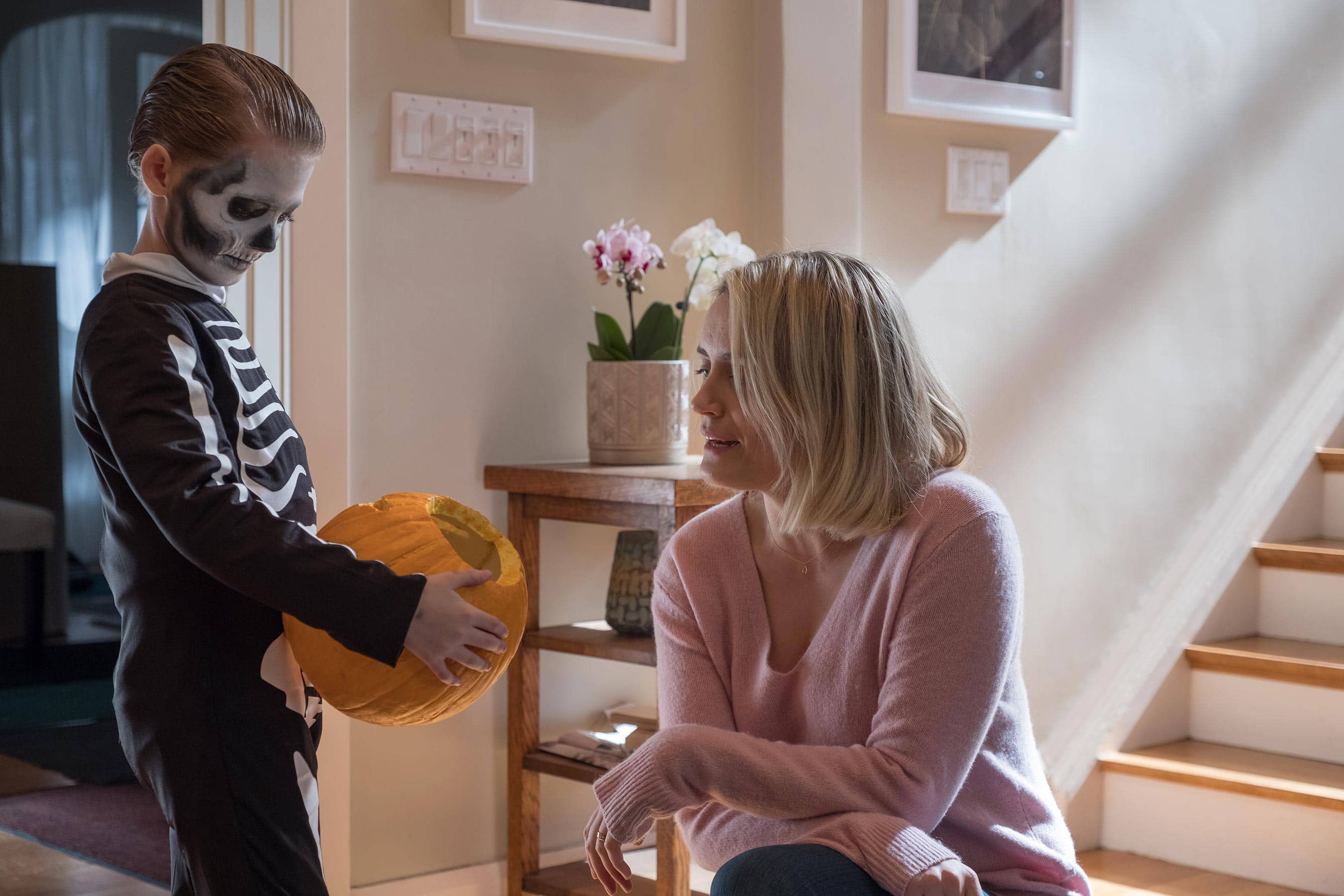
The prologue of Nicholas McCarthy’s The Prodigy crosscuts between an Ohio woman, Margaret (Brittany Allen), escaping from a serial killer, Edward (Paul Fateaux), and a young couple in the suburbs of Philadelphia preparing for the birth of a son, Miles, they weren’t sure they could have. A SWAT team descends on the killer’s lair and shoots him dead as he approaches them, naked. In a neat visual parallel, the film establishes that the man’s soul is transferred across state lines when the scene cuts from Edward’s bullet-ridden corpse to the gooey newborn. The boy, like the bad man, has one blue eye and one hazel eye, because, as Gregor Mendel proved, eye color is determined by the soul.
A smarter screenplay might have asked us to at least doubt the plausibility of reincarnation. Instead, the film’s exposition-delivering counselors (Paula Boudreau and Colm Feore) shame anyone who might dismiss its possibility. And, certainly, a more fun script might have bought into the idea wholesale, gleefully pushing it past its wackiest extremes. But Jeff Buhler’s does neither, coloring inside the lines while treating a Tales from the Crypt-level scenario with preposterous solemnity, dutifully dishing out the expected plot points. As the boy ages, too many clichés pile up. For one, the first living thing that catches on that the child is possessed is, of course, the family dog, meaning that Miles (Jackson Robert Scott) has to kill it.
Later, a character slowly pries off a section of plywood to find the dog’s body, leading to hysterical screams and the wailing of the film’s score. McCarthy takes a predictable plot development and turns it into a moment of high horror. Also effective, and redolent of the reveal of the red-coated dwarf from Don’t Look Now, is the sudden, momentary appearance of Miles with a grown man’s twisted face. But McCarthy is also prone to laziness, as when he tries to establish dread with a screaming tea kettle or the echoey drops of a leaky faucet.
The film builds toward some level of ethical complexity in its final third, asking how far into darkness parents will go for their children, how far they’re willing to indulge them. And Schilling is impressive as a mother whose moral compass becomes unfixed. But the film cops out, introducing a deus ex machina that allows the script to skirt its difficult questions for a more sequel-friendly finale. The filmmakers fail to realize that the darkest horror here doesn’t lie in the triumph of true evil, but in seeing how far a regular family will go to protect itself before doing the right and necessary thing, however hard or horrible it might be.
Since 2001, we've brought you uncompromising, candid takes on the world of film, music, television, video games, theater, and more. Independently owned and operated publications like Slant have been hit hard in recent years, but we’re committed to keeping our content free and accessible—meaning no paywalls or fees.
If you like what we do, please consider subscribing to our Patreon or making a donation.