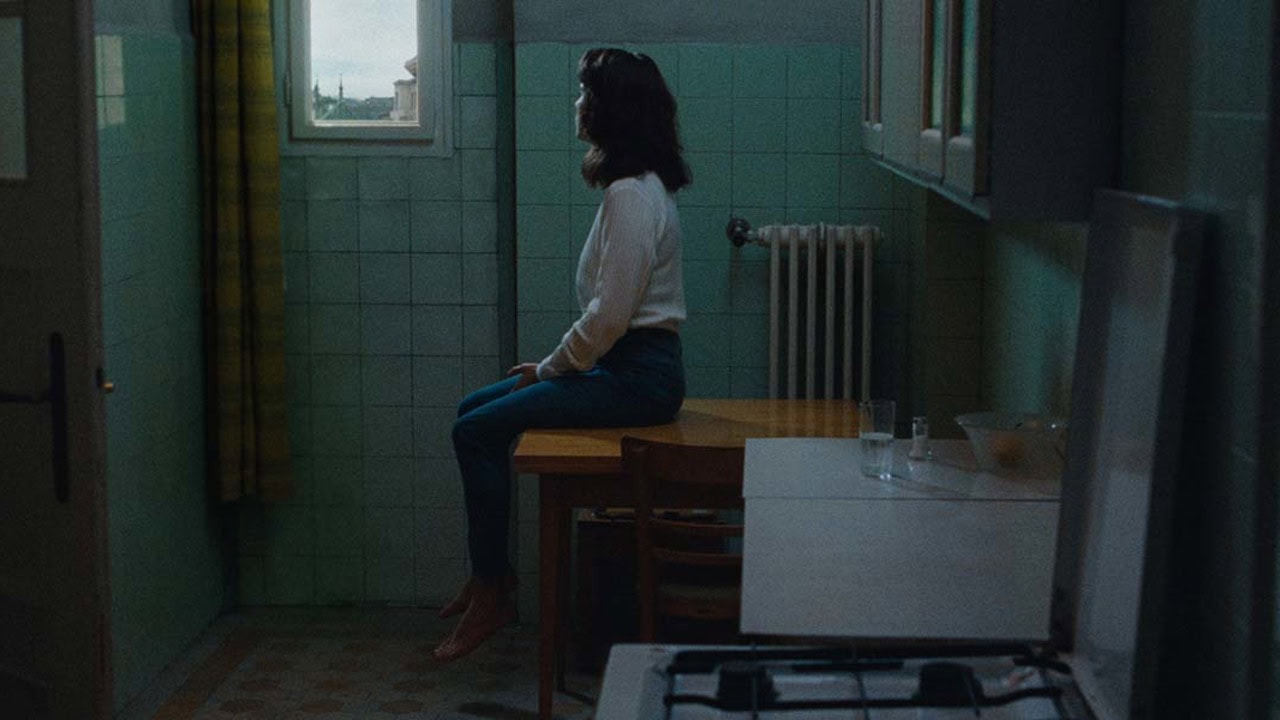
The title of writer-director Harry Macqueen’s Supernova refers to the brilliant conflagration that accompanies the death of a star, which here signifies the erasure of Tusker’s (Stanley Tucci) personality as he succumbs to early-onset dementia. It’s a metaphor that’s immediately taken to the extreme by the film in its single-shot prologue, of a tiny dot in the night sky growing brighter and then winking out. Then, at the end of the second act, Tucci’s novelist and amateur astronomer makes the connection even more explicit, explaining the science of star lifecycles to the niece (Nina Marlin) of his partner, Sam (Colin Firth), in terms that reveal that his mind is really fixated on his own mortality.
That sort of busywork provides the film with a kind of structural cohesion that’s belied by the fact that this metaphor doesn’t really suit the situation at hand. After all, in what sense does a person suffering from dementia experience a brilliant flash before fading away? The story emphasizes that Tusker has been losing not only his ability to remember where he is and conceive of stories, but even the coordination required to write legibly. The man’s dread at losing his memory and then his sense of self wouldn’t seem to mesh with Macqueen’s attempts to beautify his struggle via a decidedly one-dimensional metaphor.
In fact, Supernova is so obviously structured that it often seems to be imposing meaning on its characters. Tusker’s ostensibly extemporaneous lecture about supernovas and stardust may be a case in point, but his relationship with Sam, a concert pianist, is also composed of dialogue wrought with all the subtlety of a decorative scroll. “You’re just sitting there, propping up the entire world,” Tusker too-achingly, too-perceptively intones to Sam after they dine in the back of their camper, midway through their road trip across England to the first gig that Sam has booked in a long time. Tusker then reaches across the table and squeezes Sam’s hand—a gesture that feels less like a touch of affection and more like a stage direction.
Part of what makes such actions feel so forced, perhaps, is the lack of chemistry between Firth and Tucci. Their erudite characters profess mutual admiration, and are carefully presented to the audience as middle-aged lovers who are still physically intimate—the first we see of the couple is a shot of them in bed, a nude Sam tightly spooning Tusker—but the actors convey little of that sense of lived-in affection that can’t be wholly captured by their skilled line readings or Macqueen’s too-precise compositions. No warmth seems to underlie any of the scenes that strive for a somber significance, and there’s certainly little passion, however diffused it might have been by time and hardship, in the longtime couple’s rare kisses.
After camping near the lake where they ended their first date, Sam and Tusker make another layover on the way to the unnamed concert venue where Sam is set to return to the stage (many characters and places go unnamed in Supernova, perhaps reflecting the isolated world the couple now lives in): Sam’s sister Lilly’s (Pippa Haywood) home. She and her husband, Clive (Peter MacQueen), throw a surprise party with a sizable number of guests who mostly remain anonymous but are apparently all old friends. Here, in true second-act fashion, the revelry of the assembled society marks a contrast with the revelation of a disturbing secret that Tusker has been keeping from his partner, setting up a third-act confrontation.
The visibility of the story’s infrastructure, the way characters proceed through highly structured arcs and articulate the titular metaphor, especially prevents the tail-end of the film from having much emotional impact. Arguably, the first act communicates the ideas of the whole much more elegantly than the more schematic, wordier latter two. As Tusker and Sam travel through a stunning patch of English countryside, Macqueen and cinematographer Dick Pope find a visual metaphor more suited, and literally more grounded, than the one about exploding stars: the sight of trees and denuded mountaintops reflected in placid lakes.
Reflections in water, their clarity marred by slight, unpredictable perturbations, evoke the relation between outer and inner worlds, the mystery of the fragile human consciousness. These sequences recall everyday phrases like “stream of consciousness” and “current of thought” without a character holding forth on the topic. The striking stillness of these montages also evokes death. Unfortunately, Supernova buries this much subtler, arguably more cinematic treatment of a couple facing mortality together under far too many words.
Since 2001, we've brought you uncompromising, candid takes on the world of film, music, television, video games, theater, and more. Independently owned and operated publications like Slant have been hit hard in recent years, but we’re committed to keeping our content free and accessible—meaning no paywalls or fees.
If you like what we do, please consider subscribing to our Patreon or making a donation.