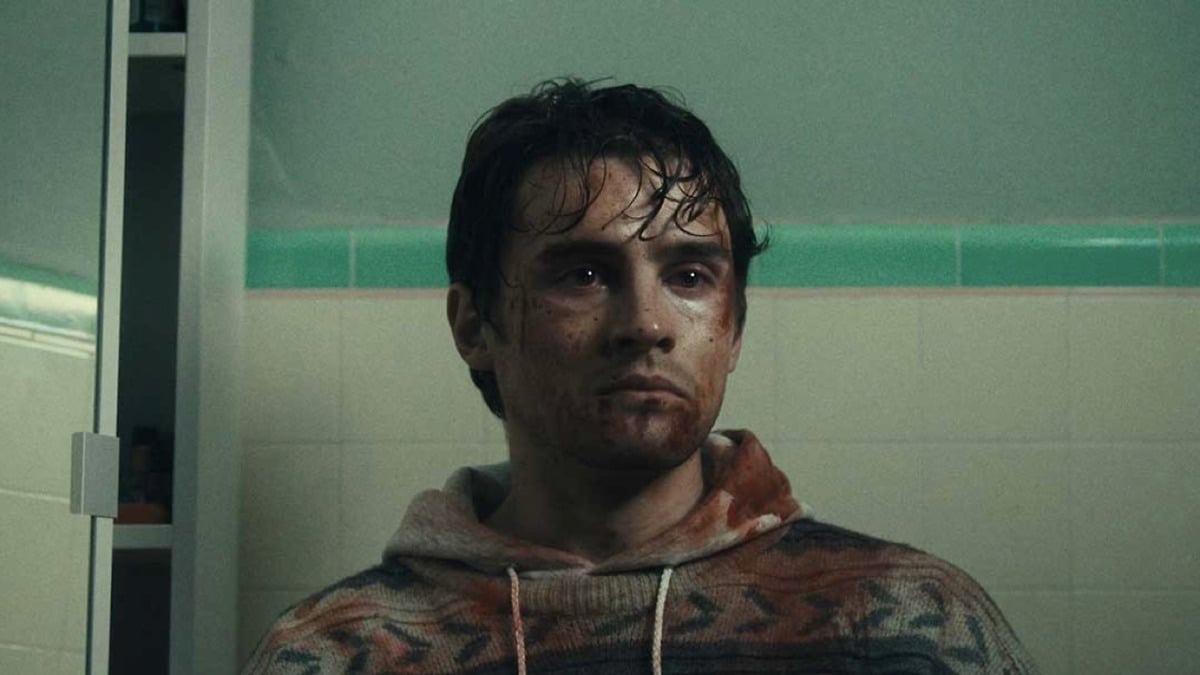
“I want Nikki Freeman to love me more than anything,” exclaims Bear (Michael Johnston), the young man at the center of Curry Barker’s Obsession, in a fit of thwarted romantic frustration. After failing to elucidate his true feelings to his co-worker Nickki (Inde Navarrette), Bear turns to the film’s version of a monkey paw, a cursed novelty toy called “One Wish Willow,” as a shortcut to an ultimate endgame with his crush. But he learns the hard way that precision of language means everything when it comes to matters of the heart.
Nikki’s initial reciprocation of Bear’s affection starts gently enough for the self-imagined nice guy to believe the kindling of their flame is his own doing, not the result of some fantastical totem. He’s happy to take advantage of the benefits from her single-minded doting without questioning their source. Yet their honeymoon stage quickly gives way to something more sinister. Nikki morphs into a starry-eyed partner who would put any “tradwife” fantasy to shame with the increasingly drastic measures she takes to fulfill her newly programmed directive.
Were it not for its supernatural elements, Obsession could easily function as a straightforward relationship drama about Gen Z young adults navigating the challenges of communication around desire. How easily the tension in a scene would dissipate if the characters—particularly the men—would just have the conviction to express what they want without fear becomes a persistent undercurrent in the narrative. Both Bear and his chummy colleague Ian (Cooper Tomlinson) tiptoe tentatively through their conversations with women, hyperaware that they’re traversing a minefield of consent that could detonate with one wrong move.
Barker makes this fear of transgressing invisible boundaries as terrifying as any jump scare or gushing gore in Obsession. The filmmaker likes to linger in the discomfort of dead air in any tête-à-tête, drawing out long takes rife with ambiguity until they become unbearable. Barker proves just as keen to break the uncertainty with a laugh or a scream, which is sure to make you feel Bear’s sense of discombobulation all the more acutely.
Obsession’s shifts between genre registers become both less frequent and agile as the consequences of Bear’s hastily worded wish pile up. As Nikki’s tightening grip over Bear’s attention and time grows spookier, Barker’s film follows suit by finding less humor in her antics. Navarette pushes her performance to unhinged extremes as Nikki’s deranged displays of devotion spill over from private moments with Bear into the public eye. Once Nikki leaves little room for misunderstanding what she wants and how far she will go to get it, Obsession loses the thrill it previously derived from the opacity of characters’ interactions.
As Nikki moves from merely possessive to downright possessed, the film buckles a bit under the weight of her exaggerated caricature. In a film about the nebulous vagaries of communication, it does feel slightly incongruous for Barker to assert so clearly what Obsession is in its third act: a folk horror tale wrapped around the acidic core of a break-up movie. The finale spares no one as Nikki’s cuckoo, clingy behavior forces Bear, Ian, and fellow officemate Sarah (Megan Lawless) to untangle a web of lusty entanglement between the quartet of co-workers.
What Obsession lacks in precision, though, it makes up for in irreverent playfulness. Barker remains resolute in pushing his maximalist sensibility ever further as the film proceeds, undaunted by seeming gaudy or gross as the gore begins to splash across the screen. Obsession’s big set-piece sequences are as chilling in their effect as they are confident in their execution.
No less effective is the ending, which positions the film as a cautionary tale about the perils of one-sided attraction in a relationship. It might seem easier to wish for change in someone else rather than in one’s own self to forge an amorous connection. But Obsession demonstrates that any love whose existence relies on conjuring an imaginary partner, much less one who lacks agency in their affection, is on track to be a horror story rather than a romance.
Since 2001, we've brought you uncompromising, candid takes on the world of film, music, television, video games, theater, and more. Independently owned and operated publications like Slant have been hit hard in recent years, but we’re committed to keeping our content free and accessible—meaning no paywalls or fees.
If you like what we do, please consider subscribing to our Patreon or making a donation.