Written and directed by Aleshea Harris, Is God Is is a bloody revenge thriller told like a campfire tale. Featuring larger-than-life characters described with epithets like “monster” and “the rough one,” and blending brutal violence with themes of generational trauma, abuse, and toxic masculinity, the film ponders what one does with the bottomless hate of being wronged. Is God Is has a Blaxploitation feel to it, but the humanity contained within the film, especially exhibited through the relationship between its twin protagonists, turns it into something altogether meditative and poignant.
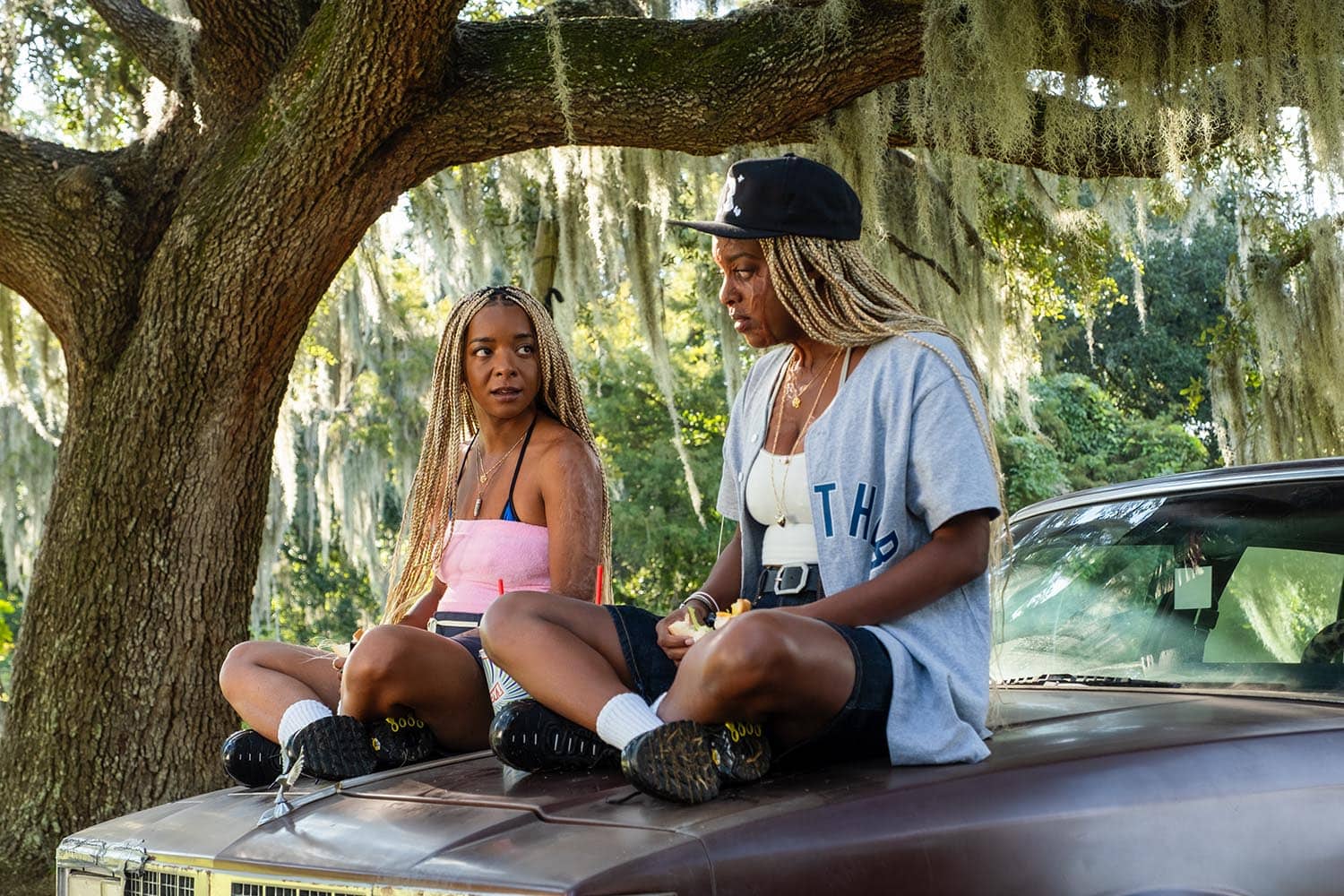
The film, which Harris adapted from her own 2018 play, is instantly memorable for the carefully established dynamic between the sisters. From the first shot, where Racine (Kara Young) violently beats up a school bully for badmouthing Anaia (Mallori Johnson), it’s abundantly clear that the siblings couldn’t be more different in how they resolve conflict. Flash forward over a decade and we find that the dynamic hasn’t changed much, except life has gotten much harsher for the twins, as they struggle to find employment due to their disfiguring burn scars.
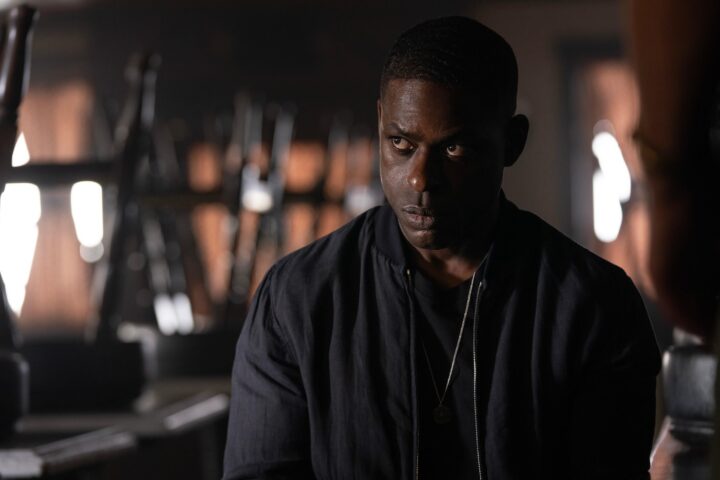
The true origin of those scars is revealed to Racine and Anaia during a visit to their dying mother (Vivica A. Fox), who admits that their father (Sterling K. Brown) once attempted to set them on fire, and in true exploitation genre fashion, the mother orders the twins to kill him. From the sisters’ eerie meeting with their mother, who they refer to as “God,” to their ability to telepathically speak to each other (represented through pop-up dialogue that floats on screen like spatial poetry), there’s a real Old Testament vibe to the film, which is concerned less with the logistics of twins’ quest than the philosophical particularity of revenge and mercy.
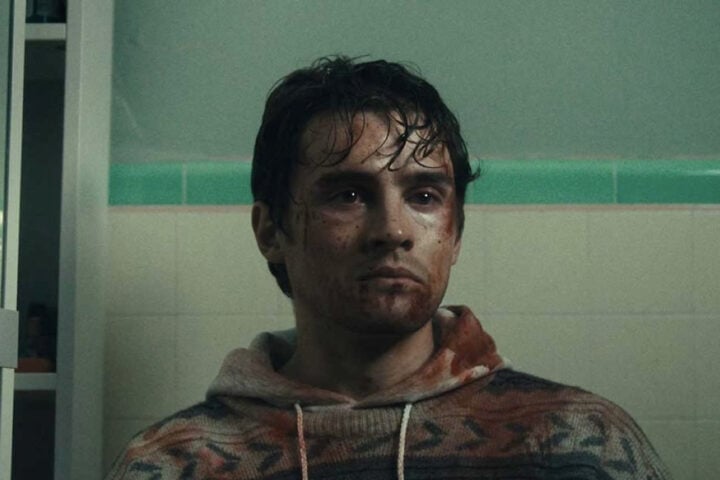
Is God Is oozes style, such as a shot of the father blowing tobacco smoke into the moonlight, a recurring image that haunts the memories of the twins. This attention to capturing the ambience of the American South is one of the film’s biggest strengths. Indeed, the climactic confrontation between the sisters and their father, for all its moody sturm und drang, is less interesting than the 40 minutes prior where Racine and Anaia are sleuthing for clues about their father’s whereabouts. It’s during this journey that the two women meet some of the film’s wackiest characters, such as the corrupt cult leader Divine (Erika Alexander) and the enigmatic lawyer, Chuck (Mykelti Williamson), who urge them to turn away from revenge.
Racine, the less visibly disfigured sister, is hell-bent on revenge, seeing it as a matter of loyalty to their mother, while Anaia, whose entire face has been burned, senses the darkness of her twin’s hate, especially after Racine ponders what it would feel like to dominate others instead of being dominated. It’s also telling as to why Anaia’s burn marks are more pronounced than Racine’s, as she tried to save their mother from the fire. As Is God Is goes on, Harris constructs more and more oppositions and parallels between the sisters, tracing them back to the origin of their trauma in an attempt to make us see how the women are two sides of the same coin.
There are shades of Quentin Tarantino’s Kill Bill: Vol. 2 in the film’s climax, with the father lulling Anaia into a false sense of security, which stretches credibility given how we’ve understood her up to this point as being too smart to be tricked. Maybe if Is God Is had given more dimension to the father’s life and motives (though the fact that he now has twin boys is telling of his patriarchal biases), whatever pull he still has on the sisters may have been understood as something more than simply an attribute of his totemic role. Yet in spite of the by-the-books nature of its culmination, Is God Is employs a Southern Gothic style in lived-in fashion to tell an effective, metaphoric story about the impact of trauma and family violence.
Since 2001, we've brought you uncompromising, candid takes on the world of film, music, television, video games, theater, and more. Independently owned and operated publications like Slant have been hit hard in recent years, but we’re committed to keeping our content free and accessible—meaning no paywalls or fees.
If you like what we do, please consider subscribing to our Patreon or making a donation.