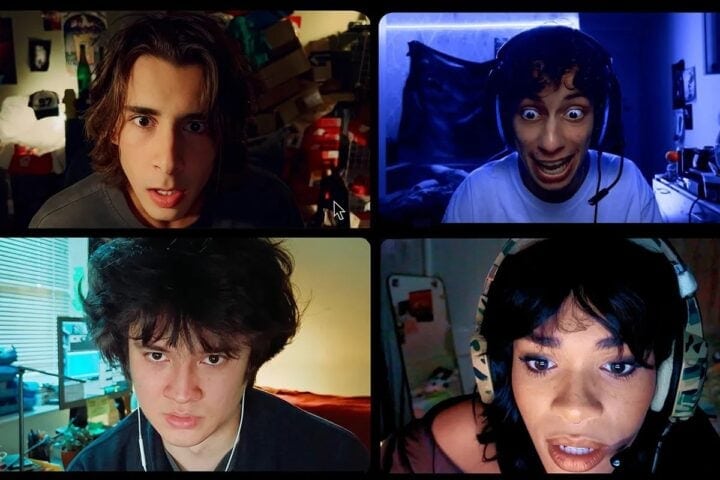
With Obsession, 26-year-old Curry Barker finds himself at the forefront of a generational shift in horror filmmaking. The release marks the culmination of years spent honing his sensibility through social media sketch comedy, made with the film’s co-star, Cooper Tomlinson, as the team “That’s a Bad Idea,” as well as longer narrative-based efforts.
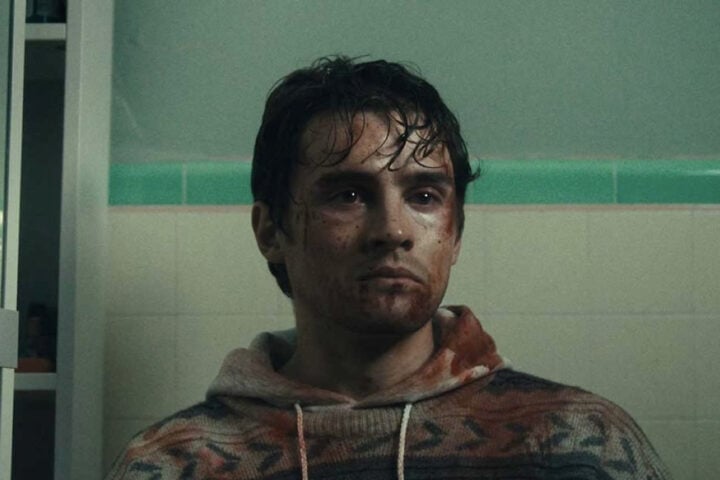
Barker might hail from a wired-in cohort whose relationship to the horror genre was shaped by the internet, YouTube especially, but his sophomore feature evinces those roots less through online-inspired aesthetics and more through its irreverent swings between attitudes. The filmmaker mixes humor and horror as he traces the fallout from the wish of Michael Johnston’s lovelorn twentysomething, named Bear, to make his co-worker, Inde Navarette’s Nikki, fall madly in love with him through the help of the magical “One Wish Willow.”
Barker has the patience to sit with scenes and maximize their squirm-worthy discomfort, an uncommon disposition for an artist who arose from a world of algorithmically optimized content. The increasingly bloody and brutal course of Bear and Nikki’s union in Obsession reveals terrifying truths about modern relationships. It’s these revelations that linger far beyond the shock of a jump scare and signal Barker’s bona fides as a filmmaker worth watching.
I spoke with Barker ahead of Obsession’s theatrical release. Our chat covered how he incorporates his short-form content creation practices into his feature filmmaking, where feedback from peers shapes his editing process, and the balancing of comedy and horror.
You’ve been prolific in creating videos for social media, which necessitates that you instantly hook a viewer. Does any of that influence the way you build a scene or flesh out an idea in a feature format, or is that a skillset you have to unlearn?
It’s not something I have to unlearn or forget. I think of it more like a tool that I have in my belt and can use. My instincts are actually always to linger and let things play out for longer. Really, that style of editing was something that I learned through the internet, so it’s actually a skill that I’ve picked up over the years. My default is always to edit in the way of a movie, but now, I use those tricks to keep the pacing going. There’s a uniqueness to the way I cut that probably comes from that world, but it’s not trying to be internet. It’s just me trying to be captivating, really.
Your conception of a scare is more about sitting in uncomfortable weirdness and less about the single moment of a jump-out. How do you calibrate how long you can let an audience steep in such a scenario before you lose them, especially when your preference in Obsession was to use long takes?
There’s no right or wrong answer, but you typically feel it. I start from a place of [going] really, really long. Then, if I’m at my desk the next day and I’m editing, I watch it again after a good night of sleep and re-tackle a scene. You’re like, “Oh my gosh, this is way too long.” It’s really revisiting it and seeing how you feel about it the next day, and not being afraid to ask your peers and friends what they think. You can learn a lot by just bringing someone into your room, being like, “Yo, check this out,” and watching their face and seeing when they lose interest or get on their phone. It doesn’t make me mad if I’m showing my friend a scene and they get on their phone. It makes me know. That’s your answer.
Social media comes with analytical tools that allow you to see when people drop off or when their interest wanes. Is that data helpful at all, or is it really just more of a gut instinct kind of thing?
I feel like if you look at that data too much, it can hurt you more than help you. If you were to look at one of my short films and be like, “Oh, I can see the most replayed moment,” just because they replayed it over and over doesn’t mean it was the part that emotionally hit them. You don’t want to think about that too much because you’re dealing with telling a story and human emotions. What you’re trying to capture is really complicated already, so you don’t want to think too much about a formula when you’re doing something.
You’ve mentioned that you can’t overwhelm the audience with shocking moments too much in horror, so how do you pace those out in a feature instead of the quick dopamine hits of short form?
I just feel like people think they know what they want, but as soon as they get it, they realize it sucks. People think they want more gore, more blood, more scares, but really, you’re just taking the specialness out of the things. Sometimes, more isn’t better. I’m trying to remember that when I tackle any project. Just because you can doesn’t mean you should. I’ve seen movies that are way gorier than Obsession, but people will tell me this movie was the most disturbing and gory movie ever. But there are movies where there’s so much gore, but it doesn’t feel effective because you’re just not emotionally attached to what’s going on.
You’ve mentioned that you liked using the mess-up takes because it feels authentic to the inarticulacy of the characters. How do you keep that looseness and freedom to make mistakes without sacrificing integrity or precision?
I try to stick to what I wrote, to a certain point. What’s important about the dialogue is the message that the character is trying to get across to the other person in the room. The goal of the scene is that this character has to get this from this person, remembering that, and then just throwing away everything else. Because if you want to keep it natural, you have to let your actors keep that improvisational feeling alive. But also, it’s [found] in the edit, having your characters talk over each other. One of the things I see sometimes that drives me nuts is when you’re watching a scene, and it feels like people are just taking turns talking. That’s not how real life is.
There are so many moments in the film that feel like they might be building to a jump scare or a horror beat, but then they’re undercut with comedy. How do you find that balance of when one genre can bleed over into another?
For a movie like Obsession, I wasn’t ever chasing the comedy too much. I mostly just like writing the scenes in a certain way that I feel is honest to the characters. I’m constantly trying to write in a way that [subverts] expectations and changes the direction as to where the audience thinks it’s going. Sometimes, that can result in laughter, so it’s really interesting. But I do think, to answer your question about teetering on the line, it’s more about the moment that your joke becomes too silly. If it breaks the danger or the stakes of the scene, you’ve done something wrong. The comedy should never come at the expense of the horror.
One of the most striking lines in the film comes from, of all people, a customer service representative, who says about Bear’s wish to make Nikki fall in love with him, “Just because you chose it for her doesn’t make it any less real.” How did the making of Obsession change the way you feel about that quote?
I think choice is the most important thing ever, what you choose to do versus what you do. But I also think that what’s really interesting about this film is that [the representative] says, in a way, you have an obligation to be there for her because you did this, which is so crazy. On one hand, it feels really wrong for him to be there with her. But then, on the other hand, he did do this. But what version of her is he talking about? I wanted to make it complicated.
Since 2001, we've brought you uncompromising, candid takes on the world of film, music, television, video games, theater, and more. Independently owned and operated publications like Slant have been hit hard in recent years, but we’re committed to keeping our content free and accessible—meaning no paywalls or fees.
If you like what we do, please consider subscribing to our Patreon or making a donation.