From Vox Lux to Trap to Smile 2, this decade has seen a mini-boom in horror (and horror-adjacent) films centered around pop stars. Mother Mary, writer-director David Lowery’s follow-up to 2023’s Peter Pan & Wendy, may be the most resplendent example of this genre: a boldly theatrical pop exorcism where the wounds of the past serve as a gateway to forces that can consume or lift the possessed to ecstatic new levels of self-expression.
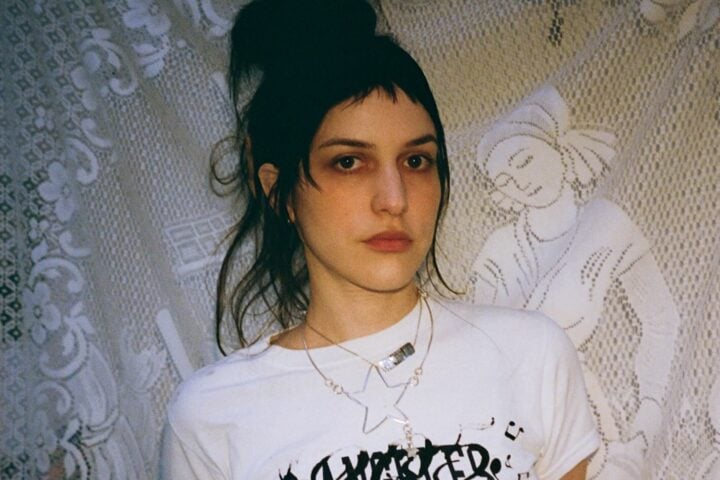
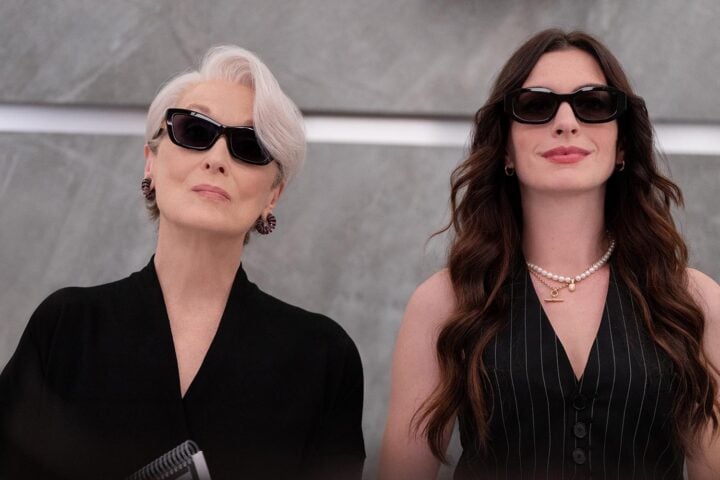
Iconic songstress Mother Mary (Anne Hathaway) is in a crisis. Having survived a highly publicized accident during her last concert tour, Mary arrives at the doorstep of her former best friend and collaborator, fashion designer Sam Anselm (Michaela Coel), begging for a dress that will inspire a reinvention on the eve of her comeback performance. Sam is initially reluctant to help, still raw over the falling out that severed their relationship years ago, but is drawn in by Mary’s turmoil and the promise of one final artistic collaboration—for good or ill.
The film is stage-bound in spirit and construction, with the bulk of the action confined to the cathedral garret-like farmhouse that Sam has taken over as her workshop. As Mary and Sam, linked by a malevolent thread of despair, talk through their shared history, the past and future fold into the present. Doors literally swing wide onto shared experiences and individual terrors, with immaculate, shimmering original songs by Jack Antonoff, Charli XCX, and FKA twigs pulling us through an audiovisual landscape of on-stage dreams and surreal nightmares.
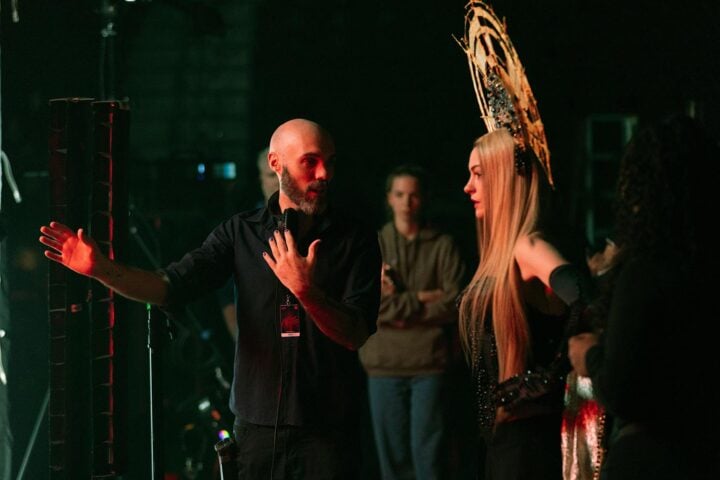
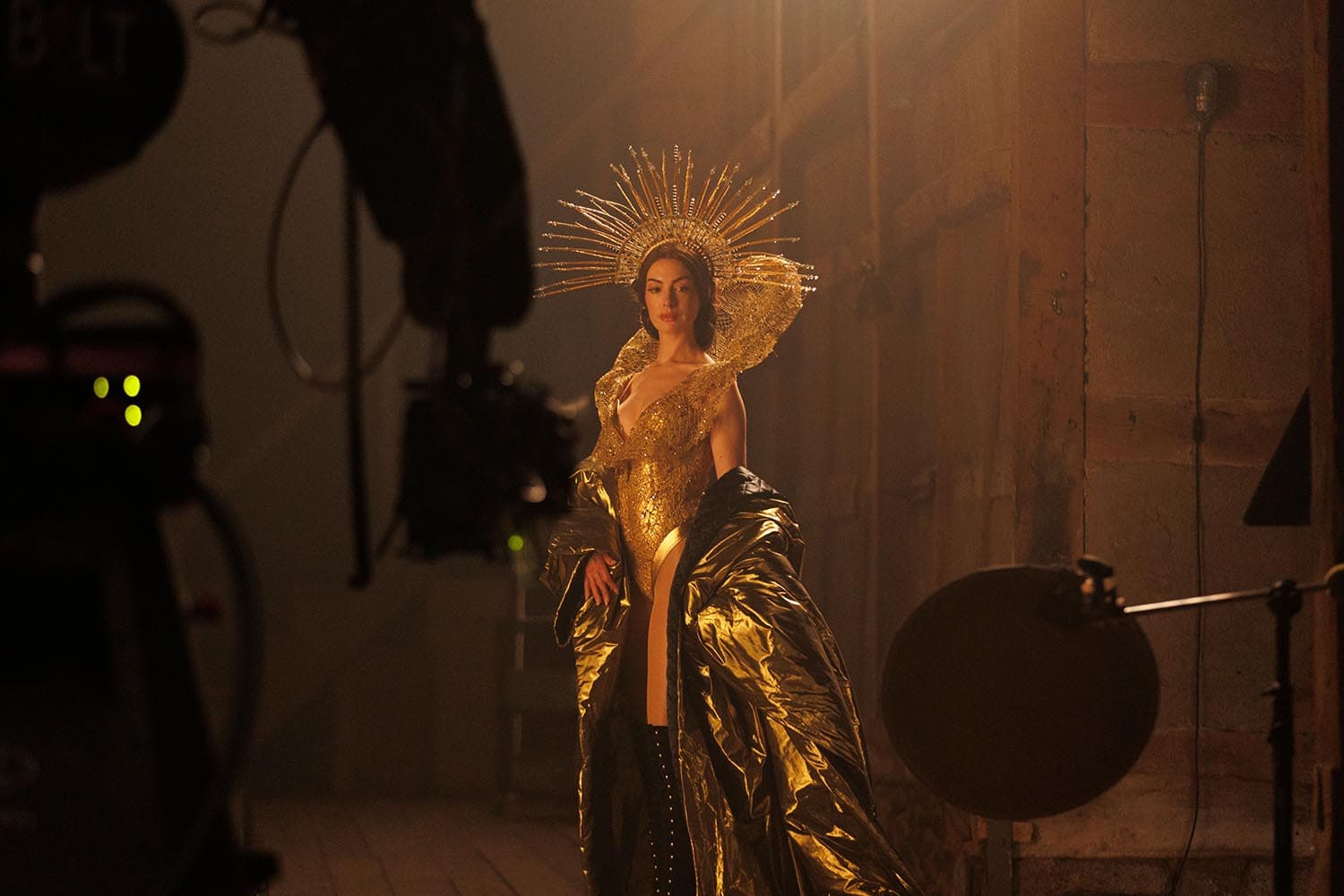
Lowery mounts it all with an intensely emotive theatricality, filling the screen with pools of black, rippling swathes of red, and heavenly columns of white light. Mary’s wardrobe is a star unto itself, with Bina Daigeler’s designs transforming the wet-haired, teary-eyed Mary that crashes Sam’s atelier into a statuesque, haloed pop deity and back again as we experience the character’s career and evolution through a rotating gallery of high-concept looks. In the film’s most arresting sequence, Mary struggles upward and stumbles downward across metal staircases as her outfits shift in a blink—a representation of the physical toll stardom is taking on her in the comedown between dissociative states of performance.
Lowery’s screenplay is verbose and weighted with rhetorical devices (“These metaphors are exhausting,” sighs Mary at one point), but Hathaway and Coel spark against each other with a connection whose alchemy consistently vivifies the material. Coel gives the voluble Sam an air devilry, with a gaze that seems to bore straight through Mary and past the walls of their shared cloister to psychic expanses beyond, and Hathaway is transformative as a character ripped in two by an artistic and spiritual conflict—both hollowed out and possessed, confident in the spotlight yet laid low by a crippling self-doubt everywhere else.
Doors are oft-referenced throughout, and the film abounds in images of wounds and penetration, comporting with the central idea that to be creative, to be notable, is to be beatified—a receptacle for the otherworldly. As for if it all hangs together, that’s up to the beholder. A goth-pop memory play, a psychological ghost story, an almost two-hander about the terrors of creative expression—the film is many things, but, above all, it’s an invitation for the pop-loving faithful to commune with something dark and divine. So, open up, and let Mother Mary in.
Since 2001, we've brought you uncompromising, candid takes on the world of film, music, television, video games, theater, and more. Independently owned and operated publications like Slant have been hit hard in recent years, but we’re committed to keeping our content free and accessible—meaning no paywalls or fees.
If you like what we do, please consider subscribing to our Patreon or making a donation.