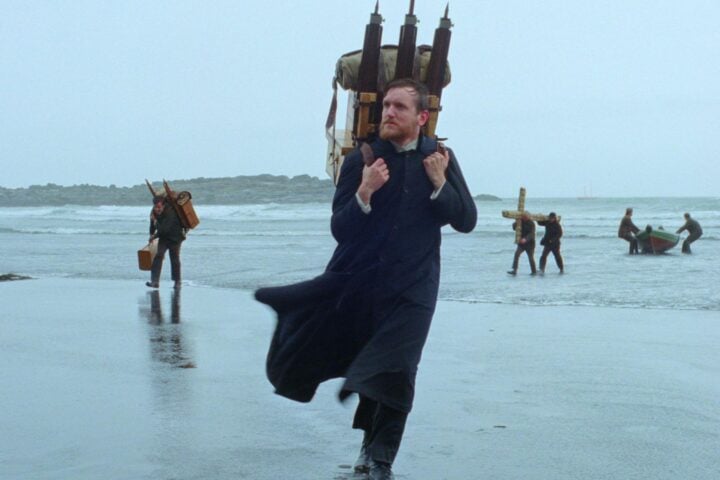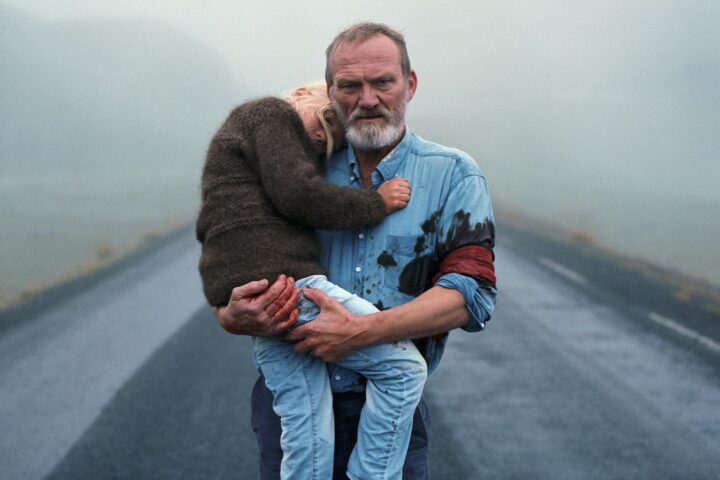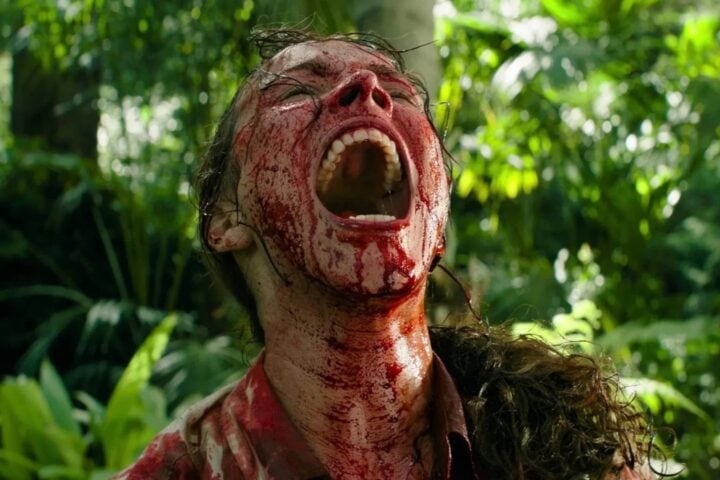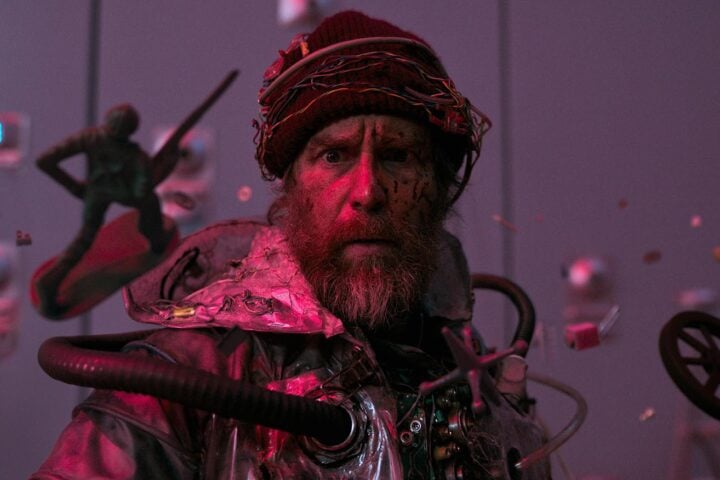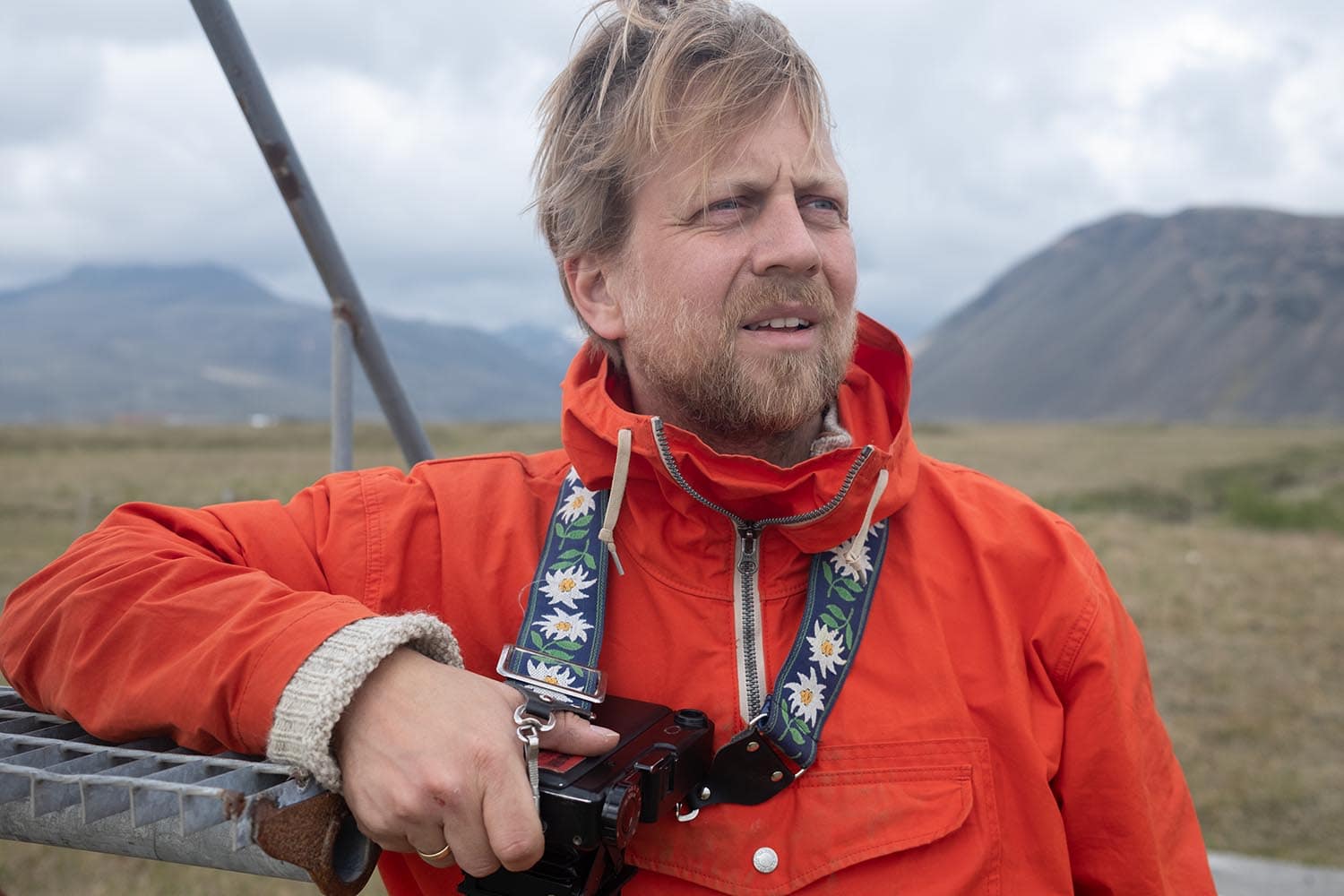
What Icelandic filmmaker Hylnur Pálmason does with his new projects would be all but impossible to predict from what precedes them. His four features to date have each drawn from different genre modes and employed different tonal sensibilities. Pálmason followed his offbeat fraternal drama Winter Brothers with the taut thriller A White, White Day, only to swerve again with the period religious epic Godland.
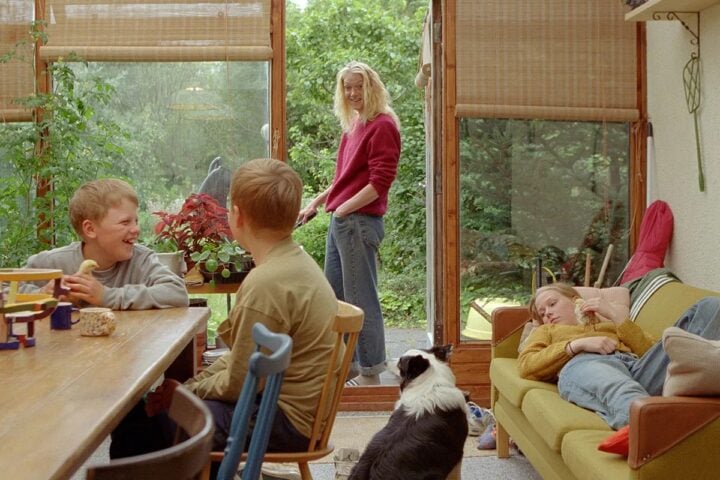
With his fourth film, The Love That Remains, Pálmason remains closer to home with a domestic drama unfolding in line with the natural rhythms of the seasons. The film’s gentle montage and soft piano score belie a succession of images chronicling a year in the dissolution of a marriage. There’s no acrimonious split between the separating spouses, artist Anna (Saga Garðarsdóttir) and seaman Magnús (Sverrir Guðnason). Instead, their gradual drift reveals itself through mundane scenes of everyday life as they and their three children adjust to their new normal.
Pálmason, working with editor Julius Krebs Damsbo, strings together these moments with sequential momentum but an impressionistic effect. The film might take the shape of a family album, especially given that the actors playing Anna and Magnús’s kids are the filmmaker’s own. But Pálmason’s ability to locate the beauty within the banality ensures that his work has applicability for a wider audience than just those who participated in its making.
I spoke with Pálmason last fall when he presented The Love That Remains at the New York Film Festival last year. Our talk covered how he shaped the film’s approach to time, where those surrealistic breaks from reality came from, and why creative conflict is crucial to his process.
Given how The Love That Remains departs from the style of your previous work, are you consciously seeking out variety?
I mean, hopefully you’re not repeating yourself too much. But, of course, there are resemblances when you make something. I’m not trying to force something completely different out of a film. I’m just trying to find something worth exploring and a natural step forward. For example, after we made Godland, we wanted to do something contemporary and more playful.
Do you find that these films have more in common than people might think?
There are ways of hearing and seeing, of editing and moving a camera. They’re not the same, but there’s a connection. All of our films are explorations of narratives that we’re trying to figure out how to tell the story through cinema, not words. You’re always trying to figure out a simple way of creating an experience. It’s always the same thing—trying to create the most emotional experience that you can with the story you have.
The film has such an interesting approach to depicting the passage of time. Did you develop that language in writing and production, or did the process of cutting the footage together reveal the relationship between the images to you?
We actually started filming this film a long time ago. After we moved back to Iceland, I bought a film camera. I really started thinking about how I could spend as much time as possible with the film before principal photography. I could develop and write for a long time, film some stuff, look at it, react to it, and rewrite things. My process has been, for a couple of years now, that I find a narrative thread in the film. For example, in this one, it’s the children building the figure. Then, I started working on that and filming that a couple of years prior to principal photography. I do that just so I can spend time in the film, listening, making scenes, writing things, so I can prepare and be in the process of writing The Love That Remains.
You often record sounds before you start writing a script. What was that library like for The Love That Remains?
The earliest sound I made was a roof being pulled off my old studio, which is also the first image you see in the film. That was back in 2017, so it was a long time ago. But then, when I was filming the kids shooting arrows and building the figure, we had sound equipment inside this camera shed that I was filming from. I had headphones on and could listen to the exterior and the outdoors. We recorded sounds from all of the seasons, and it’s quite nice to write when you’re listening to the microphones’ recording of the outdoors. It’s quite soothing, actually.
Your daughter is an aspiring actress, of course, but how did you bring your kids into the creative process? I struggle to think of another time I’ve seen children speak so frankly about sex on screen, and it feels unfathomable for young people to let anyone—much less a parent—into their private world.
I’ve been working with my kids ever since they were born…actually, they’ve been part of all of my films except for Winter Brothers. Some of the roles are very small, some of them are bigger, but they’re always somewhere in my films running around. But with this one, it was the boys’ biggest part. Ida, my daughter, has had some bigger parts than the others, but it’s so natural for us to spend time together playing. I think it’s very easy for me to do that with them because we are a very tight-knit unit. We have a very small crew, and my kids know all of them. It’s very safe to invite them into the family and into the films, because they’re basically family.
I hear a lot from parents that it feels like they can’t believe how quickly the time flies as their kids grow up. Was there at all some desire to do with The Love That Remains what’s impossible in real life: to stop or control that precious time?
Yeah, I actually think so. I was shooting a short film called “Nest,” where my kids were building a tree house during Covid. It took two years to film that short film, and I remember seeing an image of the first take with them, and they were so small. And then, after two years, they had grown so much. I started to think a lot about how precious time is, how you spend your time, and with whom. I felt like every year, time was just moving faster and faster, so I had to somehow figure out a way to capture it before it was gone.
What does it feel like to look back at the footage now and see these images of the past rendered so vividly in the present?
When I saw it at the premiere, I was just so happy that we made it. This film was almost not made because we were planning another period film that I was lining up, and some of the others wanted to go directly into the period film. But I was trying to push this in between and finish this one. I’m just really happy that everyone got on board and made it, because we made it in a rock ‘n’ roll, guerrilla-style filmmaking. We were such a small team with not a lot of money.

In interviews for previous films, you’ve said that a film has a “body.” What does that body look like for The Love That Remains?
If you spend a lot of time working on something and allow it to grow the way it wants, it’s almost as if it gets a surface and physicality. When I feel like my films are working, they’re both working mentally and physically. I can smell it, and that’s what I mean by “body.” It becomes physical, but it can also be like a sculpture. I think the film has a lot of physical things that are talking to each other, like the surface and the land that Anna is working with in her paintings, contrasted with her husband working with the ocean and the material that is being pumped up.
One of Magnus’s coworkers describes a family as a greenhouse, an ecosystem of simulated control over an environment. But that contrasts with Anna’s artwork and letting time and nature rust objects. Both feel like metaphors for filmmaking in their own way. Are either of these approaches similar to how you make films?
Yeah, I think so. I don’t agree with everything that the people say in my films, of course, but I agree with some of it. And sometimes people say things and mean different things. But I think the core of this film is, for me, just how precious time is and how you spend it. The medium of film is very much time. You have a certain amount of time to create an experience. At the same time, what I love about film is that it’s open for interpretation. You can have your own experience, and you don’t have to settle on this or that. It can be totally up to you how you read or experience it, and I’m sure it’s very different from how I do. Sometimes, when I read how people talk about it, I can feel that people focus on different things. But on the whole, when you watch it, you think about the time you have and then the people around you.
There are a few surprising breaks from realism later in the film, with some fantastical images that you introduce. Where did that arise from in the process, and how did you ensure that they didn’t feel out of place?
I’m happy that they’re surprising; they were also surprising for me when I wrote them. But I think it’s something that just happens when you spend a lot of time with something. Some ideas or thoughts that you get as a person are sometimes a little bit crazy. If you acted on all of your first thoughts, your life would probably be a total mess. But the more time that I spent with the film, the more it was pointing in that direction of wanting to be very expressive and a little bit dreamy. I just allowed it to be that because I felt it was what it wanted.
You’ve said that we only really feel love in its absence. Does it have to be that way, or are you pointing us in a direction where we can experience it as a presence?
Sometimes it’s hard to see the beauty around you, but there’s [beauty]. I think it’s worth reminding yourself of what you have. I think it’s true that, for a lot of people, you sometimes don’t know what you have until you’ve lost it. You take things for granted. We have to remind ourselves of what we have and take good care of it, and not neglect it. Then, you can lose it, and if you lose it, you often find [yourself] reminded of what you had. And I think that’s kind of just a good reminder. The topic and idea are very interesting to explore in cinema because cinema is so good at working with the basic, primitive needs and wants of a human being.
How do you train yourself to look for that kind of beauty that’s around you?
I think I miss a lot! I work a lot, and you’re always trying to find a balance in life and work. I don’t think you ever find a balance, but I think you try. Sometimes it works, and sometimes it doesn’t. When you’re making a film, you have a lot of conflicts. But if you have a good setup, good people, and good material, they’re more like creative conflicts. They’re not destructive. Creative conflicts are very important and good. No relationship is good if it doesn’t have conflict. You don’t want to be married to yourself. You know you don’t want to find someone who’s like you. You want to find someone who is the opposite, in some way.
How did this project and the nature of its collaboration change your thoughts on your directing process?
It always does, each time you make something, but I don’t know what exactly. It reminded me [to not] compromise. I mean, film is compromise, but I mean in just allowing the film to be whatever it wants to be. I think that’s really important. Each time you make something, you’re reminded of how important it is not to think about any kind of preconceived market or idea of what it’s supposed to be. Just allow it to be whatever it wants to be. That’s what I got out of it.
Since 2001, we've brought you uncompromising, candid takes on the world of film, music, television, video games, theater, and more. Independently owned and operated publications like Slant have been hit hard in recent years, but we’re committed to keeping our content free and accessible—meaning no paywalls or fees.
If you like what we do, please consider subscribing to our Patreon or making a donation.