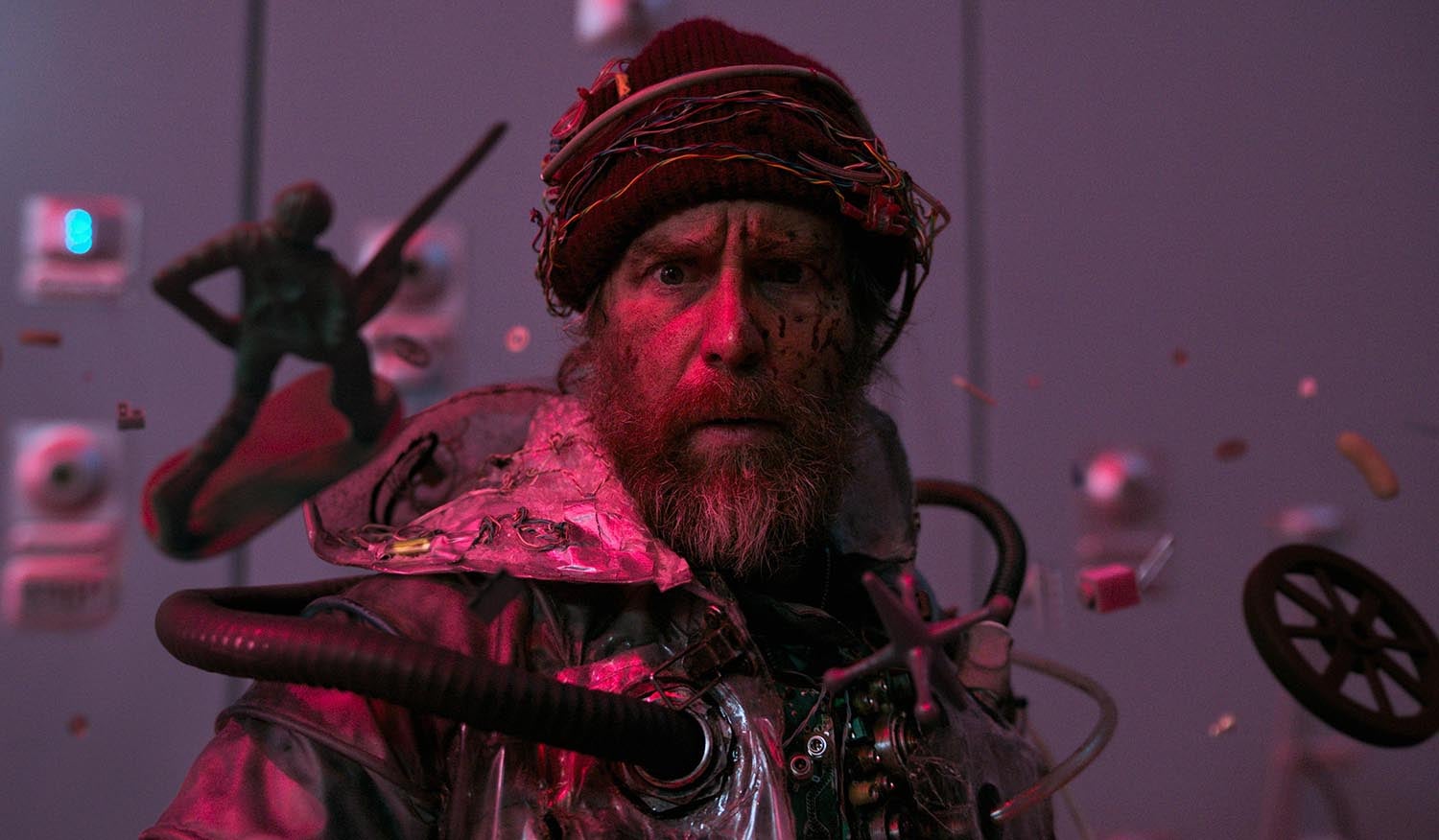
At precisely 10:10 p.m., a bedraggled, bearded man wearing a raincoat attached to a circuit board via a series of tubes walks into a Norm’s diner in Los Angeles and tells the 47 people inside that the apocalypse is nigh. There’s only one chance to stop it on this very night, and he needs volunteers to join his cause. Ask any number of Angelenos, and almost all of them will tell you that they’ve seen weirder shit go down at a Norm’s.
The bearded man, played by Sam Rockwell, isn’t crazy though. The apocalypse isn’t just nigh, it’s already technically in progress, and humanity is far too comfortable to do anything about it. Good Luck, Have Fun, Don’t Die, directed by Gore Verbinski and written by Matthew Robinson, posits the end of humanity as the byproduct of a single nameless corporation whose mobile devices, social media empire, generative A.I. apps, and V.R. headsets are so perfectly tapped into the human brain that it doesn’t even need to drop any nuclear bombs to supplant humanity as a dominant lifeform. It just needs to make online reality more appealing than actual reality.
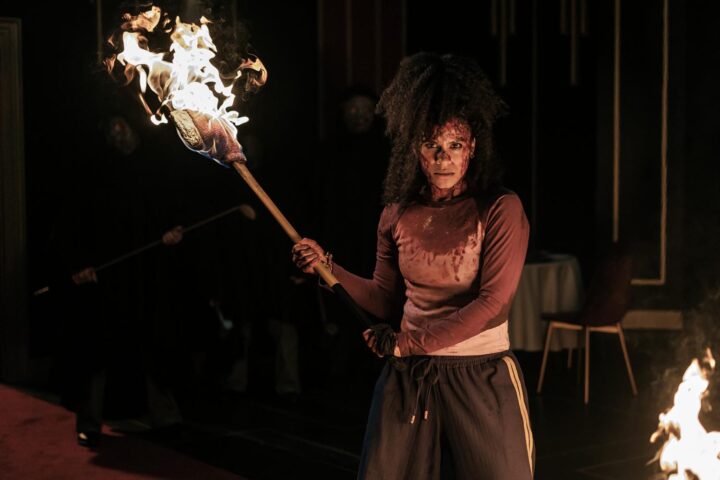
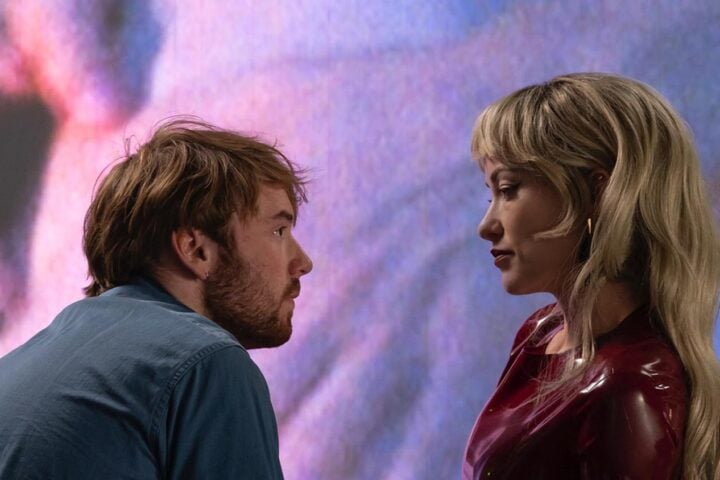
Robinson’s screenplay doesn’t play coy about any of this. Even with Rockwell devouring the scenery, the opening scene threatens to go full Boomer as this man from the future yells at patrons for letting their cellphones take over their lives. The film then doubles down on those cheap shots when it shows us the first of three major flashbacks, following a substitute teacher named Mark (Michael Peña) whose students aren’t rowdy, hyperactive teenagers, but frighteningly docile cattle, flipping through social media en masse. The other two flashbacks, about a mother’s (Juno Temple) dead son being resurrected as an algorithmic, ad-supported clone, and a girl (Haley Lu Richardson) who becomes the ultimate gaming widow when her partner discovers V.R., make your average episode of Black Mirror feel obtuse by comparison.
While there’s plenty of awkward, sardonic goofball humor in the film, Verbinski casts it all in mode of surrealist technological horror, to the point that Good Luck, Have Fun, Don’t Die suggests a 21st-century Bosch painting brought to you by OpenAI. Verbinski’s horror bona fides turn the scene at Mark’s school into a zombie set piece on par with anything in 28 Years Later, possibly scarier since there’s absolutely no sign of the people these kids used to be with their eyes transfixed on their phones. When a school shooting happens later that same day, the detached reaction of the mothers who’ve all lost children is absolutely bone-chilling.
The man who made Mouse Hunt, The Ring remake, and A Cure for Wellness is firing on every off-kilter cylinder here. The sheer confidence and control over exactly how to milk every scene for maximum distress is a magnificent sight to behold, and it only gets more bizarre and ambitious as it becomes clearer where the end of mankind will be coming from. What starts out as an oddball sci-fi riff on Groundhog Day winds up by the end resembling the likes of Snow Crash, “I Have No Mouth, and I Must Scream,” and The Electric State (the illustrated novel, not whatever that Netflix adaptation was), a surreal, nihilistic take on technological pandemonium whose horrors comes not from the bowels of hell but a prompt on ChatGPT.
Good Luck, Have Fun, Don’t Die’s obviousness only makes its proximity to the real-life A.I. slop invasion more unnerving, and the extent of what humanity has accepted for convenience’s sake more abhorrent. Even with the ambitious third act nearly stretched to a breaking point, it’s hard to not walk away from the film looking at the hole humanity’s dug itself into with fresh eyes.
Since 2001, we've brought you uncompromising, candid takes on the world of film, music, television, video games, theater, and more. Independently owned and operated publications like Slant have been hit hard in recent years, but we’re committed to keeping our content free and accessible—meaning no paywalls or fees.
If you like what we do, please consider subscribing to our Patreon or making a donation.