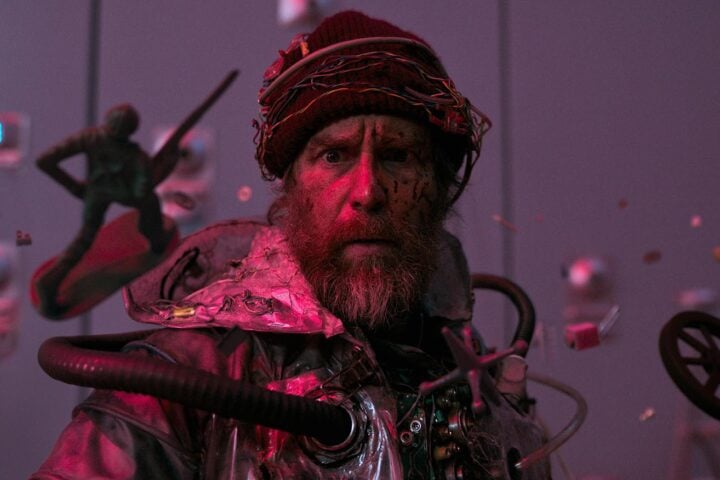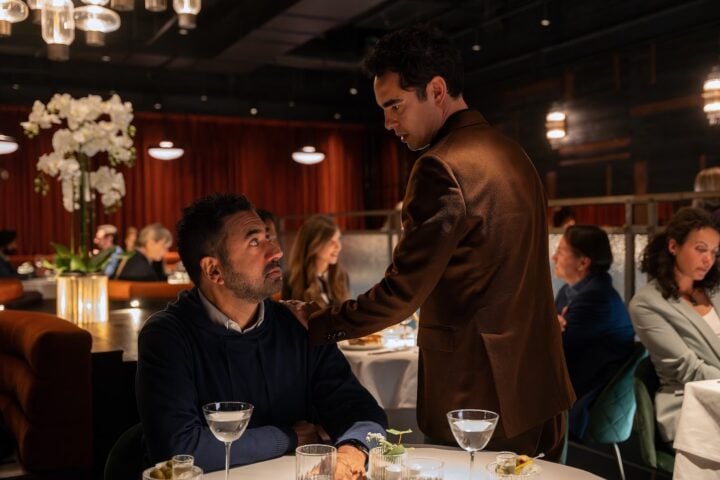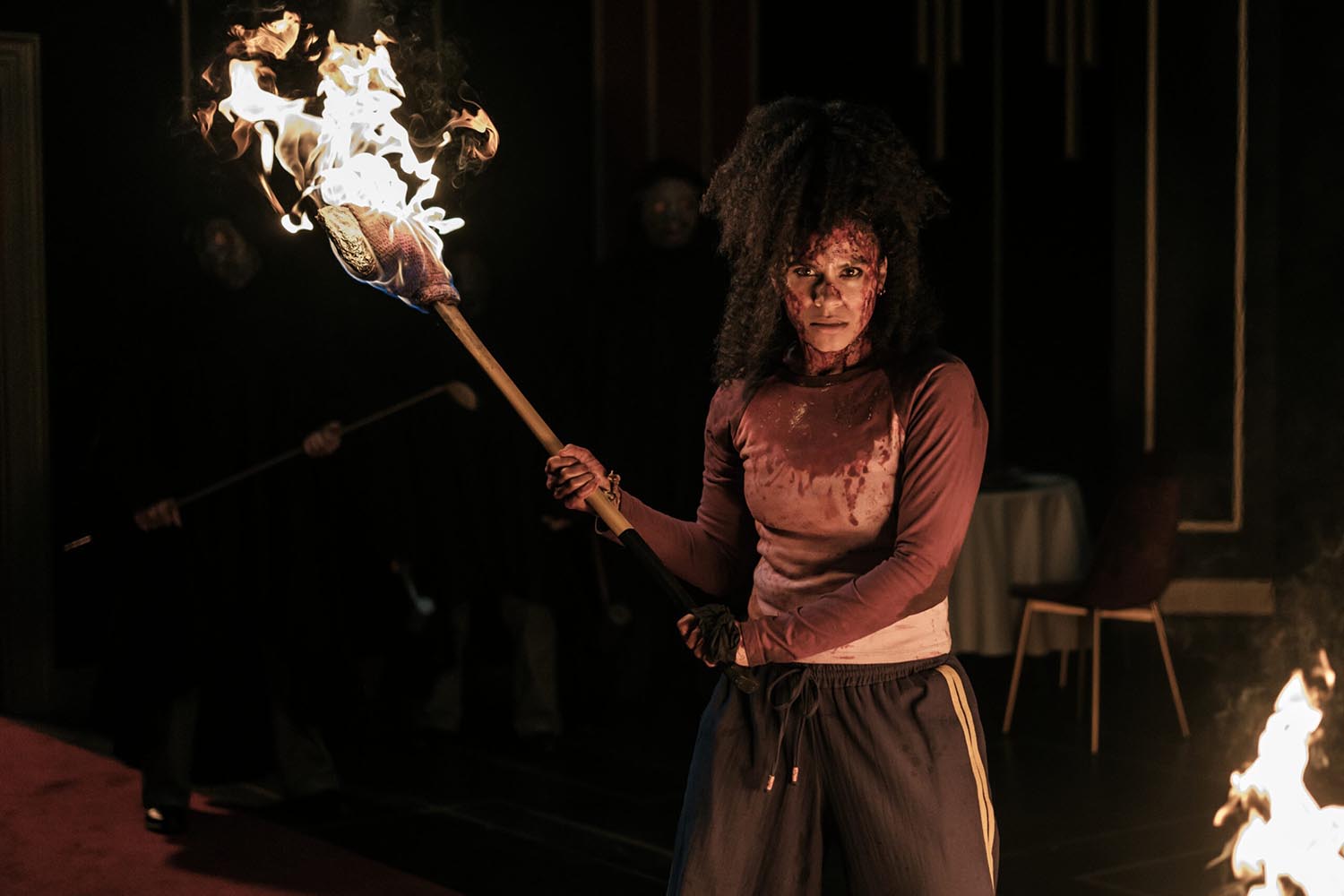
Ostensibly a horror comedy, Kirill Sokolov’s They Will Kill You plays more like a John Wick spinoff in execution, given its minimal narrative and set pieces involving hordes of enemies descending upon our very determined protagonist. Unfortunately, the film exhausts its bag of tricks relatively early, fizzling out into a generic action affair as it bombards the audience with hack-and-slash antics to diminishing returns. This is a film that’s content to imitate its influences rather than build an identity of its own.
Such is evident in the characterization of Asia Reaves (Zazie Beetz), a carbon copy of Kill Bill’s the Bride who’s hardened by a decade of prison after the accidental shooting of her abusive father and separation from her sister, Maria (Myha’la). Asia suspects that Maria is working as a housemaid at the Virgil, an ominous members’ only building in Manhattan that, unbeknownst to her, is a front for a Satanic cult that has its eyes on her as the night’s sacrifice.
They Will Kill You, written by Sokolov and Alex Litvak, launches into full-throttle mode from the moment Asia unsheathes her weapon of choice, a cleaver, and doesn’t let up on the action from there on. It’s in the film’s initial stretches that its action choreography feels most inspired, as when Asia uses a mattress to disarm her enemies. The snappy, comic-book transitions and camera zooms provide sharp jolts of slapstick energy to the proceedings, particularly during a chase scene in a tunnel maze where the characters crawl on all fours.
They Will Kill You is most exhilarating and funny when it’s grossing you out with fountains of blood or when it’s suggesting that gentrification and hipsters are approved by Satan. But even as it decrees in its opening that “when the poor give to the rich, the devil laughs,” this isn’t a film that’s exactly interested in the intersecting struggles of race, class, and gender.
For better and for worse, Sokolov commits wholly to the motto of style over substance, even if he never settles on a tone, with the film flowing back and forth between humor and self-seriousness for much of its runtime. As a result, the story can feel weightless and lacking in emotional stakes despite the escalation in violence. Beyond the flimsy relationship between the Reaves sisters, Sokolov seems mostly interested in curating a vibe above all else.
Since 2001, we've brought you uncompromising, candid takes on the world of film, music, television, video games, theater, and more. Independently owned and operated publications like Slant have been hit hard in recent years, but we’re committed to keeping our content free and accessible—meaning no paywalls or fees.
If you like what we do, please consider subscribing to our Patreon or making a donation.