The ferocious, preemptive backlash to Paul Feig’s 2016 reboot of Ghostbusters turned the release of the film into one of the ugliest battlefields of contemporary fan culture. Now, befitting a series about beings that refuse to stay dead, Ghostbusters: Afterlife has arrived to cater to the franchise’s most vocal loyalists. And to underline that the film is dedicated to the same rabid fans who effectively rendered the property radioactive five years ago, it’s even helmed by Jason Reitman, son of the original film’s director, Ivan Reitman.
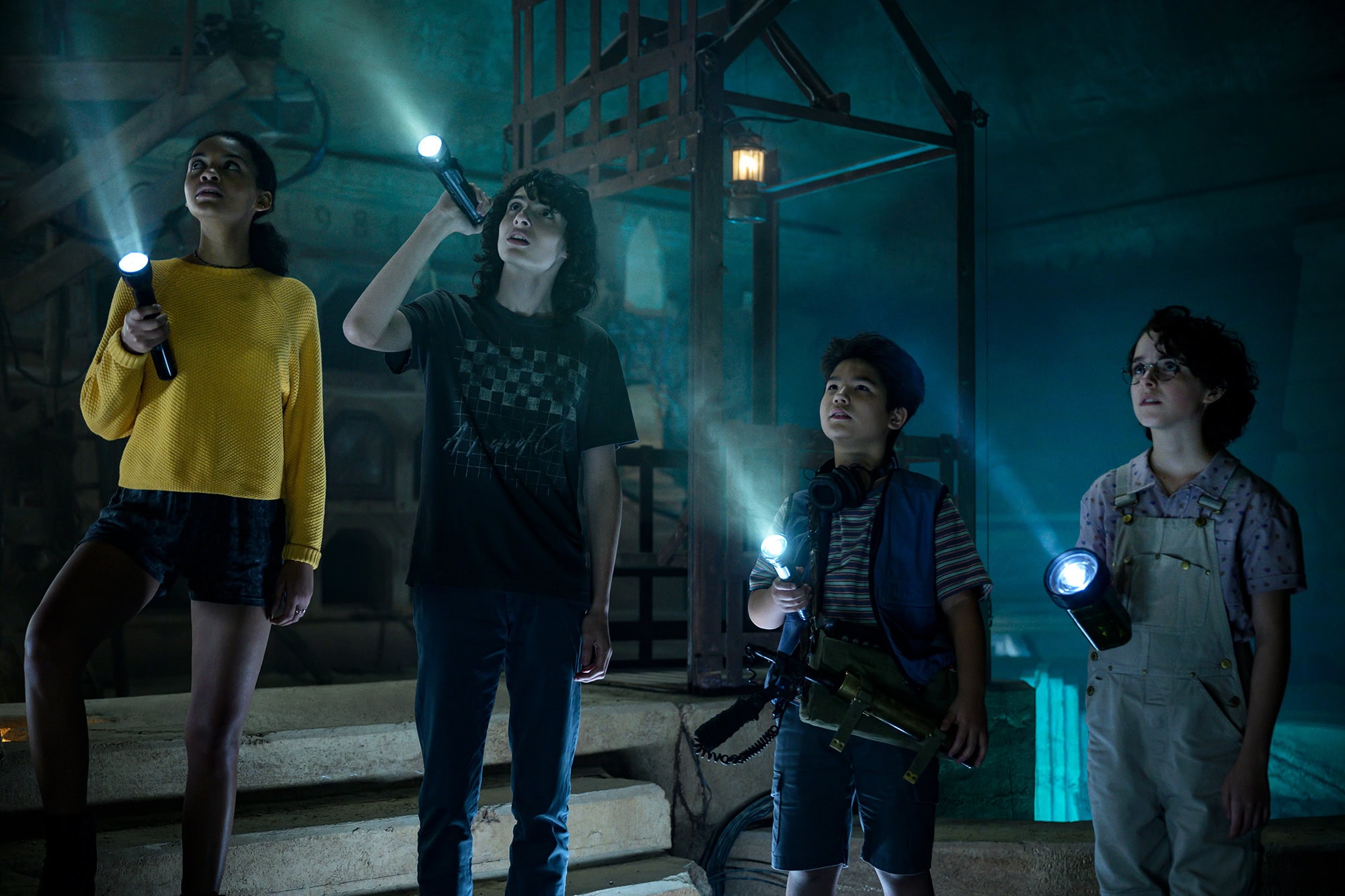
Where Feig’s women-led reboot nominally attempted to expand the boundaries of the Ghostbusters property in new ways, Afterlife focuses entirely on erecting the kind of hermetically sealed continuity that defines so many belated sequels to long-standing IP. Its protagonists are the descendants of deceased founding Ghostbuster Egon Spengler: His daughter, Callie (Carrie Coon), and his two grandchildren, Phoebe (Mckenna Grace) and Trevor (Finn Wolfhard), who move to his Midwestern farm after inheriting the property.
After Phoebe and Trevor explore their new home and surrounding land, they uncover the secrets of the grandfather whom they never knew and inadvertently unleash the ghosts that he was barely keeping in check. That’s the basic thrust of the story, and in theory that simplicity should free up the film to devote its time to the mix of comedy and sci-fi spectacle that made the original so popular. But Afterlife never nails that balance, with most of its jokes restricted to the introverted Phoebe’s awkward attempts at conversations with strangers.
Instead, the focus is thrown entirely onto action set pieces, which are executed with a severity that’s wholly at odds with what we’ve come to expect from a Ghostbusters film. Even a sequence built around chasing a gluttonous ghost named Muncher (a shameless riff on Slimer from the old movies) abandons its inherently goofy quality to stress white-knuckle tension as the kids careen through small-town Oklahoma attempting to blast the spirit.
This seriousness informs the film’s treatment of its own internal mythology, which it showcases with zealous devotion. Afterlife is gradually exposed to be less about its narrative of apocalyptic threats than the metatextual properties of its endless callbacks. Numerous scenes and shots are staged around the reveal of some element from the first movie: the car, the memorable one-liners, and members of the original cast. This turns the film’s ostensible young heroes into audience surrogates, and their emotional arcs are not about finding their own way in life, but coming to appreciate and marvel at the lives of their predecessors.
The entire film ultimately feels like Reitman attempting to stake an almost hereditary claim to the Ghostbusters franchise, in spite of the fact that the first film was a passion project for Dan Aykroyd and was honed by the late Harold Ramis, with Reitman’s father acting as a gun for hire. Reitman makes this grab even more obvious in a garish appropriation of one actor’s likeness at the end of Afterlife that stands as one of the most literal expressions yet of Hollywood’s treatment of actors as intellectual property, “casting” them even in death for unseemly nostalgic impact. By turning artists into objects, studios further divorce art from those who make it, rendering everything grist for the content mill.
Since 2001, we've brought you uncompromising, candid takes on the world of film, music, television, video games, theater, and more. Independently owned and operated publications like Slant have been hit hard in recent years, but we’re committed to keeping our content free and accessible—meaning no paywalls or fees.
If you like what we do, please consider subscribing to our Patreon or making a donation.