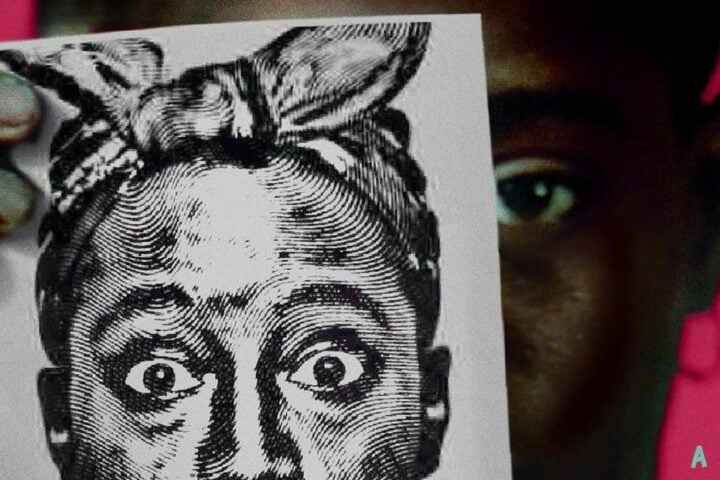
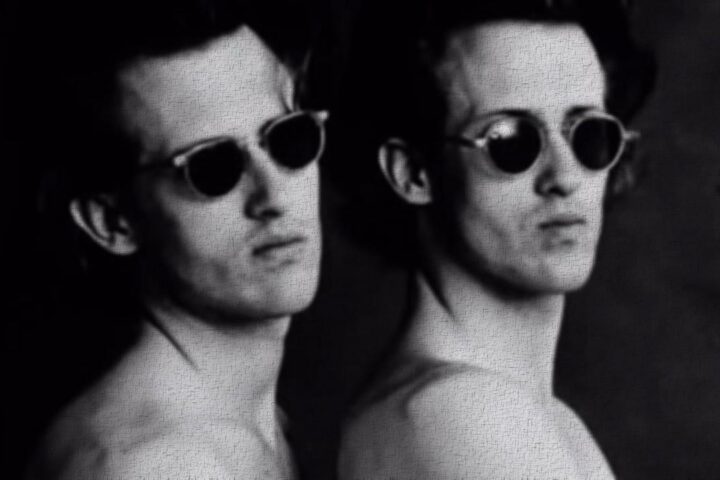
“Sometimes you have to create your own history,” reads a title card at the end of Cheryl Dunye’s debut feature. “The Watermelon Woman is fiction.” And it’s quite the gut punch. The film blends romance, comedy, and documentary elements around the journey of a video store clerk, Cheryl (Dunye), to uncover more information about the eponymous yet anonymous Black actress from the 1930s. Cheryl’s quest quickly proves quixotic given the dearth of information about this figure, which Dunye later reveals as an imagined refraction of her own troubles in identifying her Black lesbian cultural forebears.
Though now recognized as a landmark of New Queer Cinema, The Watermelon Woman, in an unfortunately ironic twist, spent many years languishing in a state of invisibility following its 1996 premiere. Thanks to her own confidence in celebrating the film, as well as the public consciousness catching up with its form and content, it now joins the illustrious ranks of Janus Films’s Criterion Collection. A quarter-century later, it’s now a little easier for the next generation of Black lesbians to see their history so they don’t have to invent it.
I spoke with Dunye shortly before The Watermelon Woman’s Criterion release. Our conversation covered the film’s long road to canonization, how she arrived at the “Dunyementary” style she created, and what its bookends say about the work as a whole.
There’s a somewhat apocryphal story of how you and many other Black women in Philadelphia went to a talkback to discuss their portrayal in Spike Lee’s She’s Gotta Have It, and how his call for people to create their own representations of Black women if they didn’t like his sparked your own journey. Now, your work sits in the Criterion Collection alongside Do the Right Thing and Bamboozled. Do you still see yourself in dialogue with that canon now?
Oh, hell yeah! I think, at one point, Spike was doing something every year or couple of years to have like a Woody Allen-esque feeling or vibe in a particular kind of film community. Spike became like a brand, in a weird way. I see myself that way, but I stay right-sized about it. I’m happy with my backyard. It’s amazing what I have. Is there more to be had? Look at the trades, look at the strike, of course. But I think I’m in a really good place, and I had the journey to tell even more stories. You don’t have that journey when you skyrocket to the top on a Marvel movie. Of course, you’ll sustain, but you’ll spend and you’ll be spent.
The Watermelon Woman seems to have really flourished in the past decade and especially since 2020, but it’s my understanding there were some periods where the film was harder to find. As someone whose cross-disciplinary work has been very attuned to the importance of the archive, can you talk a bit about that journey from those early Sundance days to here?
To correct you, we never made it into Sundance. That was the thing. A short of mine got into Sundance, and I’m a Sundance alum for that. I did many labs and knew a lot of people who are at Sundance, so I’m in the Sundance family, but [The Watermelon Woman] didn’t get into Sundance. I think we weren’t ready. We sent it to them, and we were still hustling for it. I think we just didn’t make the timing, but we got into Berlin. And right on! Berlin has this gay section, too, that talks about cinema. Those international festivals are great places for filmmakers to grow, create great work, and be in the world. That tends to be the most exciting thing for me: being a citizen of cinema and some sort of representative of that globally.
How do you go about balancing the need for canonization in places like Criterion Collection with the need to create your own spaces like the screening series you organized with online curators that brought in new makers?
So, the 10th anniversary, nobody celebrated it. I don’t even know what we’re doing around the anniversary, but we weren’t celebrating it for sure. Life was in turmoil. I had kids and was just doing other things. Maybe one Black author named Thelma Foote wrote about it and celebrated it. It was still under the radar. [Around the] 20th anniversary, I said, “Well, if nobody’s celebrating it, then I’m going to celebrate it. Nobody’s coming to me to do restoration or anything, so let’s just do it on our own.” Again, when you do your own “ism” and your own things, then celebrations happen. So that’s what I did. For me, it’s intergenerational conversation. It’s a need for me to pass down the torch, especially around anything that deals with identity and politics. Stuff that’s more narrative is what my company Jingletown does. It’s really about finding makers and empowering people to tell their own stories.
The Dunyementary style feels like a precursor to a lot of what we see with the front-facing video content that people post on social media, especially on TikTok. Do you feel like the culture has caught up to some elements of your aesthetic?
That’s a great word, and yes, I feel like people caught up to me and this moment. I do hate [being told] “you’re groundbreaking, you are ahead of your time!” I feel like I was there! You have to go to film festivals. I say this to everyone who wants to make a film. Go to the screenings and physically be there because you get to see stuff that you would never see by makers, and you being in that audience helps them make more work. [Traveling with The Watermelon Woman] was about getting it out there. There are just tons of people who are creating patterns and stories, and you just don’t get to see them because you don’t go to a film festival. I think that was a venue, and that’s definitely a way that helps flourish new voices.
Practicality dictated a lot of the style’s development because sometimes it was all you could shoot when you got hold of the equipment. As you’ve gotten more resources at your disposal working on these larger television productions, how do you determine what you want your stylistic toolkit to be?
To make a film, it’s always the camera and lights, right? It’s about how you play with that, how you move the camera and people. There’s a different way that television does it, and I’m doing a lot in episodic space right now. But in film, you have to really think about the blocking or the choreography or that dance you want to do. Weirdly, this moment of the summer right now that we’re having with strikes on strikes on strikes and the industry shutting down for a moment, I’m able to step back and really think about that. What is my cinema style? I know what the style is that I have to deliver, but what is a Cheryl Dunye film? You can’t always do something set in the 16th century with people doing the talking head! So I’m digging into lenses and looks right now and how to really exploit [them] because I’m actually working on a new feature project with Orion and Killer Films. It’s cinema, so I’m trying to really think about that.
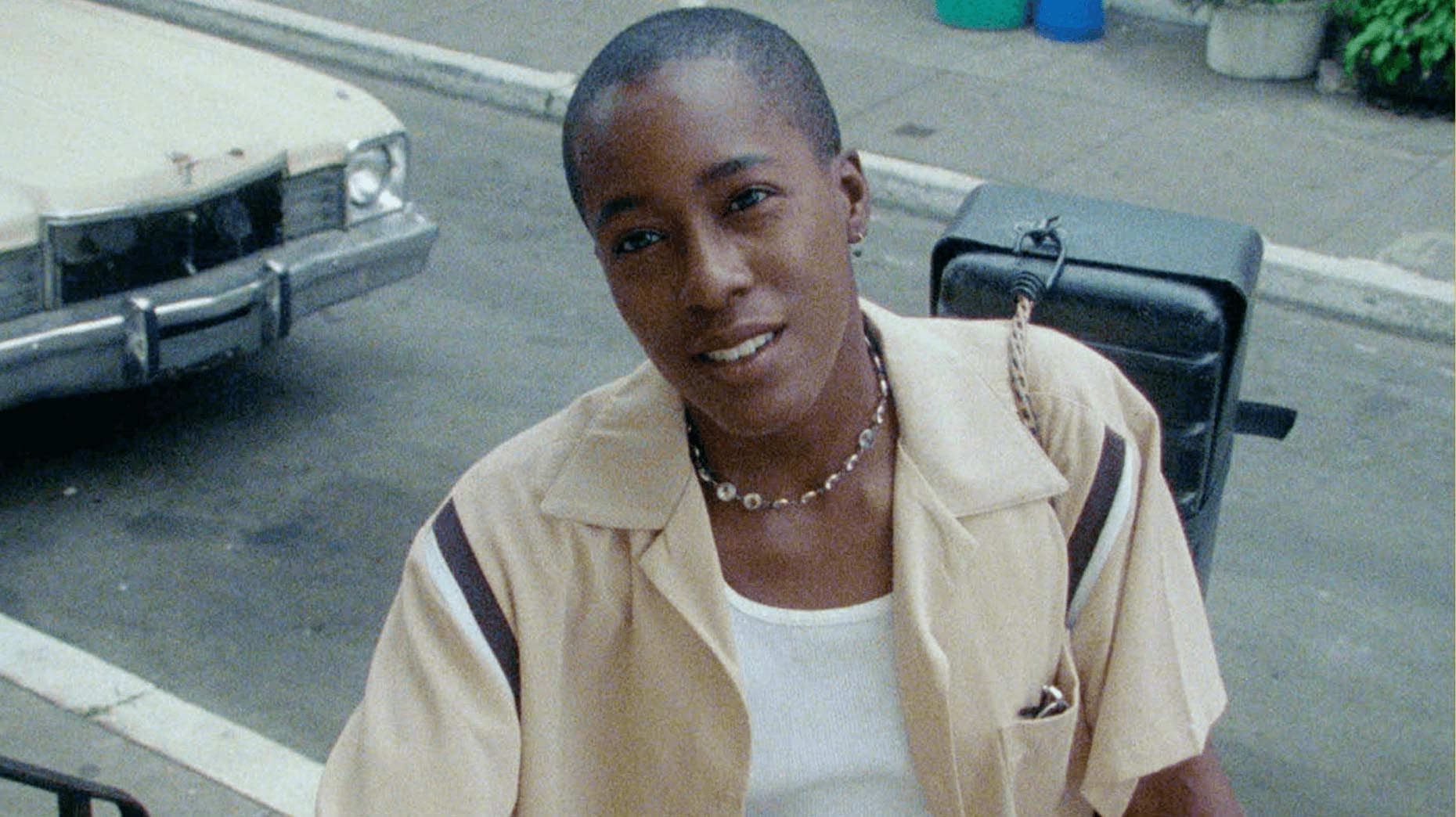
Has it been a similar process cutting your teeth on the episodic stuff to evolve your style as it was in your short films? It’s really great that those are included with The Watermelon Woman’s Criterion release because you can really see a lot of your discovery process as to how far you can push your audience within the style.
I think about the genre and how to break it, or how to take it and make it yours. Or you think about the mix and match, and you think about what the message is that you want to land on. You want to use the right tools and push those things forward. That’s definitely what I’m thinking about and stripping down. When something’s like an adaptation, it’s a little more difficult because there’s a text, and it’s always sacred. I used to teach a class on adaptation. We would read the short story, we read the script, and then we would see the film. There are three different things there! You think about what you can do with each of them, what is in each of them, and how they’re all radically different. As a filmmaker making that last choice, you’re creating a certain kind of access and aesthetic. But it could go on with the digital and social media world to become something else. The way that people cut it up on YouTube and then make little memes and things like that, I love that transmedia of it all.
Were you developing and shooting the film and video sections of The Watermelon Woman simultaneously or separately? Was figuring out how to braid them together a challenge in the editing process?
The editing of the film was more difficult [in execution] than in concept. This is analog time, so there’s no digital editing system. It became really expensive just to transfer frame rates and things back and forth. I wanted to make a film. I didn’t want to make a video. How to bring film into that world, make it feel the same, and create the look was something that was challenging.
The video part of it goes back to my social art practice when I got my MFA at Rutgers. Video was my tool, so the shorts [were] trying to figure out how to storytell with video and sort of make it feel like film. That’s why some of it’s in black and white. I would do this thing I call the theory of threes, which later becomes the Dunyementary. Somebody will sit down and do a talking head, and they’ll tell you about who they are. You’ll see their face, hear their voice, and see everything. You should understand who they are, and they should be considered subject and not other because they’re there. Second, then you put on a title card, and they can read it. We believe words as truth of some sort. And then, you have it acted out. So, if you don’t get who I am, if you don’t think Black queer lesbians exist and have just regular lives, then you’re an idiot, right? I literally was saying like, “Look! I am somebody.” That’s really what the Dunyementary was rooted in, just like, “Here I am! I’m just like everybody else. Don’t hate me.”
Can you elaborate on your process for conceptualizing the talking head bits of The Watermelon Woman? The first one is so clever because it’s not just a still camera but rather a pan over items before you as Cheryl situate yourself in the center of the frame. It’s not only content delivery but form as well.
It tells you it’s real. You see a hand and the lens cap coming off the camera. You feel like there’s some sense of time. I think it’s a timestamp, really. The one thing you can do with the talking head—and this becomes the Dunyementary—is that you can shoot them at any point in the process. In particular, when shooting the movie, I would set time down to shoot [talking-head footage] on the days of production. But then it’s really important for me to have people come back, especially in my shorts, a couple of weeks later and try to get back into character. Tell me what it’s like to get back into character and what you remember. Because I want to hear that foggy memory and the things that popped out for you. I want storytelling about yourself, in character and as yourself talking about the character. That’s where it becomes the experiment. There’s something about how we remember ourselves, how we want to boast about ourselves, how we want to represent ourselves in words to the world. That’s interesting to me. It’s a social experiment. So that’s how the talking heads are made, but the rest of it is the scripted narrative.
The first scene in The Watermelon Woman documents a wedding through the videotape, but it’s very much about whose story gets the glossy treatment and who is off in the margins…plus, an old white man even gets in the way of your cinematic gaze. Why did you want to start here? In a more traditional documentary or hybrid film, I think the start would be Cheryl’s first talking head.
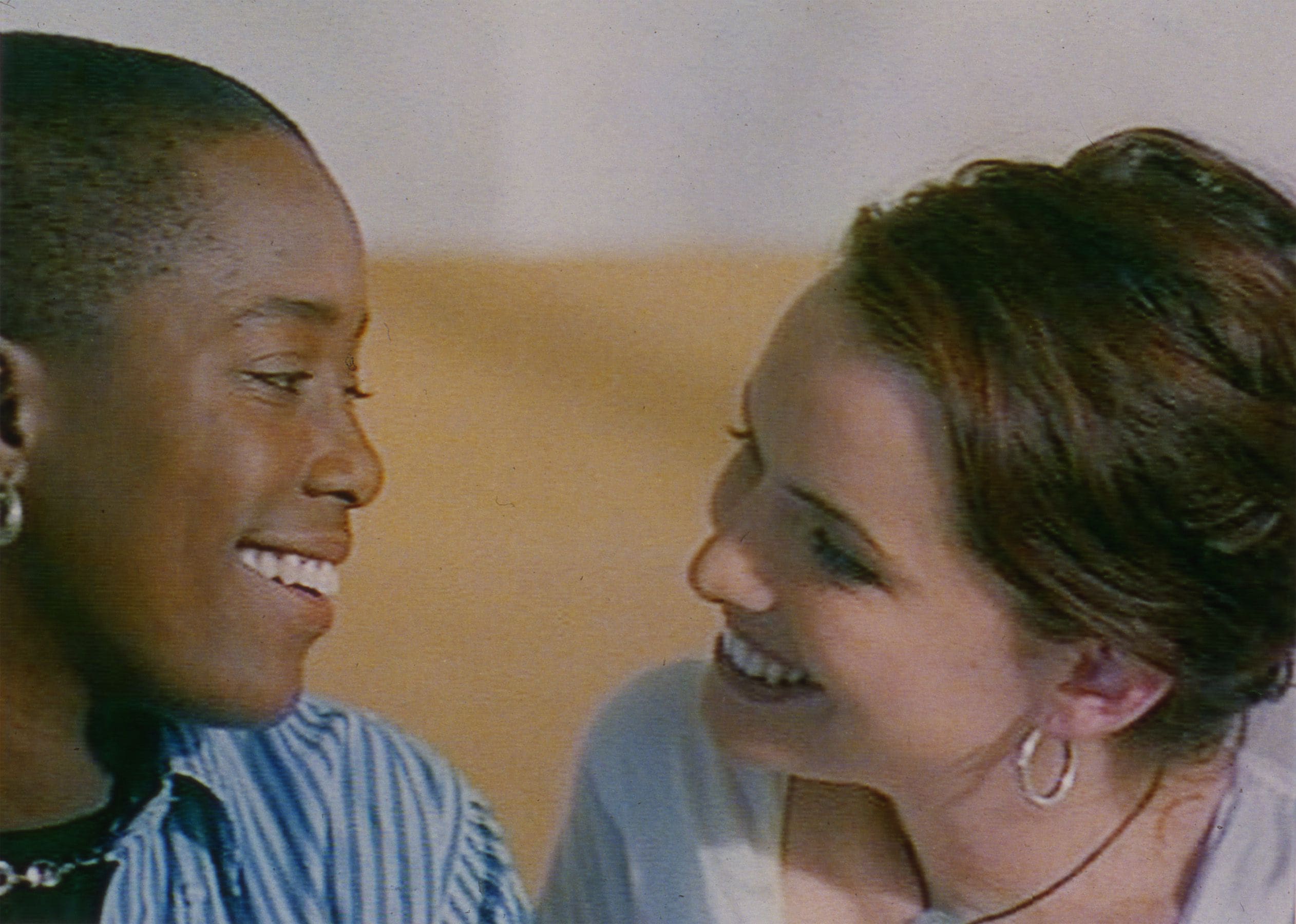
Exactly. People do or don’t know that my partner at the time, Alex Juhasz, plays Martha Page. We have kids together, and now we’re not together, but we were deep into our love. Starting to talk about the tensions of being in an interracial relationship: Alex is Jewish, and I’m Black. I wanted to put some of those things in the film. So that’s where she becomes Diana [Cheryl’s love interest in the film played by Guinevere Turner]. Things like the credit card, those are aspects of my relationship with Alex. It’s also in the Black-Jewish wedding in Philly, a chocolate city, and the discussion about the power dynamics of hiring of Black cinematographer to shoot their wedding and who gets to have space. You’re able to understand the film in the first three minutes. Boom, it’s right there, even before you see the talking head. Closer to the making of the film, people knew more about Alex and me. We were always on the road with the film, and you could clearly see that she was Martha. Good filmmakers are able to see a little bit of themselves in every character and in everything that they do. You see me all over that film! [laughs]
When did you make the decision to intercut the film’s closing credits into your character’s presentation of her findings about the “Watermelon Woman”? Was the goal to destabilize the viewer before you pull the rug out from underneath them?
Yes, it was! Jim McBride’s film David Holzman’s Diary did that for me. That was the one that was like, “What the heck?” I was hoping that would be like Portrait of Jason by Shirley Clarke, where Jason is just left a mess, and you really do hope to see that Jason was played by [an actor]. Total exploitation there. So I wanted to comment on that process. Make your own fiction, your own images. You’ve got to control shit or it’s you don’t know what happens if you don’t. And we need you in the world to be creating your world. So that was putting that the end.
But the real end, especially when people see the print of the film, is my pre-Kickstarter campaign. You get to see all the people who donated to the film, who I called up at the last minute [and told], “Give me a dollar! Give me anything you’ve got! Help me out, and then you get your name in the film!” A couple thousand was raised, I don’t remember what it was. So you actually see this first wave of people supporting this type of production in the arts through caring in the community. And some of those people aren’t around anymore, which I think is quite interesting, too. It’s a real time capsule of giving, of community on so many levels, of the finances…not just about the fiction and things in time.
Since 2001, we've brought you uncompromising, candid takes on the world of film, music, television, video games, theater, and more. Independently owned and operated publications like Slant have been hit hard in recent years, but we’re committed to keeping our content free and accessible—meaning no paywalls or fees.
If you like what we do, please consider subscribing to our Patreon or making a donation.