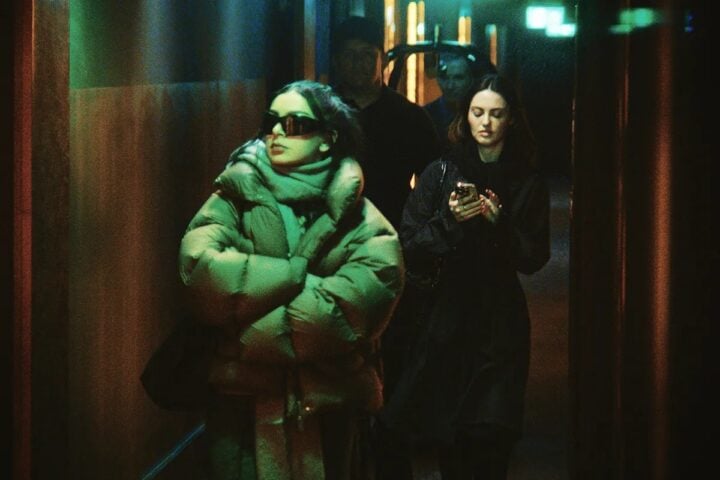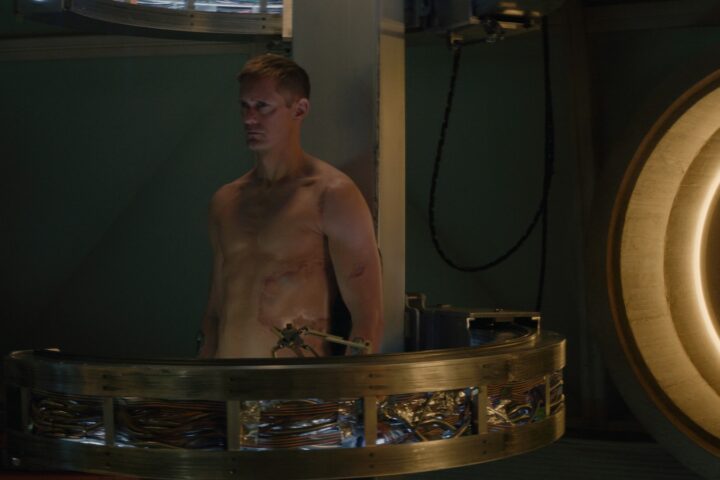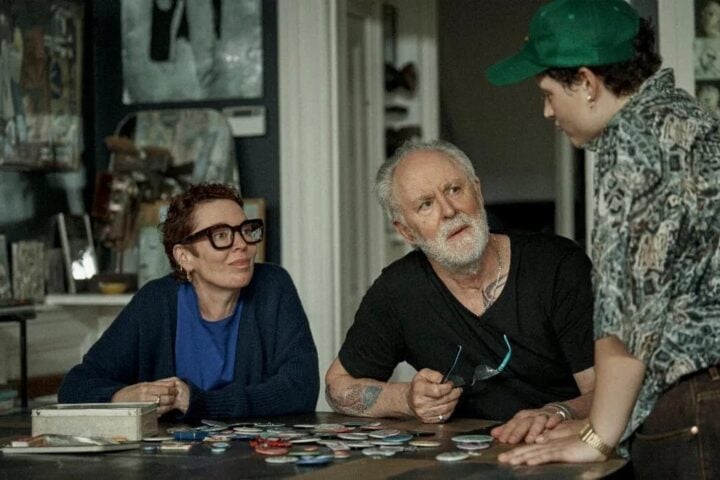
If the Sundance Film Festival is any indication, 2026 is going to be a big year for Alexander Skarsgård. The Swedish actor featured prominently in two world premieres at the festival that showcased his tremendous range. Skarsgård is a comedic scene-stealer in the mockumentary The Moment as Johannes, a motor-mouthed concert film director who takes over Charli XCX’s Brat Tour, and also proves to be the warm-hearted core of the adult fairy tale Wicker as a fantasy husband woven together by a village’s basket-maker.
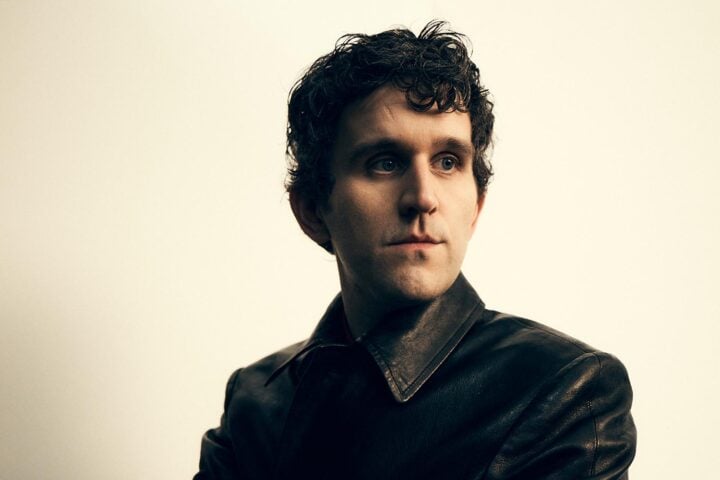
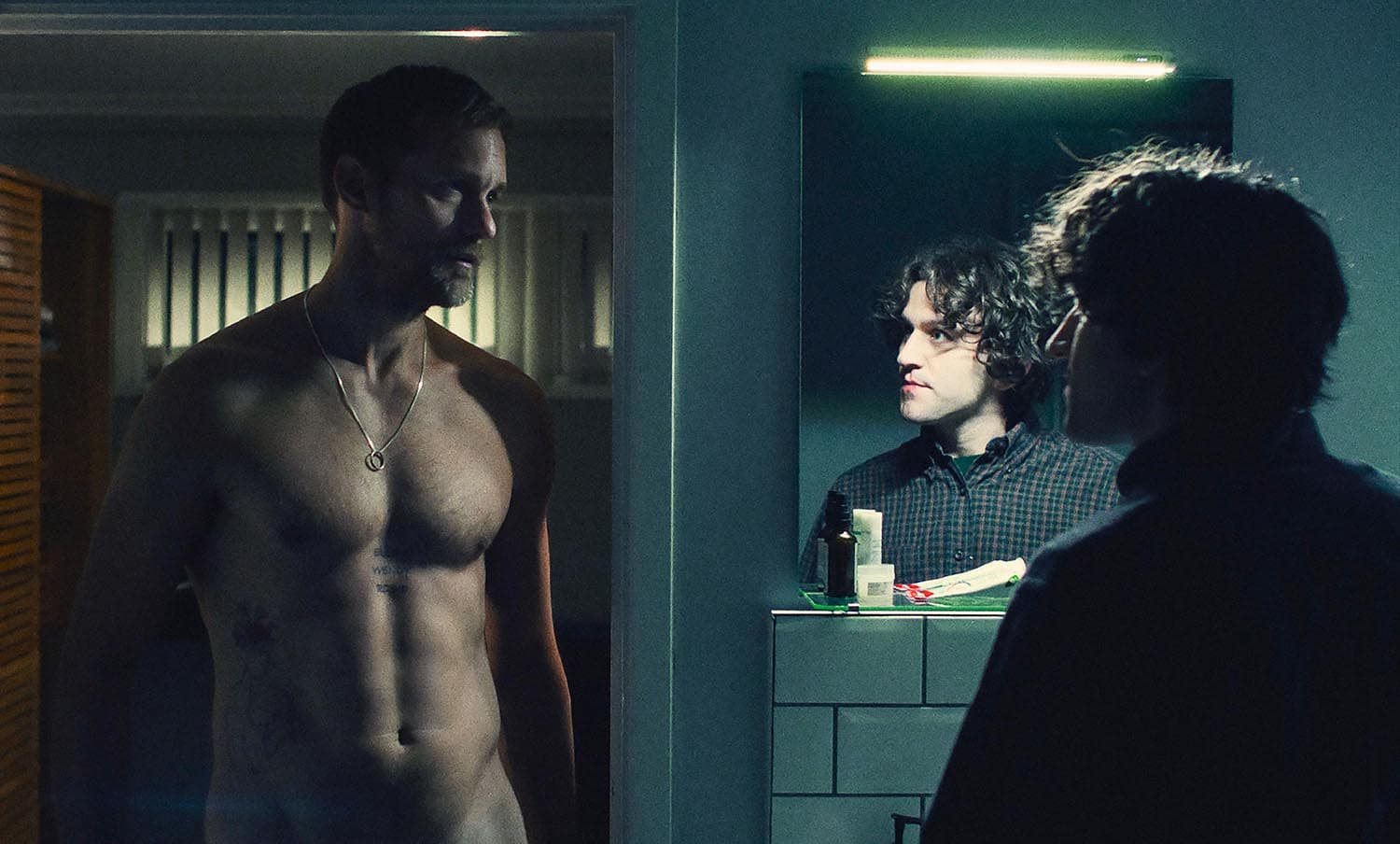
But no film quite distills the essence of Skarsgård’s persona quite like Harry Lighton’s Pillion, a “dom-com” set in the subculture of BDSM bikers. The actor cuts an imposing yet alluring figure as Ray, the mysterious man who takes a liking to Harry Melling’s nebbish Colin at a bar on Christmas Eve. While Colin’s evolving feelings about his submission drive the story forward, it’s the unspecified nature of Ray’s domination that provides the film’s true intrigue and tension.
I caught up with Skarsgård at A24’s offices ahead of Pillion’s theatrical release. Our talk covered how Ray connects to his recent roles, what being on set revealed to him about the character, and why intuition guided the moments when Ray’s façade of strength would crack.
I was just at Sundance and saw your new film, Wicker, and I couldn’t help but see some parallels to Pillion. Your characters help others build sexual confidence, allowing them to become a truer version of themselves. Do you find yourself gravitating toward certain themes when picking roles, or are these coincidences?
I think it’s a coincidence, but it’s quite an astute observation. There are some similarities in many ways. Obviously, the wicker husband and Ray are quite different. But in terms of what they’re doing to the protagonist, it opens Harry’s character up and sets him off on a new journey, and in a way, with Olivia’s character in Wicker as well. But it wasn’t intentional. They were just two really great scripts that happened to people come to me back-to-back.
There’s no backstory to Ray, but the film gives us small details to understand what formed Ray before we meet him. How were you keeping the character consistent or grounded in the absence of that?
It was about making sure there were moments throughout the film where you sense that he might not be 100% in control of his feelings. He wouldn’t let himself be emotionally exposed to Colin, but [I wanted to show] something in that direction, like a slight vulnerability under the surface for someone who’s so dominant, assertive, and clear on what he wants. It was important to find moments where there’s a crack in the façade. I didn’t really know where those would take place, which was always quite thrilling. It happened organically on the day, working with Harry in those scenes. I knew I needed a few of those, but I didn’t know when they would fall.
Did you go into a scene knowing you’d come out with a crack in the façade?
Yeah, but then that would change, because we didn’t really rehearse at all. Harry and I met two days before we started shooting the film, so we had zero time. I also didn’t feel the need to sit and [rehearse] something. Again, I’m not opposed to rehearsals, especially if it’s scenes with lots of dialogue or technically complicated scenes. But in this instance, I didn’t really feel the need to do that. I thought it could be quite interesting to not overanalyze it together or intellectualize it, but rather see what happens in front of him. I never knew how Harry would interpret a scene or where it would go, and that meant that there were days when I was like, “Oh, I think in this scene, it’d be interesting to see a little vulnerability.” But then we would shoot it, and I felt nothing because in the dynamic with Harry, we would go in a completely different direction.
Even though I play a dom in the movie, the dynamic did shift because his reaction might be something unlike what I expected. I would react to that, and then we would ping-pong in a different direction. But that was really thrilling to me because that meant there were days when I was like, “Alright, I thought Ray would feel a lot here, but I felt nothing.” And then the opposite would happen. Pedestrian scenes, where I was like, “Oh, this is just transportation.” But then, “Oh shit, that hit me really hard, and I felt something I didn’t expect to feel.”
You’ve said that your conception of Ray as a character changed once you got on set and started interacting with Harry Melling. How so?
I can’t say that the character changed. I think it was more when the changes would take place. Sometimes, in a script, you can map out quite clearly when you want the pivotal moments or character changes and shifts. But that was all over the place here, which is quite thrilling.
Harry Lighton shot the film in a way to give himself options in the cutting room to play around with the tone. Was there anything that surprised you about seeing the final film in terms of how he put scenes together?
No, I just had so much faith in Harry as a director, even though it’s the first time we worked together and it’s his first feature. Over the course of the year leading up to the shoot, in conversations with Harry, I just felt incredibly calm and confident that he was going to pull this off. Tonally, the way he talked about the sincerity and humor, balanced with the darker sides of it and how to calibrate that, I just trusted him. Which meant that when we shot the scenes, I also felt like, “Alright, we can really ham it up here and be broad, and then we can do a take where it’s way more restrained and pulled back,” feeling safe that in the edit, he will calibrate this. I was never concerned that he would be too broad or not funny enough. The final film definitely captured the essence of Ray, the way I imagine him.
We see Ray in a wide variety of clothing, from leather to athleisure and even some dad-core at the end. How do costumes and other tangible production elements shape how you act?
I really liked the aesthetic. When I first heard of the BDSM biker world, my visual references of that type of aesthetic were, like, Tom of Finland and Scorpio Rising. I thought it was really interesting to make it more contemporary and also more functional. It’s racing gear—not the old leather with the Levi jeans. And the fact that what he wears at home is like the under layer. It’s the old sweaty T-shirt and shorts. He doesn’t dress up. It’s also a way to dominate Colin, being like, “Why would I put on a shirt? I’m gonna be as comfortable as I can.” Then, the day off would be a little bit of a contrast to that, where he puts on a shirt that’s also a slight contrast to the leather and kink gear. It’s a dad [outfit], basically, not very sexy stuff.
So much of Ray’s power comes from his silence or his slowness to respond. Are those pauses written into the script, or were those things you found once the camera started rolling?
There weren’t a lot of stage directions, necessarily. Obviously, the dialogue is very sparse, and the character is quite laconic. Those happened in the moment. I would say I quite enjoyed letting Harry wait for an answer. I knew it would be uncomfortable for him. It’s a way to be dominant, obviously, if you keep the other person on his toes, and he has to wait for an answer.
I saw The Moment last night, and your character, Johannes, can similarly exert a lot of control over a room but in a much more active, verbal way. Is playing a really expressive figure working a different muscle than embodying a strong, silent type?
Yeah, very much so. For Ray, there’s a confidence in not having to say much, or knowing that he is the center of attention without having to shout and scream for attention. There’s a quiet, powerful quality to him that radiates confidence. And I think Johannes is the polar opposite. He’s talks non-stop because he’s inherently very insecure. He tries to dominate the room because, deep down, he probably knows that he’s not that interesting. He has to overcompensate by constantly talking about his accomplishments.
Your character dies at the end of the book, but his fate is left unresolved in Pillion. Do you have thoughts on what happens to Ray after he exits the film?
Yeah, I do. But I’ve consciously avoided talking about it or breaking down how I interpreted the end of the day off and Ray’s motivations for that because I think it’s a less interesting watch for people if they have those answers already. I like the fact that there’s a level of ambiguity there, and you can interpret it many different ways.
Do you make a conscious choice when acting the scene and just keep it from the audience?
Yeah, I did. I had an idea of what I thought was going on in that scene with Colin at the end.
Even if people aren’t ready to suit up in leather, what do you hope people take away from Pillion about love, sex, tenderness, or whatever topic it might be?
If people feel like 10% of what I felt when I read the screenplay, they’re in for a wonderful evening. I thought it was so incredibly exhilarating, reading something so unique tonally. It was an insight into a subculture without being exclusionary. It felt inviting and intense, but also sweet, funny, and awkward. I hope that people join Colin on this journey when he meets Ray and, at least at times in the movie, are invested in the relationship and are rooting for them to be together. But then, maybe other times, they’re like, “Well, actually, this is probably not going to work out.” I just hope people are in for the ride.
Since 2001, we've brought you uncompromising, candid takes on the world of film, music, television, video games, theater, and more. Independently owned and operated publications like Slant have been hit hard in recent years, but we’re committed to keeping our content free and accessible—meaning no paywalls or fees.
If you like what we do, please consider subscribing to our Patreon or making a donation.