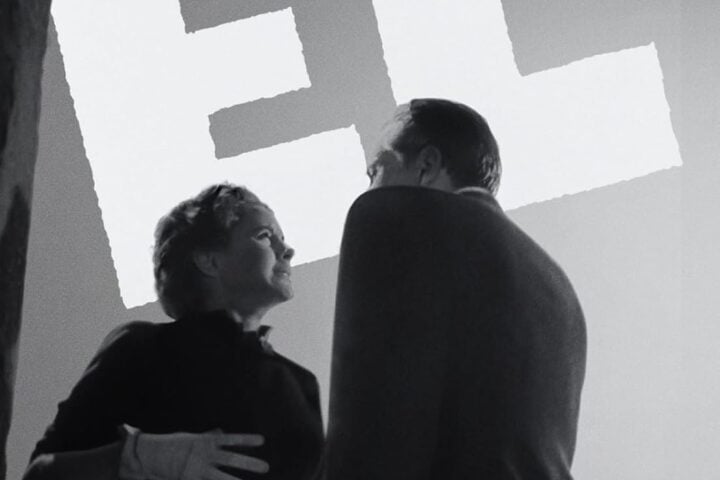
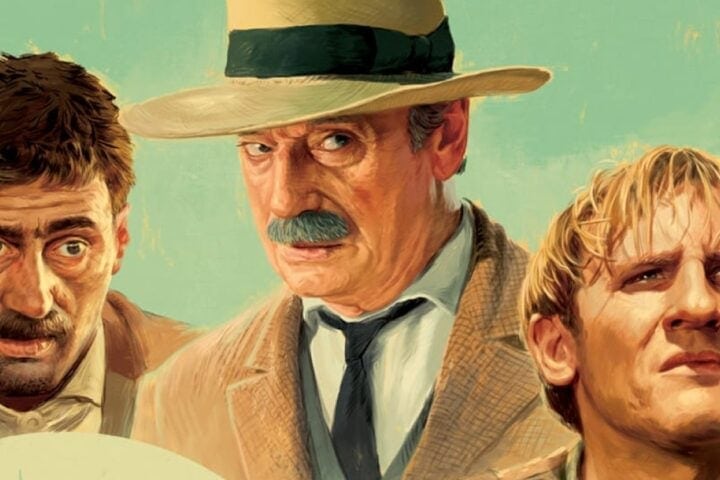
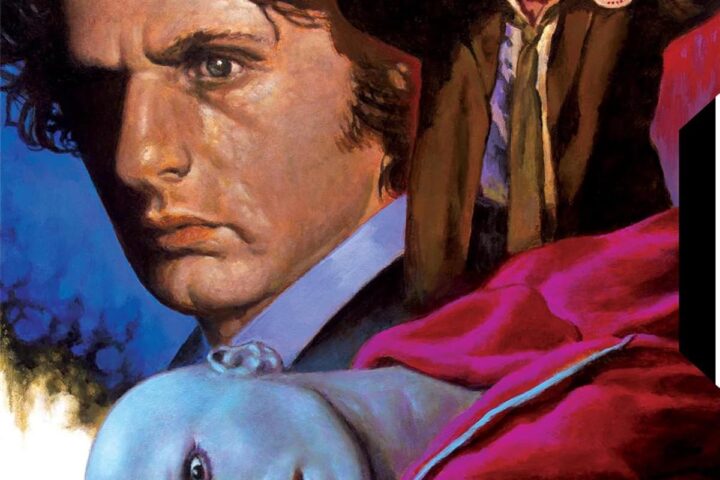
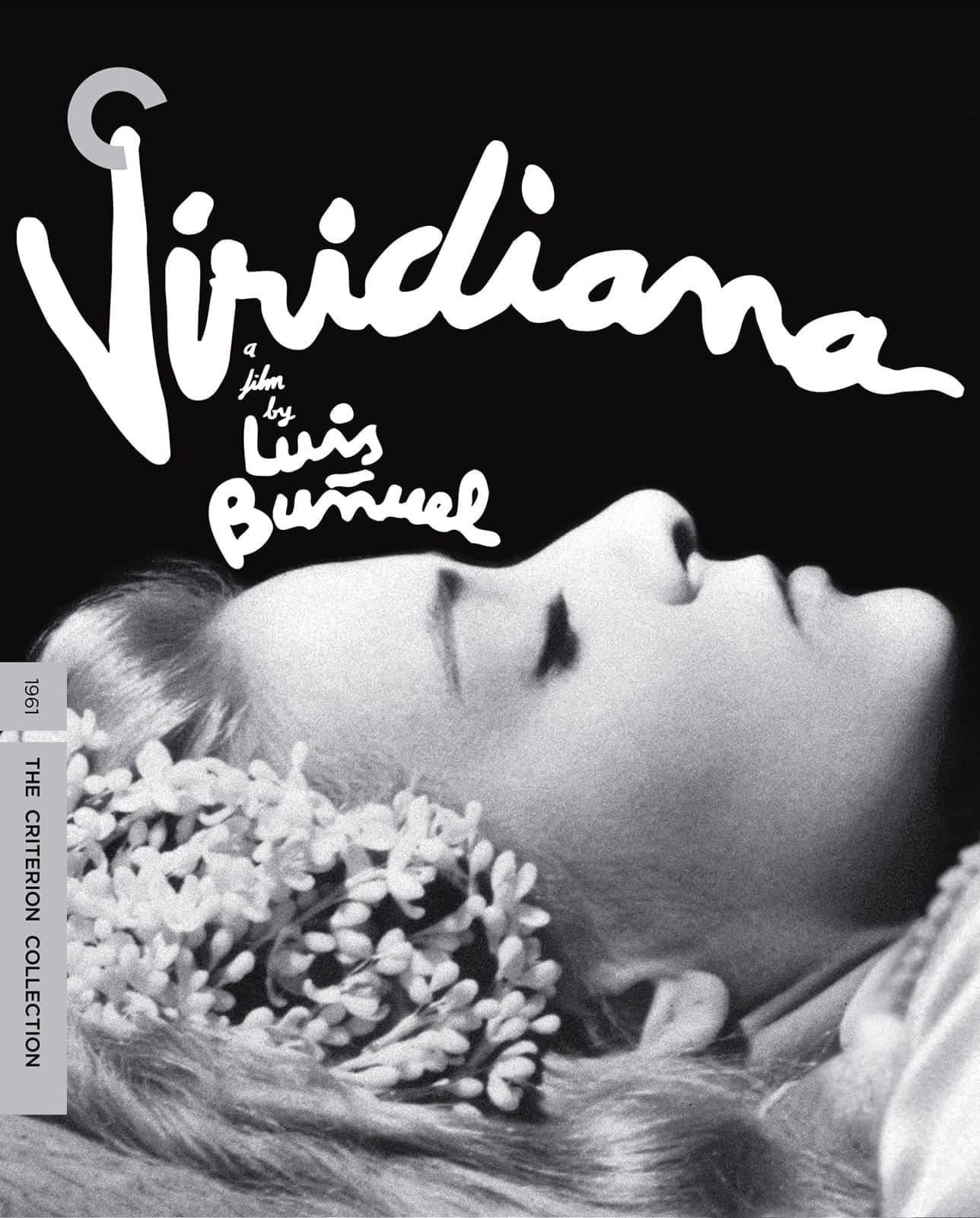
 Luis Buñuel’s Viridiana still shocks to this day. In 1960, Francisco Franco invited the exiled director to return to Spain to produce a film completely to his liking. Ask and you shall receive, as Viridiana was Buñuel’s sly “fuck you” to the Spanish dictator and his political bedfellows, including the Catholic Church. Upon its release, the Vatican and Franco’s government condemned the film. Perhaps unsurprisingly, it went on to win the Palm d’Or at Cannes.
Though Viridiana is noticeably derivative of the similarly themed Nazarín (both films were adapted from novels by Benito Pérez Galdós), not only is Viridiana more economical than Buñuel’s 1958 masterpiece but its classicism recalls the style of later works like The Diary of the Chambermaid and Belle du Jour. The film tells the story of a virtuous young nun (Silvia Pinal) whose efforts to do good and remain virtuous are constantly thwarted by the world around her. Both here and in Nazarín, an outraged Buñuel doesn’t so much attack a saint’s good intentions as much as her naïveté and unwillingness to realize that the world is incapable of appreciating them.
When summoned by Don Jaime (Fernando Rey) to his estate, the profoundly virtuous Viridiana—she sleeps on the floor, carries a crown of thorns inside her suitcase, and performs religious rituals while sleepwalking—tells a fellow sister that she would rather stay at the convent she calls home. When she visits Don Jaime’s barn and asks a cowhand for a glass of milk, the man suggests that she milk the cow herself. This innuendo-laced scene is delirious, but more startling than the fact that it slipped by the censors is the fact that Viridiana, more so than anyone around her, is on constant alert and sees sex in places where there obviously isn’t any.
From there, the film proceeds, like many a Buñuel film, as if it were setting up a punchline to a cosmic joke. Don Jaime, essentially the filmmaker’s doppelganger, pesters Viridiana to stay at his estate, forces her to dress in his deceased wife’s wedding dress, drugs her with the help of his loyal maid, Ramona (Margarita Lozano), and convinces her that they slept together when she subsequently passed out. The maid’s daughter, Rita (Teresa Rabal), is reprimanded early on for spying on Viridiana (and seeing her in her nightgown). Later, the girl’s mother chooses not to believe Don Jaime when he claims he didn’t sleep with Viridiana precisely because her daughter observed him kissing his niece. Viridiana seems to believe her uncle when he tells her he didn’t deflower her but she leaves his estate anyway. But as soon as she reaches the bus station, the local police notify her that Don Jaime committed suicide using little Rita’s jump rope.
Even in death, Jaime continues to test Viridiana’s spiritual complacency. She uses his home as a shelter for a group of beggars, but her good will is no match for the sad viciousness of the people she tries to help and the blunt level-headedness of Don Jaime’s prodigal son, Jorge (Francisco Rabal). Buñuel’s sister Conchita once observed: “In Viridiana, there’s a scene where a tired dog is attached by a rope to the underside of a cart as it rumbles along the road. Luis suffered when he shot this scene because in real life it was so very common. The habit was so ingrained in the Spanish peasant that to try to break it would have been like Don Quixote tilting at windmills.” During this beautiful scene, Jorge buys a dog from a peasant so that the animal won’t have to suffer any longer. When he turns his back to the road, another cart rumbles by with another dog attached to the vehicle’s underside. This is Buñuel’s poetic expression of the sinister cycle of life.
Viridiana is a fable about one woman who discovers just how difficult it is to change the world around her. Jorge respects Viridiana’s instinct to do good but continuously reminds her that her efforts are futile. “You can’t save everyone,” he says, not long after he himself tries to save a dog from the brutality of man. When the members of the house leave the estate for the night, Viridiana’s beggars play Handel’s “Messiah” on Don Jaime’s phonograph and reenact their own version of Da Vinci’s The Last Supper. Then, after nearly destroying Don Jaime’s dining hall, the beggars attempt to rape Viridiana when she returns to the estate.
Viridiana’s controversy is ironic because, like Nazarín, it doesn’t attack Christianity as an institution but its failure to truly and imaginatively connect with the people it seeks to help. Why break bread with people who don’t even want that bread? Viridiana learns her lesson, religious hymns give way to “Shake Your Cares Away,” and her rituals of denial usher in a very wholesome game of cards. And with that, Buñuel seems to welcome the girl into the real world.
Image/Sound
The transfer that Criterion used for its 2006 release left much to be desired, as some scenes were marred by vertical lines, suggesting perhaps an angry censor shredded the film using a crown of thorns. Flash forward 20 years, and Viridiana has received a new 4K digital restoration that’s revelatory. This is a by and large stable presentation, boasting stellar black levels and sturdy contrast, while fine details are intimately revealing. As for the uncompressed monaural soundtrack, there’s a slight hiss throughout, suggesting the track is the same as the one on the 2006 release, but the dialogue, score, and sound effects are all well presented.
Extras
All of the extras are ported over from Criterion’s earlier releases of the film. Sylvia Pinal reminisces for 15 minutes about meeting Luis Buñuel and their subsequent working relationship, while film scholar Richard Porton packs a full-length commentary track’s worth of insight into his 13-minute interview. Better yet is a 37-minute collection of clips from the French program Cinéastes de Notre Temps devoted to Buñuel’s films—a time capsule from a time when people were first beginning to make sense of one of the world’s bourgeoning cinematic geniuses. The accompanying 30-page booklet includes the essay “The Human Comedy” by Michael Wood and an interview with Buñuel conducted by José de la Colina and Tomás Pérez Turrent, excerpted from their book Objects of Desire: Conversations with Luis Buñuel.
Overall
Thanks to a glorious new 4K digital restoration, the perversions of Luis Buñuel’s Palm d’Or-winning masterpiece from 1961 have never felt more incendiary.
Since 2001, we've brought you uncompromising, candid takes on the world of film, music, television, video games, theater, and more. Independently owned and operated publications like Slant have been hit hard in recent years, but we’re committed to keeping our content free and accessible—meaning no paywalls or fees.
If you like what we do, please consider subscribing to our Patreon or making a donation.