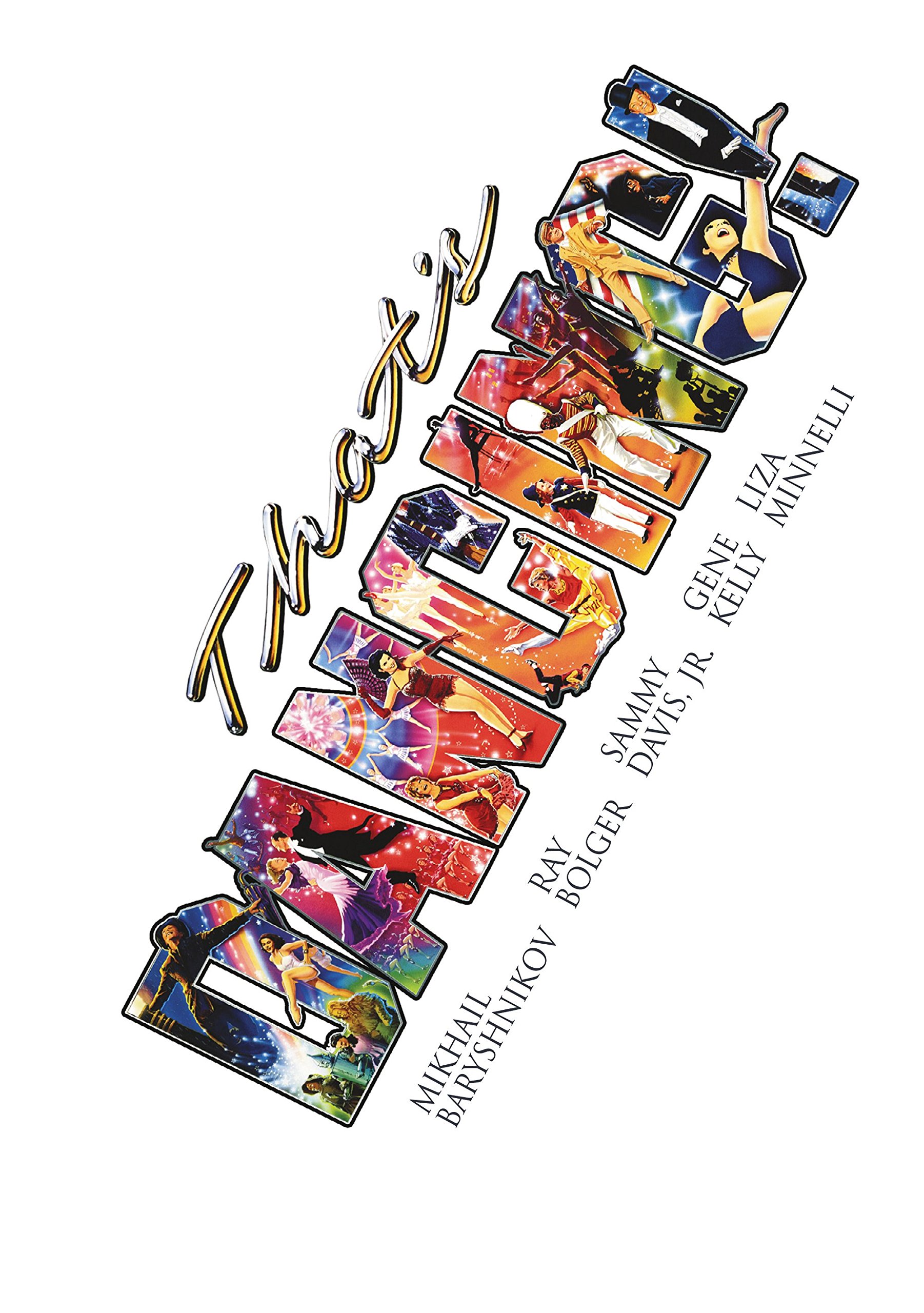
 “This film is dedicated to all dancers…especially those who devoted their lives to the development of their art long before there was a motion picture camera,” reads the clodhopping opening title card to That’s Dancing!, a 1985 retrospective of (predominately) MGM’s boffo terpsichorean treasures. And then it cuts to a group of breakdancers in white Adidas moonwalking in a line while Gene Kelly leans against a graffiti-strewn Brooklyn park wall. Though its title aligns it with the 1970s nostalgia clip fests That’s Entertainment (parts one and two), That’s Dancing differs crucially in that it bends over backward to celebrate the perception that the box office success of Fame and Flashdance heralded the rebirth of the form. The unintended side effect of this wraparound, aside from making the entire enterprise laughably dated some two decades later, is that it seriously asks us to believe the spastic, chaotic gyrations of Debbie Allen’s students (those poor, poor souls) fulfill the legacy of Eleanor Powell, Cyd Charisse, and Bob Fosse.
But never mind that. That’s Entertainment! was never about the magic of studio-system moviemaking as it was about the magic of movie stars. Therefore all the shuffle steps, the Jetés battu, and the hip rolls collected throughout That’s Dancing! come a lot closer than its unofficial predecessors did to portraying cinema as a kinetic art form, a quintessentially 20th century fusion of disparate iterations of craft into, yes, something like magic. One could carp that removing some of the clips from their context robs routines of their prime function: that they, much like songs in musicals, serve as an exaggerated psychological extension of their situation. Small price to pay. If anything, removing dance numbers from the likes of Oklahoma, Honolulu, and some of the more formulaic of Busby Berkeley’s vehicles probably does them a service. So too do the generally unobtrusive comments of the hoofers of yore guiding viewers from the Charleston all the way up through disco.
The dancing styles of those in front of the camera (foremost Gene Kelly and Fred Astaire, who in tandem take up as much as a third of the film’s running time) are given equal co-billing with the work of the choreographers and (in many cases) the directors like Vincente Minnelli who knew how to help numbers along by making his gliding camera a shared partner in the dance. True, That’s Dancing! seems to lose all interest once it gets around to the 1960s (West Side Story’s “Cool” and suddenly we’re whisked to the neo-musical era of Saturday Night Fever without so much as a stop for Cabaret). True, a bunch of no-brainer showstoppers were omitted (anyone who has seen Hellzapoppin’s blistering, bruising swing routine knows what I’m talking about). True, it would’ve served their purposes better had they waited five years or so, when production numbers in music videos were truly state of the art and when Janet Jackson’s nutty zoot suit pastiche “Alright” offered cameos to Charisse, Cab Calloway, and the Nicholas Brothers. That’s Dancing! understands that, since that hoochie-cootchie dancer appeared on screen with white bars censoring her jiggling midsection, dance on film is all about the sexy things the human body can do.
Image/Sound
People with Academy ratio TV sets (i.e. those who get black bars on all widescreen movies, and not just those with Cinemascope dimensions) will probably loathe this transfer. Those who have widescreen TVs will rejoice. The mixed formats of That’s Dancing! are presented anamorphically. That means those with old school sets will not only have to endure black bars at the top and bottom of the set during some of the later scenes, they’ll also feel like they’re peering through the wrong end of a telescope when 1.33:1 clips (i.e. almost everything up until Oklahoma) come with a second set of black bars on the left and right sides. Since eventually all TVs will likely be widescreen in the future, I say screw the haters. Warner Home Video is making DVDs for the future, people.
Extras
Aside from an introduction by Gene Kelly and director Jack Haley Jr., the disc includes only a quartet of EPK featurettes from the film’s initial release, none of which are particularly fun to watch when you have the film itself waiting, aside from the waxworks promenade that is “The Gathering.”
Overall
The rare dance documentary that features more clips of Bob Fosse in front of the camera rather than behind, That’s Dancing!’s only crippling flaw is that it was made when Kim Carnes was around to rasp through the closing credits.
Since 2001, we've brought you uncompromising, candid takes on the world of film, music, television, video games, theater, and more. Independently owned and operated publications like Slant have been hit hard in recent years, but we’re committed to keeping our content free and accessible—meaning no paywalls or fees.
If you like what we do, please consider subscribing to our Patreon or making a donation.