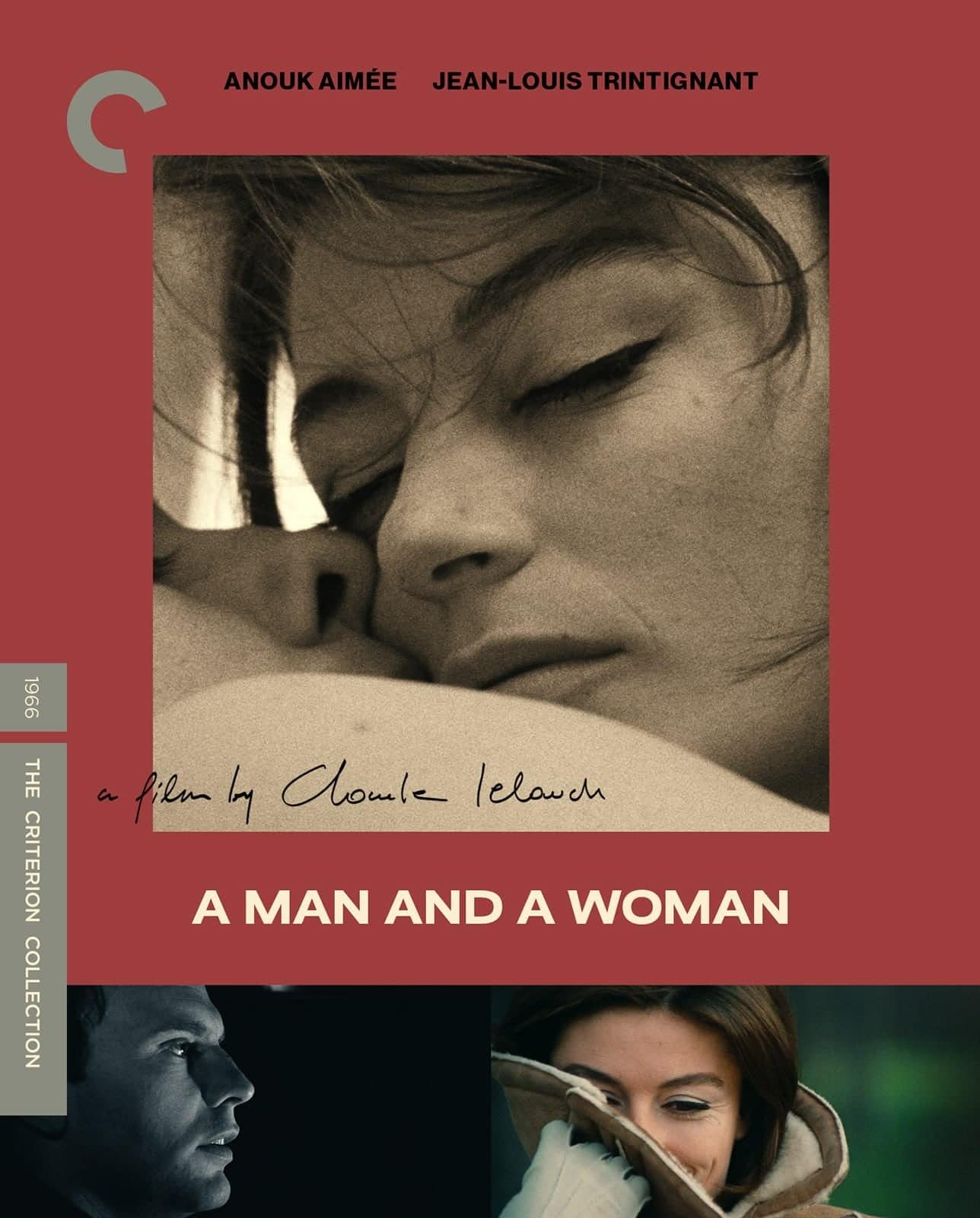
 Claude Lelouch’s Palme d’Or-winning A Man and a Woman from 1966 treasures mood above all else. In its telling of the love story between Jean-Louis (Jean-Louis Trintignant), a freewheeling race-car driver and widower, and Anne (Anouk Aimée), a reserved script supervisor and widow, the film draws visual inspiration from the French New Wave. But for all of its stylistic brio—whirling camerawork, soft-focus lensing, elliptical editing, and excessive reliance on montage and shifts between color, black and white, and sepia—A Man and a Woman mostly offers overtly sentimental flashes of love lost. The titular man and woman may have names, but the film never transforms them into anything beyond sexy, chic ciphers.
Set to Francis Lai’s occasionally beautiful yet oft-overbearing score, A Man and a Woman is as slick as it is hollow, rarely penetrating its main characters in a way that allows us to understand either their grief or rapturous feelings of burgeoning love for one another. It remains incurious about them as people, content as it is to frame them in beautiful but ultimately meaningless images, such as Anne coquettishly covering her face with a winter jacket or riding galloping horses through a field with her late husband (Pierre Barouh) and Peter gleefully speeding around a racetrack or through rain-slicked Parisian streets in his red Mustang.
It’s unsurprising that Lelouch’s film was an international hit in 1966, taking home the Oscar for best foreign film after its Palme d’Or victory. Unlike many of the early French New Wave triumphs that it seeks to emulate, A Man and a Woman is unabashedly commercial filmmaking—in both senses—as its blend of opulence and mawkishness would soon find its way into the visual language of advertising. Pauline Kael wrote that it’s “rhythmed more like a trailer than a movie,” which largely explains why, even at around 100 minutes, it’s so exhausting, spending as it does most of that time cycling through glossy images that savor the beauty of its main characters, gesturing at deeper meaning about their emotions that never materializes.
For their part, Trintignant and Aimée are convincing in the rare extended stretches they’re allowed to play off one another in any sort of meaningful way. But Lelouch isn’t interested in letting his actors do much of the heavy lifting, instead relying on gloomy, wintry locales and the melancholy strings in Lai’s score to impose a sense of either carefreeness or bittersweetness upon the characters’ relationship. Where several French New Wave films made a case for style as substance, A Man and a Woman is the pinnacle of style without substance—its aesthetic indulgences remaining a visual shorthand that points to nothing beyond itself.
Image/Sound
The 2K restoration that Criterion has transferred here is in its original 1.66:1 aspect ratio. The image is crisp, with every detail in the rain-soaked Parisian streets and intimate close-ups presented with vivid clarity. The color grading veers toward to the teal—something that’s most noticeable in the black-and-white sequences—but skin tones are very naturalistic. On the audio front, the uncompressed mono track boasts clean and clear dialogue and is robust enough to effectively handle the dramatic ebbs and flows of Francis Lai’s score.
Extras
In a new interview, Claude Lelouch reflects on the film and his start as an amateur filmmaker who started his own production company after flunking out of school. Lelouch also appears in a short 1996 making-of documentary discussing the themes of A Man and a Woman, while Jean-Louis Trintignant and Anouk Aimée praise their director for the spirit of spontaneity that he cultivated on set. There’s also a 1966 TV program that follows Lelouch, Trintignant, and Aimée at Cannes, with particular focus on the director as he talks with the projectionist, producers, and the press. Rounding out the on-disc extras are Lelouch’s 1976 short film “C’était un Rendez-Vous” and a brief introduction by the director, who describes his love of cars and speed. Finally, the foldout booklet comes with a new essay from critic Carrie Rickey that touches on Lelouch’s earlier films and his stylistic approach to A Man and a Woman.
Overall
With the Criterion Collection’s new Blu-ray, Claude Lelouch’s international breakthrough gets a spiffy new upgrade that highlights its aesthetic elegance.
Since 2001, we've brought you uncompromising, candid takes on the world of film, music, television, video games, theater, and more. Independently owned and operated publications like Slant have been hit hard in recent years, but we’re committed to keeping our content free and accessible—meaning no paywalls or fees.
If you like what we do, please consider subscribing to our Patreon or making a donation.