
A live-action adaptation of Oda Eiichirō’s manga One Piece sounds like a dicey proposition, especially with Netflix manning the ship. With decades worth of source material to draw from since the series began in 1997, a faithful adaptation would require a near-unthinkable number of seasons from the infamously cancel-happy streamer. Furthermore, compared to its Dragon Ball-inspired contemporaries, the material is unabashedly cartoonish, with much of the manga’s dialogue shouted by an enormous cast of characters with improbable abilities and bodily proportions. A true adaptation would be a more expensive, elaborate undertaking than Cowboy Bebop, which Netflix axed after a single season.
And yet, One Piece defies the odds by being faithful to its source while also standing on its own. Its first season covers a little more than 10 of 100-plus (and counting) manga volumes, making a small dent in the story of Monkey D. Luffy (Iñaki Godoy), the happy-go-lucky, straw-hatted boy determined to become King of the Pirates. To do this, he must find the treasure hidden somewhere in the Grand Line, a dangerous ocean route that circles the world.
Among Luffy’s main obstacles are his nonexistent crew and his general lack of pirate attributes: He has little interest in amassing wealth, and his demeanor is such that he opts for friendship over violence. But when the situation calls for it, he’s a rather accomplished fighter. It certainly helps that, ever since he ingested a “Devil Fruit” as a child, he has the power to stretch himself like rubber. In one memorable scene in the series, he inflates himself like a balloon to deflect a cannonball that his pursuer, Marine Vice-Admiral Garp (Vincent Regan), throws like a fastball.
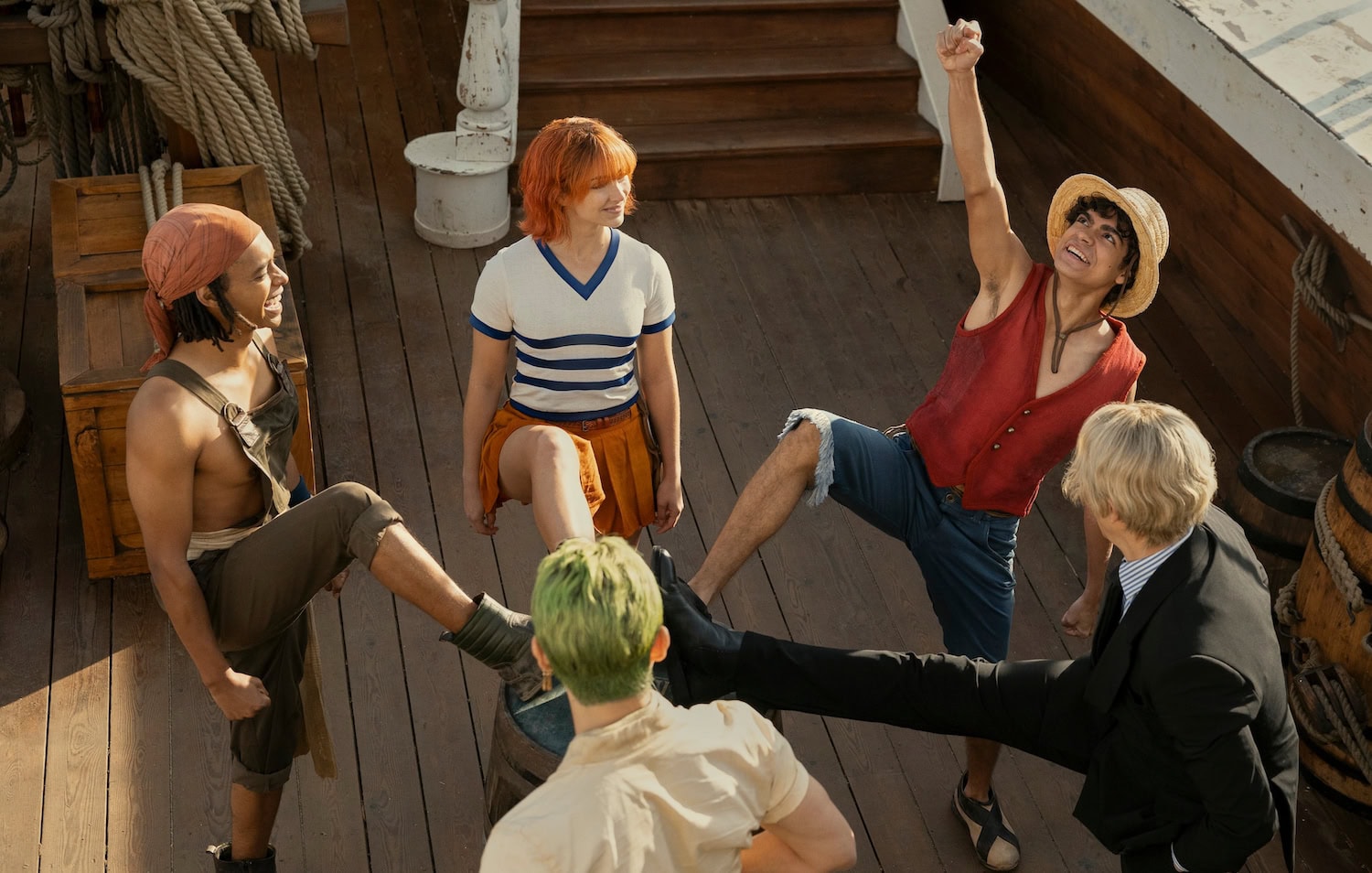
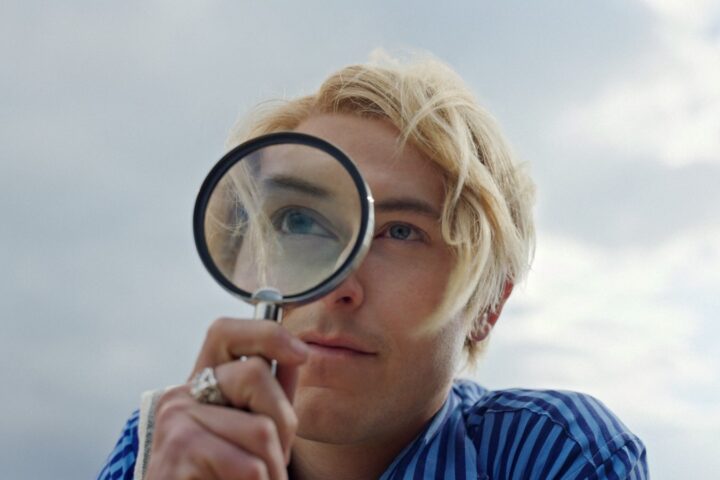
Luffy’s other great asset is the force of his personality. Over the course of the season, he leaves a trail of dedicated friends in his wake and gradually amasses a small yet colorful crew. First is pirate hunter Roronoa Zoro (Mackenyu), who wields two swords in his hands and a third in his teeth; second is Nami (Emily Rudd), a thieving navigator with her own agenda; third is Usopp (Jacob Romero Gibson), an expert with a slingshot and a habitual liar; and fourth is Sanji (Taz Skylar), a woman-crazed cook who fights only with his feet in order to protect his hands.
All are dressed to exactly resemble their manga counterparts, right down to bright, cartoonish hair colors. That any of this works can largely be attributed to Godoy’s earnest performance. The actor goes big in his portrayal of Luffy, consistently leaning into the silliest emotions. Luffy is more than willing to listen to those around him, but he’s also always nudging them in the direction of their dreams, all the while brutalizing the villains that stand in their way.

Such a character and the world he inhabits seem particularly suited for animation, but the live-action treatment that One Piece receives here is curiously effective. Considering that so much prestige TV abounds in conflicted protagonists and murky drama, One Piece’s simplicity feels refreshing, even radical. Indeed, the characters know what they want and say what they mean, expressing their affection for one another without any qualms.
There’s an uncomplicated thrill to watching these characters travel to different settings like a pirate carnival and a seagoing restaurant, each one full of odd details and a new caper to embroil the crew. In One Piece’s fealty to its serialized source material, it ends up replicating the relaxed, hangout style of episodic storytelling in a way that eludes many modern TV shows.
Also a sign of One Piece’s devotion to the manga is its visuals. Characters strangely use large snails as an inter-ocean phone service, and numerous oddities go uncommented on, from people resembling sheep or mice, to a grizzled Garp donning a cute bulldog hat that matches his ship’s masthead. The later episodes introduce a race of fishmen, realized through prosthetics of fins, gills, and, in the case of their leader, Arlong (McKinley Belcher III), a sawtooth nose. While the costumes and the settings don’t always look convincing, the heightened tone of the series encourages one against measuring the story against a criterion of credibility.
Even when a scene looks like it was obviously shot on a soundstage, the moment only underscores the show’s theatrically imaginative strangeness, even underneath the occasional layer of hideous Netflix color correction. The overall lightness of tone is why One Piece works so much better than Cowboy Bebop did: Where that adaptation had to replicate a complexity of character and a level of craft that would be a tall order for any series, One Piece’s source material calls for a channeling of its most unpretentiously bright and entertaining qualities.
With so much material to cover, the series makes some understandable cuts, but across the later episodes, fans of the manga will feel the loss of many interpersonal moments and small details. For one, Luffy and his crew’s confrontation with Arlong doesn’t quite land with the gravitas that it warrants, and more comic characters like Usopp rarely get more to do than crack jokes in the background. As such, One Piece’s appeal comes through best in its early episodes, when it’s adapting shorter storylines and providing more space for the characters’ antics.
Since 2001, we've brought you uncompromising, candid takes on the world of film, music, television, video games, theater, and more. Independently owned and operated publications like Slant have been hit hard in recent years, but we’re committed to keeping our content free and accessible—meaning no paywalls or fees.
If you like what we do, please consider subscribing to our Patreon or making a donation.


its cringey at times.