It feels like a catharsis for Louis C.K., an announcement of some yet-to-be-defined transition in his art-making.


It feels like a catharsis for Louis C.K., an announcement of some yet-to-be-defined transition in his art-making.

Season five of Louie refocuses on Louis C.K. as a lonely, divorced, ostensibly well-off New Yorker.

Glancing over this year’s Emmy nominations is to marvel again at just how much the television landscape has changed in 20 years.

If “Elevator” proved a sweet treatise on being with someone to stave off loneliness, “Pamela” at last lets Louie ease his way into a real relationship.

For the most part, however, the episode unspools as a dreary, clichéd story about Louie’s first exposure to pot.

It takes the aesthetic premise of Louie, in which the world around its protagonist matches his passive, fatalistic outlook, to its logical extreme.

Parts four and five of “Elevator” devote nearly half their running times to extended digressions.

“Elevator Part 3” finds Louie displaying darker facets of his personality.
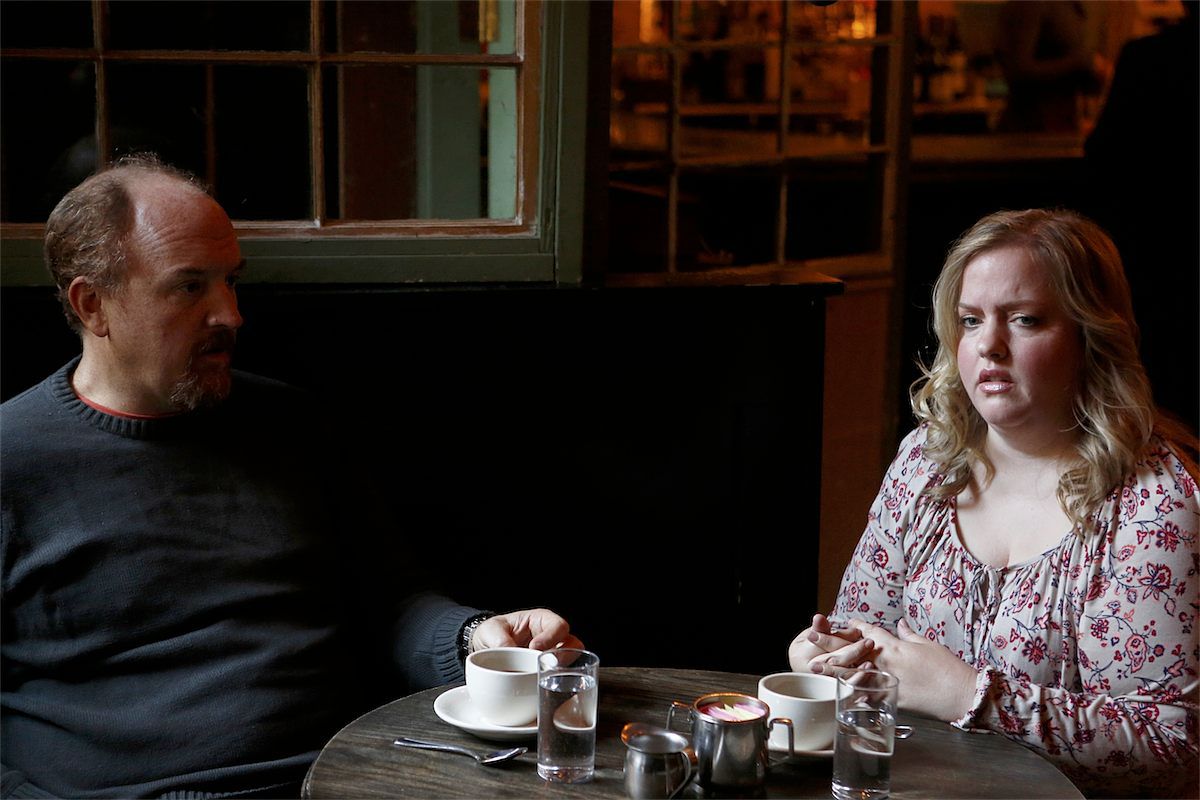
Louie offers a chance to reconnect with Louis C.K.’s roots as a more modest performer.

The title of the season-four premiere is possibly a wry acknowledgment of Louie’s return after a year-and-a-half hiatus.

Louie is akin to Seinfeld in its view of a privileged life constantly swayed by the particulars of Manhattan geography.

Louis C.K.’s ability to play with comedic perspectives is much more apparent in person.

Season three of Louie continued to tread some fantastic dimension where a half-hour television comedy is about real discovery.

As always, Louie C.K. has feelers for those emotional undercurrents that aren’t often remarked on in popular art

It can be tricky to describe what distinguishes Louis C.K. from other stand-ups, even from those who specialize in observational, storytelling, confessional comedy.

Louie is smart, cinematic, and bitterly honest.

There’s something poignant about Louie, the new FX series starring drolly despondent standup comic Louis C.K.